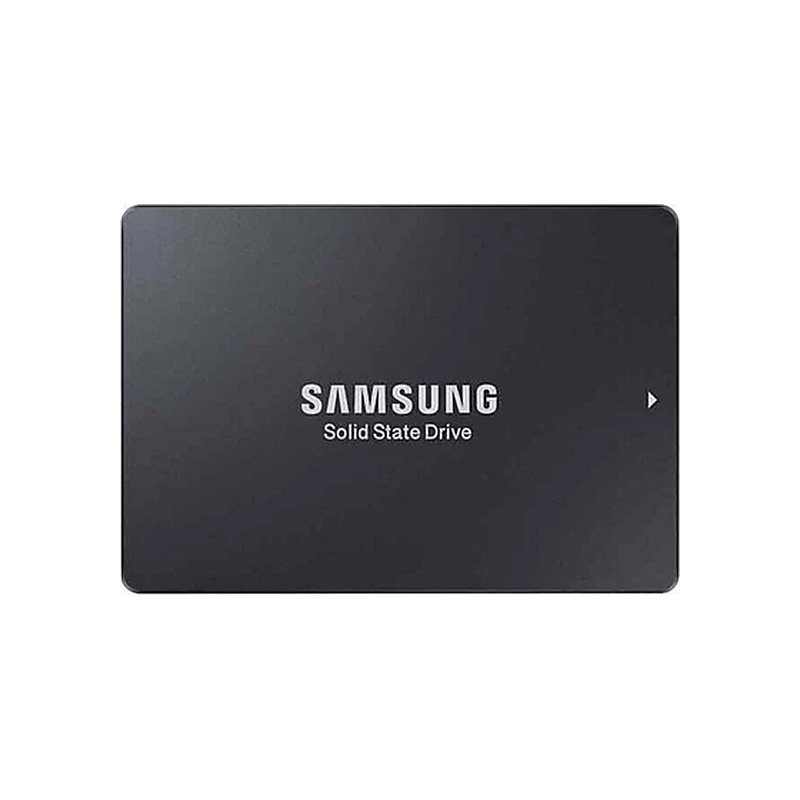
Samsung PM883 240GB SATA SSD (MZ7LH240HAHQ)
240 GB 2.5-inch SATA read-intensive SSD, ordering code MZ7LH240HAHQ-00005
- Part Number
- MZ7LH240HAHQ
- Brand
- Samsung
- Category
- Enterprise & Data Center SSD
- Accepted Payments
- T/T Bank Transfer PayPal Western Union
Technical Specifications
| Capacity | 240 GB |
|---|---|
| Interface | SATA |
| Form Factor | 2.5-inch 7mm |
| PCIe Version | Not applicable |
| NAND Type | TLC |
| Endurance (DWPD) | 0.78 |
| TBW | 341 TB |
| Sequential Read | 550 MB/s |
| Sequential Write | 320 MB/s |
| Random Read IOPS | 98K IOPS |
| Random Write IOPS | 14K IOPS |
| Power | 2.3 W |
| DRAM Cache | Yes |
| Power Loss Protection | Yes |
| Encryption | SED |
| Condition | New · Used |
Frequently Asked Questions
Samsung PM883 240 GB, 2.5-inch 7 mm SATA, catalogue code MZ7LH240HAHQ, ordering code MZ7LH240HAHQ-00005. 550 MB/s sequential read, 320 MB/s sequential write, 98K random read and 14K random write IOPS, 341 TBW on 3-bit V-NAND behind a Samsung Maru controller. Stocked new or as tested pulls with a 1-year warranty from us.
This is the read-intensive half of Samsung's 2018 SATA generation — the same generation and the same Maru controller as the SM883 at 240 GB, in the same 7 mm case, but with TLC flash and firmware provisioned for reads rather than writes. At 240 GB the split between the two is at its widest: this drive reads marginally faster (550 against 540 MB/s) and writes far more slowly (320 against 480), gives up 8K of random write, and carries a quarter of the endurance at 341 TBW against 1,314. In exchange it draws 2.3 W on read where the mixed-use drive draws 2.8 W.
The more interesting comparison is with the drive it replaced. Against the PM863a at 240 GB, sequential read jumps from 330 to 550 MB/s and random read from 86K to 98K IOPS, at the same 341 TBW — the 863a generation's small capacities were the weakest part of its line-up, and this generation fixed them. That is why a 240 GB read-intensive drive from 2018 is still a reasonable boot device in 2026: nothing about a boot volume needed more than 550 MB/s of read, and this one delivers it at 2.3 watts.
What read-intensive actually means at 240 GB
It means the flash is TLC and the over-provisioning is thin, so the drive is engineered to serve reads from a large working set rather than to absorb a write stream. Sequential write at 320 MB/s is the visible consequence, and random write at 14K IOPS is the one that matters in a queue: a mixed-use drive at the same capacity does 22K. For an operating system, a package cache, an image or ISO store, a read-mostly web tier, or an appliance system disk that is written only on upgrade, none of that is a constraint.
Two details are worth knowing because they only show up at this capacity. Write latency is 70 µs here against 40 µs on the 480 GB and larger members, and the 99.99th-percentile read at queue depth 32 is 2 ms against 0.9 ms on the larger drives. The smallest read-intensive member of any family is the one with the least parallelism, and this is where it shows — not in the headline IOPS, which are identical across the range, but in the tail.
Consistency is 99% read and 90% write across the whole range — Samsung publishes one figure for it rather than a per-capacity breakdown — which is three points below the mixed-use drive's 93% write figure and the lowest write-consistency number in this generation. On a boot volume that ratio is irrelevant; on anything that queues writes, it is the first number to look at, and the reason this drive should not be specified for a journal or a cache tier.
Technical specifications
| Product family | Samsung PM883 (V-NAND SSD, data centre / read-intensive) |
|---|---|
| PN | MZ7LH240HAHQ (catalogue code) |
| Ordering code | MZ7LH240HAHQ-00005 (General SED) |
| Capacity | 240 GB (468,862,128 sectors of 512 bytes) |
| Form factor | 2.5-inch, 7.0 mm (100.20 × 69.85 × 6.80 mm, max 70 g) |
| Interface | SATA 6 Gb/s, ATA/ATAPI-7 and Serial ATA 3.3 |
| Controller | Samsung Maru (Samsung LSI), with DRAM write cache |
| NAND | Samsung V-NAND, 3-bit (TLC), read-intensive over-provisioning |
| Sequential read / write | 550 MB/s / 320 MB/s (128 KB, QD32) |
| Random 4 KB (QD32) | 98K IOPS read / 14K IOPS write |
| IOPS consistency | 99% read / 90% write at 4 KB |
| Latency and QoS | 120 µs read / 70 µs write at QD1; 99.99th percentile 0.5 ms read, 0.3 ms write at QD1; 2.0 ms and 3.2 ms at QD32 |
| Endurance | 341 TBW — 0.78 DWPD on a five-year basis; Samsung quotes 1.3 DWPD against a three-year basis, which is the same 341 TB |
| Power | Active read 2.3 W; active write 2.6 W; idle 1.3 W; supply 5 V ±5% |
| Power-loss protection | Yes — capacitor hold-up flushes DRAM to NAND; ready state within 10 s (SPOR). No hold-up time published |
| Data security | AES 256-bit encryption engine (General SED part); no TCG Opal claim |
| Features | TRIM, NCQ to depth 32, S.M.A.R.T., end-to-end data protection, RoHS |
| Reliability | MTBF 2.0 million hours; UBER 1 sector per 1017 bits read; data retention 3 months at 40 °C after rated endurance |
| Environmental | Operating 0 °C to 70 °C (case); non-operating −40 °C to 85 °C; humidity 5–95% non-condensing |
| Shock and vibration | 1,500 G at 0.5 ms half sine; 20 G sine sweep, 20–2,000 Hz |
| Status | Legacy generation — Samsung's current SATA data-centre line is the PM893; supply here is remaining stock and pull-tested units |
Ordering codes we can supply at 240 GB
| Code | Type | Condition | Quote |
|---|---|---|---|
| MZ7LH240HAHQ | Catalogue code | New / used | Enquire |
| MZ7LH240HAHQ-00005 | Ordering code | New / used | Enquire |
The model name decodes the same way as the rest of the generation, with one letter that matters: MZ for memory, 7 for the 2.5-inch 7 mm SATA form factor, L for the V-NAND 3-bit line-up (where the SM883 carries K for the 2-bit MLC line-up), H for the Maru controller, 240 for capacity, H for the BGA NAND package, A for second-generation flash, HQ for the 1 Tb 4-CE NAND density, and -00005 for the General SED customer code. Ask for the full string; MZ7LH240HAHQ alone is the label, the -00005 is what a warranty claim is written against.
What 341 TBW means in a day
0.19 TB of writes every day for five years — 190 GB, or 0.78 drive-writes-per-day at 240 GB. That is a third of what the mixed-use drive at the same capacity allows and roughly what a boot volume, a package cache or an image store will actually consume: an operating system that is patched monthly and read continuously uses a fraction of it. It is also the number that disqualifies the drive from any role that writes continuously, because a journal or a write-back cache would exhaust 341 TB in months rather than years.
Samsung states the endurance two ways and both are honest, which is worth clearing up because the figures in circulation disagree. The rating is 1.3 drive-writes-per-day over a three-year basis, using TBW = DWPD × 365 × 3 × capacity. Spread the same 341 TB over five years and it is 0.78 DWPD, which is the figure that compares directly with the five-year ratings used everywhere else on this site. The absolute number — 341 TB — does not change with the assumption; only the intensity does.
For scale: a 240 GB mixed-use drive carries 1,314 TB at the same capacity, and the current-generation PM893 at 240 GB carries 438 TB. This drive's 341 TB is therefore the smallest write budget of the three, which is the correct trade for a part whose entire design is about serving reads cheaply.
Where this drive fits, and what it does not have
The roles are the ones where the data is written once and read many times: a hypervisor boot device or a mirrored pair of them, an operating-system volume for an appliance, an ISO or firmware repository, a read-mostly web or application tier, a restore target that is written during a backup window and read for the rest of the month, a lab machine that needs a cheap 240 GB system disk. In all of those the drive's 550 MB/s read and 2.3 W active power are the numbers that matter, and the 320 MB/s write is irrelevant. Where 240 GB is the constraint rather than the role, the PM893 at 480 GB is the same read-intensive design with twice the capacity, 520 MB/s of write and 683 TBW.
Three limits, all inherited from the generation. Power-loss protection is capacitor-based and documented but unquantified: the drive flushes its cache and returns to a ready state within ten seconds on interruption, but no hold-up time is published, so it is not a substitute for a UPS on anything transactional. There is no TCG Opal 2.0 claim — the -00005 part is a General SED device with the AES 256-bit engine, which encrypts at rest but gives no Opal locking or remote management. And the generation is legacy: Samsung's current SATA data-centre line is the PM893, so supply here is remaining stock rather than a lead time.
On paper the PM893 at 240 GB beats this drive on every line except read speed, which it matches: 550/380 MB/s against 550/320, 15K against 14K random write, 438 TB against 341, with Opal 2.0 and a published PLP specification. If the budget allows, that is the better drive. The PM883 is the one to buy when a read-mostly 240 GB slot has a fixed budget, when the platform is already qualified around it, or when a matched batch of pull-tested units is what the deployment actually needs.
How 240 GB compares with the PM883 range and the drives either side of it
| Model | Capacity | Sequential read / write | Random 4K read / write | Endurance | Class |
|---|---|---|---|---|---|
| PM883 240 GB | 240 GB | 550 / 320 MB/s | 98K / 14K IOPS | 341 TB (0.78 DWPD) | Read-intensive |
| PM883 480 GB | 480 GB | 550 / 520 MB/s | 98K / 24K IOPS | 683 TB (0.78 DWPD) | Read-intensive |
| PM883 960 GB | 960 GB | 550 / 520 MB/s | 98K / 25K IOPS | 1,366 TB (0.78 DWPD) | Read-intensive |
| PM883 1.92 TB | 1.92 TB | 550 / 520 MB/s | 98K / 25K IOPS | 2,733 TB (0.78 DWPD) | Read-intensive |
| PM883 3.84 TB | 3.84 TB | 550 / 520 MB/s | 98K / 28K IOPS | 5,466 TB (0.78 DWPD) | Read-intensive |
| SM883 240 GB | 240 GB | 540 / 480 MB/s | 97K / 22K IOPS | 1,314 TB (3.0 DWPD) | Mixed-use |
| PM863a 240 GB | 240 GB | 330 / 300 MB/s | 86K / 9K IOPS | 341 TB (0.78 DWPD) | Read-intensive |
| PM893 240 GB | 240 GB | 550 / 380 MB/s | 98K / 15K IOPS | 438 TB (1.0 DWPD) | Read-intensive |
The first five rows are the range, and they show the same pattern as the mixed-use family: at 240 GB the drive is the slow writer of the group at 320 MB/s, and from 480 GB upward sequential write is 520 MB/s and random write climbs from 24K to 28K. Read performance never changes — 550 MB/s and 98K IOPS at every capacity — which is the whole point of a read-intensive part.
Against the mixed-use drive of the same generation the decision is the write side: this one gives up 160 MB/s of sequential write, 8K of random write and three quarters of the endurance to save 0.5 W on read. Against the 863a it replaces, it is 220 MB/s faster on read with identical endurance, which makes it the better boot drive for the same 341 TB. And against the current-generation PM893 it is 60 MB/s slower on write and 97 TB lower on endurance — the honest reason to choose it is budget, not specification. If the slot turns out to need endurance rather than read speed, the SM863a at 240 GB is the mixed-use part from the generation before this one, at 3.5 drive-writes-per-day against this drive's 0.78.
How each drive is tested before it ships
- Label, capacity and model line checked against the order: PM883 2.5" SATA SSD 240 GB with MZ7LH240HAHQ, and the ordering suffix recorded on the invoice.
- SMART attribute dump before anything else — power-on hours, host writes, media wear, program/erase counts and grown defect count — retained for the individual drive shipped. On a read-intensive drive the P/E count tells you whether it was used the way it was designed for.
- Full-surface read scan, then a SMART extended self-test run to completion rather than a sample.
- Sequential read and write verified near 550 / 320 MB/s on a native SATA 6 Gb/s port, with random 4 KB measured at queue depth 32.
- Read-mostly workload check: sustained random reads at queue depth 32 to confirm the 98K figure holds once the drive has been warmed, which is the state it will spend its life in.
- Firmware revision read and recorded, and checked against the latest firmware revision for this part before the unit is offered.
- TRIM and secure-erase cycles exercised, then the drive returned to a clean state with over-provisioning intact.
- Final inspection and clean, then anti-static bag and foam packing.
Warranty, lead time and purchasing
Every drive carries a 1-year warranty from us against defects in workmanship and function. Verified faulty units are replaced or refunded and we cover return shipping. Stock is held in both new and used condition; the condition you order is confirmed before dispatch, and used units are pull-tested rather than untested lots. Stock is held in our own warehouse and normally dispatches within three to seven working days, with tracking issued at dispatch.
Pricing is quoted per order because condition and quantity both move it. Send the quantity, the condition you need and the server model the drives are going into, and you will get a quote with lead time the same working day. Boot pairs are matched from a single batch where stock allows, including firmware revision and wear level, which matters more on a drive whose wear budget is 341 TB than on one with four times that.
Get Pricing For This Part
Tell us who you are — we reply within one working day with a firm quote, stock status and lead time. Volume discounts available.
Related Products
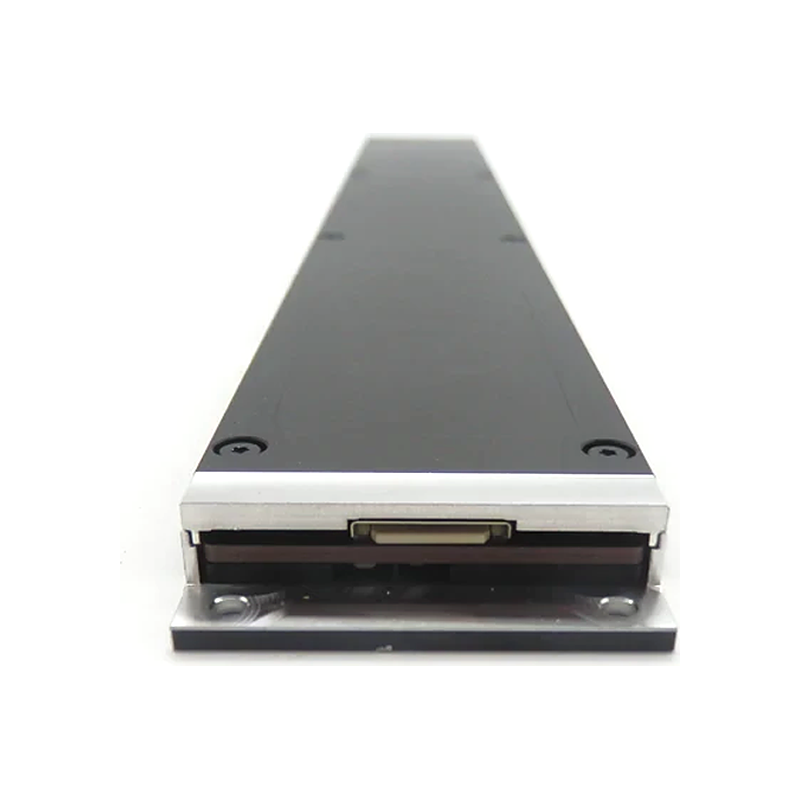
15.36 TB E1.L 1U long ruler NVMe SSD, PCIe 4.0, ordering code MZEL215THBLA-00AMV
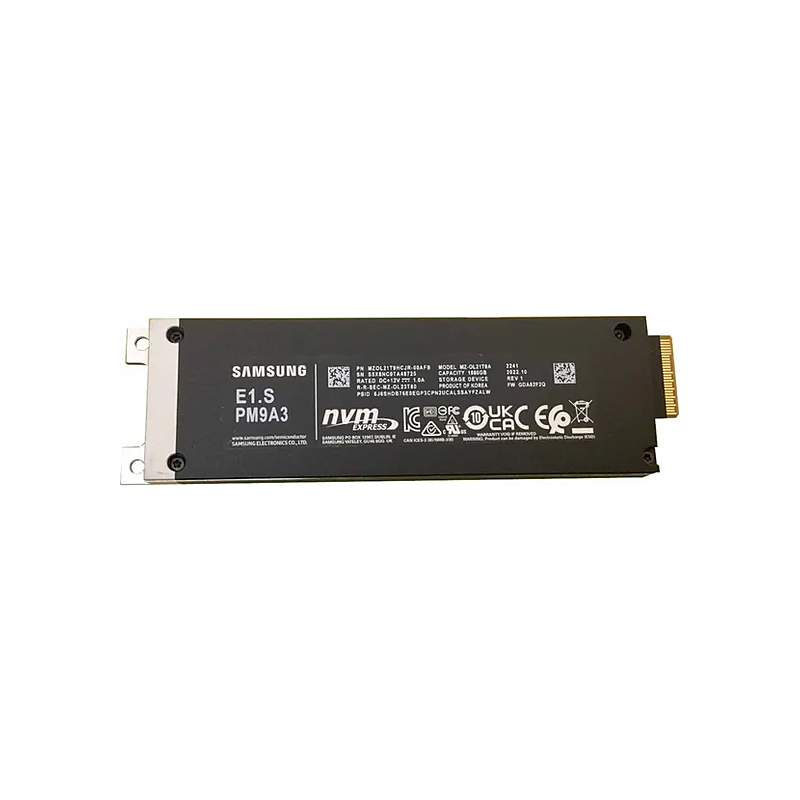
7.68 TB E1.S 1T NVMe SSD, PCIe 4.0, ordering codes MZCL27T6HBLA-00AMV / MZTL27T6HBLA-00A07
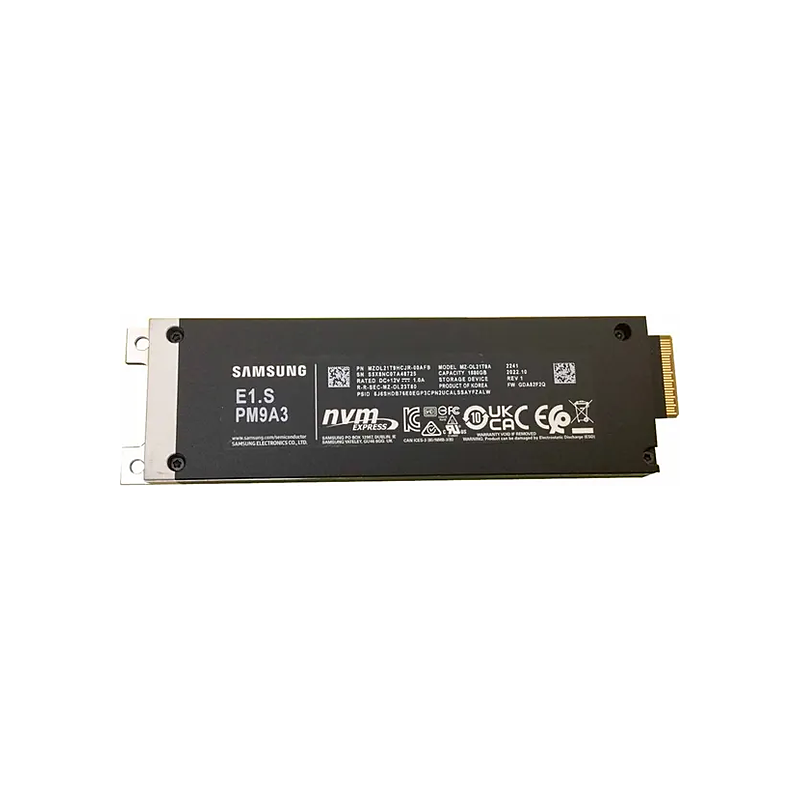
3.84 TB E1.S 1T NVMe SSD, PCIe 4.0, ordering codes MZCL23T8HCLS-00AMV / MZTL23T8HCLS-00A07
1.92 TB E1.S 1T (9.5 mm) NVMe SSD, PCIe 4.0, ordering code MZCL21T9HCJR-00AMV