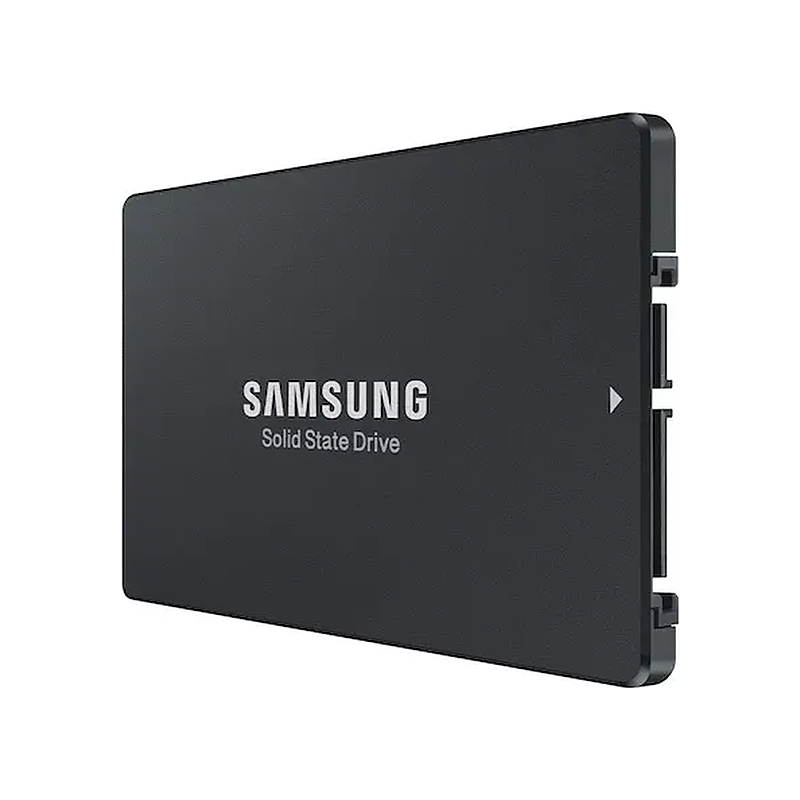
Samsung PM893 240GB SATA SSD (MZ-7L324000)
240 GB 2.5-inch SATA enterprise SSD, ordering codes -00A07 / -00W07 / -00B7C
- Part Number
- MZ-7L324000
- Brand
- Samsung
- Category
- Enterprise & Data Center SSD
- Accepted Payments
- T/T Bank Transfer PayPal Western Union
Technical Specifications
| Capacity | 240 GB |
|---|---|
| Interface | SATA |
| Form Factor | 2.5-inch 7mm |
| PCIe Version | Not applicable |
| NAND Type | TLC |
| Endurance (DWPD) | 1 |
| TBW | 438 TB |
| Sequential Read | 550 MB/s |
| Sequential Write | 380 MB/s |
| Random Read IOPS | 98K IOPS |
| Random Write IOPS | 15K IOPS |
| Power | 2.7 W |
| DRAM Cache | Yes |
| Power Loss Protection | Yes |
| Encryption | Opal 2.0 |
| Condition | New · Used |
Frequently Asked Questions
Samsung PM893 240 GB in the 2.5-inch 7 mm SATA form factor, catalogued under MZ-7L324000 and supplied under the three ordering codes that carry the same build: MZ7L3240HCHQ-00A07, MZ7L3240HCHQ-00W07 and MZ7L3240HCHQ-00B7C. 550 MB/s sequential read, 380 MB/s sequential write, 438 TBW, power-loss protection. Supplied new or as tested pulls, with a 1-year warranty from us.
240 GB is the boot tier of this family rather than a capacity tier. Two drives mirrored hold the operating system, a hypervisor image or an appliance firmware slot, and they sit outside the data pool where they can be replaced in a maintenance window without a rebuild. That is why this capacity is bought in twos and fours instead of in tens.
Write throughput is the one place it departs from the rest of the PM893 line: fewer NAND die sit behind the controller, so sequential write is 380 MB/s and random write 15K IOPS, against 520 MB/s and 29–30K IOPS from 480 GB upward. Reads are unchanged at 550 MB/s and 98K IOPS. An operating system installed once and patched occasionally never notices; a volume that ingests continuously would, and belongs on a 3 DWPD part instead.
The rest is the standard SATA feature set: hot-swap 7 mm bays, 6 Gb/s falling back to 3 Gb/s and 1.5 Gb/s, SAS backplanes whose expander accepts SATA targets, PLP capacitors, AES 256-bit full-disk encryption with TCG Opal 2.0 and IEEE 1667, TRIM, garbage collection and S.M.A.R.T. Active power averages 2.1 W reading and 2.7 W writing with 1.5 W idle, so a mirrored pair adds roughly 5 W to a node.
Four identifiers, and which one goes on the order
On the label the fields sit in a fixed order: the product line reads PM893 2.5" 240GB SSD (SATA 6.0Gbps), the MODEL line reads MZ-7L324000, and the PN line carries the full ordering code with its suffix. The label prints the same pair per density, one model name and one part number, which is why both appear on this page. MZ-7L324000 is the code this catalogue, most asset registers and most search boxes use; the ordering code is what a PO line and a warranty claim are written against. Quote whichever one your paperwork carries and the other follows from it.
The suffixes are channel identities for the same build, and MZ-7L324000 is the catalogue code they all roll up to. Every row in the table further down describes one 240 GB drive at the same published performance, endurance and power; what changes is the string a BOM line, an asset register or a warranty claim is keyed to.
Technical specifications
| Product family | Samsung PM893 (V-NAND SSD, data center / server) |
|---|---|
| PN | MZ-7L324000 (catalogue code) |
| Ordering codes | MZ7L3240HCHQ-00W07, MZ7L3240HCHQ-00A07, MZ7L3240HCHQ-00B7C |
| Capacity | 240 GB (240 GB decimal) |
| Form factor | 2.5-inch, 7.0 mm (100.20 × 69.85 × 7.0 mm) |
| Interface | SATA 6 Gb/s, compatible with SATA 3 Gb/s and 1.5 Gb/s |
| Controller | Samsung in-house controller, DRAM cache with LPDDR4 |
| NAND | Samsung V-NAND TLC |
| Sequential read / write | 550 MB/s / 380 MB/s |
| Random 4 KB (QD32) | 98K IOPS read / 15K IOPS write |
| Endurance | 438 TBW — 1 DWPD over a 5-year rating period |
| Power | Idle 1.5 W (DIPM off); active average 2.1 W read / 2.7 W write; allowable voltage 5 V ± 5% |
| Power-loss protection | Yes, PLP capacitors |
| Data security | AES 256-bit full-disk encryption, TCG Opal 2.0, IEEE 1667 |
| Features | TRIM, garbage collection, S.M.A.R.T. |
| Reliability | MTBF 2.0 million hours; operating 0 °C to 70 °C; non-operating -40 °C to 85 °C; 5–95% RH non-condensing |
| Shock / vibration | 1,500 G at 0.5 ms non-operating; 20–2,000 Hz at 20 G non-operating |
Ordering codes we can supply at 240 GB
| Code | Type | Condition | Quote |
|---|---|---|---|
| MZ-7L324000 | Catalogue code | New / used | Enquire |
| MZ7L3240HCHQ-00W07 | Standard code | New / used | Enquire |
| MZ7L3240HCHQ-00A07 | Channel code | New / used | Enquire |
| MZ7L3240HCHQ-00B7C | Channel code | New / used | Enquire |
All four are the same 240 GB drive, stocked in both conditions. MZ-7L324000 is what we catalogue and quote under; the three ordering codes are what a PO line, a BOM or a warranty claim is usually written against, with -00W07 the standard code. Put whichever code your paperwork carries in the message field of the quote form. If the suffix is not listed here, send it anyway: we will confirm whether it is on the shelf or quote the nearest equivalent.
Where 240 GB fits: the boot pair, not the data tier
What decides this capacity is bays and failure domains, not terabytes. A twelve-bay 2U holding ten large drives in the data tier still has two bays free, and putting the operating system on the array costs a partition, a rebuild boundary and a shared failure domain. Two 240 GB drives give the node its own boot pair: independent of the pool, replaceable without rebuilding a member, cheap enough to keep a spare pair on the shelf. Filled entirely with this capacity the same chassis holds only 2.88 TB raw, which is why nobody builds a data tier here.
Endurance is sized for the role rather than the workload. 438 TBW across 240 GB works out at 1.0 drive-write-per-day over five years (438 ÷ (0.24 × 365 × 5) = 1.0): far more than an operating system consumes, far less than a log or cache tier would. Designs that write the system disk continuously, some monitoring stacks and container hosts among them, belong on a 3 DWPD part such as the PM897.
Where 120 GB is enough for the operating system, the Micron M510DC at 120 GB is the other drive we list in this size class: 460 TBW on half the bytes, 1.2 W at idle and TCG Enterprise rather than Opal 2.0, in exchange for 170 MB/s sequential write against 380 MB/s here.
How 240 GB compares with the rest of the PM893 family
| Model | Capacity | Sequential read / write | Random read / write | Endurance | Active power (read / write) |
|---|---|---|---|---|---|
| PM893 240 GB | 240 GB | 550 / 380 MB/s | 98K / 15K IOPS | 438 TBW (1 DWPD) | 2.1 / 2.7 W |
| PM893 480 GB | 480 GB | 550 / 520 MB/s | 98K / 29K IOPS | 876 TBW (1 DWPD) | 2.1 / 3.2 W |
| PM893 960 GB | 960 GB | 550 / 520 MB/s | 98K / 30K IOPS | 1,752 TBW (1 DWPD) | 2.2 / 3.2 W |
| PM893 1.92 TB | 1.92 TB | 550 / 520 MB/s | 98K / 30K IOPS | 3,504 TBW (1 DWPD) | 2.2 / 3.2 W |
| PM893 3.84 TB | 3.84 TB | 550 / 520 MB/s | 98K / 30K IOPS | 7,008 TBW (1 DWPD) | 2.2 / 3.2 W |
| PM893 7.68 TB | 7.68 TB | 550 / 520 MB/s | 98K / 30K IOPS | 14,016 TBW (1 DWPD) | 2.2 / 3.2 W |
Samsung PM893 480 GB keeps the same 550 MB/s read and 98K read IOPS, lifts write to 520 MB/s and 29K IOPS, doubles endurance to 876 TBW and draws 0.5 W more under write. If there is any chance the pair gets re-tasked as a scratch or log volume later, start there instead.
960 GB and above is a different purchase: endurance climbs to 1,752 TBW at 960 GB and 14,016 TBW at 7.68 TB, all at 520 MB/s write. Buying those for a boot pair spends endurance the node will never use.
PM897 shares the 2.5-inch SATA footprint at 3 DWPD against 1 DWPD. Boot volumes do not need it; journal and cache tiers do, and that is a workload decision rather than an upgrade.
Servers, boot cages and backplanes that take it
Any 2.5-inch 7 mm hot-swap bay on a SATA controller accepts it, and SAS backplanes work where the expander accepts SATA targets. In practice it lands in the dedicated boot positions rather than the data cage:
- Dell PowerEdge R640, R740, R740xd, R840 and R940xa — rear-panel or internal 2.5-inch boot slots
- HPE ProLiant DL360, DL380 and DL560 Gen10 — the separate boot cage option
- Lenovo ThinkSystem SR630, SR650 and SR850 — rear 2.5-inch boot bays
- Supermicro 2U chassis with a two-bay boot pair isolated from the data cage
- Storage controllers and appliances that require a system disk independent of the array
If the chassis already offers M.2 boot slots, those are the cheaper route and this drive is not needed. If the only option is 2.5-inch bays and the data pool should stay untouched, this is the part for the job: two bays, one mirror, no capacity planning to redo.
How each drive is tested before it ships
- Label read first: PN line matched to the ordering code on this page, model code checked on the same label.
- S.M.A.R.T. dump before testing — power-on hours, wear indicators and reallocated sectors recorded per drive.
- Full-surface read verification across all 240 GB, confirming zero unreadable blocks.
- Sequential run held to this capacity's 550/380 MB/s class, not the 520 MB/s write figure of the larger drives.
- 4 KB QD32 random pass compared with the 98K/15K IOPS numbers above.
- Secure erase, then a hot-swap cycle in a backplane to confirm clean re-enumeration.
- Final S.M.A.R.T. snapshot attached to the packing list, then anti-static and foam packing.
Warranty, lead time and volume quotes
Every drive carries a 1-year warranty against defects in workmanship and function; verified faulty units are replaced or refunded and we cover return shipping. New and used stock are held separately, the condition you order is confirmed before dispatch, and used units are tested pulls rather than untested lots. Stock is held in our own warehouse and normally dispatches within three to seven working days; tracking is issued at dispatch.
The figure shown above is the starting point; the final number moves with condition and quantity, which is why the quote is per order. Send the quantity, the condition, the server model and the ordering code as it appears on your paperwork. Boot drives are normally bought in pairs or fours; for a fleet refresh tell us the node count and we quote matched pairs so the two drives in each node come from one batch and one firmware generation, which keeps later attributions clean.
Get Pricing For This Part
Tell us who you are — we reply within one working day with a firm quote, stock status and lead time. Volume discounts available.
Related Products
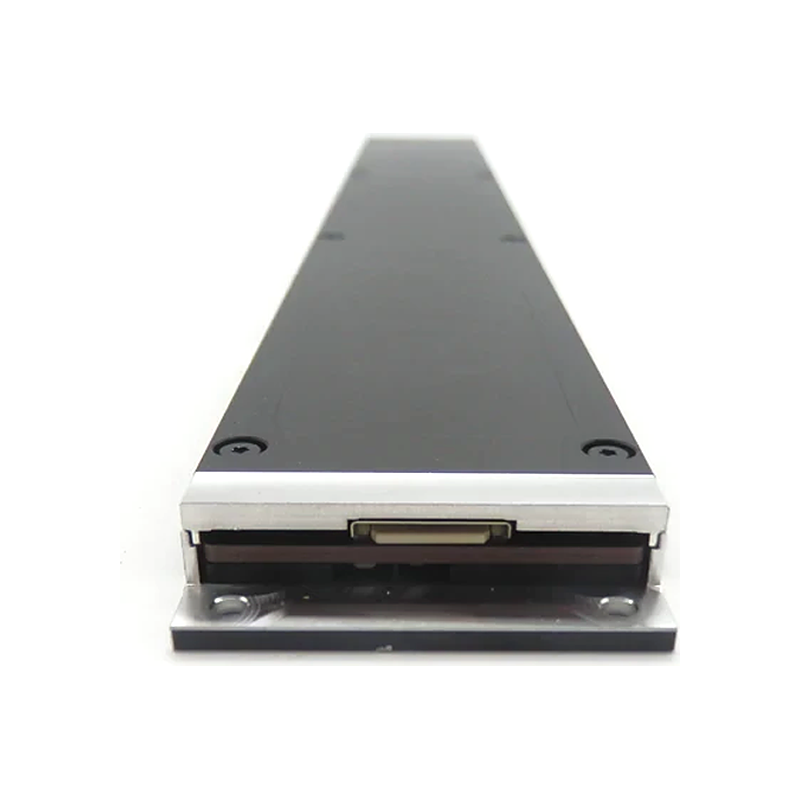
15.36 TB E1.L 1U long ruler NVMe SSD, PCIe 4.0, ordering code MZEL215THBLA-00AMV
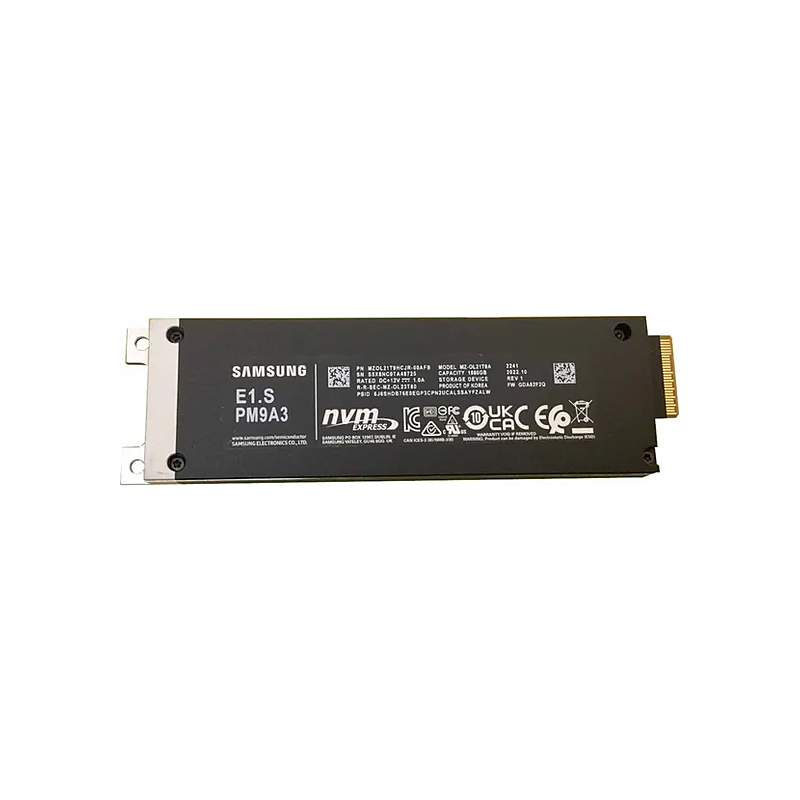
7.68 TB E1.S 1T NVMe SSD, PCIe 4.0, ordering codes MZCL27T6HBLA-00AMV / MZTL27T6HBLA-00A07
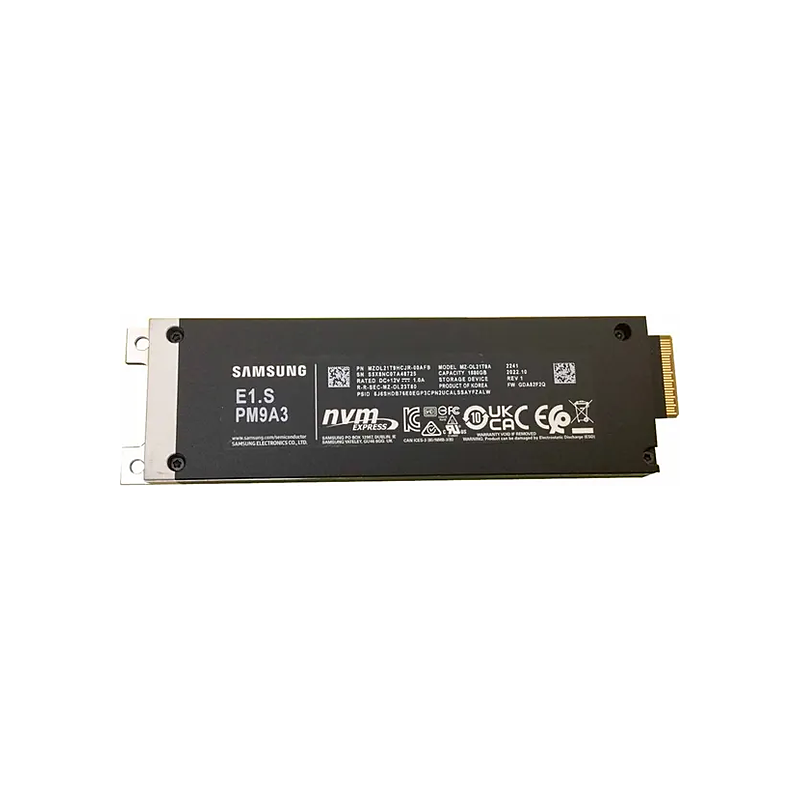
3.84 TB E1.S 1T NVMe SSD, PCIe 4.0, ordering codes MZCL23T8HCLS-00AMV / MZTL23T8HCLS-00A07
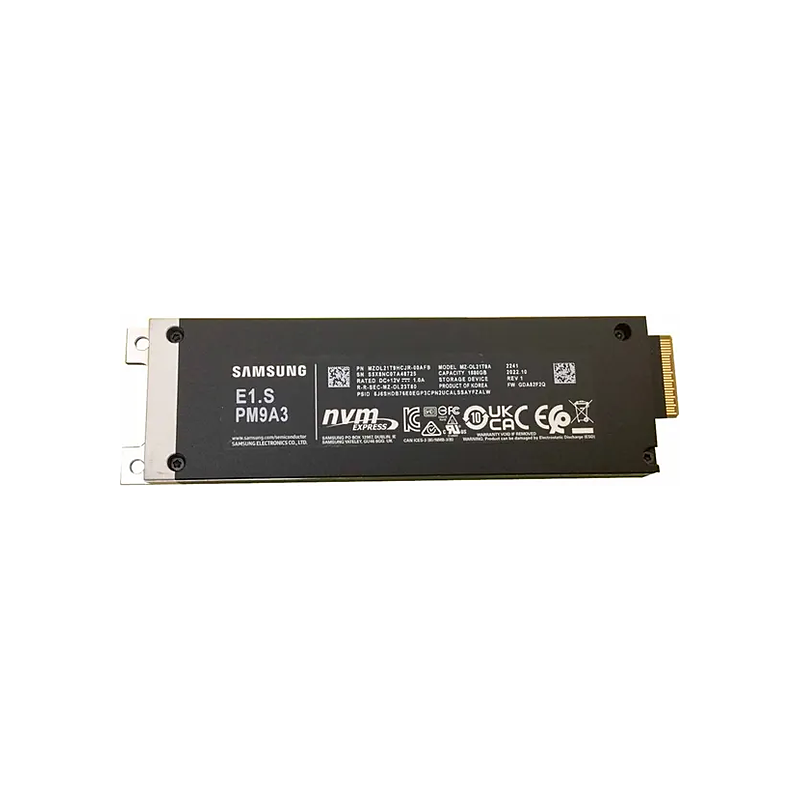
1.92 TB E1.S 1T (9.5 mm) NVMe SSD, PCIe 4.0, ordering code MZCL21T9HCJR-00AMV