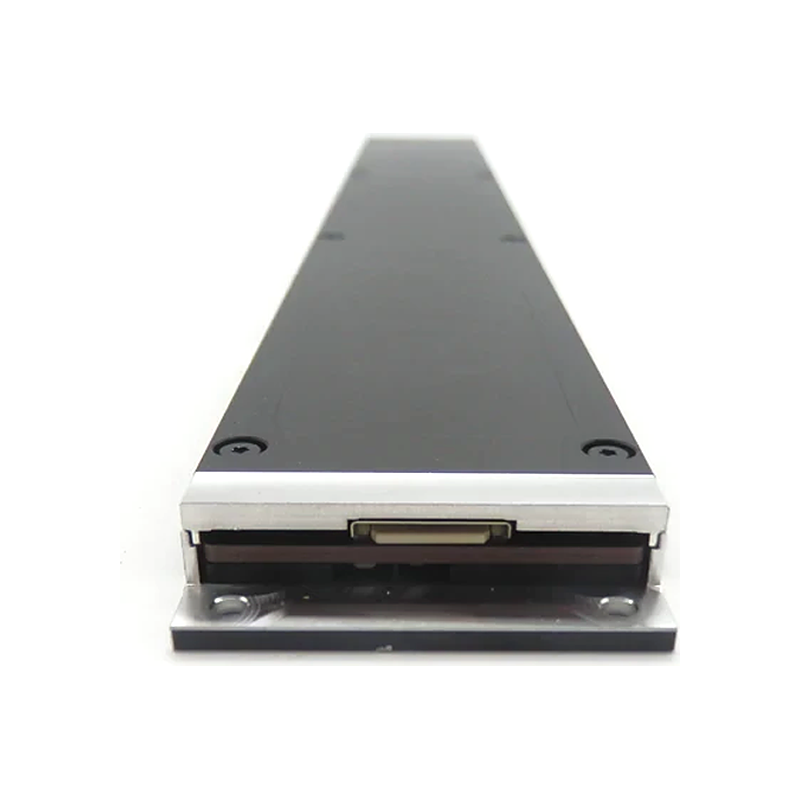
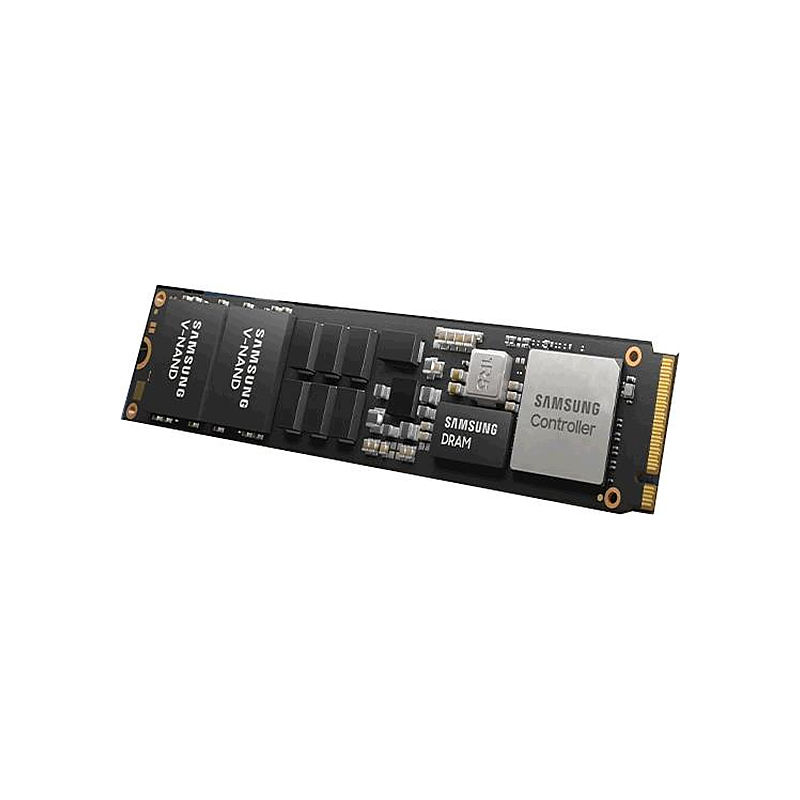
Samsung PM9A3 15.36TB E1.L NVMe SSD (MZEL215THBLA)
15.36 TB E1.L 1U long ruler NVMe SSD, PCIe 4.0, ordering code MZEL215THBLA-00AMV
- Part Number
- MZEL215THBLA
- Brand
- Samsung
- Category
- Enterprise & Data Center SSD
- Accepted Payments
- T/T Bank Transfer PayPal Western Union
Technical Specifications
| Capacity | 15.36 TB |
|---|---|
| Interface | NVMe |
| Form Factor | E1.L |
| PCIe Version | PCIe 4.0 |
| NAND Type | TLC |
| Endurance (DWPD) | 1 |
| TBW | 28,032 TB |
| Sequential Read | 5,200 MB/s |
| Sequential Write | 4,000 MB/s |
| Random Read IOPS | 850K IOPS |
| Random Write IOPS | 160K IOPS |
| Power | 11 W |
| DRAM Cache | Yes |
| Power Loss Protection | Yes |
| Encryption | AES-XTS 256 |
| Condition | New · Used |
Frequently Asked Questions
Samsung PM9A3 15.36 TB E1.L, the 1U long-ruler carrier, catalogue code MZEL215THBLA, ordered as MZEL215THBLA-00AMV. 5,200 MB/s sequential read and 4,000 MB/s write on PCIe 4.0 x4, 850K random read and 160K random write IOPS, 28,032 TBW at 1 DWPD, 11 W active read and 13.5 W active write.
This is the carrier that makes 15.36 TB useful. Thirty-two E1.L drives fit across the front of a 1U chassis, which is 492 TB in one rack unit; the same 15.36 TB drive in a 2.5-inch shell needs two rack units to reach 368 TB. Nothing about the flash changes between the two. What changes is how many of them the chassis can hold.
Technical specifications
| Product family | Samsung PM9A3 (PCIe 4.0 data centre NVMe SSD, 1 DWPD) |
|---|---|
| PN | MZEL215THBLA (catalogue code) |
| Ordering code | MZEL215THBLA-00AMV |
| Capacity | 15.36 TB (unformatted; 1 GB = 1 billion bytes, formatted capacity is less) |
| Form factor | E1.L, 1U long ruler, 9.5 mm; about 325 × 38.4 × 9.5 mm |
| Interface | PCIe 4.0 x4, NVMe 1.4, EDSFF connector, 12 V rail |
| NAND | Samsung V6 (128-layer) V-NAND TLC, Samsung Elpis controller |
| Sequential read | 5,200 MB/s (128 KB transfer size, queue depth 32) |
| Sequential write | 4,000 MB/s |
| Random 4K read | 850K IOPS (queue depth 32) |
| Random 4K write | 160K IOPS (queue depth 32) |
| Endurance (TBW) | 28,032 TB |
| Endurance (DWPD) | 1 drive write per day for five years |
| Power | 11 W active read, 13.5 W active write, about 4.0 W idle |
| Power-loss protection | Yes, capacitor-backed, with end-to-end data path protection |
| Encryption | AES 256-bit full disk encryption, TCG Opal 2.0, IEEE 1667 |
| MTBF / UBER | 2.0 million hours / 1 sector per 1017 bits read |
| Environment | 0 to 70 °C operating, 5 to 95% non-condensing humidity |
| Features | TRIM, garbage collection, S.M.A.R.T., secure boot, sanitize, end-to-end data protection |
Four ways to buy 15.36 TB, and what each one costs in rack space
| Model | Capacity | Carrier | Seq read / write | Random 4 KB | TBW | Power |
|---|---|---|---|---|---|---|
| PM9A3 | 15.36 TB | U.2 7 mm | 5,200 / 4,000 MB/s | 850K / 160K | 28,032 TB | 11 W |
| PM9A3 | 15.36 TB | E1.L 9.5 mm | 5,200 / 4,000 MB/s | 850K / 160K | 28,032 TB | 11 W |
| PM9A3 | 7.68 TB | E1.S 1T | 6,800 / 4,000 MB/s | 1,000K / 190K | 14,016 TB | 11 W |
| PM1753 | 15.36 TB | E3.S 1T | 14,000 / 10,000 MB/s | 3,200K / 620K | 28,032 TB | 21.34 W |
| PM9D3a | 15.36 TB | U.2 15 mm | 12,000 / 7,000 MB/s | 1,800K / 400K | 28,032 TB | 14.1 W |
Every row above carries 28,032 TB or its pro-rata share, because endurance at one drive write a day is 15.36 × 1,825 and no carrier changes that. Read the column that does move instead: the carrier decides how many of these a rack unit holds, and at 15.36 TB that difference is the whole argument.
A 2.5-inch backplane holds twelve drives per rack unit, so 15.36 TB per bay is 184 TB per rack unit and 368 TB across the 2U that most servers give it. E1.L holds thirty-two across one rack unit at 492 TB. E3.S sits between them on density and ahead of both on bandwidth per drive, which is why it is the carrier for the Gen5 parts listed at the bottom of the table.
What 492 TB in one rack unit actually requires
Thirty-two E1.L drives at 11 W of active read is 352 W, so 0.72 W per terabyte. That is the same figure the 2.5-inch version reaches at this capacity, which is worth stating plainly: the ruler does not improve efficiency, it improves density. Anything that tells you E1.L is more efficient per terabyte is describing a different drive, not a different shell.
Thirty-two devices also change how failure is handled. A rebuild of one 15.36 TB drive at the rated 4,000 MB/s takes about sixty-four minutes, and with thirty-two members in the set a single loss removes three percent of the group's capacity rather than eight. That is the argument for the carrier in an array that has to keep serving through a rebuild rather than the one that has to be fastest on a benchmark.
The physical constraint is the chassis, not the drive. E1.L is 325 mm long and slides in from the front like a blade, which means a 1U server built for it and nothing else. It will not enter a 2.5-inch bay, an E1.S caddy, or an M.2 slot, and there is no adapter that changes that in a way worth using. Buy this carrier only against a chassis that already lists E1.L bays.
Why the numbers on this page are the 2.5-inch numbers
Samsung publishes a data sheet with per-capacity figures for the U.2 part and a family brochure that lists U.2, E1.S and M.2 capacity ranges. E1.L appears in the family documentation and in the form-factor list of every overview that covers the product, but there is no E1.L column anywhere in Samsung's published tables. The white paper says why: the E1.S, E1.L and U.3 drives perform "similar to U.2 based products" and detailed numbers are provided only to contracted OEMs.
So the figures on this page are the 15.36 TB U.2 values, which come from the revision 1.0 data sheet for the sequential and random columns and from the revision 1.5 power table for the wattage. They are the best available statement for this capacity and this silicon, and they are not a measurement of an E1.L sample. If a quote you receive claims a materially different number for this carrier, ask which document it came from, because Samsung has not published one.
What 28,032 TBW buys
One drive write a day for five years on 15.36 TB is 15.36 TB of host writes a day, or 178 MB/s averaged. At the rated 4,000 MB/s a full fill takes sixty-four minutes, so the daily budget covers roughly one complete rewrite with room to spare. At the random write ceiling of 160K IOPS the drive absorbs 655 MB/s, and 28,032 TB at that rate lasts about four hundred and ninety days.
Across a full 1U the aggregate is 897 PB of endurance against 492 TB of capacity. The ratio is fixed by the 1 DWPD rating, so a denser shelf does not buy more years, it buys more terabytes inside the same five. Where the workload genuinely exceeds one drive write a day, the answer is a higher DWPD product rather than a different carrier.
Codes, and the letter that identifies the carrier
| Code | Type | Carrier | Condition | Quote |
|---|---|---|---|---|
| MZEL215THBLA | Catalogue code | E1.L, 9.5 mm | New / used | Enquire |
| MZEL215THBLA-00AMV | Ordering code | E1.L, 9.5 mm | New / used | Enquire |
The third character after MZ is the carrier on every Samsung data centre part: Q is the 2.5-inch U.2 drive, 1 is the M.2 module, T is E1.S, 3 is E3.S, and E is E1.L. At 15.36 TB the four codes MZQL, MZEL, MZ3L and MZ1L tell you which chassis the drive belongs in before you read anything else, and the capacity segment in the middle is identical across all of them.
- MZEL, not MZQL. One letter apart, and the difference is a chassis rather than a caddy: a 2.5-inch drive will not enter an E1.L bay in either direction.
- 9.5 mm is the only thickness E1.L is made in. If a listing offers this carrier in 15 mm or 18 mm, it is describing a different EDSFF format.
- 28,032 TBW. A lower number means a different endurance class or a different capacity row copied into the listing.
- Connector wear. The EDSFF edge connector has a finite insertion rating, so a pull that has been reseated repeatedly deserves a visual inspection rather than a functional test alone.
- SMART log against the serial. A 1U shelf of this density is inventoried by the BMC, so the drive's own history is the record that survives a shelf swap.
Warranty, lead time and purchasing
Each drive carries twelve months of cover from dispatch, whether it left the factory sealed or was pulled from a running system and tested, and the cover is tied to the serial so it survives a resale. Pulled units are erased to a verifiable standard, graded, photographed and shipped with their SMART log archived against the serial. Warehouse stock normally moves in three to seven working days with tracking issued at dispatch. Two pieces is the minimum on a line, other capacities and carriers in this family can be combined on one order, and a quotation is returned the same working day once part number, condition and quantity are confirmed.
Get Pricing For This Part
Tell us who you are — we reply within one working day with a firm quote, stock status and lead time. Volume discounts available.
Related Products
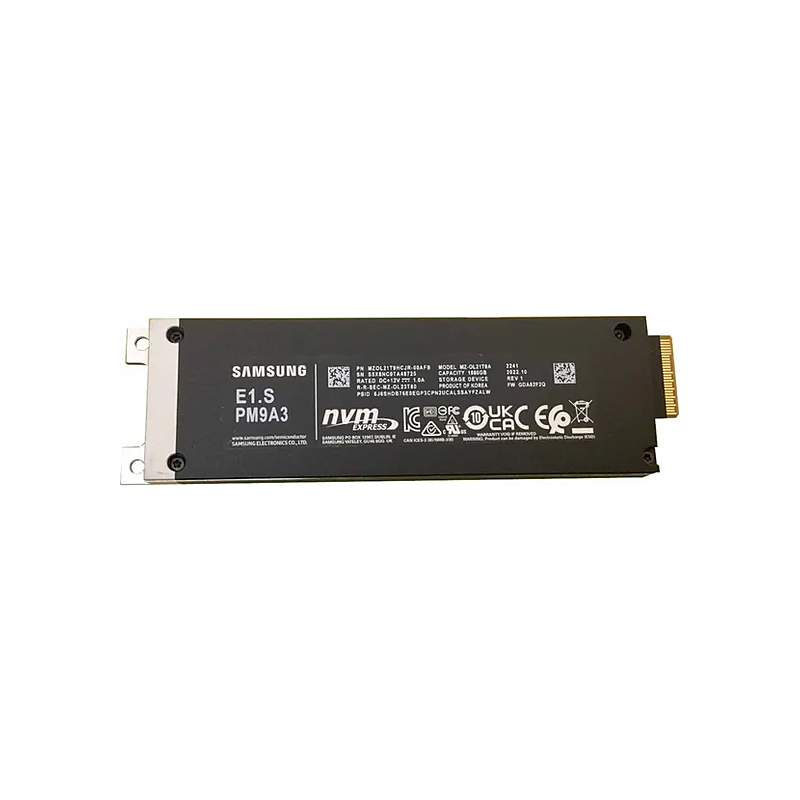
7.68 TB E1.S 1T NVMe SSD, PCIe 4.0, ordering codes MZCL27T6HBLA-00AMV / MZTL27T6HBLA-00A07
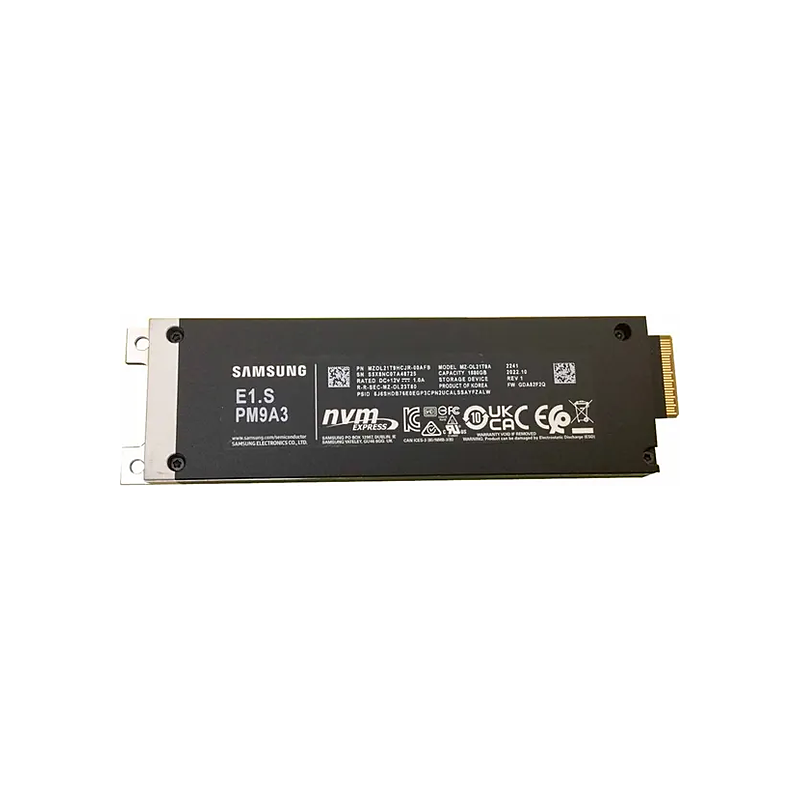
3.84 TB E1.S 1T NVMe SSD, PCIe 4.0, ordering codes MZCL23T8HCLS-00AMV / MZTL23T8HCLS-00A07
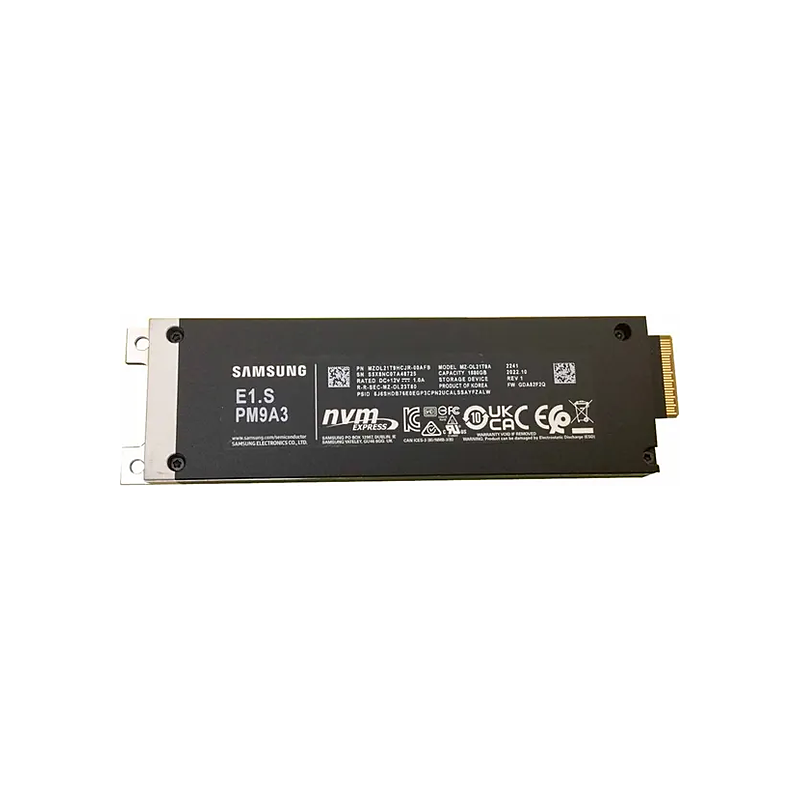
1.92 TB E1.S 1T (9.5 mm) NVMe SSD, PCIe 4.0, ordering code MZCL21T9HCJR-00AMV
3.84 TB M.2 22110 NVMe SSD, PCIe 4.0, ordering codes MZ1L23T8HBLA-00A07 / -00B7C