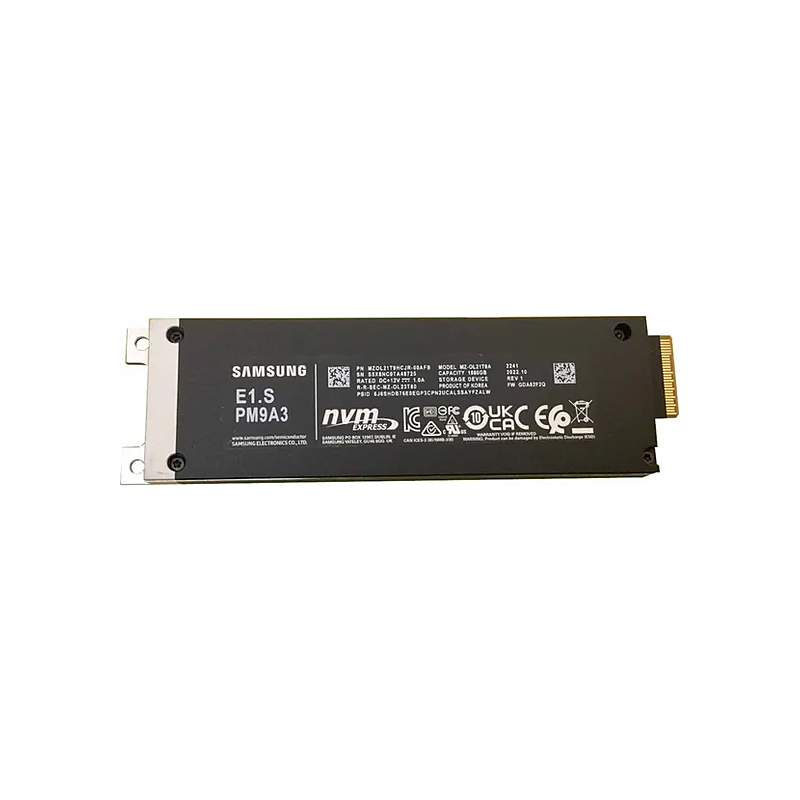
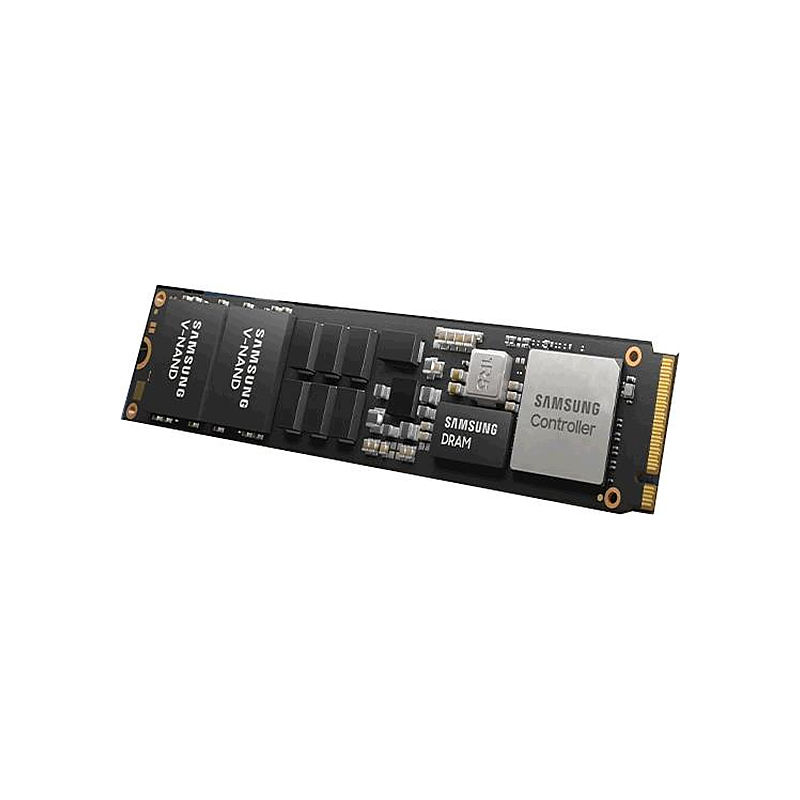
Samsung PM9A3 7.68TB E1.S NVMe SSD (MZCL27T6HBLA)
7.68 TB E1.S 1T NVMe SSD, PCIe 4.0, ordering codes MZCL27T6HBLA-00AMV / MZTL27T6HBLA-00A07
- Part Number
- MZCL27T6HBLA
- Brand
- Samsung
- Category
- Enterprise & Data Center SSD
- Accepted Payments
- T/T Bank Transfer PayPal Western Union
Technical Specifications
| Capacity | 7.68 TB |
|---|---|
| Interface | NVMe |
| Form Factor | E1.S |
| PCIe Version | PCIe 4.0 |
| NAND Type | TLC |
| Endurance (DWPD) | 1 |
| TBW | 14,016 TB |
| Sequential Read | 6,800 MB/s |
| Sequential Write | 4,000 MB/s |
| Random Read IOPS | 1,000K IOPS |
| Random Write IOPS | 190K IOPS |
| Power | 11 W |
| DRAM Cache | Yes |
| Power Loss Protection | Yes |
| Encryption | AES-XTS 256 |
| Condition | New · Used |
Frequently Asked Questions
Samsung PM9A3 7.68 TB E1.S, single-width 1T carrier at 9.5 mm, catalogue code MZCL27T6HBLA, orderable as MZCL27T6HBLA-00AMV or MZTL27T6HBLA-00A07. 6,800 MB/s sequential read and 4,000 MB/s write on PCIe 4.0 x4, 1,000K random read and 190K random write IOPS, 14,016 TBW at 1 DWPD. 128-layer TLC V-NAND, capacitor-backed PLP, AES 256-bit full disk encryption, 11 W active read and 13.5 W active write.
At 7.68 TB the E1.S carrier stops being a compromise. Up to 3.84 TB the smaller shell costs a few percent of write bandwidth against the 2.5-inch drive of the same capacity; here the two ratings sit inside a hundred megabytes of each other on sequential and within ten percent on random, which is closer than two spec sheets usually manage. What changes at this capacity is not the drive but the arithmetic of a shelf: thirty-two of these are 246 TB in one rack unit.
Technical specifications
| Product family | Samsung PM9A3 (PCIe 4.0 data centre NVMe SSD, 1 DWPD) |
|---|---|
| PN | MZCL27T6HBLA (catalogue code) |
| Ordering codes | MZCL27T6HBLA-00AMV / MZTL27T6HBLA-00A07 |
| Capacity | 7.68 TB (unformatted; 1 GB = 1 billion bytes, formatted capacity is less) |
| Form factor | E1.S, 1T single width, 9.5 mm, EDSFF; 33.75 × 118.75 × 9.50 mm |
| Weight | About 80 g |
| Interface | PCIe 4.0 x4, NVMe 1.4, EDSFF E1.S connector, 12 V rail |
| NAND | Samsung V6 (128-layer) V-NAND TLC, Samsung Elpis controller |
| Sequential read | 6,800 MB/s (128 KB transfer size, queue depth 32) |
| Sequential write | 4,000 MB/s |
| Random 4K read | 1,000K IOPS (queue depth 32) |
| Random 4K write | 190K IOPS (queue depth 32) |
| Endurance (TBW) | 14,016 TB |
| Endurance (DWPD) | 1 drive write per day for five years |
| Power | 11 W active read, 13.5 W active write, about 3.5 W idle |
| Power-loss protection | Yes, capacitor-backed, with end-to-end data path protection |
| Encryption | AES 256-bit full disk encryption, TCG Opal 2.0 |
| MTBF / UBER | 2.0 million hours / 1 sector per 1017 bits read |
| Environment | 0 to 70 °C operating, 5 to 95% non-condensing humidity |
| Features | TRIM, garbage collection, S.M.A.R.T., secure boot, NVMe-MI over SMBus, static and dynamic wear levelling |
Seven and a half terabytes in four drive designs
| Model | Capacity | Carrier | Seq read / write | Random 4 KB | TBW | Power |
|---|---|---|---|---|---|---|
| PM9A3 | 7.68 TB | U.2 7 mm | 6,700 / 4,000 MB/s | 1,100K / 200K | 14,016 TB | 11 W |
| PM9A3 | 7.68 TB | E1.S 1T | 6,800 / 4,000 MB/s | 1,000K / 190K | 14,016 TB | 11 W |
| PM1753 | 7.68 TB | U.2 15 mm | 14,000 / 10,000 MB/s | 3,200K / 580K | 14,016 TB | 18.7 W |
| PM9D3a | 7.68 TB | U.2 15 mm | 12,000 / 7,000 MB/s | 1,700K / 400K | 14,016 TB | 13.5 W |
| PM9A3 | 3.84 TB | E1.S 1T | 6,800 / 4,000 MB/s | 1,000K / 180K | 7,008 TB | 11 W |
Read the two PM9A3 rows against each other first. The 2.5-inch drive is rated 6,700 and 4,000 with 1,100K and 200K random; the E1.S carrier is rated 6,800 and 4,000 with 1,000K and 190K. Sequential is level, random read gives up nine percent, random write gives up five, and the endurance is identical at 14,016 TB because endurance at one drive write a day is arithmetic.
Those small gaps are worth treating as rating noise rather than as a thermal hierarchy. Two spec feeds for the same silicon disagree by more than this, and the two carriers share the controller, the NAND and the firmware. The honest summary is that at this capacity the carrier is a mechanical choice: buy whichever one the chassis takes and stop comparing the numbers.
The contrast is the Gen5 rows underneath. PM1753 at the same capacity is 14,000 and 10,000 with 3,200K and 580K, and PM9D3a is 12,000 and 7,000. Nothing about EDSFF is holding this drive back; the link generation is, and no carrier change fixes that.
What 246 TB in one rack unit changes
Thirty-two E1.S positions across a 1U front panel hold 246 TB and draw 352 W on active read, which is 1.43 W per terabyte. A 2.5-inch shelf in the same rack unit takes eight to twelve drives, so 61 to 92 TB at 88 to 132 W, also 1.43 W per terabyte. Density improves by a factor of about 2.7 to 4 and the power per terabyte does not move at all, because both shelves are filling slots with the same drive.
The figure that does move is devices per unit of capacity. Thirty-two independent 7.68 TB devices give 32 million random read IOPS from one rack unit, and a rebuild after a failure touches 7.68 TB rather than the 15.36 TB or 30.72 TB that a twelve-bay shelf would be running at that density. Twenty-four minutes is what 7.68 TB takes at the rated 4,000 MB/s write, so recovery stays inside a maintenance window instead of becoming an overnight event.
There is a second-order effect worth planning for: at 7.68 TB per slot the array has fewer members for the same capacity than a shelf of 1.92 TB parts, so a single failure costs a larger share of the set. EDSFF at this capacity is a density decision, not a redundancy decision, and the redundancy level should be chosen on the rebuild time rather than on the bay count.
The carrier that stops at 3.84 TB
M.2 is the one carrier in this family that cannot reach this capacity at all. The module tops out at 3.84 TB with 5,500 MB/s read and 2,000 MB/s write, because a 22 mm wide module on a 3.3 V slot has an 8 W budget and no metal to spread heat into. E1.S has a 12 V rail and a 9.5 mm shell, so it scales to 7.68 TB without giving up the write column.
That is the practical answer to the question of whether to fill an M.2 slot or an E1.S bay. If the workload needs more than 3.84 TB per device, or needs write bandwidth rather than read bandwidth, the module cannot be used and the conversation is over. If the job is a boot device or a small read cache inside a server with no front-bay NVMe, the module is the only thing that fits and its limits do not matter.
Why Samsung's published E1.S table stops at 3.84 TB
The E1.S column on Samsung's OCP marketplace listing gives the capacity range as 1.92 and 3.84 TB, and quotes 4,000 MB/s write with 180K random write as the carrier maxima. This drive is 7.68 TB and rates 190K, which looks like a contradiction until the dates are compared: that listing is a 2021 envelope, and the 7.68 TB E1.S part number appears in current OEM catalogues from CDW, SHI and Zoro with the same 14,016 TB endurance and the same 11 W and 13.5 W power.
Two consequences follow for anyone comparing quotes. A listing that quotes 180K random write for this capacity has copied the 3.84 TB row, and a listing that quotes 200K has copied the 2.5-inch drive at 7.68 TB. Both are close enough to pass unnoticed and both are the wrong row. The 14,016 TB endurance figure is the one number that cannot be faked, because 7.68 × 1,825 is arithmetic.
What 14,016 TBW buys
One drive write a day for five years on 7.68 TB is 7.68 TB of host writes a day, or 89 MB/s averaged. At the rated 4,000 MB/s a full fill takes thirty-two minutes, so the daily budget is roughly one and a half complete rewrites. At the random write ceiling of 190K IOPS the drive absorbs 778 MB/s, and 14,016 TB at that rate lasts about two hundred days.
Across a full shelf the aggregate is 448 PB of endurance against 246 TB of capacity. That ratio is the same on every 1 DWPD drive ever made, which is the argument for reading durability as a fixed five-year statement rather than as a differentiator: at one drive write a day every shelf lasts exactly as long as its warranty, no matter how many bays it has, and a workload that genuinely needs more should be buying a higher DWPD part rather than more drives.
Ordering codes: two prefixes, one carrier
| Code | Type | Carrier | Condition | Quote |
|---|---|---|---|---|
| MZCL27T6HBLA | Catalogue code | E1.S 1T, 9.5 mm | New / used | Enquire |
| MZCL27T6HBLA-00AMV | Ordering code | E1.S 1T, 9.5 mm | New / used | Enquire |
| MZTL27T6HBLA-00A07 | Ordering code | E1.S 1T, 9.5 mm | New / used | Enquire |
Both prefixes are E1.S on this capacity, which is the part that catches buyers out: MZTL is what distributor catalogues carry, MZCL is what arrives through OEM channels, and neither is a 2.5-inch drive. The 2.5-inch part at 7.68 TB is MZQL27T6HBLA, one letter away in the third position, and it will not enter an E1.S caddy. The capacity segment in the middle of the string is the same on all three; only the carrier character and the build suffix change.
- Third character is the carrier. Q is 2.5-inch U.2, 1 is M.2, T and C are E1.S. Check that character on the purchase order and again on the packing list.
- Thickness in writing. E1.S is made in more than one height; this part is 9.5 mm, and a 1T caddy built for a thinner module will not seat it.
- 14,016 TBW. A lower figure means a drive from a different endurance class or a different capacity row copied into the datasheet.
- Connector wear. EDSFF contacts have a finite insertion rating, so a pull that has been reseated repeatedly deserves a visual inspection rather than a functional test alone.
- SMART log against the serial. Dense shelves are inventoried by the BMC, so the drive's own history is the record that survives a shelf swap.
Warranty, lead time and purchasing
Cover runs one year from dispatch on sealed and pulled drives alike, registered to the serial rather than to the invoice so a change of owner does not end it. Pulls are erased to a verifiable standard, graded, photographed and shipped with their SMART log archived against the serial. Warehouse stock leaves in three to seven working days and tracking is issued at dispatch. The minimum order is two pieces, other capacities and carriers in this family combine on one order, and a quotation is returned the same working day once part number, condition and quantity are confirmed.
Get Pricing For This Part
Tell us who you are — we reply within one working day with a firm quote, stock status and lead time. Volume discounts available.
Related Products
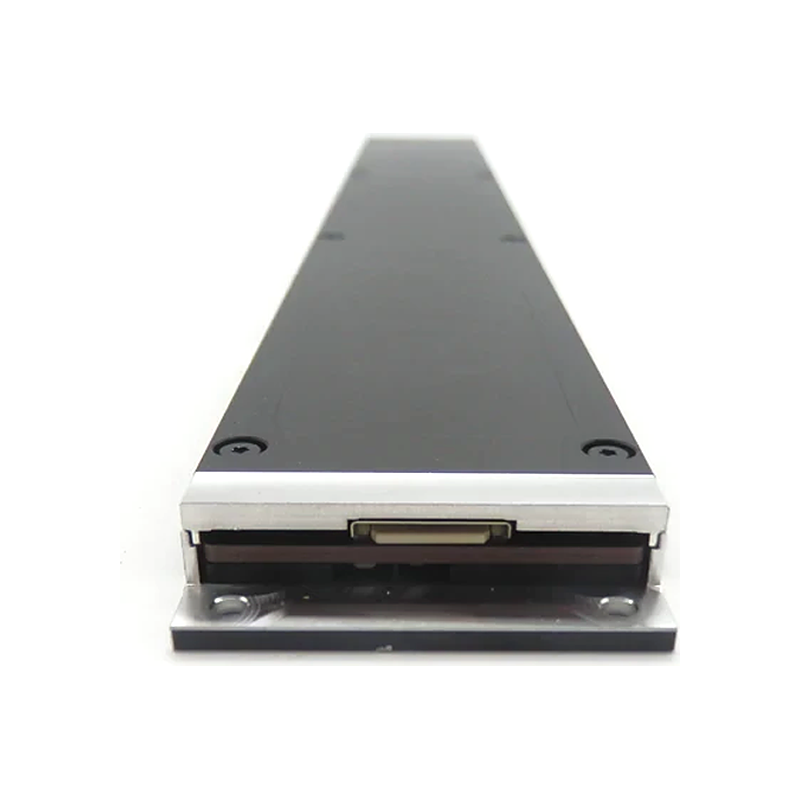
15.36 TB E1.L 1U long ruler NVMe SSD, PCIe 4.0, ordering code MZEL215THBLA-00AMV
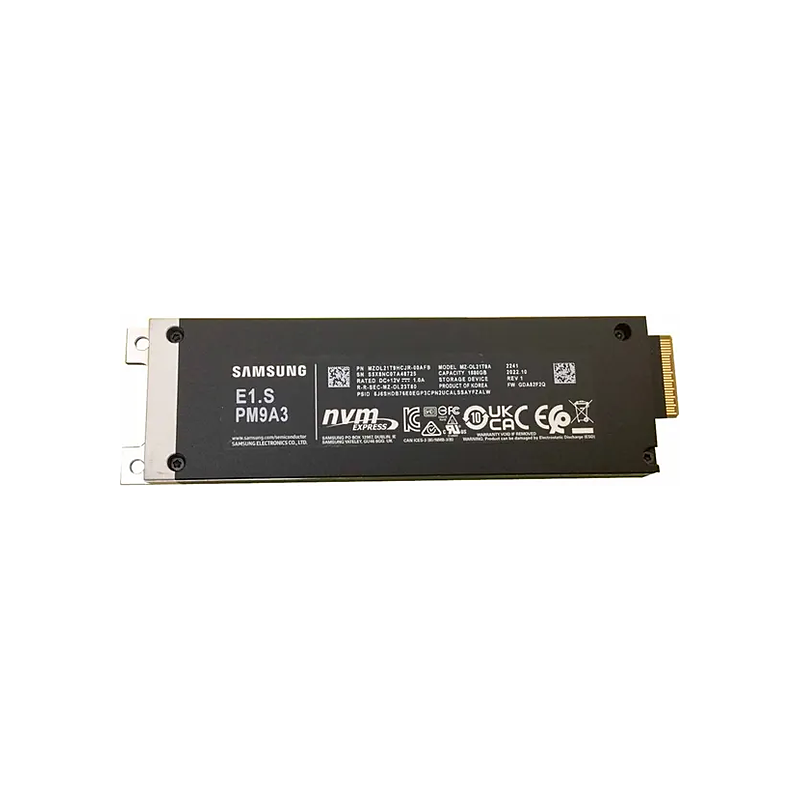
3.84 TB E1.S 1T NVMe SSD, PCIe 4.0, ordering codes MZCL23T8HCLS-00AMV / MZTL23T8HCLS-00A07
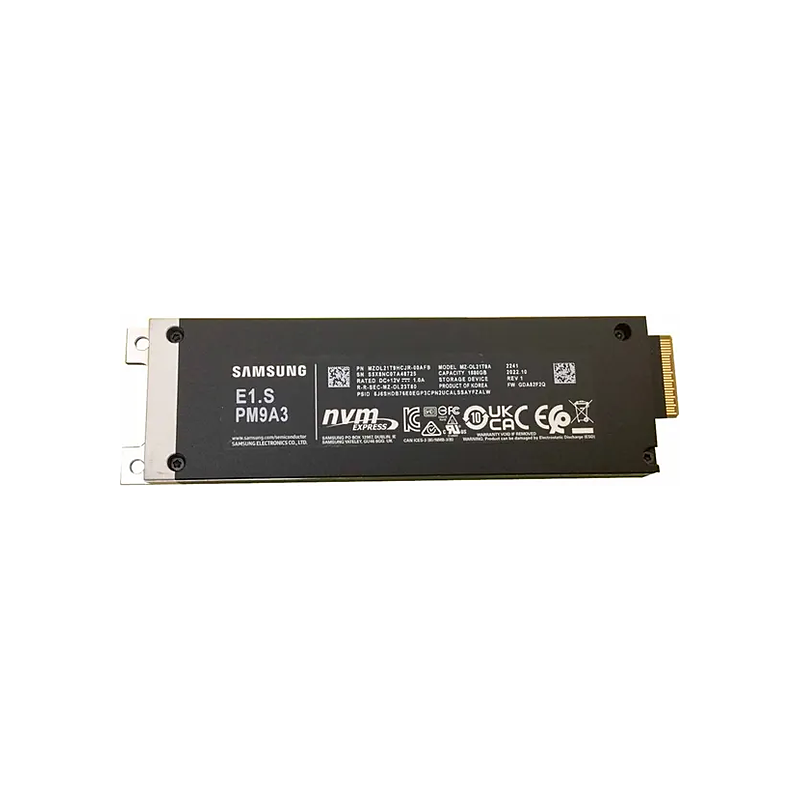
1.92 TB E1.S 1T (9.5 mm) NVMe SSD, PCIe 4.0, ordering code MZCL21T9HCJR-00AMV
3.84 TB M.2 22110 NVMe SSD, PCIe 4.0, ordering codes MZ1L23T8HBLA-00A07 / -00B7C