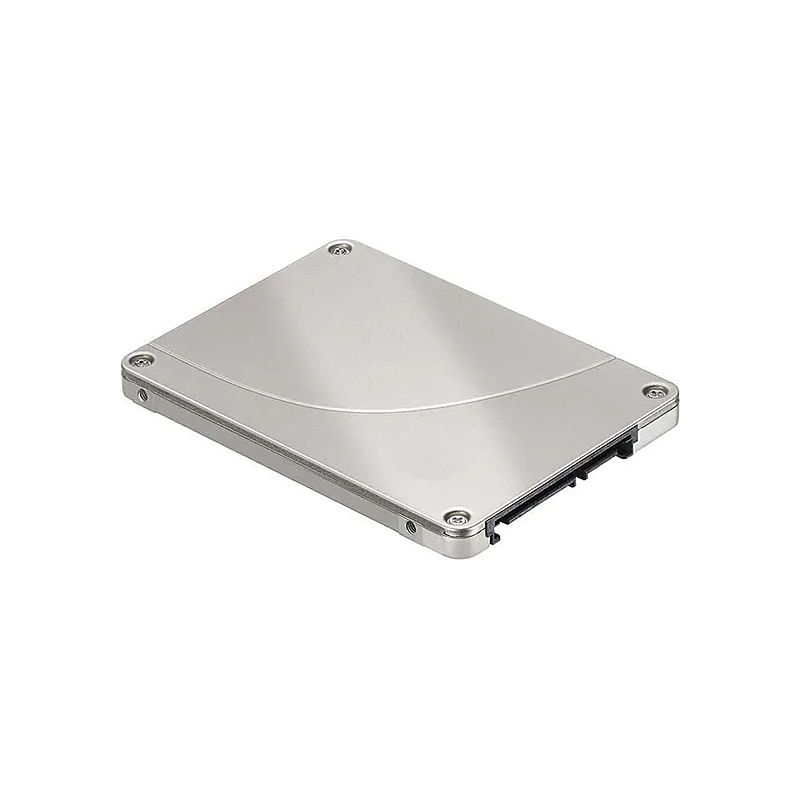
Micron M510DC 240GB SATA SSD (MTFDDAK240MBP)
240 GB 2.5-inch SATA read-intensive SSD, ordering code MTFDDAK240MBP-1AN1ZABYY
- Part Number
- MTFDDAK240MBP
- Brand
- Micron
- Category
- Enterprise & Data Center SSD
- Accepted Payments
- T/T Bank Transfer PayPal Western Union
Technical Specifications
| Capacity | 240 GB |
|---|---|
| Interface | SATA |
| Form Factor | 2.5-inch 7mm |
| PCIe Version | Not applicable |
| NAND Type | MLC |
| Endurance (DWPD) | 2.1 |
| TBW | 920 TB |
| Sequential Read | 420 MB/s |
| Sequential Write | 290 MB/s |
| Random Read IOPS | 63K IOPS |
| Random Write IOPS | 18K IOPS |
| Power | 5 W |
| DRAM Cache | Yes |
| Power Loss Protection | Yes |
| Encryption | TCG Enterprise |
| Condition | New · Used |
Frequently Asked Questions
Micron M510DC 240 GB, 2.5-inch 7 mm SATA, catalogue code MTFDDAK240MBP, ordering code MTFDDAK240MBP-1AN1ZABYY. 420 MB/s sequential read, 290 MB/s sequential write, 63K random read and 18K random write IOPS at 4 KB, 920 TBW on Micron 16nm MLC NAND, with a data-protection capacitor, TCG Enterprise self-encryption and end-to-end data path protection. Stocked new or as tested pulls with a 1-year warranty from us.
This is the capacity where the M510DC range stops being a compromise. At 120 GB the drive is capped at 170 MB/s sequential write by the number of NAND die it can write across in parallel; at 240 GB that figure rises 70% to 290 MB/s, random write rises 50% to 18K, and the write budget doubles to 920 TBW — while the read side, 420 MB/s and 63K IOPS, does not move at all. Going one step further to 480 GB buys only another 31% of sequential write for twice the capacity again, which is why this is the point where the family's speed and its bytes come into balance.
Why 240 GB is the balanced capacity in this range
The six capacities share one read specification and diverge on write. Sequential write steps 170, 290, 380 and 380 MB/s across 120, 240, 480 and 960 GB; random write steps 12K, 18K, 23K and 10.5K; endurance steps 460, 920, 1,850 and 1,140 TB. The first step buys the largest gain in write throughput the range offers, the second buys another third of it, and the third buys endurance and loses random write, because the 960 GB part is rated at one drive fill a day rather than two.
That makes 240 GB the capacity with no obvious weakness. It is fast enough that a boot volume, a hypervisor system partition or an appliance database will not queue behind it, it carries 920 TB of write budget, and it does all of that on 1.2 W at idle. The 120 GB member is cheaper per unit but capped at 170 MB/s; the 480 GB member carries twice this drive's budget for twice the bytes, and the 600 GB member doubles that again to 3,800 TB for 25% more capacity than the 480. Buyers who do not already know their capacity requirement usually land here.
One property of the range is worth repeating at this capacity because it is unusual. The endurance rating is not a straight line through the capacities: 480 GB carries 1,850 TBW, which is more than double this drive's 920 TB, but 960 GB carries only 1,140 TB, less than 480 GB despite twice the bytes. Micron rates 120, 240 and 480 GB at two drive fills a day and 960 GB at one. So a buyer comparing by capacity alone will guess the endurance column wrong in both directions.
Technical specifications
| Product family | Micron M510DC (SATA NAND Flash SSD, read-intensive data centre) |
|---|---|
| PN | MTFDDAK240MBP (catalogue code) |
| Ordering code | MTFDDAK240MBP-1AN1ZABYY |
| Capacity | 240 GB (unformatted; 1 GB = 1 billion bytes, formatted capacity is less) |
| Form factor | 2.5-inch, 7 mm (69.85 × 100.45 × 7.00 mm) |
| Interface | SATA 6 Gb/s, ATA-8 ACS2, hot-plug capable, NCQ to depth 32 |
| NAND | Micron 16nm MLC NAND |
| Sequential read / write | 420 MB/s / 290 MB/s (128 KB, steady state) |
| Random 4 KB (QD32) | 63K IOPS read / 18K IOPS write |
| Latency | 0.50 ms read / 2.0 ms write (typical) |
| Endurance | 920 TBW — 2.1 DWPD over five years, which Micron states as 2 drive fills a day |
| TBW basis | 55 °C case temperature, drive 100% full, 100% random aligned 4 KB writes |
| Power | Idle 1.2 W; sequential write max 5 W; sequential read max under 5 W; active average 1.5 W |
| Power-loss protection | Yes — data-protection capacitor, with capacitor monitoring reported by firmware |
| Data security | TCG Enterprise 1.0 SED (self-encrypting drive); AES encryption engine |
| DRAM cache | Yes — on-board DDR3 DRAM |
| Features | XPERT feature set: data path protection, adaptive thermal monitoring, power-loss protection; static and dynamic wear levelling; end-to-end data protection |
| Reliability | MTTF 2.0 million device hours; UBER under 1 sector per 1016 bits read |
| Environmental | Operating 0 °C to 70 °C (case); non-operating −40 °C to 85 °C; humidity 5–95% non-condensing; operating shock 1500G/0.5 ms; vibration 10–500 Hz at 3.1G |
Ordering codes: one digit apart from the 120 GB
| Code | Type | Condition | Quote |
|---|---|---|---|
| MTFDDAK240MBP | Catalogue code | New / used | Enquire |
| MTFDDAK240MBP-1AN1ZABYY | Ordering code | New / used | Enquire |
The part number decodes by position. MTFDDAK is the prefix Micron uses for its SATA solid-state drives in this form factor, 240 is the capacity in gigabytes, MBP is the family and form-factor block, and everything after the hyphen is the configuration string Micron assigns at order entry. Micron does not publish a field-by-field decode for that suffix, so we quote it in full rather than guess at its parts.
Between this drive and the 120 GB member the only difference in the model number is the capacity block, and the configuration suffix is identical on both at -1AN1ZABYY. That makes the capacity block the single field that separates them, and it is worth checking twice at goods-in: a 120 GB drive picked against a 240 GB line is the same size, the same weight, the same connector and the same firmware line, and it will train and run perfectly while halving the space the shelf was built for.
What 920 TBW means at 240 GB
920 TB over five years is 504 GB of writes every day, or two full fills of the drive — the same daily ratio as the 120 GB member, because Micron rates both at two fills a day. Written flat out at 290 MB/s the rating would last about 37 days, which is longer than the smaller capacity manages at its 170 MB/s and still far shorter than the five years the rating covers. The figure assumes a 55 °C case, a drive held 100% full and 100% random aligned 4 KB writes, so it is a harsher basis than any sequential workload.
Against the read-intensive Samsung parts at this capacity the write budget is the reason to look at this drive. The PM893 at 240 GB is rated 1.0 drive fill a day and 438 TBW; this drive carries 920 TB, or 2.1 times as much. The PM883 and PM863a at 240 GB carry 341 TB each, which is 2.7 times less than this drive. What the Samsung parts have instead is throughput: 550/380 and 98K/15K on the PM893 against 420/290 and 63K/18K here.
So the trade at this capacity is not endurance against price, it is endurance against throughput. If the workload rewrites the volume daily but never saturates the link — container images, package caches, an appliance's working set — the extra budget is worth more than the extra 60 MB/s. If the workload is a read cache that must serve at line rate, the Samsung part is the better purchase and the endurance is irrelevant.
Where 240 GB beats 120 GB in practice
Three roles need the extra room rather than the extra speed. A boot pair that keeps its logs and swap on the same device, which is what most single-disk appliance images do; a hypervisor system partition with room for a local scratch area; and a small application database whose working set outgrows 120 GB but not 240 GB. In each case the 120 GB member would fit the operating system and nothing else, and the operator would end up adding a second drive or a network share.
The write-side gain matters in the first two. A boot pair that also carries logs sees continuous small writes, and 290 MB/s with 18K random write absorbs them without a queue forming; at 170 MB/s and 12K the same workload sits close enough to the ceiling that a log rotation or a package install becomes visible in latency. The difference is not about peak throughput, it is about how much headroom is left when the drive is also doing its day job.
Above this capacity the argument changes shape. 480 GB doubles the bytes and the budget again, but adds only 31% sequential write and 28% random write, and the power envelope rises from 5 W to 6 W. Unless the deployment genuinely needs 480 GB of local space, the marginal money is better spent on a second 240 GB drive for redundancy than on the larger single device.
How the M510DC 240 GB compares with the Samsung 240 GB parts
| Model | Capacity | Sequential read / write | Random 4K read / write | Endurance | Class |
|---|---|---|---|---|---|
| Micron M510DC 240 GB | 240 GB | 420 / 290 MB/s | 63K / 18K IOPS | 920 TB (2.1 DWPD) | Read-intensive, 16nm MLC |
| Samsung PM893 240 GB | 240 GB | 550 / 380 MB/s | 98K / 15K IOPS | 438 TB (1.0 DWPD) | Read-intensive, TLC |
| Samsung PM883 240 GB | 240 GB | 550 / 320 MB/s | 98K / 14K IOPS | 341 TB (0.78 DWPD) | Read-intensive, TLC |
| Samsung PM863a 240 GB | 240 GB | 330 / 300 MB/s | 86K / 9K IOPS | 341 TB (0.78 DWPD) | Read-intensive, TLC |
| Samsung SM863a 240 GB | 240 GB | 410 / 450 MB/s | 90K / 10K IOPS | 1,540 TB (3.5 DWPD) | Mixed-use, MLC |
| Samsung SM883 240 GB | 240 GB | 540 / 480 MB/s | 97K / 22K IOPS | 1,314 TB (3.0 DWPD) | Mixed-use, MLC |
| Micron M510DC 120 GB | 120 GB | 420 / 170 MB/s | 63K / 12K IOPS | 460 TB (2.1 DWPD) | Same family, half capacity |
Read the endurance column first and this drive sits third of seven, behind the two mixed-use MLC parts and ahead of all three Samsung read-intensive parts by a factor of 2.1 to 2.7. Read the throughput columns next and the order reverses: every other row in that table writes sequentially faster, from 300 MB/s on the PM863a up to 480 on the SM883, and every one of them serves more random reads, 86K to 98K against this drive's 63K. Random write is the one performance line where this drive holds the middle, 18K against 9K to 22K.
The last row is the same family at half the bytes, and it is included because the step between it and this drive is the clearest decision in the range: double the bytes, double the budget and gain 70% sequential write, or keep the smaller device and accept 170 MB/s. Both carry the same configuration suffix and both are rated at two drive fills a day, so the model number is the only thing that separates them on a pallet.
Against the newer PRO-tier Micron part at this capacity, the 5100 PRO at 240 GB, the trade runs the other way: that drive reads at 540 MB/s with 78K random read and 26K random write at 4.5 W, all ahead of this one, while writing sequentially at 250 MB/s against 290 here and carrying 650 TBW against 920 — 71% of the write budget. Faster response and lower power on one side, more endurance and faster streaming on the other.
How each drive is tested before it ships
- Label read first and in full: M510DC 240GB with MTFDDAK240MBP, the capacity block checked against 120, 480 and 960, and the configuration suffix recorded against the order.
- SMART read before anything else — power-on hours, total LBAs written, media wear, reallocated sectors, program/erase counts and grown defect count — kept on file for the individual drive shipped.
- Full-surface read scan across the whole 240 GB, then the drive's extended self-test run to completion rather than a sample.
- Sequential read and write verified near 420 / 290 MB/s on a native SATA 6 Gb/s port, measured in steady state rather than on a fresh drive's first pass.
- Random 4 KB measured at queue depth 32 in both directions; 18K write is the rated figure and the first one a worn MLC drive loses.
- Power-loss protection checked at the firmware level — capacitor health flag and the SMART attributes that report it — because a degraded capacitor is invisible in a benchmark.
- TCG Enterprise state queried, so a drive that arrives locked to a previous owner's keys is unlocked or rejected before it is listed rather than after it ships.
- Secure erase and sanitize exercised, drive returned to a clean state, then final inspection, anti-static bag and foam packing.
Warranty, lead time and purchasing
Every drive carries a 1-year warranty from us against defects in workmanship and function. Verified faulty units are replaced or refunded and we cover return shipping. Stock is held in both new and used condition; the condition you order is confirmed before dispatch, and used units are pull-tested rather than untested lots. Stock is held in our own warehouse and normally dispatches within three to seven working days, with tracking issued at dispatch.
This capacity is listed with a starting price rather than quoted, so the figure on the page is the entry point for a tested pull; new units and larger quantities are quoted per order, and the number moves with condition and batch. Send the quantity, the condition you need and the platform the drives are going into, and you will get a quote with lead time the same working day. If the host uses TCG Enterprise key management, say so when you enquire and we will confirm the drive's security state before it ships.
Get Pricing For This Part
Tell us who you are — we reply within one working day with a firm quote, stock status and lead time. Volume discounts available.
Related Products
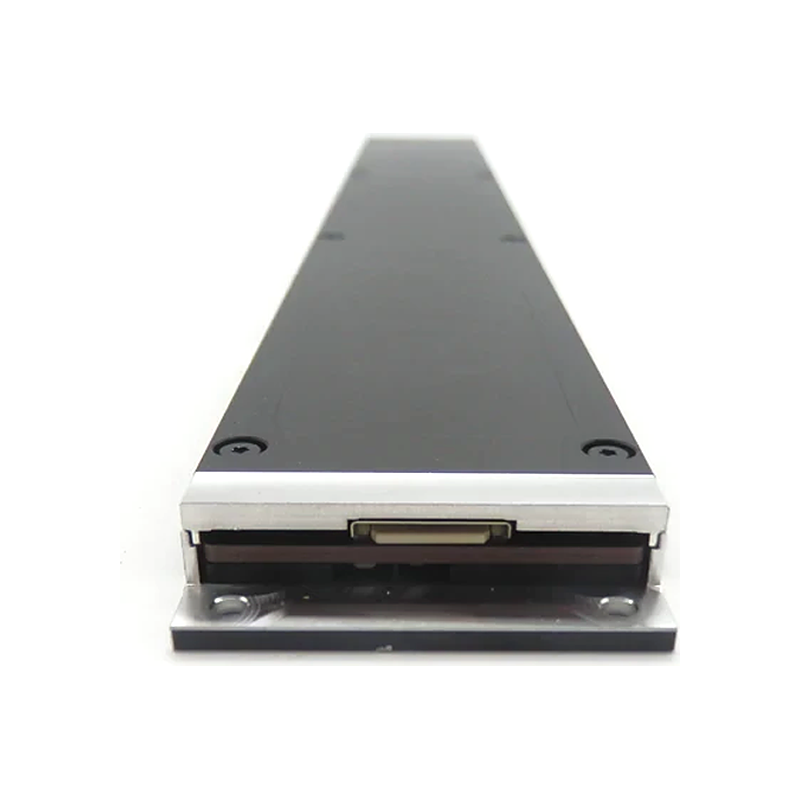
15.36 TB E1.L 1U long ruler NVMe SSD, PCIe 4.0, ordering code MZEL215THBLA-00AMV
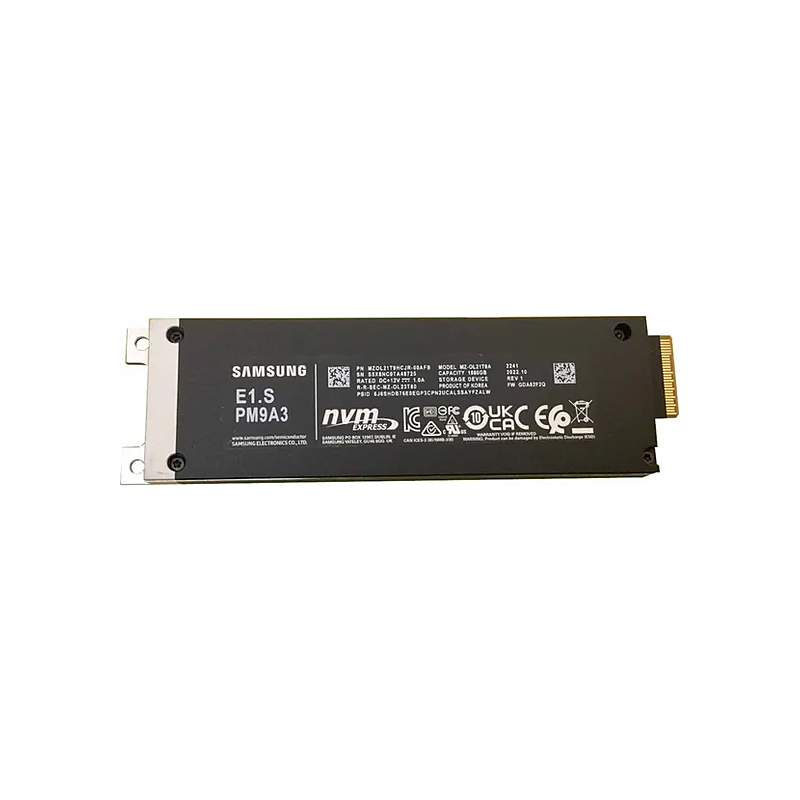
7.68 TB E1.S 1T NVMe SSD, PCIe 4.0, ordering codes MZCL27T6HBLA-00AMV / MZTL27T6HBLA-00A07
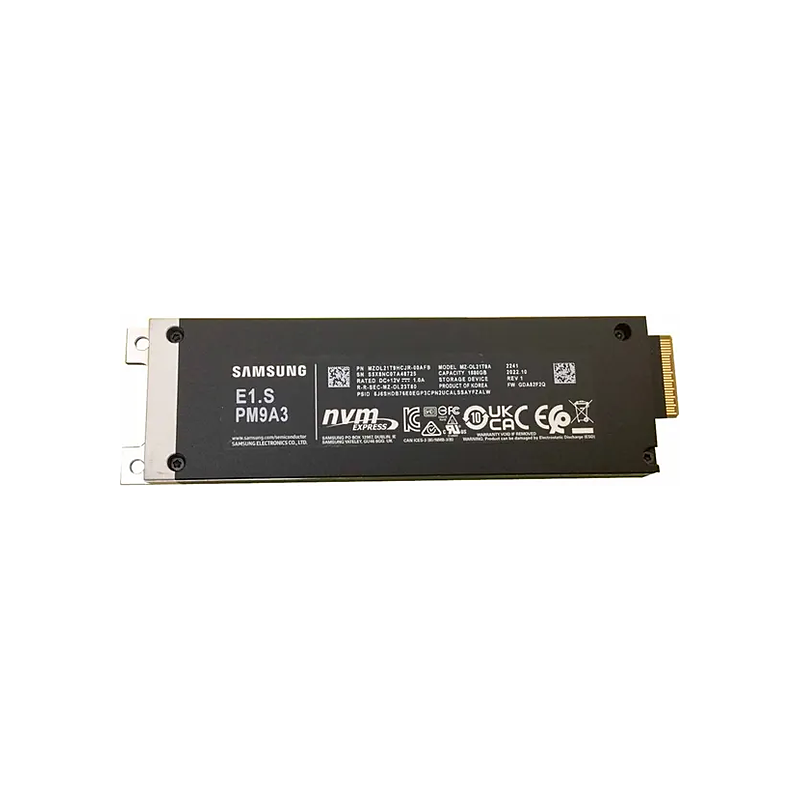
3.84 TB E1.S 1T NVMe SSD, PCIe 4.0, ordering codes MZCL23T8HCLS-00AMV / MZTL23T8HCLS-00A07
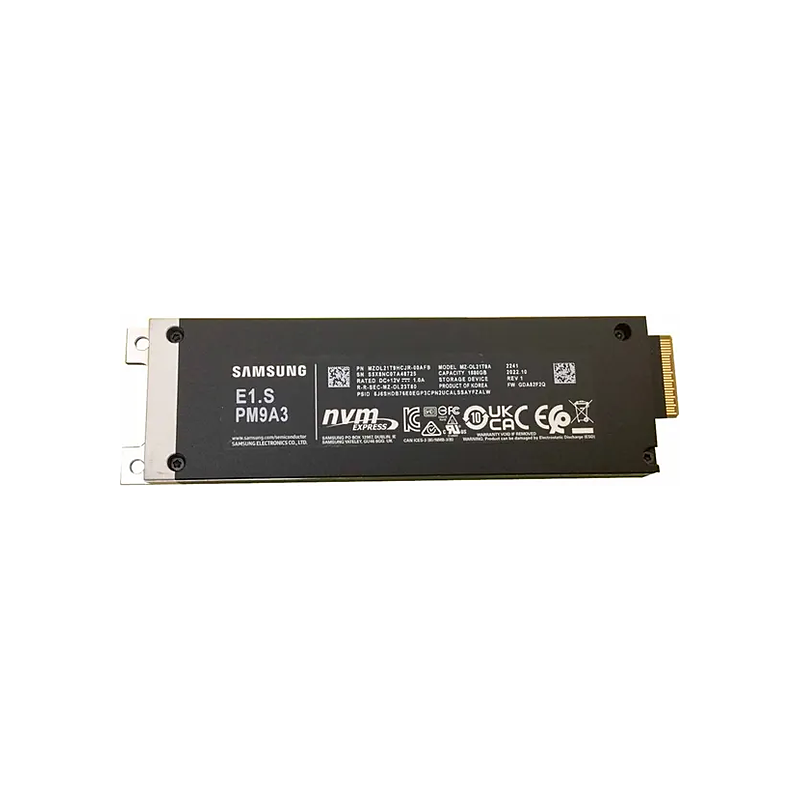
1.92 TB E1.S 1T (9.5 mm) NVMe SSD, PCIe 4.0, ordering code MZCL21T9HCJR-00AMV