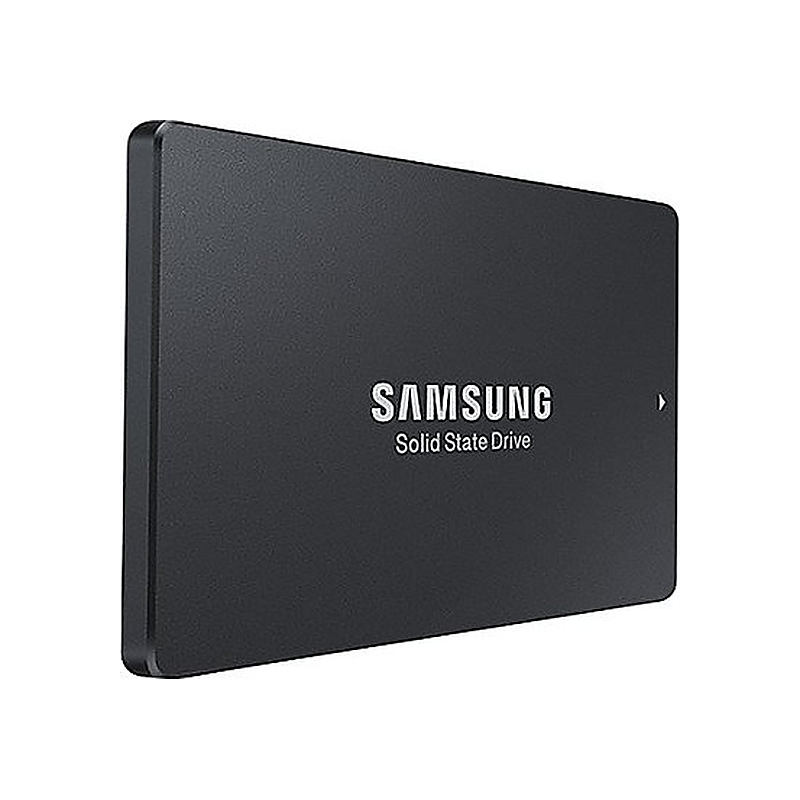
Samsung SM863a 1.92TB SATA SSD (MZ7KM1T9HMJP)
1.92 TB 2.5-inch SATA mixed-use SSD, ordering code MZ7KM1T9HMJP-00005
- Part Number
- MZ7KM1T9HMJP
- Brand
- Samsung
- Category
- Enterprise & Data Center SSD
- Accepted Payments
- T/T Bank Transfer PayPal Western Union
Technical Specifications
| Capacity | 1.92 TB |
|---|---|
| Interface | SATA |
| Form Factor | 2.5-inch 7mm |
| PCIe Version | Not applicable |
| NAND Type | TLC |
| Endurance (DWPD) | 3.5 |
| TBW | 12,320 TB |
| Sequential Read | 510 MB/s |
| Sequential Write | 485 MB/s |
| Random Read IOPS | 95K IOPS |
| Random Write IOPS | 28K IOPS |
| Power | 2.5 W |
| DRAM Cache | Yes |
| Power Loss Protection | Yes |
| Encryption | SED |
| Condition | New · Used |
Frequently Asked Questions
Samsung SM863a 1.92 TB, 2.5-inch 7 mm SATA, catalogue code MZ7KM1T9HMJP, ordering code MZ7KM1T9HMJP-00005. The top of Samsung's 2016 mixed-use SATA range: 510 MB/s sequential read, 485 MB/s sequential write, 95K random read and 28K random write IOPS, and 12,320 TBW — a 3.5 drive-writes-per-day rating over five years, or twelve petabytes of warranted writes.
Nothing in this range is faster than this drive and nothing sits above it. The capacity buys two things and only two: the highest random-write figure the family reaches, 28K IOPS at queue depth 32, and a write budget twice that of the 960 GB member. Sequential throughput has been fixed at 510/485 MB/s since 480 GB and the drive maintains 2.5 W read / 3 W write throughout, so there is no efficiency penalty for going to the top — the same watts carry twice the bytes.
Mechanically it is the familiar 2016 design at its most over-provisioned: 48-layer V-NAND TLC behind a Samsung Mercury controller with a DRAM write cache, end-to-end data protection, an AES 256-bit engine, 2 million hours MTBF, and a 7 mm, 60 g case. Stock is held in both conditions, and quotes are issued per order rather than listed for the reasons at the foot of this page.
The top of the range buys write budget, not speed
Line the four capacities up and the last step is easy to read: everything from 480 GB up shares the 510/485 MB/s rating, and random write climbs 19K, 25K, 28K across 480 GB, 960 GB and this drive. So the step from 960 GB here is a 12% gain in random write and a doubling of endurance. That is not a performance upgrade; it is a budget upgrade.
Which is the right way to buy it. A drive of this size is normally not one of a pair of small volumes but the whole write tier of a node: a datastore that hosts the VMs which actually do work, a database with its log on the same device, a backup staging area that receives a nightly stream and then serves it back out. Those workloads do not need more than 510 MB/s — SATA will not give them more — but they do consume writes continuously, and 12,320 TB is what makes a five-year service life plausible instead of optimistic.
There is also a quieter benefit at this capacity: fewer devices for the same usable space. Two of these replace four 960 GB drives in the same chassis, which halves the number of write streams the array has to schedule, halves the number of firmware revisions to track, and removes two spindles from the rebuild arithmetic. Where a shelf has free bays that is merely convenient; where it does not, it is the whole point.
Technical specifications
| Product family | Samsung SM863a (V-NAND SSD, data centre / mixed-use) |
|---|---|
| PN | MZ7KM1T9HMJP (catalogue code) |
| Ordering code | MZ7KM1T9HMJP-00005 |
| Capacity | 1.92 TB (1,920 GB decimal) |
| Form factor | 2.5-inch, 7.0 mm (100.20 × 69.85 × 6.8 mm, max 60 g) |
| Interface | SATA 6 Gb/s, compatible with SATA 3 Gb/s and 1.5 Gb/s |
| Controller | Samsung Mercury, with DRAM write cache |
| NAND | Samsung V-NAND TLC (48-layer), with mixed-use over-provisioning |
| Sequential read / write | 510 MB/s / 485 MB/s (128 KB, QD32) |
| Random 4 KB (QD32) | 95K IOPS read / 28K IOPS write |
| Endurance | 12,320 TBW — 3.5 DWPD over a 5-year basis (Samsung's brochure quotes 3.6; the published TBW works out to 3.5) |
| Power | Idle 1.4 W; active 2.5 W read / 3 W write; supply 5 V ±5% |
| Power-loss protection | Yes — Samsung specifies write-cache protection for this generation; no hold-up time is published |
| Data security | AES 256-bit encryption engine; no TCG Opal |
| Features | TRIM, NCQ to depth 32, S.M.A.R.T., Dynamic Thermal Guard, end-to-end data protection |
| Reliability | MTBF 2.0 million hours; UBER 1 sector per 1017 bits read; operating 0 °C to 70 °C |
| Shock | 1,500 G at 0.5 ms, half sine wave |
| Status | End of life — Samsung has discontinued the SM863a generation |
Ordering codes we can supply at 1.92 TB
| Code | Type | Condition | Quote |
|---|---|---|---|
| MZ7KM1T9HMJP | Catalogue code | New / used | Enquire |
| MZ7KM1T9HMJP-00005 | Ordering code | New / used | Enquire |
Both strings describe the same 1.92 TB drive. MZ7KM1T9HMJP is the model name printed on the label and the one this catalogue and most asset registers index on; MZ7KM1T9HMJP-00005 is the ordering code a PO line and a warranty claim are written against. The suffix encodes packing type and customer code, so it does not change capacity, endurance or firmware behaviour.
12,320 TBW is 6.7 TB a day for five years
Spread across a five-year rating, twelve petabytes is 6.7 TB of writes every day for 1,825 days. It is the same 3.5 drive-writes-per-day as every other capacity in the family — the percentage never changes — but at 1.92 TB that percentage is a number a real workload can be measured against rather than a theoretical allowance.
Consider what 6.7 TB a day covers. A database writing a heavy transaction log plus its data files, a virtualisation host with thirty busy VMs, a nightly backup stream of 3 TB that is then read back for restores, a video or media pipeline that ingests and rewrites proxies — each of those fits comfortably, and two of them together still leave headroom. Put the same set on the read-intensive PM863a at the same capacity, rated 2,733 TB at 0.78 drive-writes-per-day, and it is 4.5× over budget on day one.
The ceiling has not moved, only the distance to it. Sustained writing at 485 MB/s would consume 12,320 TB in about 293 days, so this is still not an archive or scratch medium, and any workload that streams continuously for months belongs on something designed for it. What the rating does is make a five-year life credible for a drive that carries a live, writing workload — which is the whole reason to pay for a mixed-use part at this size.
What is missing compared with a current-generation drive
Three things. Power-loss protection is specified but unquantified: Samsung's documentation states that this generation safeguards data in the write cache when power fails and adds end-to-end protection, but publishes no hold-up time — cover for a brief interruption, not a guaranteed flush window. On a drive that holds the write tier of a node, that means the controller cache or the UPS is part of the design. There is no TCG Opal, only a plain AES 256-bit engine. And the generation is out of production, which at this capacity is a spares question as much as a supply one.
The current-generation part at the same size is the PM893 at 1.92 TB: 550/520 MB/s, 98K/30K IOPS, a published PLP specification, TCG Opal 2.0, continued production, and 3.2 W instead of 3 W on the write side. It wins every column except one — 3,504 TBW at 1.0 DWPD against 12,320 TBW at 3.5, which is 28%. For a read-mostly volume the PM893 is simply the better drive. For a volume with a genuine write stream, three and a half times the budget is the reason this part still exists in the catalogue.
Where this drive is wrong: a new build, a read-mostly role, no RAID cache and no UPS, or a requirement for on-drive key management. Where it is right: an existing platform already qualified against MZ7KM1T9HMJP, a node whose write tier needs to last as long as the chassis, and a fleet where the alternative is buying read-intensive drives and replacing them on a two-year cycle.
How 1.92 TB compares with the SM863a range and the read-intensive twin
| Model | Capacity | Sequential read / write | Random read / write | Endurance | Class |
|---|---|---|---|---|---|
| SM863a 240 GB | 240 GB | 410 / 450 MB/s | 90K / 10K IOPS | 1,540 TB (3.5 DWPD) | Mixed-use |
| SM863a 480 GB | 480 GB | 510 / 485 MB/s | 95K / 19K IOPS | 3,080 TB (3.5 DWPD) | Mixed-use |
| SM863a 960 GB | 960 GB | 510 / 485 MB/s | 95K / 25K IOPS | 6,160 TB (3.5 DWPD) | Mixed-use |
| SM863a 1.92 TB | 1.92 TB | 510 / 485 MB/s | 95K / 28K IOPS | 12,320 TB (3.5 DWPD) | Mixed-use |
| PM863a 1.92 TB | 1.92 TB | 520 / 480 MB/s | 97K / 24K IOPS | 2,733 TB (0.78 DWPD) | Read-intensive |
Two patterns are worth reading off that table. Within the mixed-use family the columns are almost flat from 480 GB up — identical sequential, random write moving 19K to 28K — and only endurance doubles at each step, which is why the choice between these capacities is a capacity and lifespan decision rather than a performance one. Against the read-intensive drive of the same size, the sequential figures are within 2% of each other and the endurance is 4.5× apart — the same trade that defines every SM863a page in this catalogue.
How each drive is tested before it ships
- Label, capacity and model line checked against the order: SM863a 2.5" SATA SSD 1.92 TB with MZ7KM1T9HMJP, and the ordering suffix recorded on the invoice.
- SMART attribute dump before anything else — power-on hours, host writes, media wear, program/erase counts and grown defect count — retained for the individual drive shipped and quoted alongside the price, so a used unit is never sold blind.
- Full-surface read scan, then a SMART extended self-test run to completion rather than a sample; at 1.92 TB that is a long test and we do not shortcut it.
- Sequential read and write verified near 510 / 485 MB/s on a native SATA 6 Gb/s port, with random 4 KB measured at queue depth 32.
- Sustained write exercise long enough to exhaust the SLC cache, confirming the drive settles at its steady-state speed instead of falling off a cliff.
- Firmware revision read and recorded: units below the revision that fixes the UECC-flag defect on this generation are reflashed or rejected, not shipped.
- TRIM and secure-erase cycles exercised, then the drive returned to a clean state with over-provisioning intact.
- Final inspection and clean, then anti-static bag and foam packing.
Warranty, lead time and purchasing
Every drive carries a 1-year warranty from us against defects in workmanship and function. Verified faulty units are replaced or refunded and we cover return shipping. Stock is held in both new and used condition; the condition you order is confirmed before dispatch, and used units are pull-tested rather than untested lots. Stock is held in our own warehouse and normally dispatches within three to seven working days, with tracking issued at dispatch.
This capacity is quoted rather than listed because the stock position genuinely moves: the generation is out of production, so what is available in any month is a mix of new old stock and decommissioned pulls arriving in different wear bands, and a single number would misrepresent both condition and availability. Send the quantity, the condition you need and the server or array the drives are going into, and the quote with lead time comes back the same working day. Tell us if the units join an existing pool and we will match firmware revision and wear level across the set where stock allows.
Get Pricing For This Part
Tell us who you are — we reply within one working day with a firm quote, stock status and lead time. Volume discounts available.
Related Products
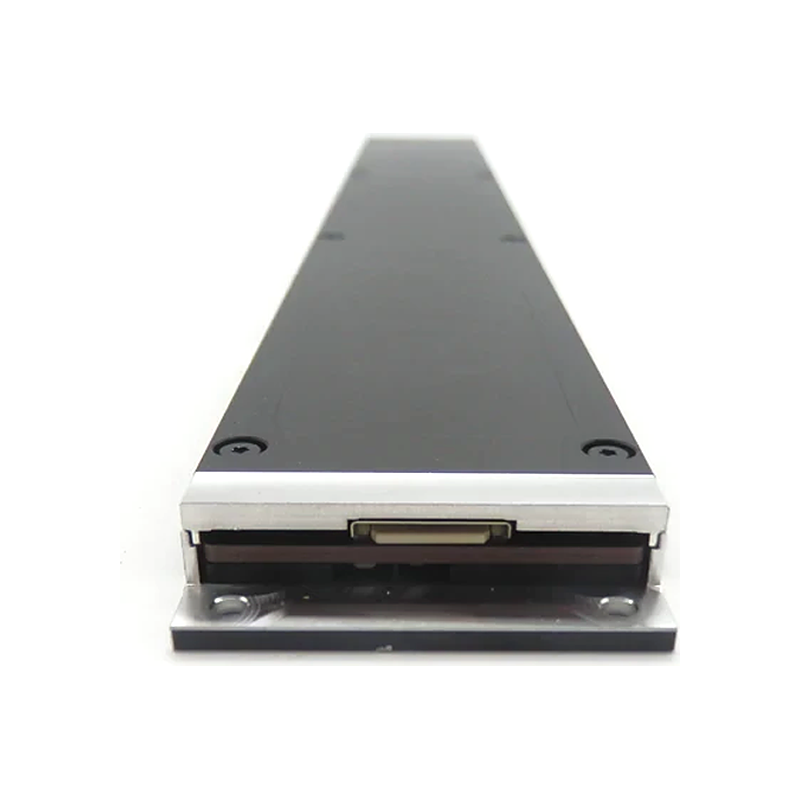
15.36 TB E1.L 1U long ruler NVMe SSD, PCIe 4.0, ordering code MZEL215THBLA-00AMV
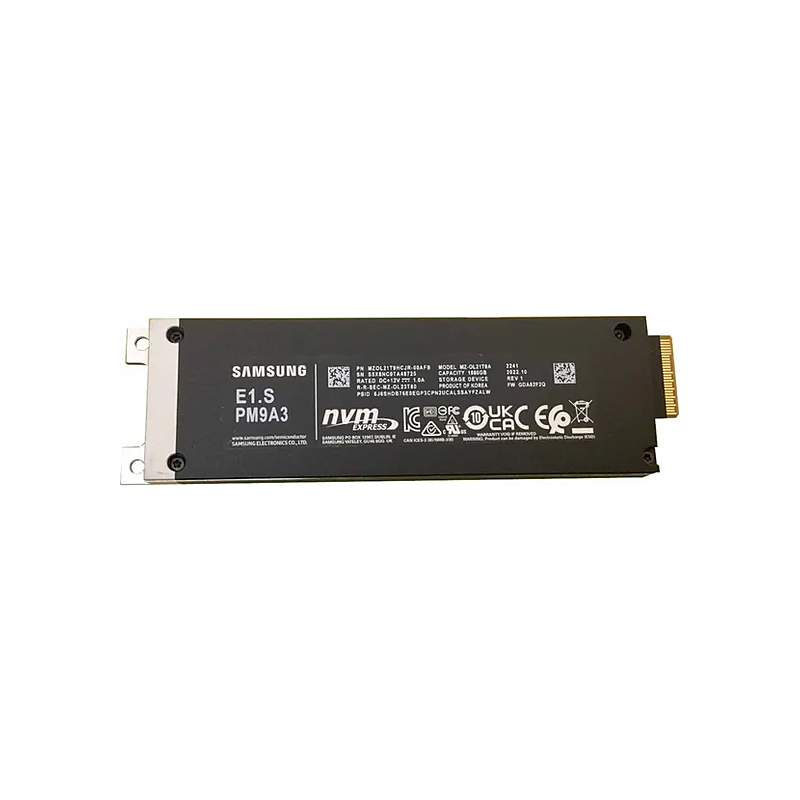
7.68 TB E1.S 1T NVMe SSD, PCIe 4.0, ordering codes MZCL27T6HBLA-00AMV / MZTL27T6HBLA-00A07
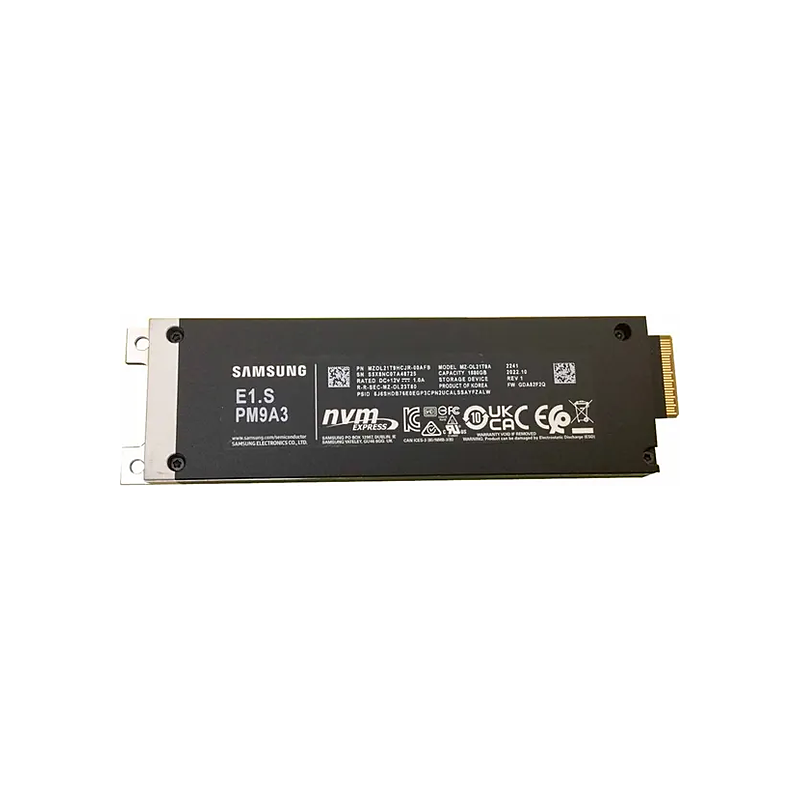
3.84 TB E1.S 1T NVMe SSD, PCIe 4.0, ordering codes MZCL23T8HCLS-00AMV / MZTL23T8HCLS-00A07
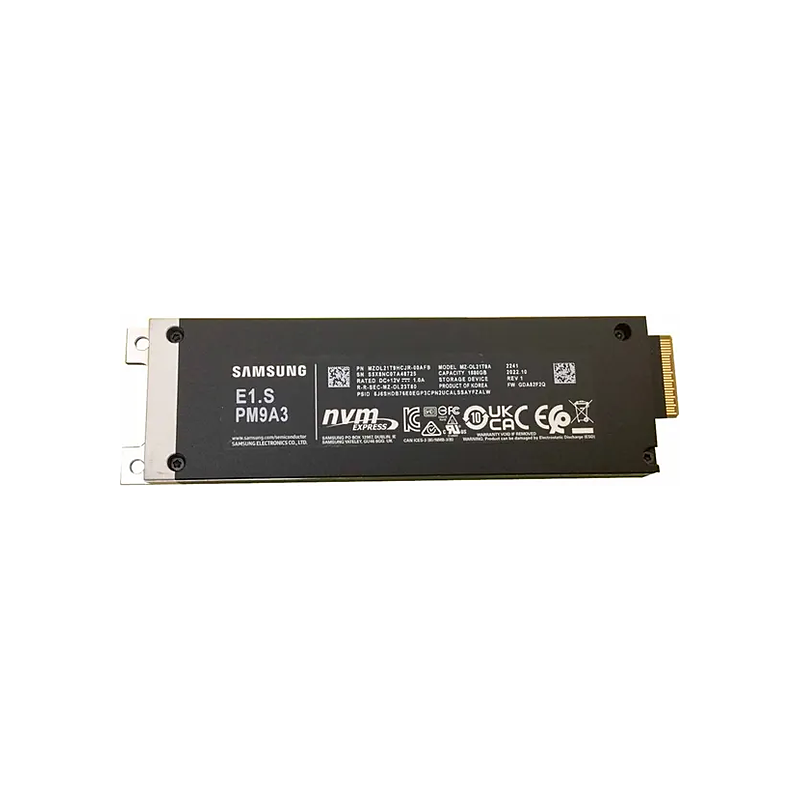
1.92 TB E1.S 1T (9.5 mm) NVMe SSD, PCIe 4.0, ordering code MZCL21T9HCJR-00AMV