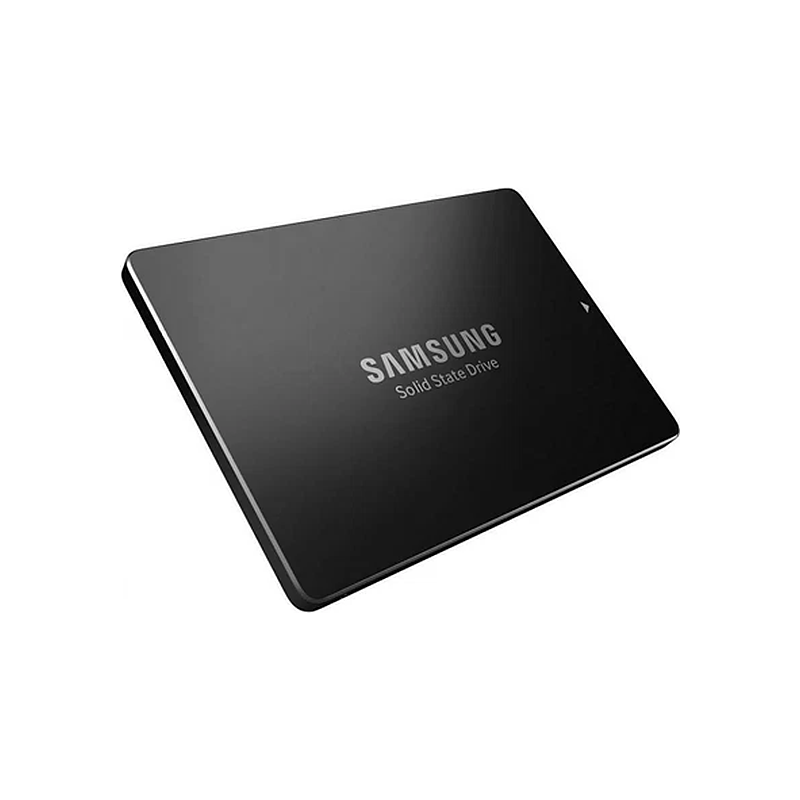
Samsung PM863a 1.92TB SATA SSD (MZ7LM1T9HMJP)
1.92 TB 2.5-inch SATA read-intensive SSD, ordering code MZ7LM1T9HMJP-00005
- Part Number
- MZ7LM1T9HMJP
- Brand
- Samsung
- Category
- Enterprise & Data Center SSD
- Accepted Payments
- T/T Bank Transfer PayPal Western Union
Technical Specifications
| Capacity | 1.92 TB |
|---|---|
| Interface | SATA |
| Form Factor | 2.5-inch 7mm |
| PCIe Version | Not applicable |
| NAND Type | TLC |
| Endurance (DWPD) | 0.78 |
| TBW | 2,733 TB |
| Sequential Read | 520 MB/s |
| Sequential Write | 480 MB/s |
| Random Read IOPS | 97K IOPS |
| Random Write IOPS | 24K IOPS |
| Power | 4 W |
| DRAM Cache | Yes |
| Power Loss Protection | Yes |
| Encryption | SED |
| Condition | New · Used |
Frequently Asked Questions
Samsung PM863a 1.92 TB, 2.5-inch 7 mm SATA, catalogue code MZ7LM1T9HMJP, ordering code MZ7LM1T9HMJP-00005. Rated 520 MB/s sequential read, 480 MB/s sequential write, 97K random read and 24K random write IOPS, 2,733 TBW, with 3 W read and 4 W write power. Stocked new or as tested pulls with a 1-year warranty from us.
This is the capacity where the family stops improving and starts costing: sequential and random figures are byte-for-byte those of the 960 GB drive, while the write power rises from 3 W to 4 W. Nothing in the performance table moves. What moves is capacity per bay, endurance in absolute terabytes, and the wattage a densely populated chassis has to find — which makes this the drive to specify when the answer to "can we fit it" is a bay count rather than a benchmark.
Underneath, the same 2016 read-intensive design: 48-layer V-NAND TLC behind a Samsung Mercury controller with a DRAM write cache, 2 million hours MTBF, an AES 256-bit engine, end-to-end data protection, and a 55 g aluminium case that fits any 7 mm SATA bay. Samsung has discontinued the generation, so supply is decommissioned server stock plus remaining channel inventory.
The one watt in this family that buys no speed
Compare the power row rather than the performance row and the shape of the range becomes clear. Every PM863a up to 960 GB writes at 3 W; from 1.92 TB upward the write figure is 4 W, while read stays at 3 W and idle at 1.3 W. That single extra watt buys zero additional throughput — the drive is already at 520/480 MB/s and 97K/24K IOPS at half its capacity.
It is not an inefficiency, it is arithmetic. Write current scales with the number of NAND packages the controller is programming at once, and doubling capacity doubles the number of packages on the board. The dies are the cost; the watt is the receipt. Read power does not move because a read is served from a subset of dies at a time.
On a two-drive node the difference is a rounding error. On a 1U chassis with ten 2.5-inch bays, populating all ten at this capacity adds ten watts over the 960 GB build — which is exactly the kind of number that decides whether a power budget closes. Where the answer is tight, half the array at 960 GB and half at 1.92 TB is a legitimate compromise: the two capacities are interchangeable at the interface, and only the endurance and the write watt differ.
Technical specifications
| Product family | Samsung PM863a (V-NAND SSD, data centre / read-intensive) |
|---|---|
| PN | MZ7LM1T9HMJP (catalogue code) |
| Ordering code | MZ7LM1T9HMJP-00005 |
| Capacity | 1.92 TB (1,920 GB decimal) |
| Form factor | 2.5-inch, 7.0 mm (100.20 × 69.85 × 6.8 mm, max 55 g) |
| Interface | SATA 6 Gb/s, compatible with SATA 3 Gb/s and 1.5 Gb/s |
| Controller | Samsung Mercury, with DRAM write cache |
| NAND | Samsung V-NAND TLC (48-layer) |
| Sequential read / write | 520 MB/s / 480 MB/s (128 KB, QD32) |
| Random 4 KB (QD32) | 97K IOPS read / 24K IOPS write — 99% / 97% IOPS consistency |
| Endurance | 2,733 TBW — 0.78 DWPD over a 5-year basis; Samsung publishes 1.3 DWPD against a 3-year period |
| Power | Idle 1.3 W; active 3 W read / 4 W write; supply 5 V ±5% |
| Power-loss protection | Yes — Samsung specifies write-cache protection for this generation; no hold-up time is published |
| Data security | AES 256-bit encryption engine (self-encrypting drive); no TCG Opal |
| Features | TRIM, NCQ to depth 32, S.M.A.R.T., Dynamic Thermal Guard, end-to-end data protection |
| Reliability | MTBF 2.0 million hours; UBER 1 sector per 1017 bits read; operating 0 °C to 70 °C |
| Shock | 1,500 G at 0.5 ms, half sine wave |
| Status | End of life — Samsung has discontinued the PM863a generation |
Ordering codes we can supply at 1.92 TB
| Code | Type | Condition | Quote |
|---|---|---|---|
| MZ7LM1T9HMJP | Catalogue code | New / used | Enquire |
| MZ7LM1T9HMJP-00005 | Ordering code | New / used | Enquire |
Both strings describe the same 1.92 TB drive. MZ7LM1T9HMJP is the model name printed on the label and the one this catalogue and most asset registers index on; MZ7LM1T9HMJP-00005 is the ordering code a PO line and a warranty claim are written against. Quote whichever your paperwork carries.
What 2,733 TBW means in a day
Endurance figures are quoted per drive and read as if they were per year, which is why the useful conversion is daily. 2,733 TB over a five-year rating is 1.5 TB of writes every day for 1,825 days — and because the rating is a constant 0.78 drive-writes-per-day, that daily budget scales with capacity exactly: 0.19 TB/day at 240 GB, 0.37 at 480 GB, 0.75 at 960 GB, 1.5 here. The percentage is identical at every size; only the absolute headroom changes.
That is the practical argument for this capacity in a mixed node. A hypervisor host with a boot pair, an application volume and a log directory that does not get its own tier can easily write a few hundred gigabytes a day; at 960 GB that is a meaningful fraction of the allowance, at 1.92 TB it is a third of it. The drive has not become more tolerant per gigabyte — it simply has twice as many gigabytes to spend.
The limit is still a limit. Sustained sequential write at 480 MB/s would burn 2,733 TB in about 66 days, and a workload that behaves like that belongs on a mixed-use drive rather than a read-intensive one. What this rating does buy is the ability to absorb the write tail of a read-heavy workload — snapshot deltas, log flushes, index rebuilds — without the endurance number becoming the reason to move up a tier.
What is missing compared with a current-generation drive
Three things. Power-loss protection is specified but unquantified: Samsung's PM863a documentation states that the drive safeguards data in the write cache when power fails, and end-to-end protection covers the path, but no hold-up time is published — so it is sound cover against a brief interruption and not a replacement for a controller with a battery or flash-backed cache. There is no TCG Opal, only a plain AES 256-bit engine, so encryption is managed in software rather than through key management on the drive. And the generation is out of production, which matters for spares planning more than for performance.
Against the PM893 at 1.92 TB every line moves in the current drive's favour: 550/520 MB/s against 520/480, 98K/30K IOPS against 97K/24K, 3,504 TBW at a full 1.0 DWPD against 2,733 at 0.78, a published PLP specification, TCG Opal 2.0, and 3.2 W instead of 4 W on the write side. There is no metric on which the older drive wins except price per terabyte and the fact that the part number is already qualified in fleets that were built around it.
So the honest framing is this: buy the PM863a 1.92 TB when the chassis, the controller firmware and the asset register are already committed to it, or when the data on it is reproducible and the budget is the constraint. Buy the current generation when the node is new, when the drive sits on a bare board with no RAID cache in front of it, or when the service life starts now rather than in 2017.
How 1.92 TB compares with the rest of the PM863a family
| Model | Capacity | Sequential read / write | Random read / write | Endurance | Active power |
|---|---|---|---|---|---|
| PM863a 240 GB | 240 GB | 330 / 300 MB/s | 86K / 9K IOPS | 341 TB (0.78 DWPD) | 3 / 3 W |
| PM863a 480 GB | 480 GB | 520 / 480 MB/s | 97K / 16K IOPS | 683 TB (0.78 DWPD) | 3 / 3 W |
| PM863a 960 GB | 960 GB | 520 / 480 MB/s | 97K / 24K IOPS | 1,366 TB (0.78 DWPD) | 3 / 3 W |
| PM863a 1.92 TB | 1.92 TB | 520 / 480 MB/s | 97K / 24K IOPS | 2,733 TB (0.78 DWPD) | 3 / 4 W |
| PM863a 3.84 TB | 3.84 TB | 520 / 480 MB/s | 97K / 24K IOPS | 5,466 TB (0.78 DWPD) | 3 / 4 W |
Read the rows as pairs. The 960 GB and 1.92 TB drives are performance-identical and differ in capacity, endurance and one watt; the 1.92 TB and 3.84 TB drives are identical in every column except capacity and endurance, since both already sit in the 4 W bracket. The 3.84 TB therefore costs no power premium over this one — the premium was paid at this boundary, which is worth knowing before specifying a shelf of one size or the other.
One consequence deserves a line of its own: rebuild time. A SATA array rebuilds at roughly the write speed of the surviving members, so a 1.92 TB member takes about twice as long to rebuild as a 960 GB one, and the second failure window stretches with it. Larger members are cheaper per terabyte and more exposed during repair; sized correctly, both statements are true at once.
How each drive is tested before it ships
- Label, capacity and model line checked against the order: PM863a 2.5" SATA SSD 1.92 TB with MZ7LM1T9HMJP, and the ordering suffix recorded on the invoice.
- SMART attribute dump before anything else — power-on hours, host writes, media wear and grown defect count — retained for the individual drive shipped.
- Full-surface read scan, then a SMART extended self-test run to completion rather than a sample.
- Sequential read and write verified near 520 / 480 MB/s on a native SATA 6 Gb/s port, with random 4 KB measured at queue depth 32.
- Firmware revision read and recorded: units below the revision that fixes the UECC-flag defect on this generation are reflashed or rejected, not shipped.
- TRIM and secure-erase cycles exercised, then the drive returned to a clean state with over-provisioning intact.
- Thermal soak at operating temperature with Dynamic Thermal Guard behaviour observed, since a throttling drive becomes the customer's cooling problem.
- Final inspection and clean, then anti-static bag and foam packing.
Warranty, lead time and purchasing
Every drive carries a 1-year warranty from us against defects in workmanship and function. Verified faulty units are replaced or refunded and we cover return shipping. Stock is held in both new and used condition; the condition you order is confirmed before dispatch, and used units are pull-tested rather than untested lots. Stock is held in our own warehouse and normally dispatches within three to seven working days, with tracking issued at dispatch.
Pricing is quoted per order because condition and quantity both move it. Send the quantity, the condition you need and the server model the drive is going into, and you will get a quote with lead time the same working day. Arrays are usually ordered in even numbers and we will match units from a single batch where stock allows, including firmware revision. Because the PM863a generation is end-of-life, larger quantities are quoted against confirmed stock rather than a standing lead time.
Get Pricing For This Part
Tell us who you are — we reply within one working day with a firm quote, stock status and lead time. Volume discounts available.
Related Products
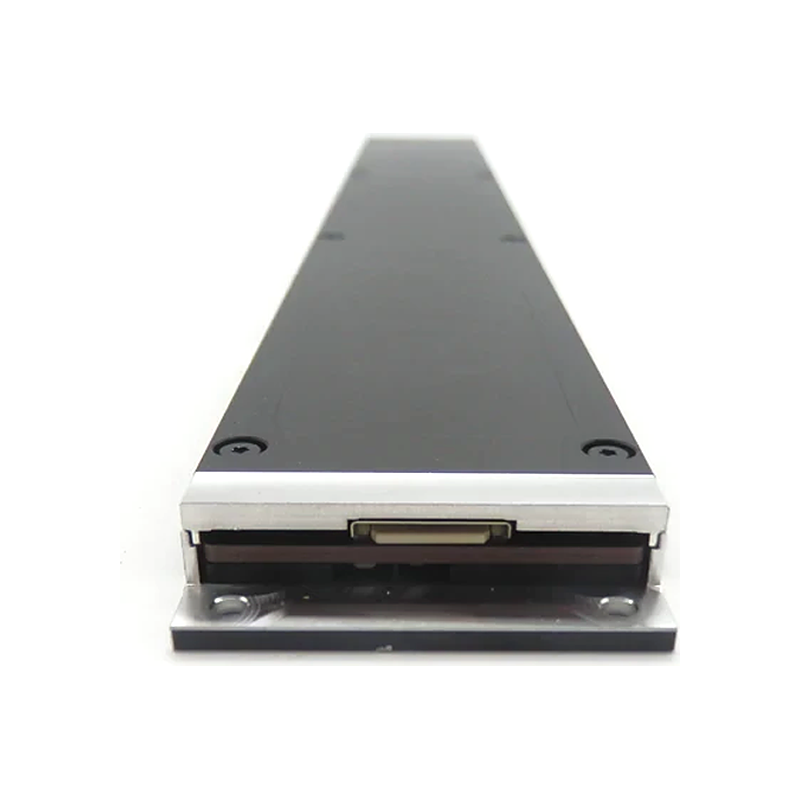
15.36 TB E1.L 1U long ruler NVMe SSD, PCIe 4.0, ordering code MZEL215THBLA-00AMV
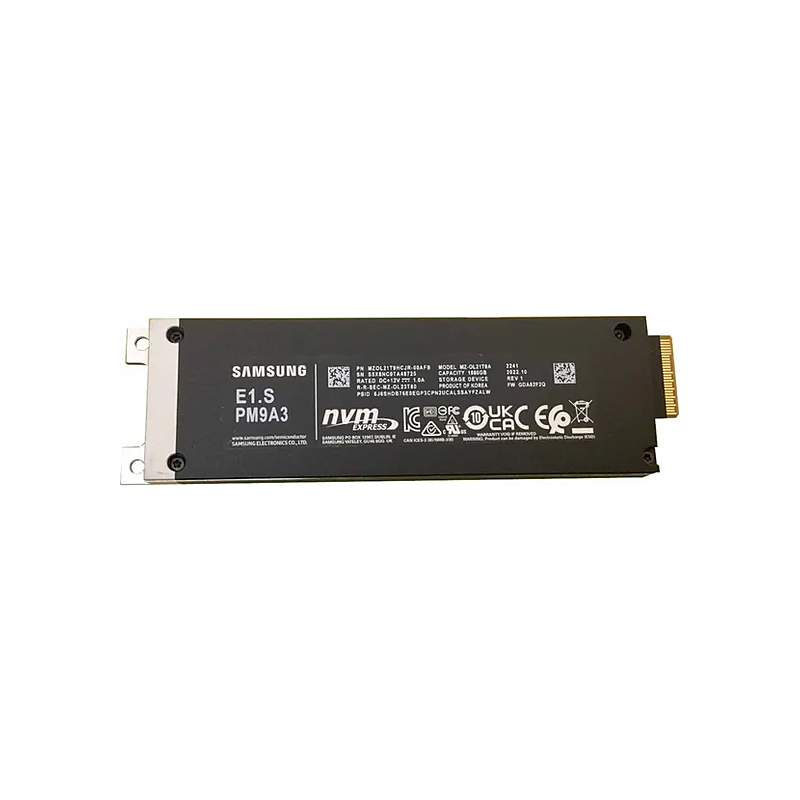
7.68 TB E1.S 1T NVMe SSD, PCIe 4.0, ordering codes MZCL27T6HBLA-00AMV / MZTL27T6HBLA-00A07
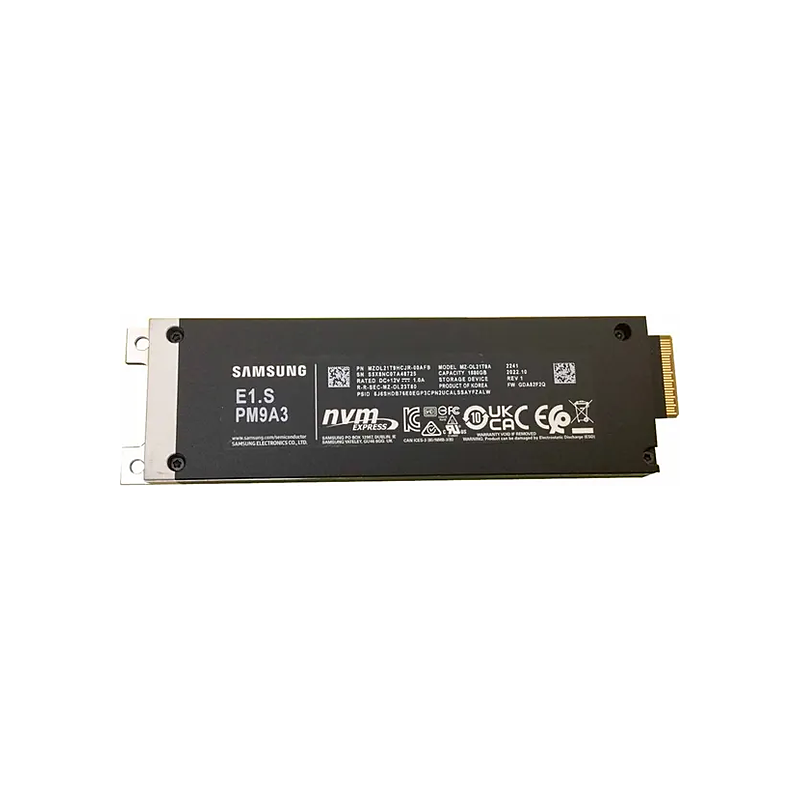
3.84 TB E1.S 1T NVMe SSD, PCIe 4.0, ordering codes MZCL23T8HCLS-00AMV / MZTL23T8HCLS-00A07
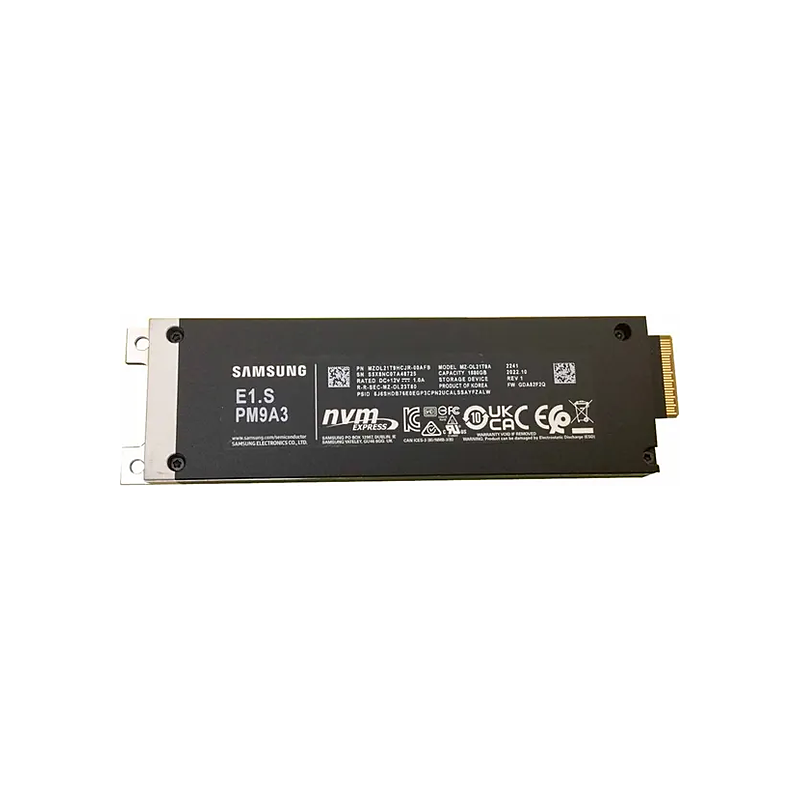
1.92 TB E1.S 1T (9.5 mm) NVMe SSD, PCIe 4.0, ordering code MZCL21T9HCJR-00AMV