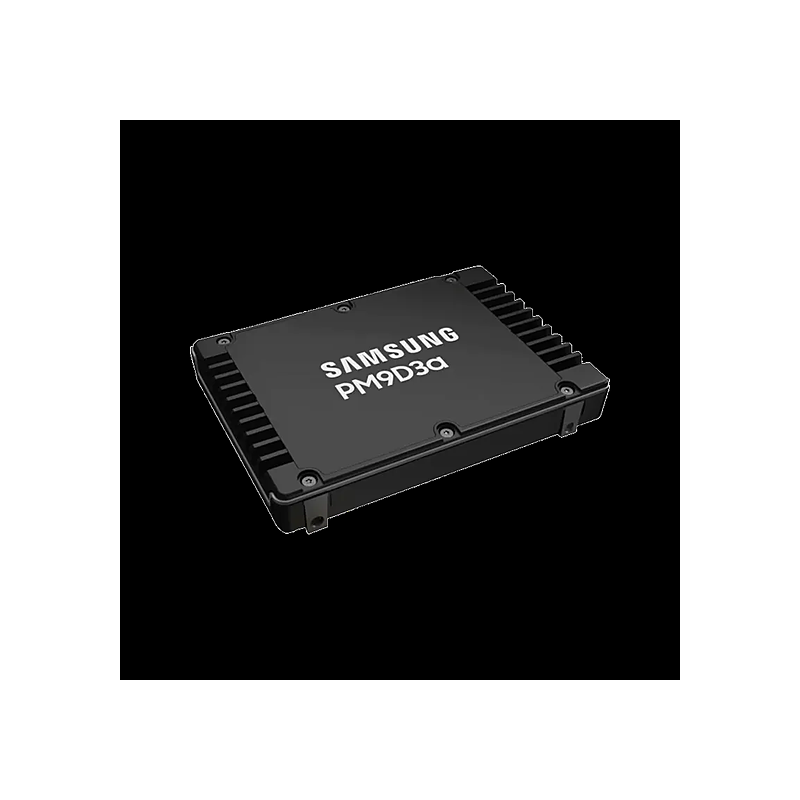
Samsung PM9D3a 3.84TB PCIe 5.0 NVMe U.2 SSD (MZWL63T8HFLT)
3.84 TB 2.5-inch U.2 NVMe SSD, PCIe 5.0, ordering code MZWL63T8HFLT-00AW7
- Part Number
- MZWL63T8HFLT
- Brand
- Samsung
- Category
- Enterprise & Data Center SSD
- Accepted Payments
- T/T Bank Transfer PayPal Western Union
Technical Specifications
| Capacity | 3.84 TB |
|---|---|
| Interface | NVMe |
| Form Factor | U.2 15mm |
| PCIe Version | PCIe 5.0 |
| NAND Type | TLC |
| Endurance (DWPD) | 1 |
| TBW | 7,008 TB |
| Sequential Read | 12,000 MB/s |
| Sequential Write | 6,700 MB/s |
| Random Read IOPS | 1,700K IOPS |
| Random Write IOPS | 250K IOPS |
| Power | 12.8 W |
| DRAM Cache | Yes |
| Power Loss Protection | Yes |
| Encryption | AES-XTS 256 |
| Condition | New · Used |
Frequently Asked Questions
Samsung PM9D3a 3.84 TB, 2.5-inch U.2 at 15 mm, catalogue code MZWL63T8HFLT, ordering code MZWL63T8HFLT-00AW7. 12,000 MB/s sequential read and 6,700 MB/s write on PCIe 5.0 x4, 1,700K random read and 250K random write IOPS, 7,008 TBW at one drive write a day for five years. Eighth-generation V-NAND TLC, NVMe 2.0, 12.8 W reading and 15.6 W writing. New and used both stocked.
Two things change at this capacity, and the second one is the reason to read the rest of the page. Write throughput jumps to 6,700, which is the first figure in the family that cannot be reached on a Gen4 link. And write power passes read power for the first time: 15.6 W against 12.8. Both facts point at the same buying question, which is whether the server has Gen5 slots or not.
Technical specifications
| Product family | Samsung PM9D3a (PCIe 5.0 data centre NVMe SSD, 1 DWPD) |
|---|---|
| PN | MZWL63T8HFLT (catalogue code) |
| Ordering code | MZWL63T8HFLT-00AW7 |
| Capacity | 3.84 TB (unformatted; 1 GB = 1 billion bytes, formatted capacity is less) |
| Form factor | 2.5-inch U.2, 15 mm (100.45 × 69.85 × 15 mm, up to 170 g) |
| Interface | PCIe 5.0 x4, NVMe 2.0, backwards compatible with PCIe 4.0 and 3.0 |
| NAND | Samsung V-NAND TLC (8th generation) |
| Sequential read | 12,000 MB/s (128 KB, queue depth 256) |
| Sequential write | 6,700 MB/s |
| Random 4K read | 1,700K IOPS (queue depth 64, four workers) |
| Random 4K write | 250K IOPS |
| Endurance (TBW) | 7,008 TB |
| Endurance (DWPD) | 1 drive write per day for five years |
| Latency | 65 µs random read, 9 µs random write (queue depth 1, median) |
| QoS 99% | 0.08 ms read at queue depth 1, 0.13 ms at depth 32; 0.01 / 0.15 ms write |
| Power | 12.8 W typical read, 15.6 W typical write, 4 W idle on PCIe 5.0 (12 V rail) |
| Power on PCIe 4.0 | 11 W read, 14.8 W write, 3.2 W idle |
| Power-loss protection | Yes, capacitor-backed, with end-to-end data path protection |
| Encryption | AES-XTS 256-bit engine, TCG Opal compliant |
| Sector size | 512, 520, 4096 or 4160 bytes, formattable |
| MTBF / UBER | 2.5 million hours / 1 sector per 1017 bits read |
| Drive ready | 8 s from power-on to accepting commands |
Three generations at the same 3.84 TB
| Model | Capacity | Bus and form factor | Seq read / write | Random 4 KB | TBW | DWPD |
|---|---|---|---|---|---|---|
| PM963 | 3.84 TB | PCIe 3.0, U.2 7 mm | 2,000 / 1,200 MB/s | 430K / 40K | 5,466 TB | 0.78 |
| PM983 | 3.84 TB | PCIe 3.0, U.2 7 mm | 3,200 / 2,000 MB/s | 540K / 50K | 5,466 TB | 0.78 |
| PM1733 | 3.84 TB | PCIe 4.0, U.2 15 mm | 7,000 / 3,800 MB/s | 1,500K / 135K | 7,008 TB | 1 |
| PM893 | 3.84 TB | SATA 6 Gb/s, 2.5-inch 7 mm | 550 / 520 MB/s | 98K / 30K | 7,008 TB | 1 |
| PM9D3a | 3.84 TB | PCIe 5.0, U.2 15 mm | 12,000 / 6,700 MB/s | 1,700K / 250K | 7,008 TB | 1 |
Three NVMe generations sit in that table, and the PM1733 is the one worth setting against this drive, because they share a connector, a thickness, an endurance rating and a 7,008 TB budget. The only thing that separates them is the link.
From Gen3 to Gen4, sequential write went 2,000 to 3,800. From Gen4 to Gen5 it goes 3,800 to 6,700, and random write goes 135K to 250K. Random read moves from 1,500K to 1,700K, which is the smallest step in the table and a hint at where the ceiling now sits: random read was already close to what the controller can issue, and the new link mostly buys sequential bandwidth and write parallelism.
6,700 MB/s is the first number Gen4 cannot carry
Samsung rates this drive at 7,000 MB/s read and 4,100 MB/s write on a PCIe 4.0 link. That is not a small downgrade from 6,700. It is a 39 percent cut, and it makes the write advantage over the PM1733 almost disappear: 4,100 against 3,800, eleven percent, for what is usually a higher price.
Compare that with the smaller capacities, where the loss was nothing. The 1.92 TB drive writes at 3,500 and still writes at 3,100 on Gen4, a 11 percent gap that leaves the ordering intact. The 960 GB drive writes at 1,600 and barely notices the older slot at all. This capacity is the point where the drive starts needing the platform it was built for.
Random read is the sharper problem. On Gen4 this drive is rated 1,100K IOPS. The PM1733 at the same capacity is rated 1,500K on its native link. A Gen4 server buying PM9D3a for random read throughput is buying 73 percent of what the older drive delivers, and paying Gen5 money for it. That single number decides several deals, so it belongs on the page rather than in a footnote.
The first capacity that works as plain capacity
Below this point the drives are fast per terabyte and expensive per terabyte of power. At 960 GB the read load costs 11.5 W for every terabyte stored; at 1.92 TB it is 5.8. Here it is 3.33, a 43 percent improvement over the 1.92 TB part for a four percent loss of write throughput per terabyte.
That is the trade worth naming. Write per terabyte runs 1,823 MB/s at 1.92 TB and 1,745 here, effectively flat, while power per terabyte drops by nearly half and the bay count for a given capacity halves too. Twenty-four of these hold 92 TB; twenty-four 1.92 TB drives hold 46.
What did not come along is random read per terabyte, which falls from 885K at 1.92 TB to 443K here. If the workload is a read-intensive cache, the smaller drive is still the right purchase; this one is for the tier behind it.
Write power above read power
Fifteen point six watts writing against 12.8 reading. Most enterprise drives are quoted the other way round, and the inversion matters for chassis design rather than for the datasheet. A 24-bay shelf under sustained write load draws 374 W from the 12 V rail, against 307 W reading, and the difference lands on airflow rather than on the power supply.
The fins on the 15 mm carrier are part of the answer, and they are why the drive is 15 mm and not 7. It will not close in a 7 mm bay that held a PM983, and a 1U chassis built around those bays needs the carrier and the airflow checked before the order, not after.
7,008 TB and the shelf arithmetic
One drive write a day for five years is 3.84 TB of host writes daily, 44 MB/s averaged. A 24-bay shelf holds a 92 TB daily write budget, which is the number to hold against a backup window or a replication target rather than against the drive's own peak.
The peak is worth understanding separately. 250K random IOPS at 4 KB is 1 GB/s of random writes, which would consume the five-year budget in 107 days. The gap between 44 MB/s and 1 GB/s is not a defect in the rating; it is the difference between a sustained workload and a burst, and it is why this class of drive is quoted by DWPD rather than by IOPS.
Ordering codes: MZWL63T8 and the -00AW7 suffix
| Code | Type | Capacity | Condition | Quote |
|---|---|---|---|---|
| MZWL63T8HFLT | Catalogue code | 3.84 TB | New / used | Enquire |
| MZWL63T8HFLT-00AW7 | Ordering code | 3.84 TB | New / used | Enquire |
The suffix records the distribution block and region. Samsung's datasheet lists this capacity as -00B07; channel stock usually carries -00AW7. Both are the 3.84 TB U.2 drive and either is acceptable unless the purchase order names one.
Three strings sit close enough to be confused. MZWL61T9HFLT is the 1.92 TB drive, one character apart. MZ3L63T8HFLT is the E3.S version at 7.5 mm, which shares nothing but the capacity. MZWL6960HFJA is the 960 GB part and differs in every digit after the prefix.
Checks worth running on delivery:
- T8 in the string. 3.84 TB is MZWL63T8HFLT; 1.92 TB is MZWL61T9HFLT. One character, double the capacity.
- Reported capacity. 3.84 TB reports about 3.49 TiB. Anything reporting 1.75 TiB is the 1.92 TB drive in the same shell.
- Link speed before blaming the drive. If sequential write lands near 4,100 rather than 6,700, the slot is Gen4. That is a platform fact, not a faulty unit.
- Airflow over the carrier. 15.6 W in write and 15 mm of aluminium need cross-flow, not just a fan somewhere in the chassis.
Warranty, lead time and purchasing
Every drive leaves here with a one year warranty, sealed stock or tested pull alike, and the cover travels with the unit rather than with the server it was taken out of. Warehouse stock usually dispatches inside three to seven working days, with tracking issued as it goes. Two pieces is the minimum order, capacities in this family can be combined on a single order, and once part number, condition and quantity are with us a price follows the same working day.
Get Pricing For This Part
Tell us who you are — we reply within one working day with a firm quote, stock status and lead time. Volume discounts available.
Related Products
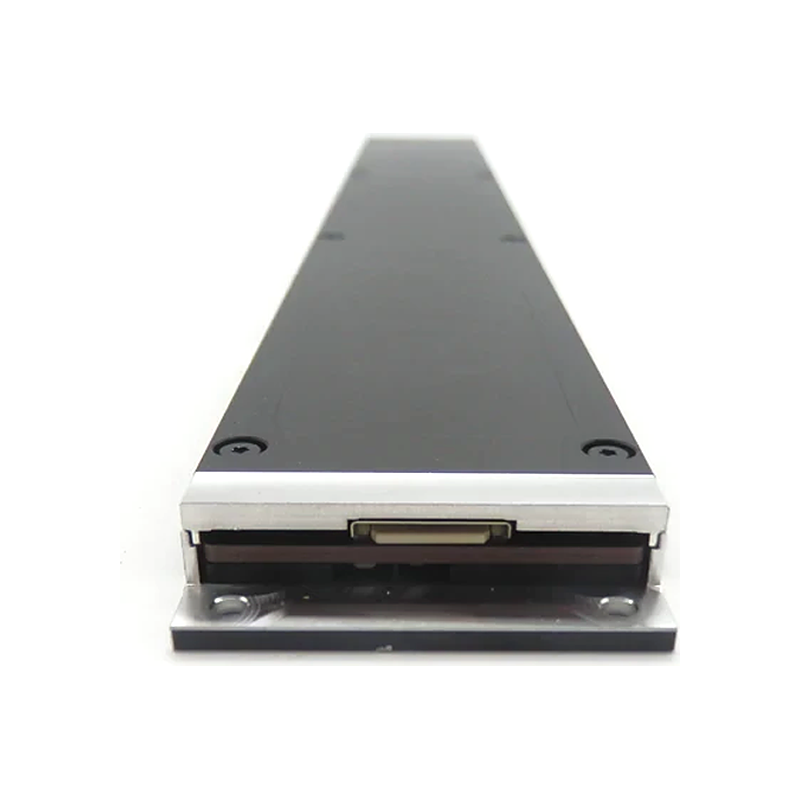
15.36 TB E1.L 1U long ruler NVMe SSD, PCIe 4.0, ordering code MZEL215THBLA-00AMV
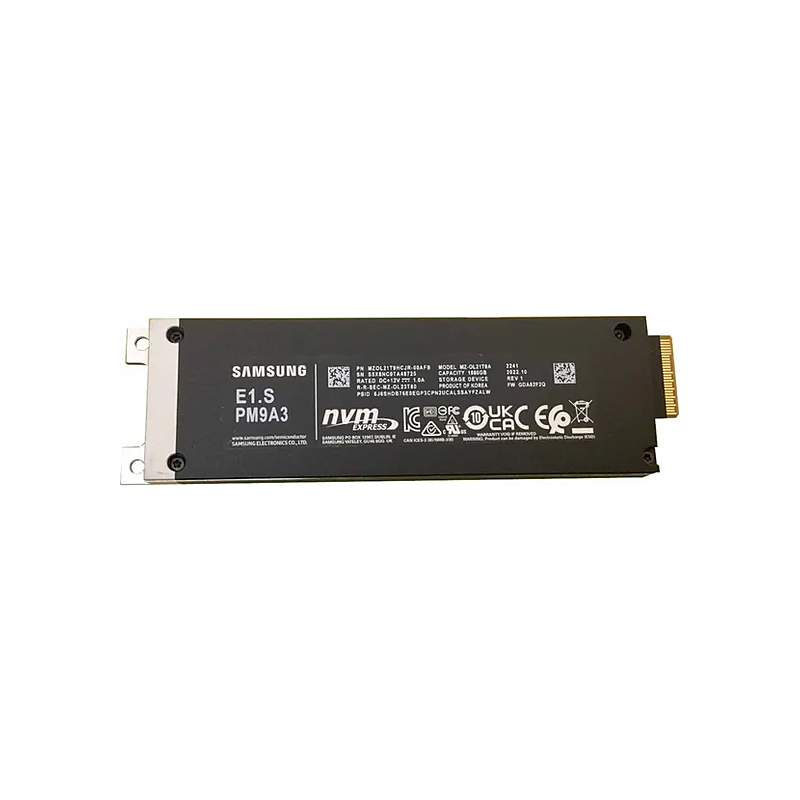
7.68 TB E1.S 1T NVMe SSD, PCIe 4.0, ordering codes MZCL27T6HBLA-00AMV / MZTL27T6HBLA-00A07
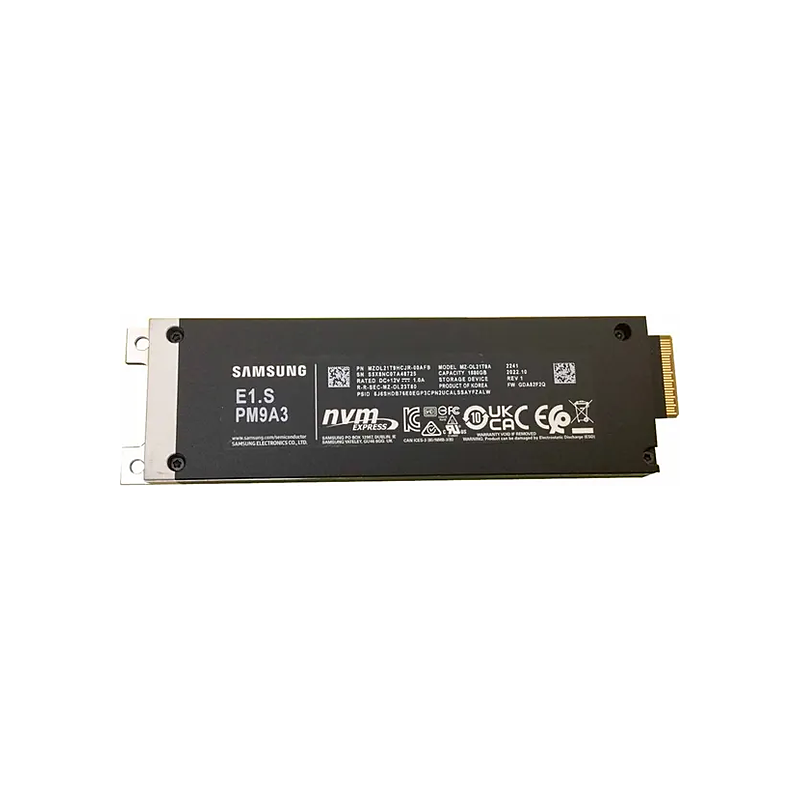
3.84 TB E1.S 1T NVMe SSD, PCIe 4.0, ordering codes MZCL23T8HCLS-00AMV / MZTL23T8HCLS-00A07
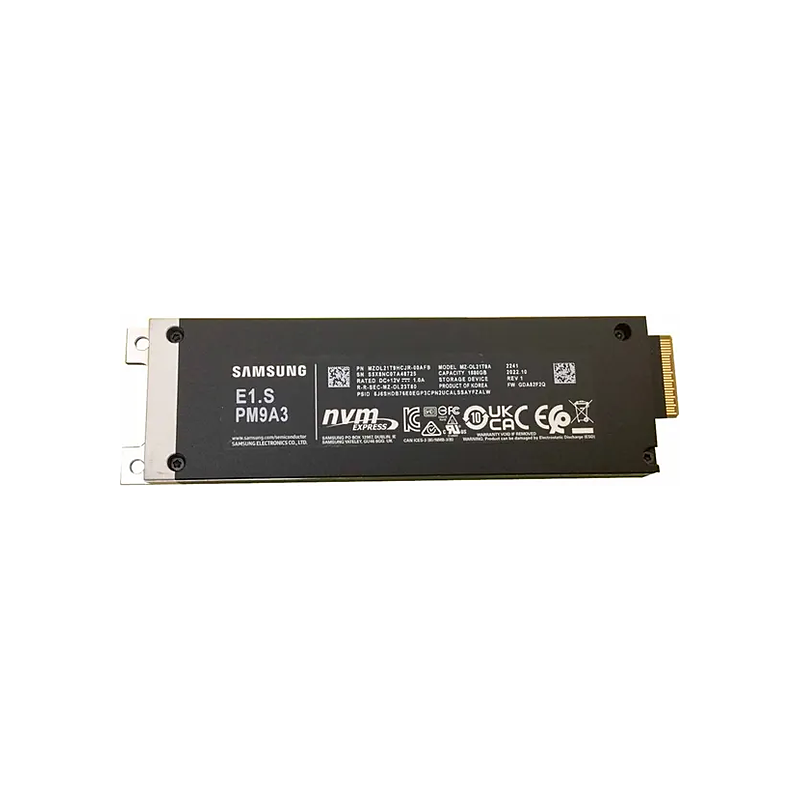
1.92 TB E1.S 1T (9.5 mm) NVMe SSD, PCIe 4.0, ordering code MZCL21T9HCJR-00AMV