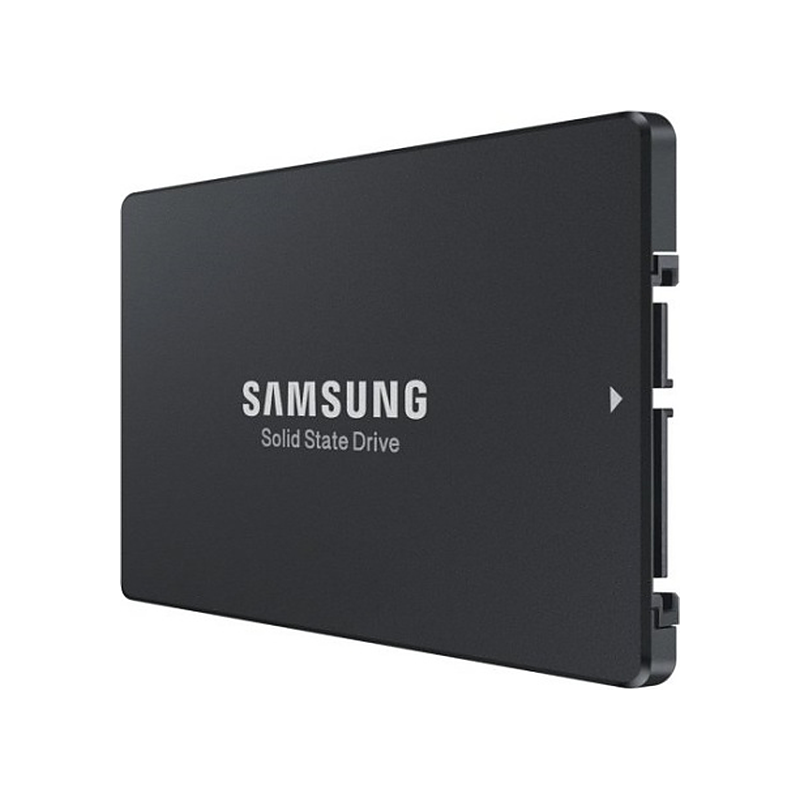
Samsung PM983 3.84TB PCIe 3.0 NVMe U.2 SSD (MZQLB3T8HALS)
3.84 TB 2.5-inch U.2 NVMe SSD, ordering code MZQLB3T8HALS-00007
- Part Number
- MZQLB3T8HALS
- Brand
- Samsung
- Category
- Enterprise & Data Center SSD
- Accepted Payments
- T/T Bank Transfer PayPal Western Union
Technical Specifications
| Capacity | 3.84 TB |
|---|---|
| Interface | NVMe |
| Form Factor | U.2 7mm |
| PCIe Version | PCIe 3.0 |
| NAND Type | TLC |
| Endurance (DWPD) | 0.78 |
| TBW | 5,466 TB |
| Sequential Read | 3,200 MB/s |
| Sequential Write | 2,000 MB/s |
| Random Read IOPS | 540K IOPS |
| Random Write IOPS | 50K IOPS |
| Power | 10.6 W |
| DRAM Cache | Yes |
| Power Loss Protection | Yes |
| Encryption | AES-XTS 256 |
| Condition | New · Used |
Frequently Asked Questions
Samsung PM983 3.84 TB, 2.5-inch U.2 (SFF-8639), catalogue code MZQLB3T8HALS, ordering code MZQLB3T8HALS-00007. 3,200 MB/s sequential read, 2,000 MB/s sequential write, 540K random read and 50K random write IOPS at 4 KB, 5,466 TBW. V-NAND TLC behind Samsung's Phoenix controller, PCIe 3.0 x4, NVMe 1.2a, 85 µs random read latency. Both conditions stocked, one-year warranty either way.
Performance here is identical to the 1.92 TB drive: same 3,200 MB/s, same 540K / 50K IOPS, same latency. What doubles is the capacity and, with it, the lifetime budget. That makes the 3.84 TB the capacity to argue about on economics rather than on specifications, because the specifications stopped moving at 1.92 TB.
Twice the capacity in the same power envelope
Samsung rates both drives at 8.7 W on reads and 10.6 W on writes. Put 3.84 TB behind those numbers instead of 1.92 and the power per terabyte halves. Across a 24-bay shelf that is the difference between 24 drives at 1.92 TB and 12 drives at 3.84, with 12 fewer links, 12 fewer failure points and the same rack power for twice the flash.
That is the argument for this capacity, and it is a stronger one than it looks. Density does not just save watts; it saves ports, backplane lanes and the PCIe switches behind them. A chassis that has run out of U.2 lanes cannot be fixed with cheaper drives, only with bigger ones.
Technical specifications
| Product family | Samsung PM983 (PCIe 3.0 enterprise NVMe SSD, read-intensive) |
|---|---|
| PN | MZQLB3T8HALS (catalogue code) |
| Ordering code | MZQLB3T8HALS-00007 |
| Capacity | 3.84 TB (unformatted; 1 GB = 1 billion bytes, formatted capacity is less) |
| Form factor | 2.5-inch U.2, SFF-8639, 7 mm (100 × 70 × 7 mm) |
| Interface | PCIe 3.0 x4, NVMe 1.2a |
| Controller | Samsung Phoenix |
| NAND | Samsung V-NAND TLC (3-bit MLC) |
| Sequential read | 3,200 MB/s (128 KB) |
| Sequential write | 2,000 MB/s (128 KB) |
| Random 4K read | 540K IOPS |
| Random 4K write | 50K IOPS |
| Latency, random read / write | 85 µs / 50 µs |
| Latency, sequential read / write | 15 µs / 20 µs |
| Endurance (TBW) | 5,466 TB |
| Endurance (DWPD) | 1.3 for three years, which is 0.78 over five years |
| Power | 8.7 W typical read, 10.6 W typical write (12 V rail) |
| DRAM cache | Yes |
| Power-loss protection | Yes, capacitor-backed, with end-to-end data protection |
| Encryption | AES-XTS 256-bit, TCG Opal compliant |
| MTTF | 2 million hours |
What 5,466 TBW means at 3.84 TB
5,466 TB over 1,825 days is 2,995 GB of host writes a day, or 0.78 drive writes at this capacity. Over the three-year period Samsung rates it for, the same tonnage allows 4,992 GB a day at 1.3 drive writes. Three terabytes a day for five years is a serious workload, and it is the point at which this drive stops being a boot device and starts being usable for real data.
It is still a read-intensive rating. The mixed-use SATA drives at this capacity carry 10,512 to 23,827 TB, and anything that writes its full capacity daily will exhaust this one long before its service life ends. Three terabytes a day is generous for a cache or an index; it is not generous for a write log.
Where it sits against the PM963 and the SATA drives
| Model | Interface | Capacity | Seq read / write | Random 4 KB | TBW | DWPD |
|---|---|---|---|---|---|---|
| PM983 3.84 TB | PCIe 3.0 x4 | 3.84 TB | 3,200 / 2,000 MB/s | 540K / 50K | 5,466 TB | 0.78 |
| PM963 3.84 TB | PCIe 3.0 x4 | 3.84 TB | 2,000 / 1,200 MB/s | 430K / 40K | 5,466 TB | 0.78 |
| 5400 PRO 3.84 TB | SATA 6 Gb/s | 3.84 TB | 540 / 520 MB/s | 95K / 30K | 10,512 TB | 1.5 |
| 5400 MAX 3.84 TB | SATA 6 Gb/s | 3.84 TB | 540 / 520 MB/s | 95K / 34K | 23,827 TB | 3.4 |
The PM963 row is worth reading carefully, because the endurance figure is the same 5,466 TB on both generations. What the PM983 adds is read bandwidth — 60 percent sequential, 26 percent random — and 10K more random write IOPS. If a fleet is being upgraded for lifetime, neither drive is the answer; both are read-intensive parts with identical budgets.
The SATA rows show the ceiling this drive does not reach. 23,827 TB on the 5400 MAX is more than four times the budget, and it writes 4 KB blocks at 34K against 50K. The NVMe drive wins sequential read by a factor of six and random read by a factor of 5.7. That trade — read speed against write life — is the only decision on the table.
The HALS build code
This is the one PM983 capacity whose build letters differ from the rest. The 960 GB and 1.92 TB drives read HAJR; this one reads HALS, and the 7.68 TB reads HMLA. The change tracks the NAND package count and the board layout rather than anything a buyer chooses between.
It matters for one practical reason: a drive labelled MZQLB3T8HAJR does not exist, and a drive sold as a 3.84 TB with a HAJR build is a mislabelled 1.92 TB. At goods-in, the capacity block and the build block have to agree, and checking both takes five seconds against the scan.
Ordering codes and the 3T8 block
| Code | Type | Capacity | Condition | Quote |
|---|---|---|---|---|
| MZQLB3T8HALS | Catalogue code | 3.84 TB | New / used | Enquire |
| MZQLB3T8HALS-00007 | Ordering code | 3.84 TB | New / used | Enquire |
MZQL for the 2.5-inch family, B for the PM983 generation, 3T8 for 3.84 TB in Samsung's shorthand, HALS for the build, -00007 for the channel Samsung lists in its datasheet. Server inventory systems record this one as MZ-QLB3T80, and the shorter form maps back cleanly.
Note the shorthand: 3T8 is three terabytes and eight tenths, written without a decimal point, exactly as 1T9 means 1.92 TB on the smaller drive. A part number read as "3.8" or "3TB8" is a transcription error waiting to become a wrong shipment.
What to check at goods-in
- 3T8 with HALS. The capacity block and the build block move together on this generation. A 3T8 drive with HAJR is a 1.92 TB unit in the wrong box.
- Host bytes written against 5,466 TB. Read the SMART counter before wiping. A pull at 70 percent of rated bytes has roughly 900 GB a day left for five years, not three terabytes.
- Capacitor health. Power-loss protection degrades without logging. Every pull is discharged and measured on our bench before it is listed as tested.
- Firmware revision. The PM983 shipped across several revisions from 2018 onward, and Phoenix controller behaviour under sustained write differs between them. Ask for the string and check the vendor list.
- Backplane wiring. U.2 needs PCIe lanes at the bay. On a SAS or SATA backplane the drive powers up and never links.
Warranty, lead time and purchasing
Sealed drives and tested pulls both carry a year of cover, and the warranty stays with the drive rather than the server it came from. Stock normally turns round in three to seven working days, with tracking issued as it leaves. Two pieces is the minimum order, capacities in this family combine on one order, and we price from part number, condition and quantity — usually the same working day.
Get Pricing For This Part
Tell us who you are — we reply within one working day with a firm quote, stock status and lead time. Volume discounts available.
Related Products
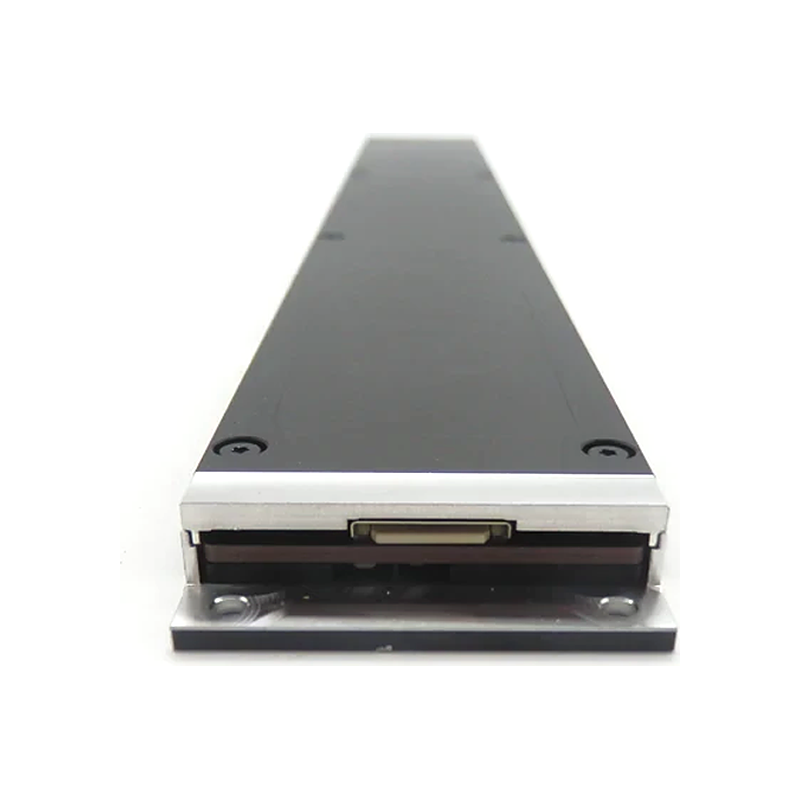
15.36 TB E1.L 1U long ruler NVMe SSD, PCIe 4.0, ordering code MZEL215THBLA-00AMV
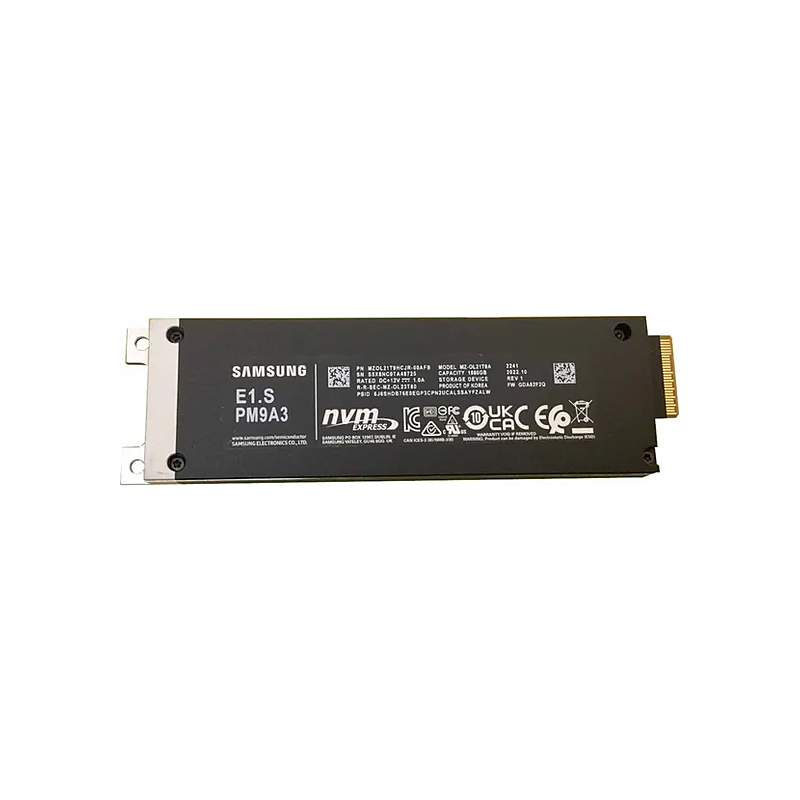
7.68 TB E1.S 1T NVMe SSD, PCIe 4.0, ordering codes MZCL27T6HBLA-00AMV / MZTL27T6HBLA-00A07
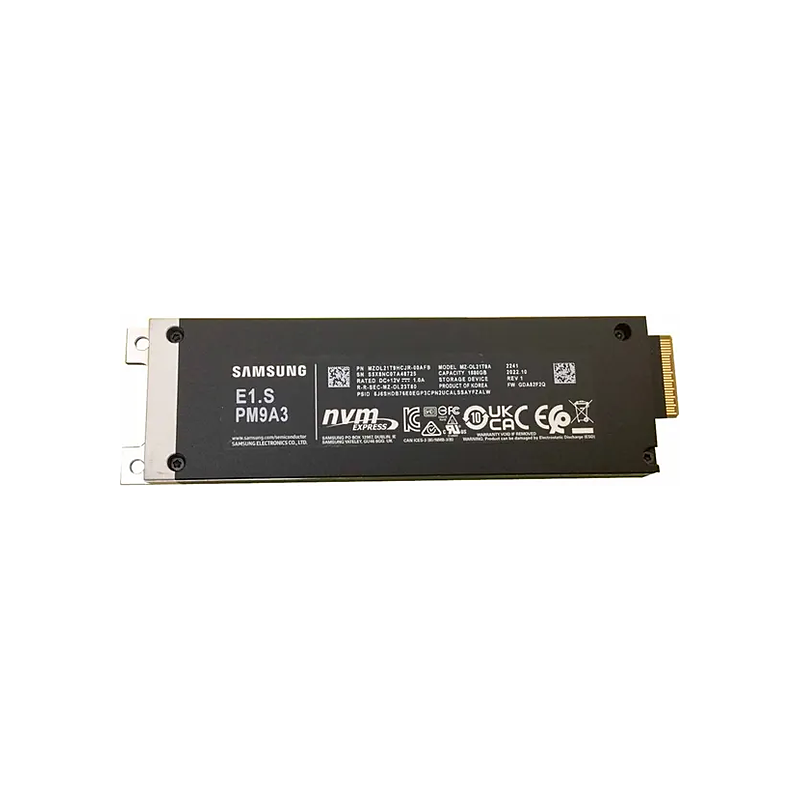
3.84 TB E1.S 1T NVMe SSD, PCIe 4.0, ordering codes MZCL23T8HCLS-00AMV / MZTL23T8HCLS-00A07
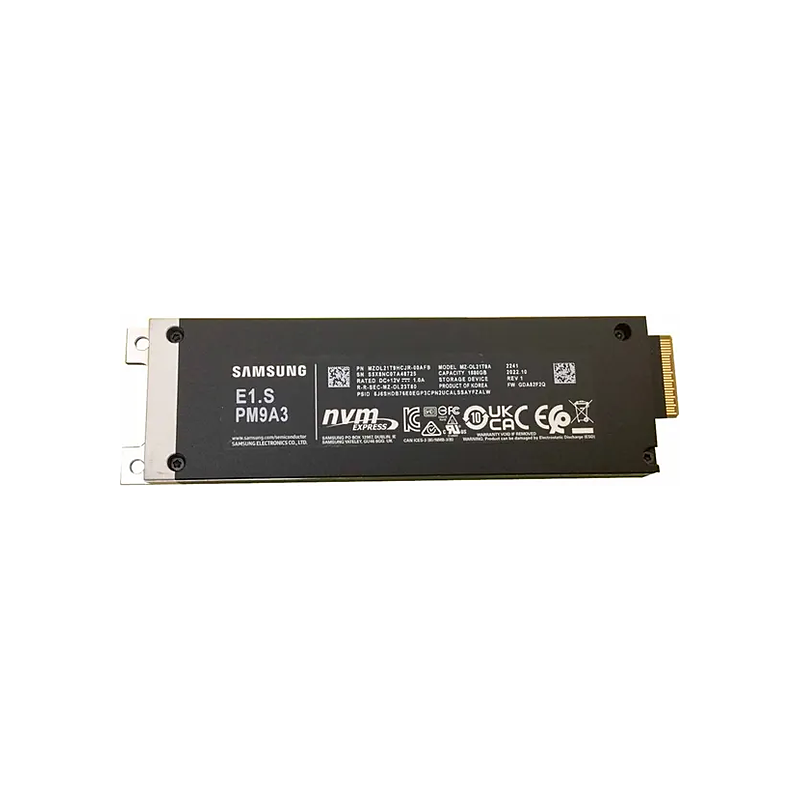
1.92 TB E1.S 1T (9.5 mm) NVMe SSD, PCIe 4.0, ordering code MZCL21T9HCJR-00AMV