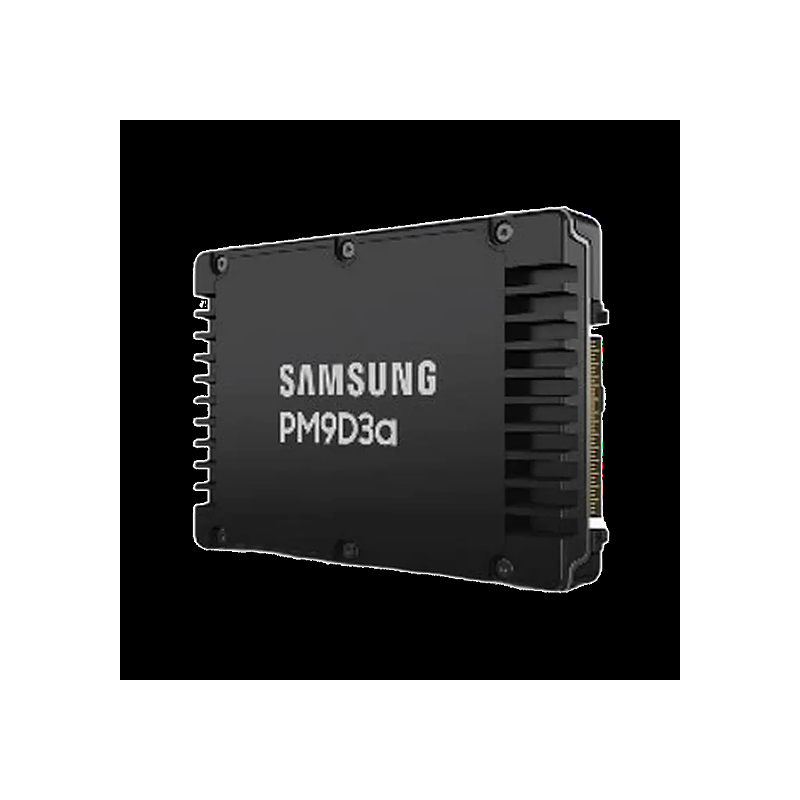
Samsung PM9D3a 1.92TB PCIe 5.0 NVMe U.2 SSD (MZWL61T9HFLT)
1.92 TB 2.5-inch U.2 NVMe SSD, PCIe 5.0, ordering code MZWL61T9HFLT-00AW7
- Part Number
- MZWL61T9HFLT
- Brand
- Samsung
- Category
- Enterprise & Data Center SSD
- Accepted Payments
- T/T Bank Transfer PayPal Western Union
Technical Specifications
| Capacity | 1.92 TB |
|---|---|
| Interface | NVMe |
| Form Factor | U.2 15mm |
| PCIe Version | PCIe 5.0 |
| NAND Type | TLC |
| Endurance (DWPD) | 1 |
| TBW | 3,504 TB |
| Sequential Read | 12,000 MB/s |
| Sequential Write | 3,500 MB/s |
| Random Read IOPS | 1,700K IOPS |
| Random Write IOPS | 150K IOPS |
| Power | 11.2 W |
| DRAM Cache | Yes |
| Power Loss Protection | Yes |
| Encryption | AES-XTS 256 |
| Condition | New · Used |
Frequently Asked Questions
Samsung PM9D3a 1.92 TB, 2.5-inch U.2 at 15 mm, catalogue code MZWL61T9HFLT, ordering code MZWL61T9HFLT-00AW7. 12,000 MB/s sequential read and 3,500 MB/s write on PCIe 5.0 x4, 1,700K random read and 150K random write IOPS, 3,504 TBW at one drive write a day for five years. Eighth-generation V-NAND TLC, NVMe 2.0, 11.2 W reading and 11.1 W writing. New and used both stocked.
This is where the family's write path stops being the weak one. The 960 GB drive writes at 1,600 MB/s; this one writes at 3,500 for twice the capacity, and it is the last capacity in the range that still quotes the full 1,700K random read. Nothing was traded away on the read side to get there.
Technical specifications
| Product family | Samsung PM9D3a (PCIe 5.0 data centre NVMe SSD, 1 DWPD) |
|---|---|
| PN | MZWL61T9HFLT (catalogue code) |
| Ordering code | MZWL61T9HFLT-00AW7 |
| Capacity | 1.92 TB (unformatted; 1 GB = 1 billion bytes, formatted capacity is less) |
| Form factor | 2.5-inch U.2, 15 mm (100.45 × 69.85 × 15 mm, up to 170 g) |
| Interface | PCIe 5.0 x4, NVMe 2.0, backwards compatible with PCIe 4.0 and 3.0 |
| NAND | Samsung V-NAND TLC (8th generation) |
| Sequential read | 12,000 MB/s (128 KB, queue depth 256) |
| Sequential write | 3,500 MB/s |
| Random 4K read | 1,700K IOPS (queue depth 64, four workers) |
| Random 4K write | 150K IOPS |
| Endurance (TBW) | 3,504 TB |
| Endurance (DWPD) | 1 drive write per day for five years |
| Latency | 65 µs random read, 9 µs random write (queue depth 1, median) |
| QoS 99% | 0.08 ms read at queue depth 1, 0.16 ms at depth 32; 0.01 / 0.25 ms write |
| Power | 11.2 W typical read, 11.1 W typical write, 4 W idle on PCIe 5.0 (12 V rail) |
| Power on PCIe 4.0 | 10 W read, 10.3 W write, 3.2 W idle |
| Power-loss protection | Yes, capacitor-backed, with end-to-end data path protection |
| Encryption | AES-XTS 256-bit engine, TCG Opal compliant |
| Sector size | 512, 520, 4096 or 4160 bytes, formattable |
| MTBF / UBER | 2.5 million hours / 1 sector per 1017 bits read |
| Drive ready | 8 s from power-on to accepting commands |
Where the write path stops being the weak one
| Model | Capacity | Bus and form factor | Seq read / write | Random 4 KB | TBW | DWPD |
|---|---|---|---|---|---|---|
| PM953 | 1.92 TB | PCIe 3.0, U.2 7 mm | 1,000 / 870 MB/s | 240K / 19K | 2,800 TB | 0.8 |
| PM963 | 1.92 TB | PCIe 3.0, U.2 7 mm | 2,000 / 1,200 MB/s | 430K / 40K | 2,733 TB | 0.78 |
| PM983 | 1.92 TB | PCIe 3.0, U.2 7 mm | 3,200 / 2,000 MB/s | 540K / 50K | 2,733 TB | 0.78 |
| PM893 | 1.92 TB | SATA 6 Gb/s, 2.5-inch 7 mm | 550 / 520 MB/s | 98K / 30K | 3,504 TB | 1 |
| PM9D3a | 1.92 TB | PCIe 5.0, U.2 15 mm | 12,000 / 3,500 MB/s | 1,700K / 150K | 3,504 TB | 1 |
Sequential write went from 870 to 3,500 across four generations, a factor of four. Sequential read went up twelve. Random write multiplied by eight, random read by seven. Endurance moved 25 percent and stopped, because 1.92 TB at one write a day is 3,504 TB of arithmetic whatever the controller does.
Compare that with the smallest drive in the family and the difference is not incremental. The 960 GB part writes at 1,600 MB/s, which is under half of this one, and quotes 70K random write against 150K. Doubling the flash more than doubled the write path, because write bandwidth is a function of how many dies can be programmed at once and this capacity has twice as many.
Above this point the curve flattens. The 3.84 TB drive writes at 6,700 and 7.68 TB at 7,000, which is only twice this drive for four times the capacity. If writing is the reason for the purchase, 1.92 TB is the last capacity where the money buys a proportional gain.
Per-terabyte maths across the range
Divide the range out per terabyte and the shape of it becomes visible. Sequential write per terabyte runs 1,667 MB/s at 960 GB, 1,823 here, 1,745 at 3.84 TB, 911 at 7.68 TB and 456 at 15.36 TB. Random write per terabyte runs 72.9K, 78.1K here, 65.1K, 52.1K and 26K.
Both curves peak at this capacity. That is the whole argument for buying 1.92 TB rather than the cheaper drive below it or the denser drive above it. The 960 GB sibling wins on random read per terabyte and loses on everything that writes; the 3.84 TB and up win on cost and power per terabyte and lose on write efficiency.
One caveat worth stating. None of this makes 1.92 TB cheap. Per gigabyte it costs more than 3.84 TB, and a shelf of these holds half the data of the same shelf of 7.68 TB drives. The case is specific: a write-bearing tier where the working set is small and the write rate is high.
What 3,500 MB/s buys that 1,600 does not
Random write is where a database or a log volume actually lives, and the figures there are 150K IOPS against 70K, or 600 MB/s of 4 KB writes against 280. Twice the commit rate at the same queue depth, before touching sequential bandwidth at all.
Sequential write matters on ingest and on restore. Filling this drive takes about nine minutes at its rated 3,500 MB/s; doing the same job on a pair of 960 GB drives takes roughly twelve, and on SATA it takes an hour. The rated figure is not reachable for long on any drive once the SLC cache is spent, but the ratio between capacities holds.
Endurance deserves a line of its own because it is the number buyers check first and misread most often. 3,504 TB is 1.92 TB of host writes a day for 1,825 days, which averages 22 MB/s. A server writing 150K random IOPS of 4 KB is writing 600 MB/s and would exhaust the warranty in 67 days. That combination is a statement about steady-state workload, not about the drive: choose by sustained write rate, not by the IOPS peak.
Power, slots and rebuild at this capacity
Eleven point two watts reading, 11.1 writing, 4 W idle. Twenty-four drives hold 46 TB and draw 269 W under read load, which is 5.8 W per terabyte. The 15.36 TB drive manages 0.92 W per terabyte, so this is six times the power per gigabyte and one sixth of the data per bay. Neither number is a defect; they are the price of the write path.
Rebuild is the counterweight. A failed member here costs 1.92 TB of reconstruction, about 64 minutes at 500 MB/s, against eight hours for a 15.36 TB member in the same chassis. On a parity array with a narrow redundancy margin, that difference decides whether a second failure is survivable, and it is the strongest argument for a mid-size drive in a write-heavy tier.
What happens in a Gen4 slot
On a PCIe 4.0 link the drive negotiates to 7,000 MB/s sequential read and 3,100 write, with random read at 1,000K and random write holding at 150K. Power falls to 10 W reading and 3.2 W idle.
Read the losses individually. Sequential read drops 42 percent, sequential write 11 percent, random write nothing, random read 41 percent. A Gen4 server running mixed or write-heavy work keeps nearly all of what it paid for. A Gen4 server bought for random read throughput loses four tenths of it, and there a Gen4 drive at half the price is the better purchase.
Ordering codes: MZWL61T9 and the -00AW7 suffix
| Code | Type | Capacity | Condition | Quote |
|---|---|---|---|---|
| MZWL61T9HFLT | Catalogue code | 1.92 TB | New / used | Enquire |
| MZWL61T9HFLT-00AW7 | Ordering code | 1.92 TB | New / used | Enquire |
The suffix is a distribution block, not a specification. Samsung's datasheet lists this capacity as -00B07; channel stock commonly carries -00AW7. Both are the 1.92 TB U.2 drive. Put the full string on the order and accept either.
Two strings sit close enough to confuse on a packing list. MZWL6960HFJA is the 960 GB drive and differs in the digits after MZWL6, not in the connector. MZWL63T8HFLT is 3.84 TB and differs in a single character, T9 against T8. Read the label, not the invoice line.
Checks worth running on delivery:
- T9 in the string. 1.92 TB is MZWL61T9HFLT; the 3.84 TB is MZWL63T8HFLT. One character apart.
- Reported capacity. 1.92 TB reports about 1.75 TiB, and 960 GB reports about 894 GiB in the same 15 mm shell.
- Thickness. 15 mm, up to 170 g. The 7 mm bays that held PM983 and PM963 will not close on it.
- Host bytes written against 3,504 TB. On a pull this is the only field that tells you how much of the warranty budget is gone.
Warranty, lead time and purchasing
Sealed drives and tested pulls each carry a one year warranty from us, and the cover follows the drive rather than the machine it came out of. Warehouse stock normally ships in three to seven working days with tracking issued when it leaves. Minimum order is two pieces, capacities in this family combine on one order, and a price comes back the same working day once part number, condition and quantity are with us.
Get Pricing For This Part
Tell us who you are — we reply within one working day with a firm quote, stock status and lead time. Volume discounts available.
Related Products
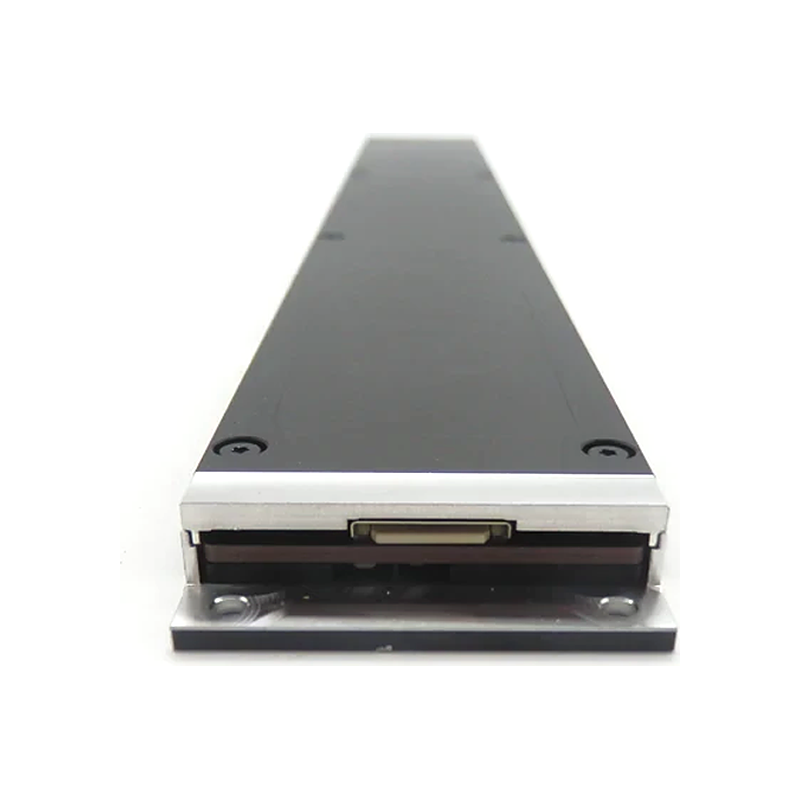
15.36 TB E1.L 1U long ruler NVMe SSD, PCIe 4.0, ordering code MZEL215THBLA-00AMV
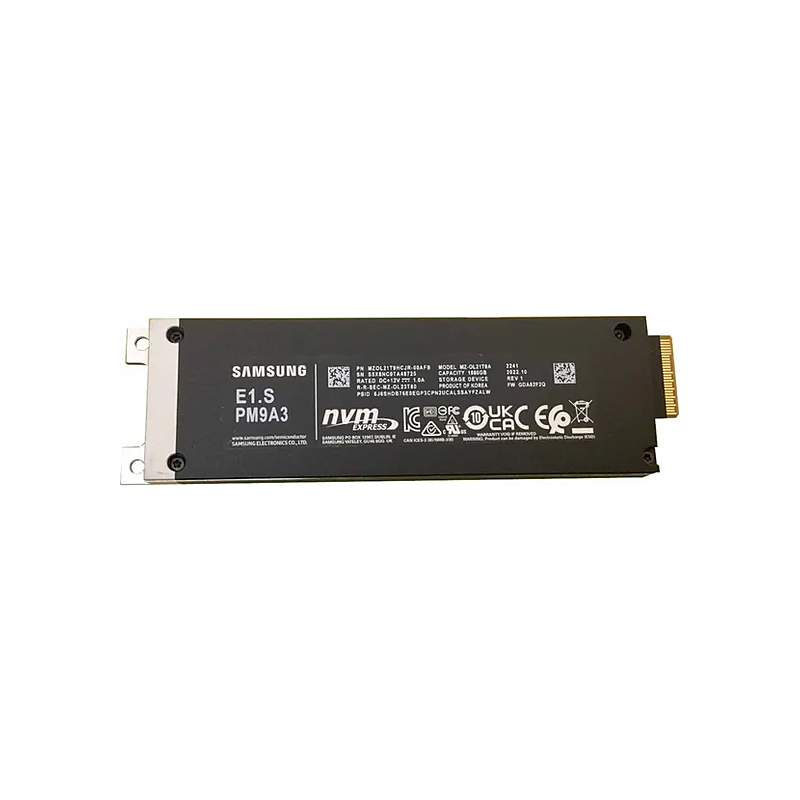
7.68 TB E1.S 1T NVMe SSD, PCIe 4.0, ordering codes MZCL27T6HBLA-00AMV / MZTL27T6HBLA-00A07
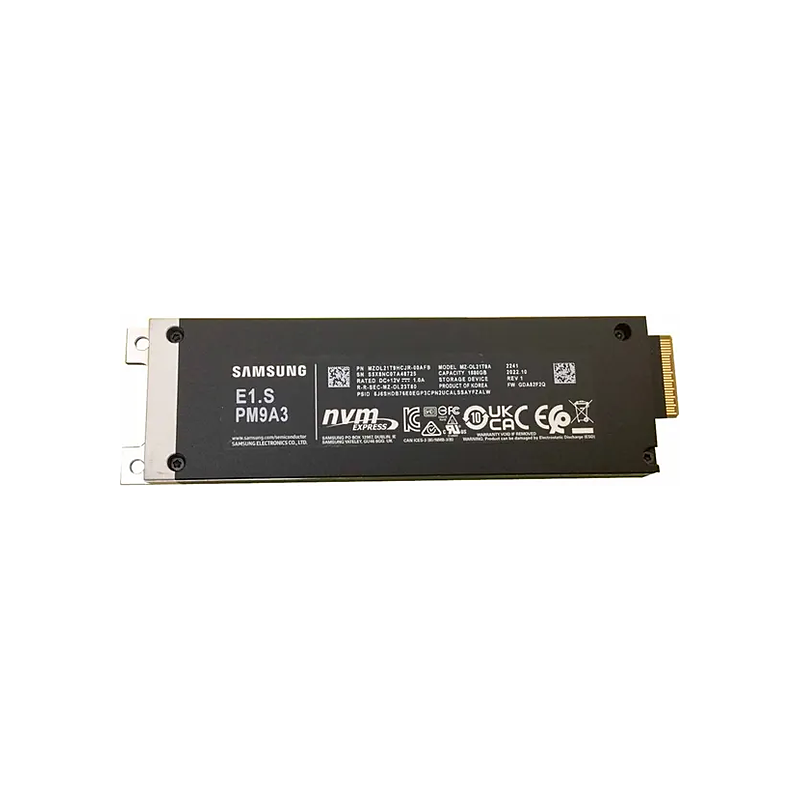
3.84 TB E1.S 1T NVMe SSD, PCIe 4.0, ordering codes MZCL23T8HCLS-00AMV / MZTL23T8HCLS-00A07
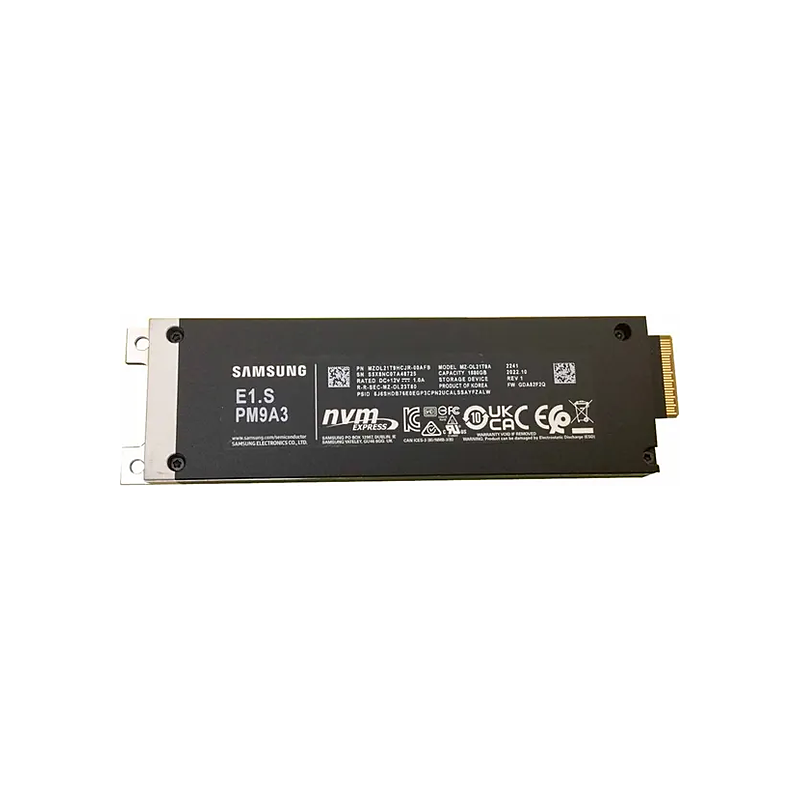
1.92 TB E1.S 1T (9.5 mm) NVMe SSD, PCIe 4.0, ordering code MZCL21T9HCJR-00AMV