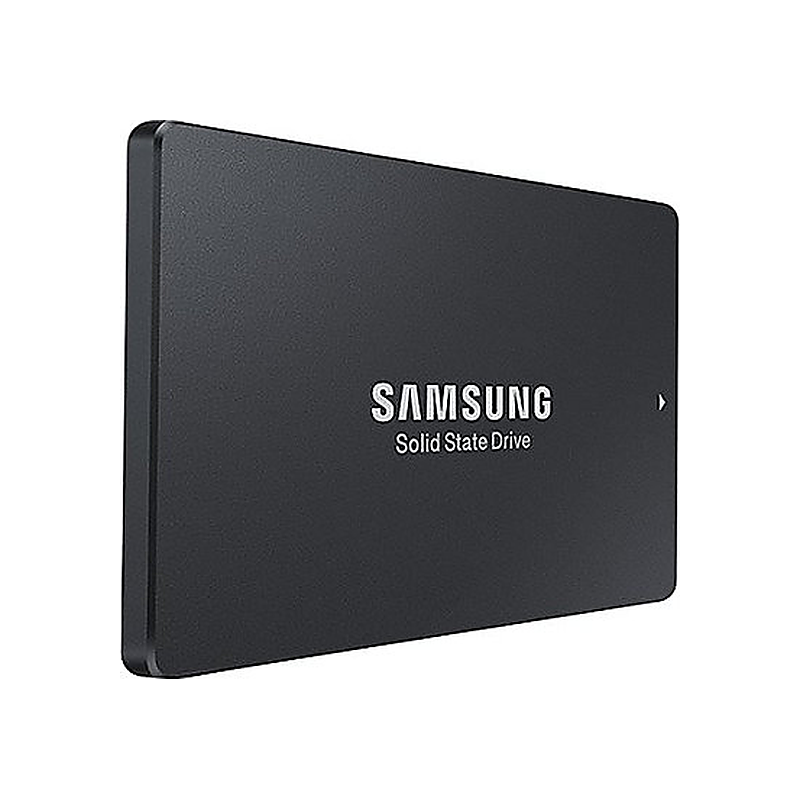
Samsung PM963 3.84TB PCIe 3.0 NVMe U.2 SSD (MZQLW3T8HMLP)
3.84 TB 2.5-inch U.2 NVMe SSD, ordering code MZQLW3T8HMLP-00003
- Part Number
- MZQLW3T8HMLP
- Brand
- Samsung
- Category
- Enterprise & Data Center SSD
- Accepted Payments
- T/T Bank Transfer PayPal Western Union
Technical Specifications
| Capacity | 3.84 TB |
|---|---|
| Interface | NVMe |
| Form Factor | U.2 7mm |
| PCIe Version | PCIe 3.0 |
| NAND Type | TLC |
| Endurance (DWPD) | 0.78 |
| TBW | 5,466 TB |
| Sequential Read | 2,000 MB/s |
| Sequential Write | 1,200 MB/s |
| Random Read IOPS | 430K IOPS |
| Random Write IOPS | 40K IOPS |
| Power | 7.6 W |
| DRAM Cache | Yes |
| Power Loss Protection | Yes |
| Encryption | AES-XTS 256 |
| Condition | New · Used |
Frequently Asked Questions
Samsung PM963 3.84 TB, 2.5-inch U.2 (SFF-8639), catalogue code MZQLW3T8HMLP, ordering code MZQLW3T8HMLP-00003. 2,000 MB/s sequential read, 1,200 MB/s sequential write, 430K random read and 40K random write IOPS at 4 KB, 5,466 TBW. V-NAND TLC, PCIe 3.0 x4, NVMe 1.2, 85 µs random read latency. Both conditions stocked, one-year warranty either way.
Capacity is the only thing this drive adds over its 1.92 TB sibling. Every performance figure is identical, from the 2,000 MB/s read down to the 40K random write, because the controller and the PCIe link were already the limit at half the capacity. What changes is how much data sits behind that bandwidth, and how many years of writes it will take.
Past the ceiling of the PM953
The PM953 family stops at 1.92 TB. If a 7 mm U.2 slot needs more than that from this generation of Samsung hardware, the PM963 is the drive that goes in it, and 3.84 TB is the largest capacity Samsung built on this controller. The step from 1.92 to 3.84 buys density and lifetime, not throughput — bank on the same 430K random read whether there are two terabytes behind it or four.
That is worth stating plainly because the pricing does not always reflect it. A 3.84 TB PM963 quoted at twice the price of the 1.92 is being priced on capacity, which is fair. Quoted at three times on the strength of performance, it is not.
Technical specifications
| Product family | Samsung PM963 (PCIe 3.0 enterprise NVMe SSD, read-intensive) |
|---|---|
| PN | MZQLW3T8HMLP (catalogue code) |
| Ordering code | MZQLW3T8HMLP-00003 |
| Capacity | 3.84 TB (unformatted; 1 GB = 1 billion bytes, formatted capacity is less) |
| Form factor | 2.5-inch U.2, SFF-8639, 7 mm (100 × 70 × 7 mm) |
| Interface | PCIe 3.0 x4, NVMe 1.2 |
| NAND | Samsung V-NAND TLC (48-layer) |
| Sequential read | 2,000 MB/s (128 KB) |
| Sequential write | 1,200 MB/s (128 KB) |
| Random 4K read | 430K IOPS |
| Random 4K write | 40K IOPS |
| Latency, random read / write | 85 µs / 50 µs |
| Latency, sequential read / write | 15 µs / 35 µs |
| Endurance (TBW) | 5,466 TB |
| Endurance (DWPD) | 1.3 for three years, which is 0.78 over five years |
| Power | 7.6 W typical read, 7.0 W typical write, 2.5 W idle |
| DRAM cache | Yes |
| Power-loss protection | Yes, capacitor-backed |
| Encryption | AES 256-bit hardware encryption |
| MTTF | 2 million hours |
3 TB a day for five years, or 5 TB for three
5,466 TB is the lifetime figure, and how you spend it depends on the clock you choose. Spread over five years it is 2,995 GB of host writes a day, which is 0.78 drive writes. Compress the same tonnage into three years and it becomes 4,992 GB a day, or 1.3 drive writes. Both are correct; Samsung prints the three-year rating in its brochure and Lenovo's ThinkSystem documentation prints both, which is where the two numbers usually collide in a spreadsheet.
The ratio between the two is fixed at 1,095 against 1,825 days, so it does not change with capacity: the 1.92 TB member carries half the tonnage and the same 0.78 and 1.3. What doubling the capacity does buy is absolute headroom. Three terabytes a day for five years is a real workload, not a rounding error, and it is twice what the smaller drive will absorb over the same period.
The latency figures, which are easy to overlook
Bandwidth numbers describe a queue full of commands. Latency describes what a single thread sees, and for this drive the published figures are 85 µs on a random read and 50 µs on a random write, with 15 and 35 µs on the sequential paths. Turned around, 85 µs is roughly 11.7K IOPS from one outstanding request and 50 µs is 20K, which is the ceiling any single-threaded workload will hit no matter how many drives are striped behind it.
That is the number that decides whether an application feels fast. A 430K IOPS rating is reached at queue depths in the hundreds; a database doing one synchronous read at a time never gets near it and lives entirely inside the 85 µs. It is also why moving from SATA to this drive changes the feel of a latency-bound workload far more than the sequential figures suggest.
Where it sits against the SATA drives at 3.84 TB
| Model | Interface | Capacity | Seq read / write | Random 4 KB | TBW | DWPD |
|---|---|---|---|---|---|---|
| PM963 3.84 TB | PCIe 3.0 x4 | 3.84 TB | 2,000 / 1,200 MB/s | 430K / 40K | 5,466 TB | 0.78 |
| 5300 PRO 3.84 TB | SATA 6 Gb/s | 3.84 TB | 540 / 520 MB/s | 95K / 22K | 8,410 TB | 1.2 |
| 5400 PRO 3.84 TB | SATA 6 Gb/s | 3.84 TB | 540 / 520 MB/s | 95K / 30K | 10,512 TB | 1.5 |
| 5400 MAX 3.84 TB | SATA 6 Gb/s | 3.84 TB | 540 / 520 MB/s | 95K / 34K | 23,827 TB | 3.4 |
Every SATA row beats this drive on endurance, the cheapest of them by half again and the 5400 MAX by more than four times. That is not a flaw in the PM963; it is what a read-intensive part looks like next to mixed-use parts. The NVMe drive returns 3.7 times the sequential read, 4.5 times the random read and a fraction of the latency, and those are the columns that matter when the workload is a cache or an index.
The 5300 PRO row is the useful one for anyone holding stock of that drive: same capacity, same bay, 8,410 TB against 5,466, and a quarter of the read bandwidth. If the server is already full of them and the workload is genuinely read-heavy, the PM963 is the upgrade that changes something. If it is write-heavy, replacing them makes endurance worse, not better.
Ordering codes and the 3T8 block
| Code | Type | Capacity | Condition | Quote |
|---|---|---|---|---|
| MZQLW3T8HMLP | Catalogue code | 3.84 TB | New / used | Enquire |
| MZQLW3T8HMLP-00003 | Ordering code | 3.84 TB | New / used | Enquire |
Read the string from the fifth character. MZQLW is the PM963 family, and 3T8 is 3.84 TB in Samsung's shorthand — three terabytes and eight tenths, written without a decimal point. Then HMLP for the build and -00003 for the OEM channel. The 1.92 TB member reads MZQLW1T9HMJP, so both the capacity block and the four build letters change between them.
The label also carries the shorter model form, MZ-QLW3T80, which is what most server inventory systems record. A purchase order written against MZ-QLW3T80 and a drive labelled MZQLW3T8HMLP-00003 are the same part; a drive labelled MZQLW1T9HMJP is not, and it looks identical in the hand.
What to check at goods-in
- 3T8, not 1T9. The two capacities share a shell, a label layout and a connector. Only the capacity block in the P/N separates them.
- Host bytes written against 5,466 TB. Read the SMART counter before the drive is wiped. A pull at 70 percent of rated bytes has roughly 1.5 TB a day left for five years, not 3.
- Capacitor health. Power-loss protection degrades silently on these drives. Every pull is discharged and measured on our bench before it is listed as tested.
- Firmware revision. Ask for the string out of SMART and check it against the server vendor's compatibility list; these shipped across several revisions through 2016 and 2017.
- Backplane wiring. U.2 needs PCIe lanes at the bay. On a SAS or SATA backplane the drive takes power and never links, which reads as a dead drive if the wiring is not checked first.
Warranty, lead time and purchasing
Both conditions carry a year of cover from us, and the warranty attaches to the drive rather than to the machine it was pulled from. Stock usually leaves the warehouse inside three to seven working days, with tracking issued on the way out. We sell from two pieces, capacities in this family can be combined on a single order, and a price follows once part number, condition and quantity are in hand.
Get Pricing For This Part
Tell us who you are — we reply within one working day with a firm quote, stock status and lead time. Volume discounts available.
Related Products
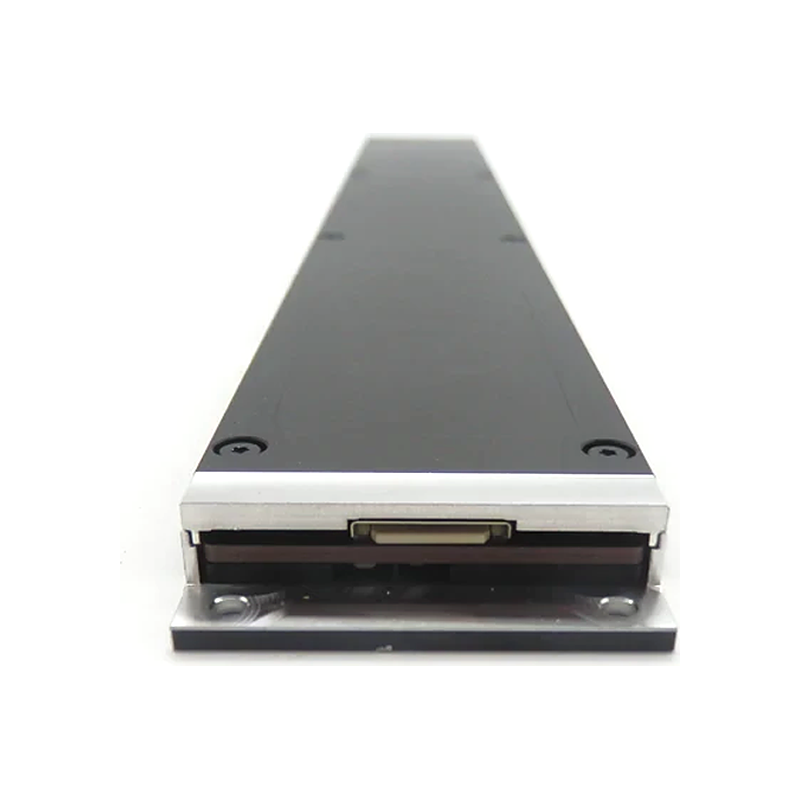
15.36 TB E1.L 1U long ruler NVMe SSD, PCIe 4.0, ordering code MZEL215THBLA-00AMV
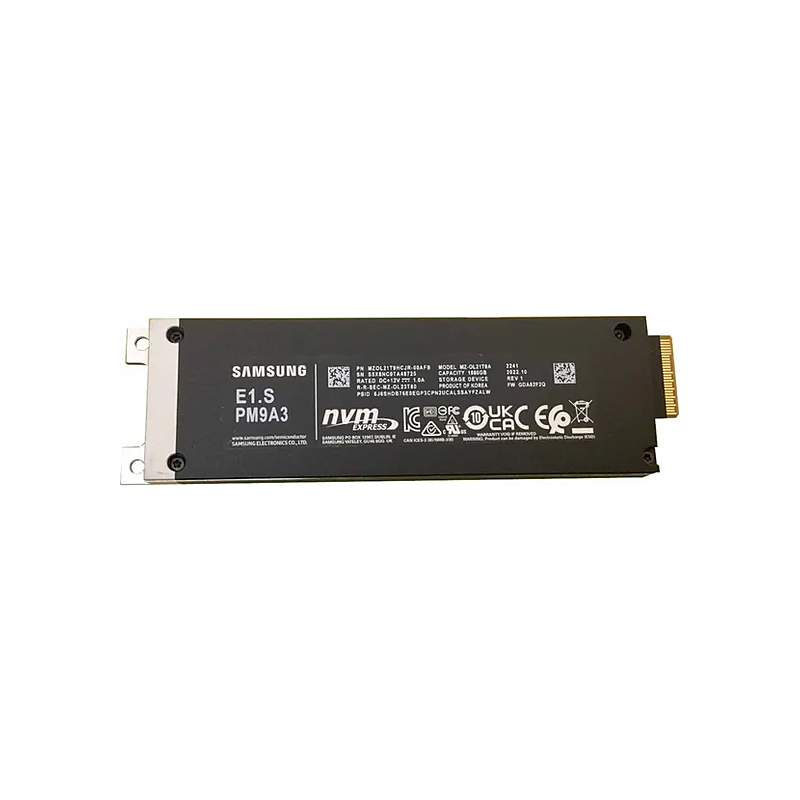
7.68 TB E1.S 1T NVMe SSD, PCIe 4.0, ordering codes MZCL27T6HBLA-00AMV / MZTL27T6HBLA-00A07
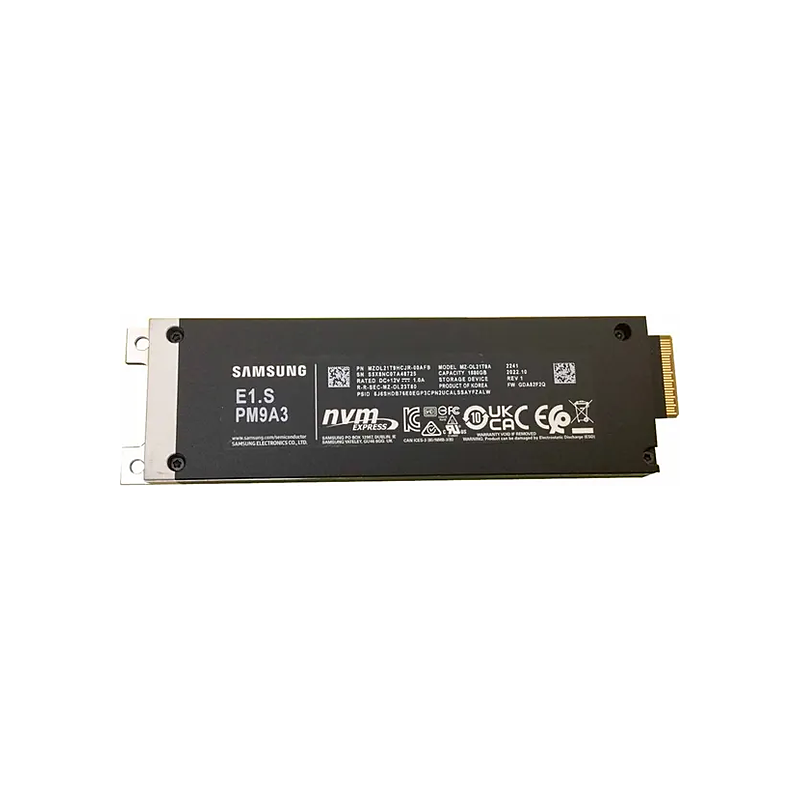
3.84 TB E1.S 1T NVMe SSD, PCIe 4.0, ordering codes MZCL23T8HCLS-00AMV / MZTL23T8HCLS-00A07
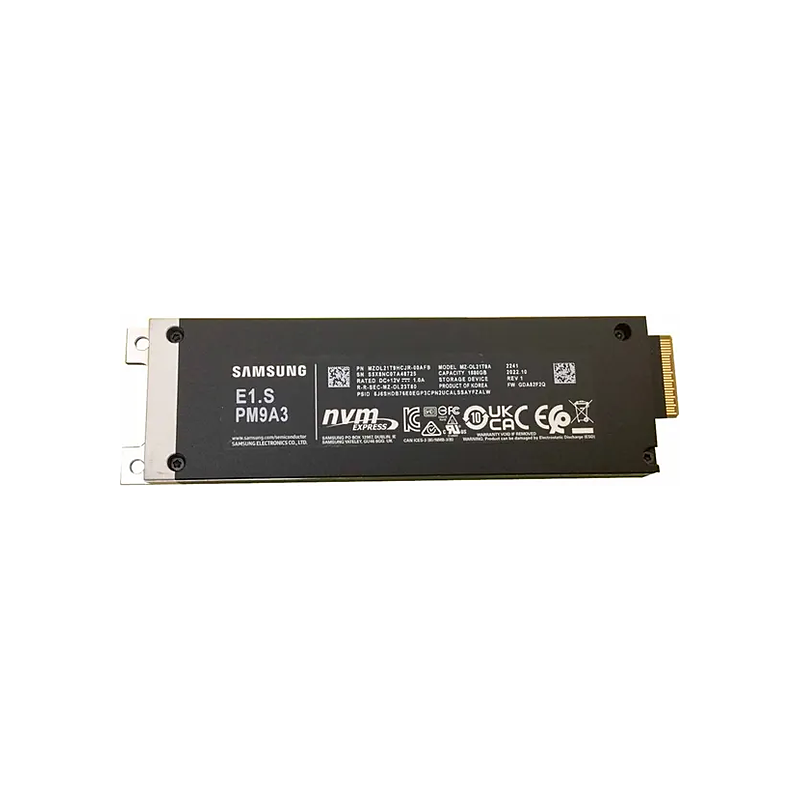
1.92 TB E1.S 1T (9.5 mm) NVMe SSD, PCIe 4.0, ordering code MZCL21T9HCJR-00AMV