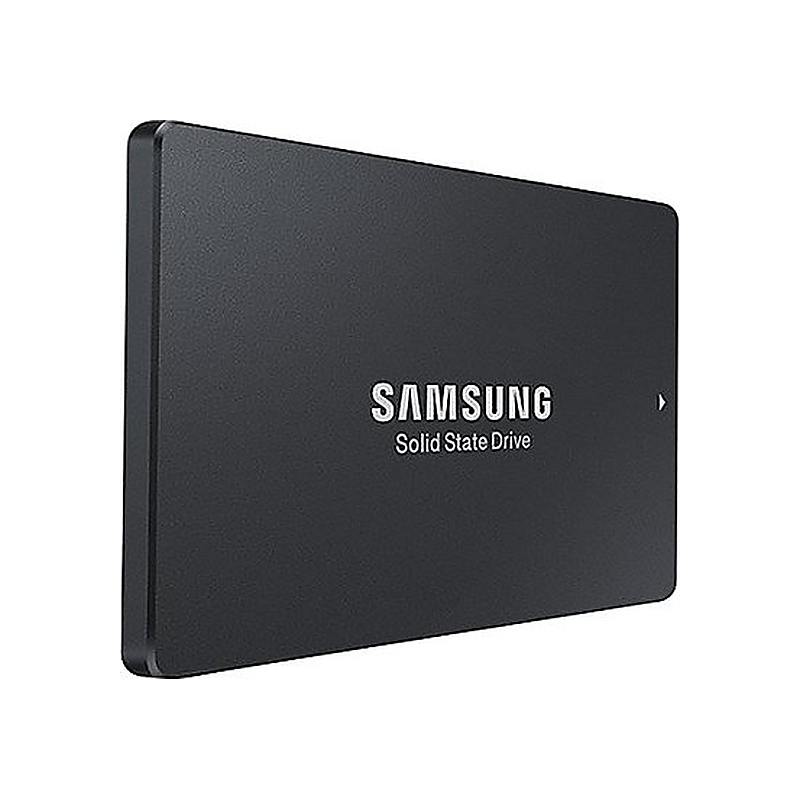
Samsung PM863a 480GB SATA SSD (MZ7LM480HMHQ)
480 GB 2.5-inch SATA read-intensive SSD, ordering code MZ7LM480HMHQ-00005
- Part Number
- MZ7LM480HMHQ
- Brand
- Samsung
- Category
- Enterprise & Data Center SSD
- Accepted Payments
- T/T Bank Transfer PayPal Western Union
Technical Specifications
| Capacity | 480 GB |
|---|---|
| Interface | SATA |
| Form Factor | 2.5-inch 7mm |
| PCIe Version | Not applicable |
| NAND Type | TLC |
| Endurance (DWPD) | 0.78 |
| TBW | 683 TB |
| Sequential Read | 520 MB/s |
| Sequential Write | 480 MB/s |
| Random Read IOPS | 97K IOPS |
| Random Write IOPS | 16K IOPS |
| Power | 3 W |
| DRAM Cache | Yes |
| Power Loss Protection | Yes |
| Encryption | SED |
| Condition | New · Used |
Frequently Asked Questions
Samsung PM863a 480 GB in the 2.5-inch 7 mm SATA form factor, catalogued under MZ7LM480HMHQ and supplied under ordering code MZ7LM480HMHQ-00005. 520 MB/s sequential read, 480 MB/s sequential write, 97K random read and 16K random write IOPS, 683 TBW. Supplied new or as tested pulls, with a 1-year warranty from us.
This is the density at which the PM863a family reaches its full rated speed. The 240 GB entry point runs 330/300 MB/s because there are fewer NAND die behind the controller; from 480 GB upward the rating is 520/480, and random write climbs from 9K to 16K IOPS. Every larger capacity in the family matches this one exactly, which makes 480 GB the cheapest way to buy the full specification rather than a cut-down version of it.
Underneath it is the same 2016 read-intensive design: 48-layer V-NAND TLC behind a Samsung Mercury controller with a DRAM cache, 2 million hours MTBF, AES 256-bit encryption, and 3 W of active draw whatever the capacity. Samsung has discontinued the generation, so supply is decommissioned server stock and remaining channel inventory — which is why a drive of this class is priced where it is.
This is the capacity where the family reaches full speed
The step from 240 GB to 480 GB is the only place in the PM863a range where performance actually moves. Doubling the die count lifts sequential write by 60% (300 to 480 MB/s), sequential read by 58% (330 to 520), and random write by 78% (9K to 16K IOPS). Above 480 GB, the 960 GB, 1.92 TB and 3.84 TB parts post the identical 520/480 MB/s and 97K read, with only random write moving once more, from 16K to 24K.
So the engineering argument for this capacity is not "more space". It is that a mirrored pair here delivers the full family specification for twice the raw capacity of the entry tier, at the same 3 W per drive and inside the same 7 mm bay. Where the earlier capacity was confined to a boot role by its write throughput, 480 GB can carry the boot volume plus a working set — a hypervisor datastore, a container image cache, a small read-mostly index — without the throughput ceiling becoming the limit.
What it still is not is a write device. The 0.78 drive-writes-per-day rating is unchanged from the smaller capacity, because endurance scales with capacity: 683 TBW against 480 GB is the same ratio as 341 TBW against 240 GB. Anything that writes continuously — a log sink, a write-back cache, a monitoring database — still belongs on a mixed-use part.
Technical specifications
| Product family | Samsung PM863a (V-NAND SSD, data centre / read-intensive) |
|---|---|
| PN | MZ7LM480HMHQ (catalogue code) |
| Ordering code | MZ7LM480HMHQ-00005 |
| Capacity | 480 GB (480 GB decimal) |
| Form factor | 2.5-inch, 7.0 mm (100.20 × 69.85 × 6.8 mm, max 55 g) |
| Interface | SATA 6 Gb/s, compatible with SATA 3 Gb/s and 1.5 Gb/s |
| Controller | Samsung Mercury, with 512 MB DRAM cache |
| NAND | Samsung V-NAND TLC (48-layer) |
| Sequential read / write | 520 MB/s / 480 MB/s (128 KB, QD32) |
| Random 4 KB (QD32) | 97K IOPS read / 16K IOPS write |
| Endurance | 683 TBW — 0.78 DWPD over a 5-year basis; Samsung publishes 1.3 DWPD against a 3-year period |
| Power | Idle 1.3 W; active 3 W read / 3 W write; supply 5 V ±5% |
| Power-loss protection | Yes — Samsung specifies write-cache protection for this generation; no hold-up time is published |
| Data security | AES 256-bit encryption engine (self-encrypting drive); no TCG Opal |
| Features | TRIM, NCQ to depth 32, S.M.A.R.T.; ATA/ATAPI-7 compliant |
| Reliability | MTBF 2.0 million hours; UBER 1 sector per 1017 bits read; operating 0 °C to 70 °C |
| Shock | 1,500 G at 0.5 ms, half sine wave |
| Status | End of life — Samsung has discontinued the PM863a generation |
Ordering codes we can supply at 480 GB
| Code | Type | Condition | Quote |
|---|---|---|---|
| MZ7LM480HMHQ | Catalogue code | New / used | Enquire |
| MZ7LM480HMHQ-00005 | Ordering code | New / used | Enquire |
Both strings describe the same 480 GB drive. MZ7LM480HMHQ is the model name printed on the label and the one this catalogue and most asset registers index on; MZ7LM480HMHQ-00005 is the ordering code a PO line and a warranty claim are written against. Quote whichever your paperwork carries.
What 480 GB buys over 240 GB, and what it does not
It buys throughput, endurance and working space, in that order of importance. The 240 GB sibling is a boot device and little else: 300 MB/s write and 341 TBW confine it to an operating system that is installed once and patched occasionally. At 480 GB the write path is 480 MB/s and the endurance 683 TBW, which is enough to hold the boot pair and something useful beside it — a hypervisor scratch volume, an image cache, a read-mostly index that gets rebuilt rather than updated.
What it does not buy is write-endurance headroom in absolute terms. The rating is expressed as drive-writes-per-day and stays at 0.78 however large the drive; a 480 GB unit tolerates twice the bytes of the 240 GB unit only because it is twice the size. A workload that would wear out one in three years wears out the other in three years too. If the duty cycle is the problem, the answer is a mixed-use part such as the SM863a, not a larger PM863a.
Neither does it buy any change in power or physical envelope. Both capacities draw 3 W active and fit the same 7 mm bay, so a pair of 480 GB drives costs a node the same watts as a pair of 240 GB drives while delivering twice the usable space — the reason this capacity is often the last one that makes sense before moving to a bigger chassis instead.
What is missing compared with a current-generation drive
Two things. Power-loss protection is claimed but not specified: the PM863a documentation lists write-cache protection for this generation beside end-to-end data protection, yet publishes no hold-up time, so it should be read as cover for a short interruption rather than a guaranteed flush. A RAID controller with a battery or flash-backed cache is what actually closes that gap in practice; a bare board has nothing behind it. And there is no TCG Opal, only a plain AES 256-bit engine, so software-managed full-disk encryption is the practical route rather than a self-encrypting drive under key management.
On speed the gap has narrowed by this capacity. The current-generation PM893 at 480 GB runs 550/520 MB/s with 876 TBW and capacitor-backed PLP, so the sequential difference is now measured in tens of megabytes rather than in hundreds: what separates them is endurance, power-loss behaviour and the fact that one is still in production. Where the node is already built and the part number fixed, this generation remains a serviceable boot and read-tier drive; for a new design the current one is the better specification, and 960 GB of it is the natural step if the working set keeps growing.
How 480 GB compares with the rest of the PM863a family
| Model | Capacity | Sequential read / write | Random read / write | Endurance | Active power |
|---|---|---|---|---|---|
| PM863a 240 GB | 240 GB | 330 / 300 MB/s | 86K / 9K IOPS | 341 TB (0.78 DWPD) | 3 / 3 W |
| PM863a 480 GB | 480 GB | 520 / 480 MB/s | 97K / 16K IOPS | 683 TB (0.78 DWPD) | 3 / 3 W |
| PM863a 960 GB | 960 GB | 520 / 480 MB/s | 97K / 24K IOPS | 1,366 TB (0.78 DWPD) | 3 / 3 W |
| PM863a 1.92 TB | 1.92 TB | 520 / 480 MB/s | 97K / 24K IOPS | 2,733 TB (0.78 DWPD) | 3 / 4 W |
| PM863a 3.84 TB | 3.84 TB | 520 / 480 MB/s | 97K / 24K IOPS | 5,466 TB (0.78 DWPD) | 3 / 4 W |
Read through that table and the shape of the family is clear: one performance step at 480 GB, then nothing but capacity and endurance. Everything from 480 GB up shares the same 520/480 MB/s rating, the same 97K read IOPS and the same 0.78 DWPD; the larger rows differ in random write, in watts at the top end, and in how many bytes they can absorb before the rating is spent. Choosing between them is a question of how much room the working set needs, not of how fast the drive is.
How each drive is tested before it ships
- Label and model line checked against the order: PM863a 2.5" SATA SSD with MZ7LM480HMHQ and the ordering suffix recorded on the invoice.
- SMART attribute read before anything else — power-on hours, host writes and grown defect count — with the readout kept on file for the unit shipped.
- Full-surface read scan, then a SMART long self-test to completion.
- Sequential read and write verified near the 520 / 480 MB/s rating on a SATA 6 Gb/s port, and random 4 KB checked at queue depth 32.
- Capacity and over-provisioning confirmed at 480 GB with the expected reserve.
- TRIM and secure-erase cycle exercised, then the drive returned to a clean state.
- Thermal soak at operating temperature, checking for the firmware-level faults this generation is known for; units below the fixed firmware revision are reflashed or rejected.
- Final clean, then packaging in an anti-static bag with foam.
Warranty, lead time and purchasing
Every drive carries a 1-year warranty from us against defects in workmanship and function. Verified faulty units are replaced or refunded and we cover return shipping. Stock is held in both new and used condition; the condition you order is confirmed before dispatch, and used units are pull-tested stock rather than untested lots. Stock is held in our own warehouse and normally dispatches within three to seven working days, with tracking issued at dispatch.
Pricing is quoted per order because condition and quantity both move it. Send the quantity, the condition you need and the server model the drive is going into, and you will get a quote with lead time the same working day. Boot pairs and small data tiers are usually ordered in even numbers and we will supply matched units from the same batch where stock allows. Because the PM863a generation is end-of-life, larger quantities are quoted against confirmed stock rather than a standing lead time.
Get Pricing For This Part
Tell us who you are — we reply within one working day with a firm quote, stock status and lead time. Volume discounts available.
Related Products
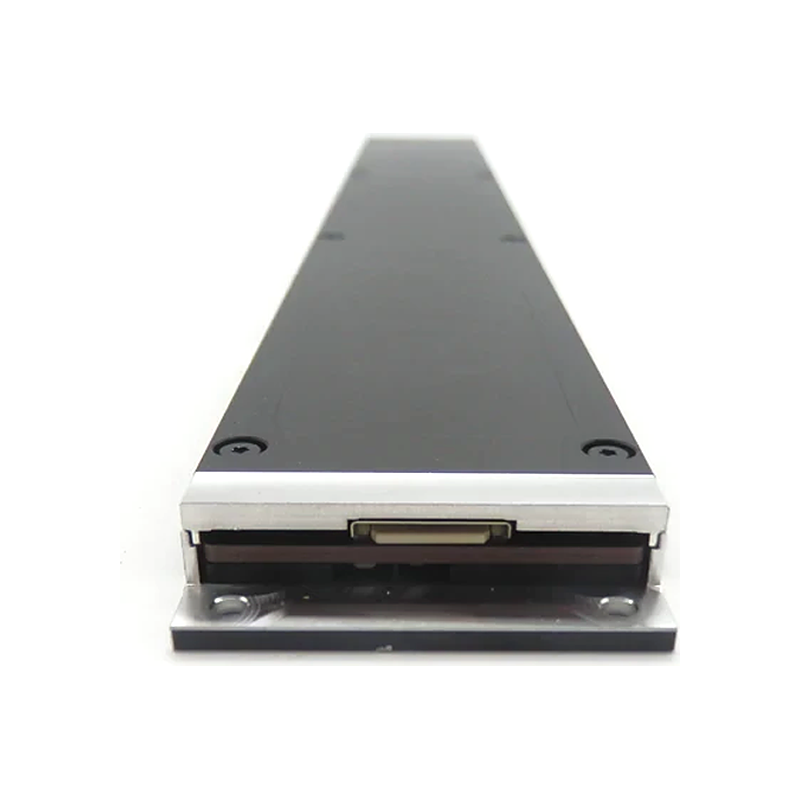
15.36 TB E1.L 1U long ruler NVMe SSD, PCIe 4.0, ordering code MZEL215THBLA-00AMV
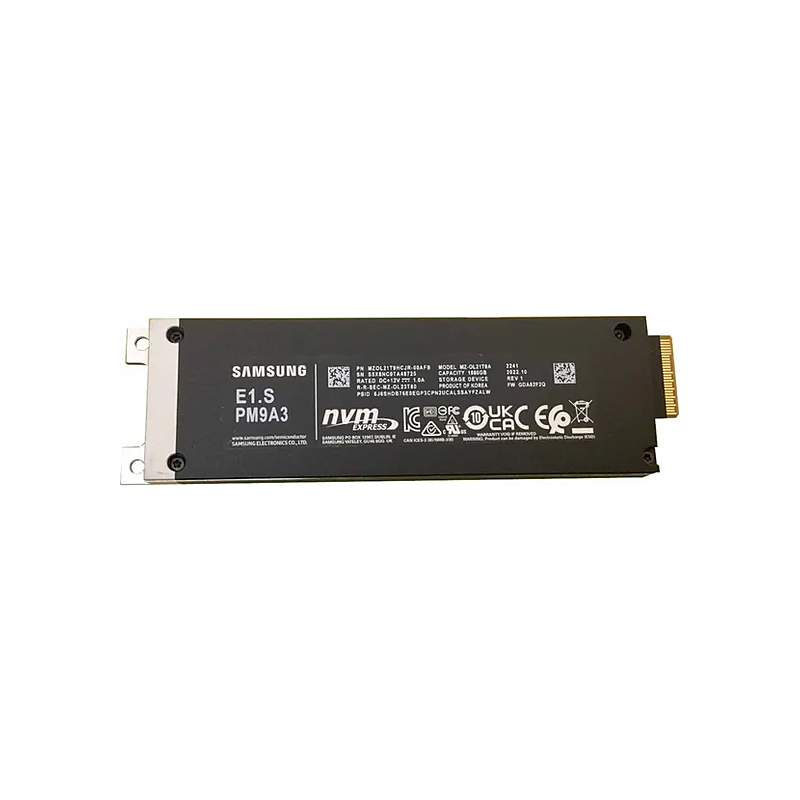
7.68 TB E1.S 1T NVMe SSD, PCIe 4.0, ordering codes MZCL27T6HBLA-00AMV / MZTL27T6HBLA-00A07
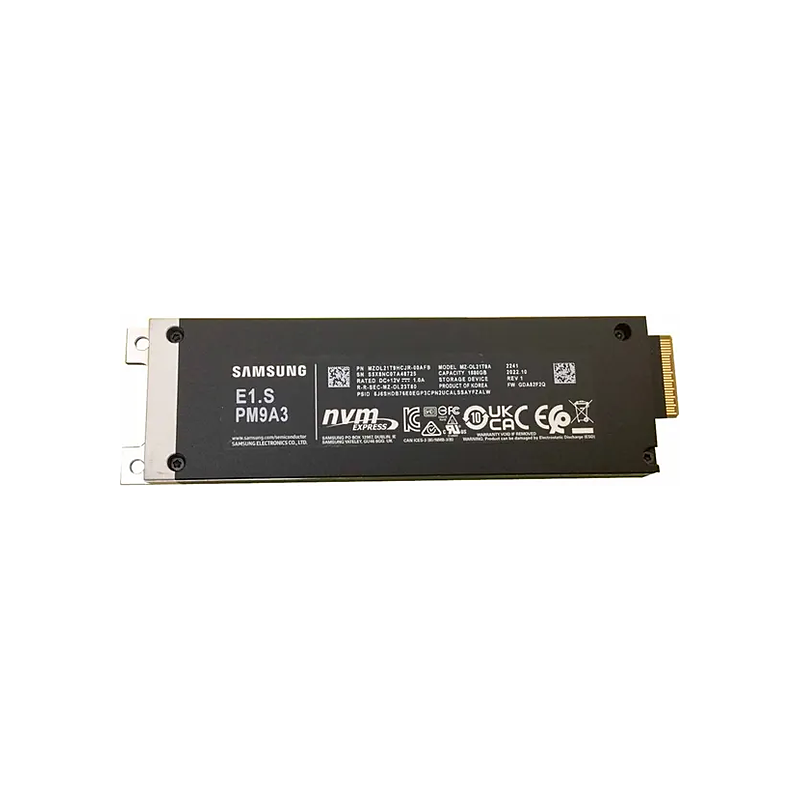
3.84 TB E1.S 1T NVMe SSD, PCIe 4.0, ordering codes MZCL23T8HCLS-00AMV / MZTL23T8HCLS-00A07
1.92 TB E1.S 1T (9.5 mm) NVMe SSD, PCIe 4.0, ordering code MZCL21T9HCJR-00AMV