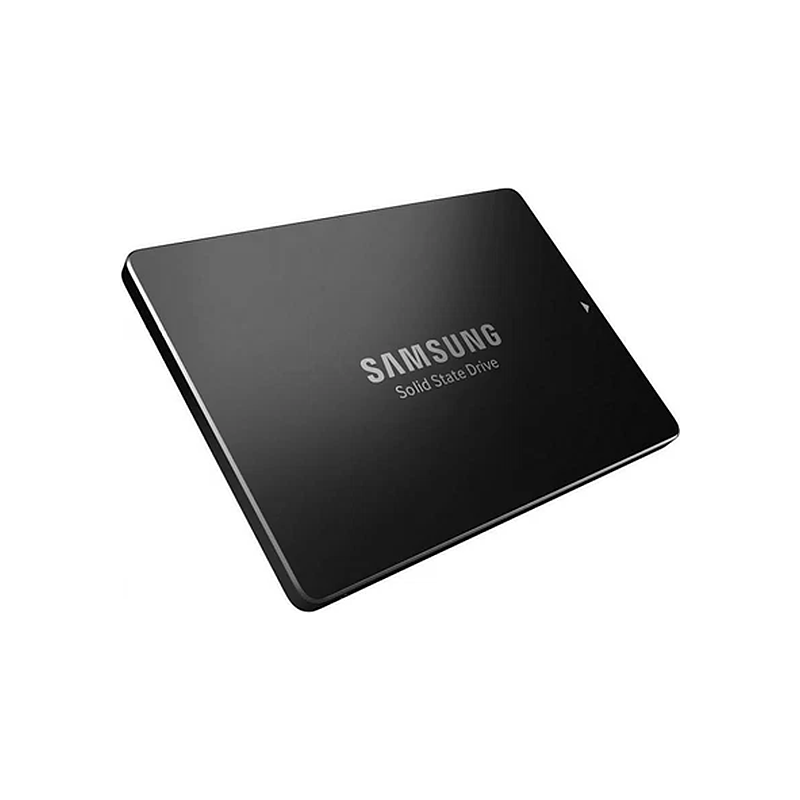
Samsung SM883 3.84TB SATA SSD (MZ7KH3T8HALS)
3.84 TB 2.5-inch SATA mixed-use SSD, ordering code MZ7KH3T8HALS-00005
- Part Number
- MZ7KH3T8HALS
- Brand
- Samsung
- Category
- Enterprise & Data Center SSD
- Accepted Payments
- T/T Bank Transfer PayPal Western Union
Technical Specifications
| Capacity | 3.84 TB |
|---|---|
| Interface | SATA |
| Form Factor | 2.5-inch 7mm |
| PCIe Version | Not applicable |
| NAND Type | MLC |
| Endurance (DWPD) | 3 |
| TBW | 21,024 TB |
| Sequential Read | 540 MB/s |
| Sequential Write | 520 MB/s |
| Random Read IOPS | 97K IOPS |
| Random Write IOPS | 29K IOPS |
| Power | 2.8 W |
| DRAM Cache | Yes |
| Power Loss Protection | Yes |
| Encryption | SED |
| Condition | New · Used |
Frequently Asked Questions
Samsung SM883 3.84 TB, 2.5-inch 7 mm SATA, catalogue code MZ7KH3T8HALS, ordering code MZ7KH3T8HALS-00005. 540 MB/s sequential read, 520 MB/s sequential write, 97K random read and 29K random write IOPS, 21,024 TBW — 3.0 drive-writes-per-day over five years — on 2-bit MLC V-NAND behind a Samsung Maru controller. Stocked new or as tested pulls with a 1-year warranty from us.
This is the largest capacity Samsung built in the SM883 family, and the last rung of the ladder. Nothing about the performance changes from 960 GB upward: 540/520 MB/s, 97K/29K random 4K, 99/97 consistency, all identical. What changes is scale — one drive now carries the write budget of four 960 GB drives and the capacity of four of them, in a single 7 mm slot that draws under four watts.
The endurance figure is the one that changes the conversation. 21,024 TBW is 11.5 TB of writes every day for five years. At that point the write model stops being part of the design: a database, its log, a staging copy and a backup spool can share the device and still leave the rating untouched. What replaces it as the limiting factor is everything else about putting 3.84 TB in one 2.5-inch slot — rebuild times, the number of spindles' worth of redundancy you have given up, and whether the platform would rather have NVMe at this density.
The rest of the package is the generation's: 2-bit MLC V-NAND in 4 Tb two-chip-enable packages (the LS code in the model name, where 960 GB and 1.92 TB carry JR), a documented power-loss sequence where capacitor hold-up flushes the DRAM cache to NAND and the mapping table is rebuilt within ten seconds, 99.99th-percentile latency of 0.2 ms read and 0.1 ms write at queue depth 1, a 2-million-hour MTBF, and no TCG Opal. It is a 2018 design, and it is out of production.
Why the top capacity is usually the cheapest per terabyte
Because the controller, the case, the connector and the qualification work are the same at every capacity in the range. The only thing that scales is flash and the test time, so the fixed cost is spread over 3.84 TB instead of 240 GB. That is a general property of NAND, and it is the reason this page exists at all: a buyer comparing this drive to the 480 GB member on price per gigabyte will find the largest drive wins, while a buyer comparing on absolute price will find the opposite.
The endurance scales with it, at an unchanged 3.0 drive-writes-per-day: 1,314 / 2,628 / 5,256 / 10,512 / 21,024 TB from 240 GB to here. That is the property worth checking against other ranges — Samsung did not de-rate the small members and it did not inflate the large ones, so the capacity decision is a capacity decision and the endurance comes along automatically.
The catch at this size is not in the numbers. A 3.84 TB drive takes far longer to rebuild than a 960 GB one, and a mirror pair of them gives you 3.84 TB of usable space with a rebuild that takes hours rather than minutes. If the array is small, two 1.92 TB drives usually beat one of these on availability for the same usable space; if the array is large, the density wins because it removes devices, ports and cables.
Technical specifications
| Product family | Samsung SM883 (V-NAND SSD, data centre / mixed-use) |
|---|---|
| PN | MZ7KH3T8HALS (catalogue code) |
| Ordering code | MZ7KH3T8HALS-00005 (General SED) |
| Capacity | 3.84 TB (7,501,476,528 sectors of 512 bytes) |
| Form factor | 2.5-inch, 7.0 mm (100.20 × 69.85 × 6.80 mm, max 60 g) |
| Interface | SATA 6 Gb/s, ATA/ATAPI-7 and Serial ATA 3.2 |
| Controller | Samsung Maru (Samsung LSI), with DRAM write cache |
| NAND | Samsung V-NAND, 2-bit MLC (4 Tb dies, two-chip-enable packages) |
| Sequential read / write | 540 MB/s / 520 MB/s (128 KB, QD32) |
| Random 4 KB (QD32) | 97K IOPS read / 29K IOPS write |
| Random 8 KB (QD32) | 57K IOPS read / 14K IOPS write |
| IOPS consistency | 99% read / 97% write at 4 KB, sustained |
| Latency and QoS | 85 µs read / 35 µs write at QD1; 99.99th percentile 0.2 ms read, 0.1 ms write at QD1; 0.6 ms and 1.9 ms at QD32 |
| Endurance | 21,024 TBW — 3.0 DWPD over five years (Samsung: TBW = DWPD × 365 × 5 × capacity) |
| Power | Active read 2.8 W; active write 3.7 W; idle 1.4 W; supply 5 V ±5% |
| Power-loss protection | Yes — capacitor hold-up flushes DRAM to NAND; mapping table rebuilt within 10 s (SPOR). No hold-up time published |
| Data security | AES 256-bit encryption engine (General SED part); no TCG Opal claim |
| Features | TRIM, NCQ to depth 32, S.M.A.R.T., end-to-end data protection, RoHS |
| Reliability | MTBF 2.0 million hours; UBER 1 sector per 1017 bits read; data retention 3 months at 40 °C after rated endurance |
| Environmental | Operating 0 °C to 70 °C (case); non-operating −40 °C to 85 °C; humidity 5–95% non-condensing |
| Shock and vibration | 1,500 G at 0.5 ms half sine; 20–2,000 Hz at 20 G peak, 7–800 Hz at 2.17 Grms |
| Status | End of life — Samsung has discontinued the SM883 |
Ordering codes we can supply at 3.84 TB
| Code | Type | Condition | Quote |
|---|---|---|---|
| MZ7KH3T8HALS | Catalogue code | New / used | Enquire |
| MZ7KH3T8HALS-00005 | Ordering code | New / used | Enquire |
The model name follows the family pattern: MZ for memory, 7 for the 2.5-inch 7 mm SATA form factor, K for the VM line-up (the 2-bit MLC V-NAND family), H for the Maru controller, 3T8 for 3.84 TB, H for the BGA NAND package, A for second-generation flash, LS for the 4 Tb 2-CE NAND density, and -00005 for the General SED customer code. Only the last field is a purchasing decision, and it is the field a PO and a warranty claim are written against.
What 21,024 TBW means in a day
11.5 TB of writes every day for five years. At 3.0 drive-writes-per-day this is the largest write budget in the SM883 family, and it is exactly four times the 960 GB member's 5,256 TB — the ratio of the capacities, not a bonus for buying big. Written flat out at 520 MB/s the rating would last about 468 days, which is the point where that arithmetic starts to describe a real workload rather than a thought experiment.
The arithmetic is the published one: 3.0 × 365 × 5 × 3,840 GB = 21,024 TB. It reconciles exactly, as it does at every capacity in this generation, which is not something that could be said for the 863a family where the brochure drive-writes figure and the TBW figure differed.
Two comparisons put the number in context. The read-intensive PM893 at 3.84 TB carries 7,008 TBW, exactly one third, so the mixed-use premium is a straight factor of three at this capacity. And a 960 GB SM883 carries 5,256 TB, so four of them — which is what it takes to match this drive's capacity — would give the same 21,024 TB in total while occupying four slots, four ports, four firmware records and four failure domains.
Where this drive fits, and what it does not have
At 3.84 TB the drive is a density play. The roles are a datastore that has to hold many guests, a database whose size you would rather not predict, an archive or backup target that is written once and read during restores, a content or media store that is read-heavy but rewritten during ingest, or a lab machine that wants four terabytes of local flash without a storage array. In every one of those the capacity removes a decision rather than enabling one, which is the point of buying the top of a range.
The limits are the generation's, and none of them improve with capacity. Power-loss protection is capacitor-based and documented but unquantified — it covers a short interruption, not a sustained outage, so a battery-backed controller cache or a UPS still belongs in the design. There is no TCG Opal 2.0 claim: the -00005 part is a General SED device with the AES 256-bit engine. And the drive is out of production, which at this capacity matters more than at 240 GB: a failed 3.84 TB member of a mirror is harder to replace than a small one, so the sensible time to buy the pair is while stock exists.
Where current-generation credentials matter more than write behaviour, the PM893 at 3.84 TB offers Opal 2.0, a published PLP specification and a slightly faster read side at 7,008 TBW. It is the right drive for a mostly-read store at this capacity and the wrong one for anything that is rewritten continuously. The honest summary: buy the SM883 when 3.84 TB has to be written to and read from all day; buy the PM893 when it is mostly read and a third of the write budget is already more than the role needs.
How 3.84 TB compares with the SM883 range and its neighbours
| Model | Capacity | Sequential read / write | Random 4K read / write | Endurance | Class |
|---|---|---|---|---|---|
| SM883 480 GB | 480 GB | 540 / 520 MB/s | 97K / 27K IOPS | 2,628 TB (3.0 DWPD) | Mixed-use |
| SM883 960 GB | 960 GB | 540 / 520 MB/s | 97K / 29K IOPS | 5,256 TB (3.0 DWPD) | Mixed-use |
| SM883 1.92 TB | 1.92 TB | 540 / 520 MB/s | 97K / 29K IOPS | 10,512 TB (3.0 DWPD) | Mixed-use |
| SM883 3.84 TB | 3.84 TB | 540 / 520 MB/s | 97K / 29K IOPS | 21,024 TB (3.0 DWPD) | Mixed-use |
| PM863a 3.84 TB | 3.84 TB | 520 / 480 MB/s | 97K / 24K IOPS | 5,466 TB (0.78 DWPD) | Read-intensive |
| PM893 3.84 TB | 3.84 TB | 550 / 520 MB/s | 98K / 30K IOPS | 7,008 TB (1.0 DWPD) | Read-intensive |
The four SM883 rows are the whole story of the range: from 960 GB upward nothing about performance moves, and only capacity and write budget double at each step. This is the top of that ladder, so it is the drive to buy when the answer to "how much room" is "all of it" — and the drive to skip when the answer is 960 GB or 1.92 TB, because the smaller members deliver identical speed for less.
Against the read-intensive pair at the same capacity the trade is stark and easy to price: the PM893 reads 10 MB/s faster and writes 1K more random IOPS, with Opal 2.0 and a published PLP figure, for exactly a third of the endurance; the PM863a is a quarter of it and 40 MB/s slower on write. At 3.84 TB those differences multiply across a whole array, which is why the mixed-use rating is worth paying for here if the workload writes at all.
How each drive is tested before it ships
- Label, capacity and model line checked against the order: SM883 2.5" SATA SSD 3.84 TB with MZ7KH3T8HALS, and the ordering suffix recorded on the invoice.
- SMART attribute dump before anything else — power-on hours, host writes, media wear, program/erase counts and grown defect count — retained for the individual drive shipped. At this capacity the host-write total is the number that says how hard the drive was worked.
- Full-surface read scan, then a SMART extended self-test run to completion rather than a sample — at 3.84 TB that is an overnight test, and it is run rather than skipped.
- Sequential read and write verified near 540 / 520 MB/s on a native SATA 6 Gb/s port, with random 4 KB measured at queue depth 32.
- Sustained random-write exercise across the whole LBA range to confirm 29K IOPS and 97% consistency hold in the steady state, not just in a fresh-drive burst.
- Firmware revision read and recorded, and checked against the latest firmware revision for this part before the unit is offered.
- TRIM and secure-erase cycles exercised, then the drive returned to a clean state with over-provisioning intact.
- Final inspection and clean, then anti-static bag and foam packing.
Warranty, lead time and purchasing
Every drive carries a 1-year warranty from us against defects in workmanship and function. Verified faulty units are replaced or refunded and we cover return shipping. Stock is held in both new and used condition; the condition you order is confirmed before dispatch, and used units are pull-tested rather than untested lots. Stock is held in our own warehouse and normally dispatches within three to seven working days, with tracking issued at dispatch.
This capacity is quoted rather than listed, because price moves with condition, quantity and which batch the units come from — the SM883 is end-of-life, so larger quantities are quoted against confirmed stock rather than a standing lead time. Send the quantity, the condition you need and the server model the drives are going into, and you will get a quote with lead time the same working day. Pairs destined for a mirror are matched from a single batch where stock allows, including firmware revision and wear level.
Get Pricing For This Part
Tell us who you are — we reply within one working day with a firm quote, stock status and lead time. Volume discounts available.
Related Products
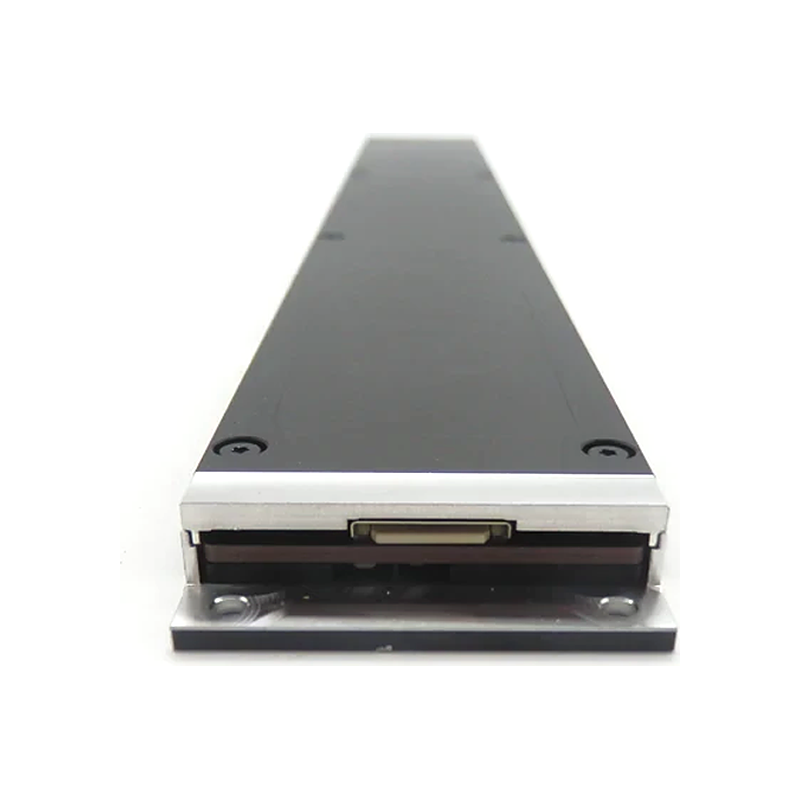
15.36 TB E1.L 1U long ruler NVMe SSD, PCIe 4.0, ordering code MZEL215THBLA-00AMV
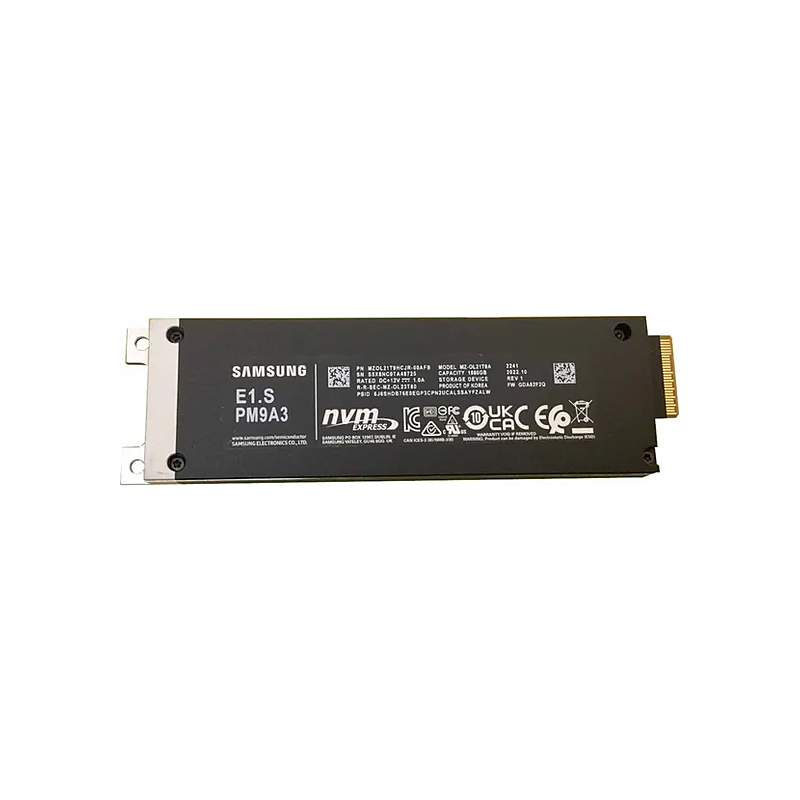
7.68 TB E1.S 1T NVMe SSD, PCIe 4.0, ordering codes MZCL27T6HBLA-00AMV / MZTL27T6HBLA-00A07
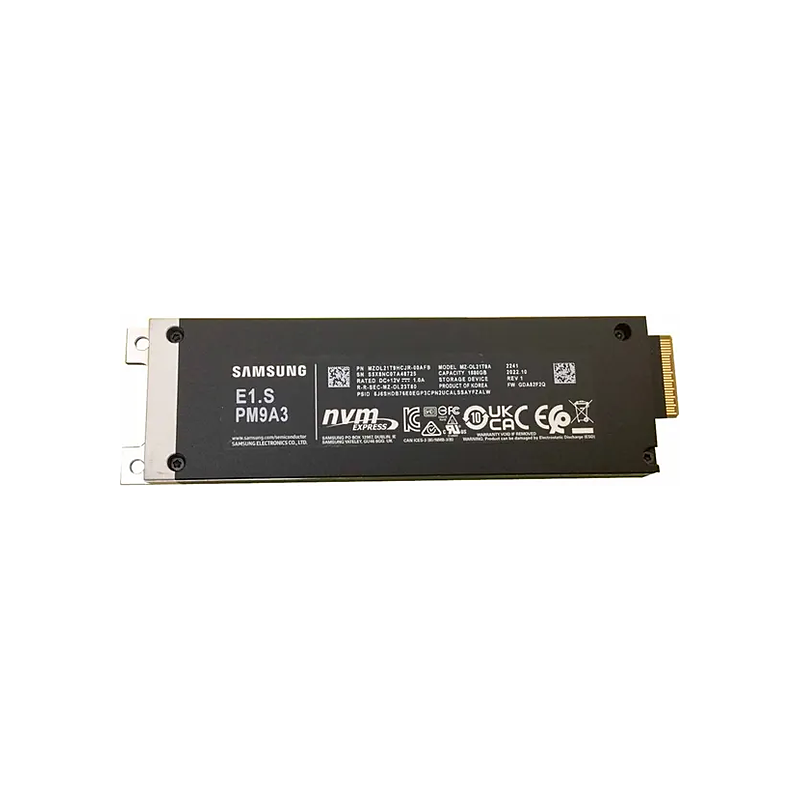
3.84 TB E1.S 1T NVMe SSD, PCIe 4.0, ordering codes MZCL23T8HCLS-00AMV / MZTL23T8HCLS-00A07
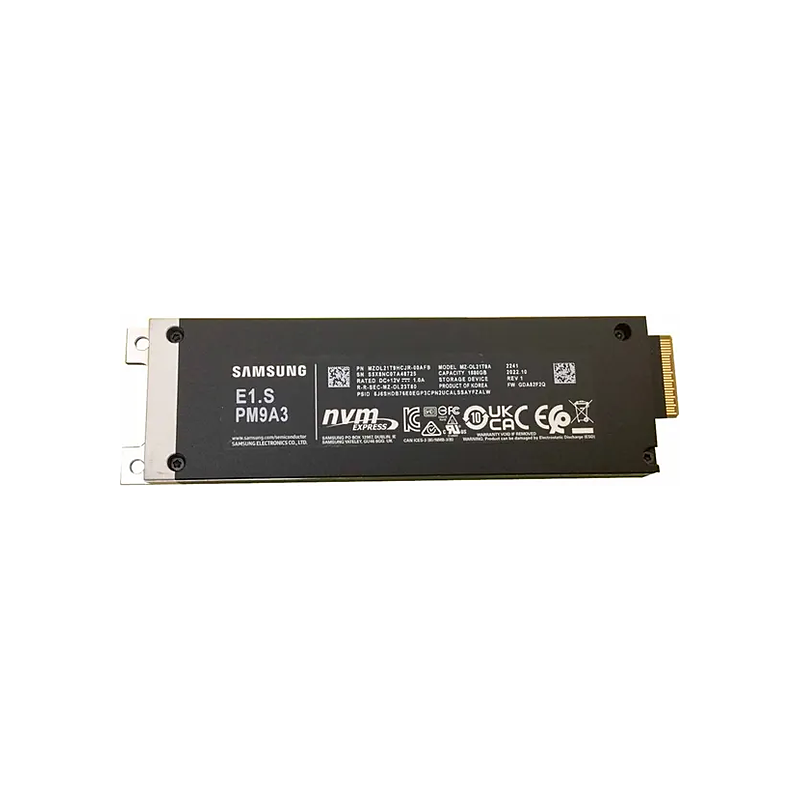
1.92 TB E1.S 1T (9.5 mm) NVMe SSD, PCIe 4.0, ordering code MZCL21T9HCJR-00AMV