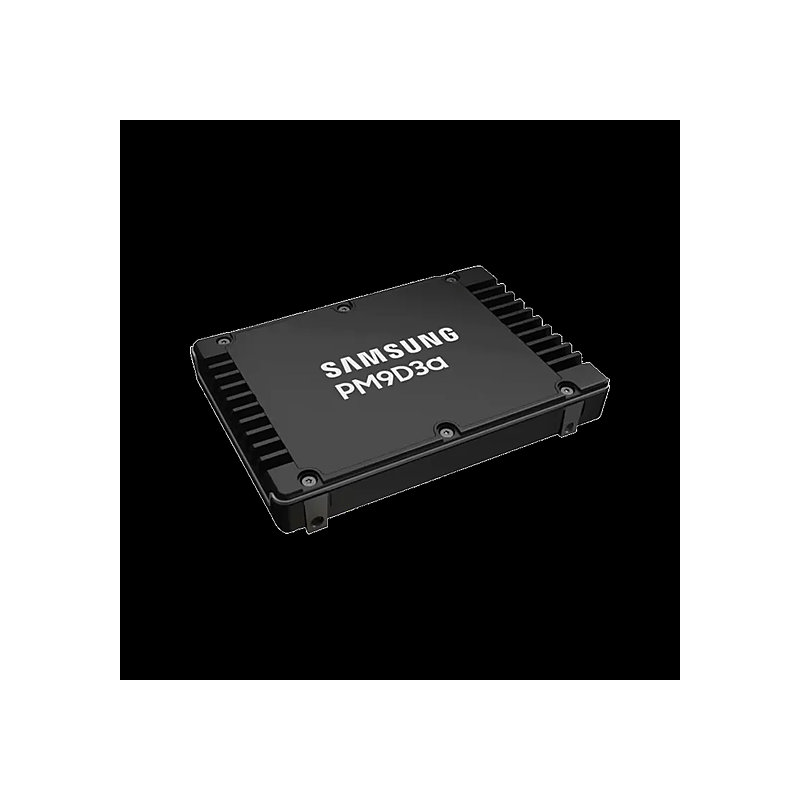
Samsung PM9D3a 7.68TB PCIe 5.0 NVMe U.2 SSD (MZWL67T6HBLC)
7.68 TB 2.5-inch U.2 NVMe SSD, PCIe 5.0, ordering code MZWL67T6HBLC-00AW7
- Part Number
- MZWL67T6HBLC
- Brand
- Samsung
- Category
- Enterprise & Data Center SSD
- Accepted Payments
- T/T Bank Transfer PayPal Western Union
Technical Specifications
| Capacity | 7.68 TB |
|---|---|
| Interface | NVMe |
| Form Factor | U.2 15mm |
| PCIe Version | PCIe 5.0 |
| NAND Type | TLC |
| Endurance (DWPD) | 1 |
| TBW | 14,016 TB |
| Sequential Read | 12,000 MB/s |
| Sequential Write | 7,000 MB/s |
| Random Read IOPS | 1,700K IOPS |
| Random Write IOPS | 400K IOPS |
| Power | 13.5 W |
| DRAM Cache | Yes |
| Power Loss Protection | Yes |
| Encryption | AES-XTS 256 |
| Condition | New · Used |
Frequently Asked Questions
Samsung PM9D3a 7.68 TB, 2.5-inch U.2 at 15 mm, catalogue code MZWL67T6HBLC, ordering code MZWL67T6HBLC-00AW7. 12,000 MB/s sequential read and 7,000 MB/s write on PCIe 5.0 x4, 1,700K random read and 400K random write IOPS, 14,016 TBW at one drive write a day for five years. Eighth-generation V-NAND TLC, NVMe 2.0, 13.5 W reading and 16.3 W writing. New and used both stocked.
There are two Samsung Gen5 drives at this capacity now, and they are not interchangeable. The PM1743 reads faster and writes slower. This one reads slower and writes faster, and it draws six watts less per drive while doing it. A buyer comparing one Gen5 7.68 TB against another has no way to tell them apart from the marketing, so the comparison is set out below.
Technical specifications
| Product family | Samsung PM9D3a (PCIe 5.0 data centre NVMe SSD, 1 DWPD) |
|---|---|
| PN | MZWL67T6HBLC (catalogue code) |
| Ordering code | MZWL67T6HBLC-00AW7 |
| Capacity | 7.68 TB (unformatted; 1 GB = 1 billion bytes, formatted capacity is less) |
| Form factor | 2.5-inch U.2, 15 mm (100.45 × 69.85 × 15 mm, up to 170 g) |
| Interface | PCIe 5.0 x4, NVMe 2.0, backwards compatible with PCIe 4.0 and 3.0 |
| NAND | Samsung V-NAND TLC (8th generation) |
| Sequential read | 12,000 MB/s (128 KB, queue depth 256) |
| Sequential write | 7,000 MB/s |
| Random 4K read | 1,700K IOPS (queue depth 64, four workers) |
| Random 4K write | 400K IOPS |
| Endurance (TBW) | 14,016 TB |
| Endurance (DWPD) | 1 drive write per day for five years |
| Latency | 65 µs random read, 9 µs random write (queue depth 1, median) |
| QoS 99% | 0.09 ms read at queue depth 1, 0.15 ms at depth 32; 0.015 / 0.16 ms write |
| Power | 13.5 W typical read, 16.3 W typical write, 4.3 W idle on PCIe 5.0 (12 V rail) |
| Power on PCIe 4.0 | 12.2 W read, 14.9 W write, 3.3 W idle |
| Power-loss protection | Yes, capacitor-backed, with end-to-end data path protection |
| Encryption | AES-XTS 256-bit engine, TCG Opal compliant |
| Sector size | 512, 520, 4096 or 4160 bytes, formattable |
| MTBF / UBER | 2.5 million hours / 1 sector per 1017 bits read |
| Drive ready | 11 s from power-on to accepting commands |
Two Gen5 drives at 7.68 TB
| Model | Capacity | Bus and form factor | Seq read / write | Random 4 KB | TBW | DWPD | Power |
|---|---|---|---|---|---|---|---|
| PM983 | 7.68 TB | PCIe 3.0, U.2 7 mm | 3,100 / 2,000 MB/s | 500K / 55K | 10,932 TB | 0.78 | 10.6 W |
| PM1733a | 7.68 TB | PCIe 4.0, U.2 15 mm | 7,500 / 4,100 MB/s | 1,600K / 170K | 14,016 TB | 1 | 18 W |
| PM1743 | 7.68 TB | PCIe 5.0, U.2 15 mm | 14,000 / 6,000 MB/s | 2,500K / 300K | 14,016 TB | 1 | 23 W |
| PM893 | 7.68 TB | SATA 6 Gb/s, 2.5-inch 7 mm | 550 / 520 MB/s | 98K / 30K | 14,016 TB | 1 | 3.2 W |
| PM9D3a | 7.68 TB | PCIe 5.0, U.2 15 mm | 12,000 / 7,000 MB/s | 1,700K / 400K | 14,016 TB | 1 | 13.5 W |
Set the two Gen5 lines against each other, column by column. Random read: 2,500K against 1,700K, a 32 percent advantage to the PM1743. Random write: 300K against 400K, a 33 percent advantage the other way. Sequential write: 6,000 against 7,000. Read: 14,000 against 12,000. Power: 23 W against 13.5.
None of that is accidental. The PM1743 is a read-optimised part with a larger power envelope and more flash behind the controller for read queues. The PM9D3a is the balanced one, built on a later V-NAND generation with fewer watts to spend. Samsung sells both and neither is superseded; the datasheet will not tell you which one your workload wants, which is why it is worth doing the arithmetic before the order.
Where 400K random write changes the order
Four hundred thousand 4 KB writes is 1.56 GB/s of random write. The PM1743 at this capacity is 300K, or 1.17 GB/s. That third of extra headroom lands on the side of the workload that usually has a queue: ingest, log volumes, replication targets, and any database with a commit rate high enough to notice.
The read figures look less impressive by comparison, and for most mixed fleets they are invisible. The gap between 1,700K and 2,500K only shows up when the read queue is deep enough to fill both, which means a pure read tier or a very wide fan-out workload. A tier that writes as much as it reads will never reach either number.
So the decision rule is short. Read-mostly array, drive idle waiting on reads: buy the PM1743. Write-bearing tier, or a fleet where six watts a drive matters: buy this one.
Six watts, multiplied
Six watts per drive sounds like rounding. A 24-bay shelf of this drive draws 324 W under read load and holds 184 TB. The same shelf of PM1743 draws 552 W for the same 184 TB. That is 228 W of extra heat in a chassis that was probably not sized for either number, plus the fan power to move it.
Per terabyte the gap is 1.76 W against 3.0 W. Across forty shelves the difference is over nine kilowatts of continuous load, which stops being a specification argument and becomes a question about whether the room needs another cooling unit. For a fleet purchase that calculation usually outranks every IOPS figure on this page.
The Gen3 to Gen4 step was bigger than this one
Going from PM983 to PM1733a, random read multiplied by 3.2 and random write by 3.1. Going from PM1733a to this drive, random read moves six percent and random write doubles.
That pattern is worth understanding before paying for Gen5. The Gen3 to Gen4 jump was the link catching up with what the controller could already issue, so every metric moved. The Gen4 to Gen5 jump is narrower: random read was already close to the controller's limit at 1,600K, so the new link buys almost nothing there. What it does buy is write bandwidth, because writes are limited by how fast the flash can be programmed rather than by how fast the host can ask.
Stated as a purchase rule: if the reason for buying Gen5 is random read throughput, this generation does not deliver it and the money is better spent on capacity. If the reason is random write, or sustained sequential write, Gen5 is the only place to get it and this is the cheapest 7.68 TB that has it.
On a Gen4 link: 4,100 and 200K
The drive is rated 7,000 MB/s read and 4,100 write on PCIe 4.0, with random read at 1,100K and random write at 200K. Sequential write gives up 41 percent and random write exactly half. Power falls to 12.2 W reading and 3.3 W idle.
That random write penalty is the largest in the family, and it follows from the same cause as the gain: 400K random writes need bandwidth that Gen4 does not provide. A Gen4 server buying this capacity should compare it against the PM1733a at 4,100 sequential and 170K random write, where the gap collapses to almost nothing.
Ordering codes: MZWL67T6 and the -00AW7 suffix
| Code | Type | Capacity | Condition | Quote |
|---|---|---|---|---|
| MZWL67T6HBLC | Catalogue code | 7.68 TB | New / used | Enquire |
| MZWL67T6HBLC-00AW7 | Ordering code | 7.68 TB | New / used | Enquire |
The suffix is a distribution block, not a specification. The datasheet lists this capacity as -00B07 and channel stock usually carries -00AW7. Both are the 7.68 TB U.2 drive.
Three strings are close enough to cost somebody a return. MZWL63T8HFLT is the 3.84 TB drive, one digit and one letter apart. MZTL67T6HBLC is the E1.S version of this exact capacity and will not fit a U.2 bay at all. MZWLO7T6HBLA is the PM1743 and differs in the fifth character, a letter O instead of a digit 6.
Checks worth running on delivery:
- 7T6 in the string. 7.68 TB is MZWL67T6HBLC; 3.84 TB is MZWL63T8HFLT. The last four characters differ too, so read the whole string.
- Reported capacity. 7.68 TB reports about 6.98 TiB. Anything near 3.49 TiB is the 3.84 TB drive in the same 15 mm shell.
- Drive-ready time. 11 seconds at this capacity rather than 8, which matters when a full shelf powers on together and every drive draws inrush current at once.
- Host bytes written against 14,016 TB. On a pull this is the only field that tells you how much of the budget is gone; ask before wiping, not after.
Warranty, lead time and purchasing
Both conditions ship with a one year warranty from us, and it attaches to the drive rather than to the server it was removed from. Stock normally leaves the warehouse in three to seven working days and tracking follows it out. Two pieces is the minimum, this family combines on a single order, and a price returns the same working day once we have part number, condition and quantity.
Get Pricing For This Part
Tell us who you are — we reply within one working day with a firm quote, stock status and lead time. Volume discounts available.
Related Products
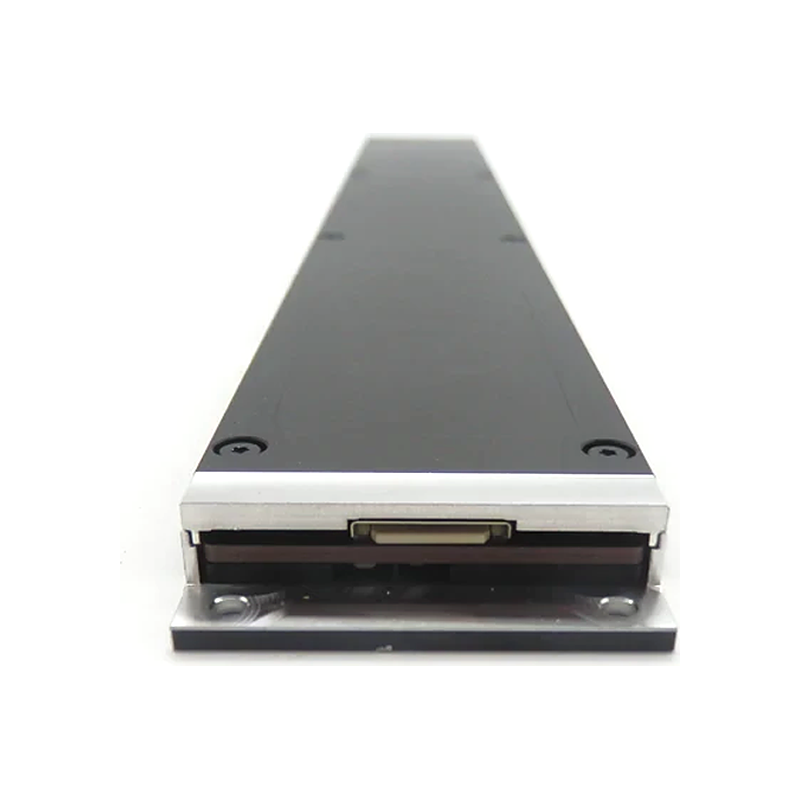
15.36 TB E1.L 1U long ruler NVMe SSD, PCIe 4.0, ordering code MZEL215THBLA-00AMV
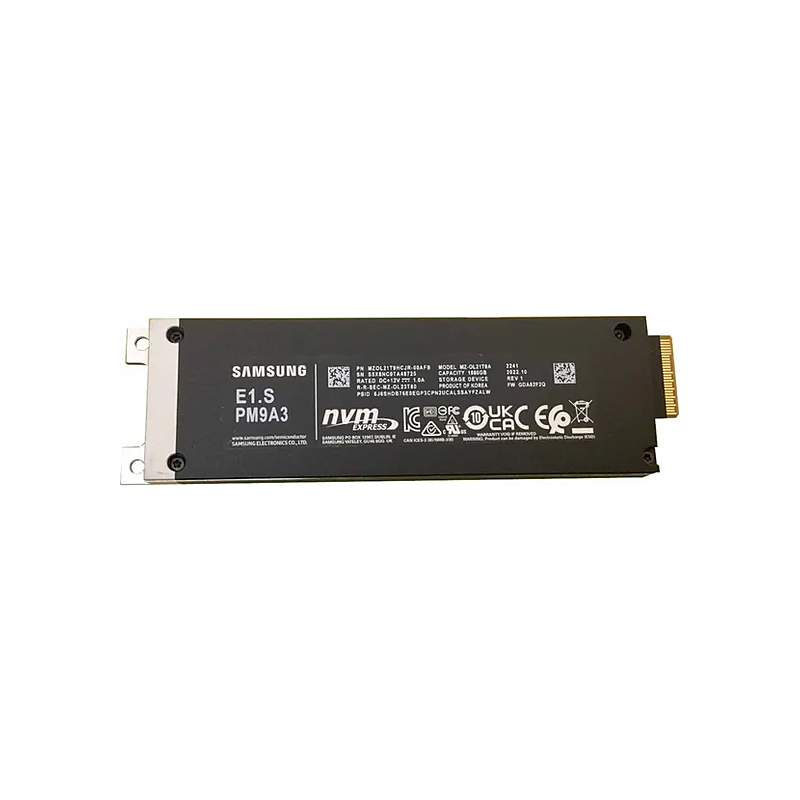
7.68 TB E1.S 1T NVMe SSD, PCIe 4.0, ordering codes MZCL27T6HBLA-00AMV / MZTL27T6HBLA-00A07
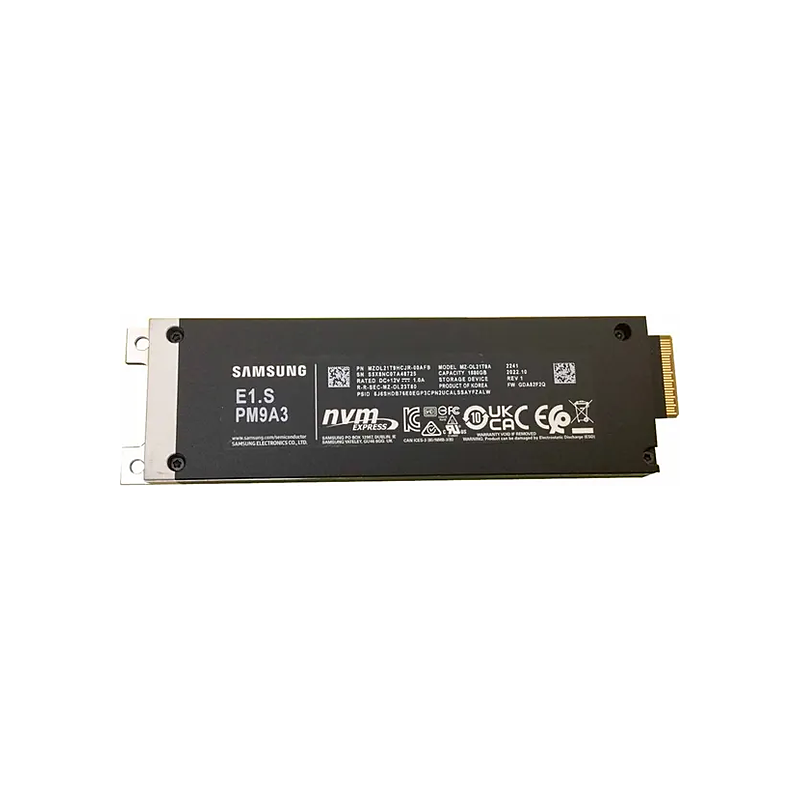
3.84 TB E1.S 1T NVMe SSD, PCIe 4.0, ordering codes MZCL23T8HCLS-00AMV / MZTL23T8HCLS-00A07
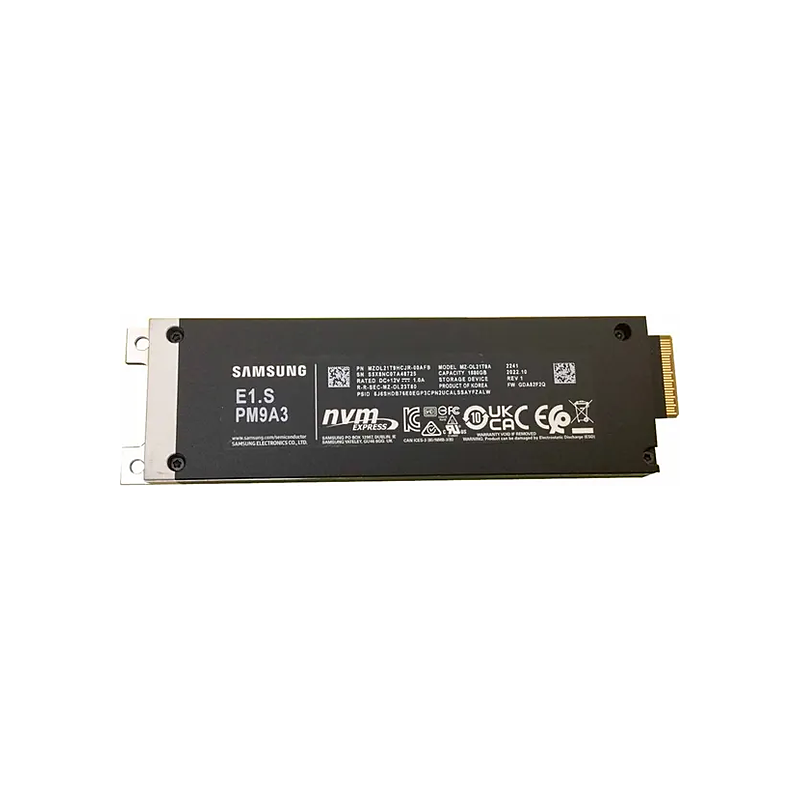
1.92 TB E1.S 1T (9.5 mm) NVMe SSD, PCIe 4.0, ordering code MZCL21T9HCJR-00AMV