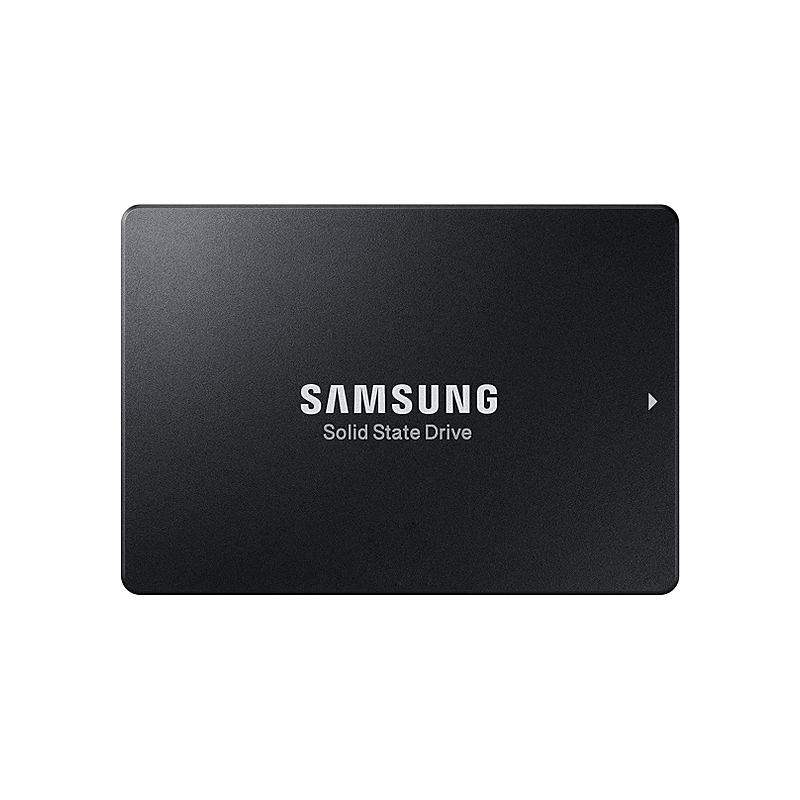
Samsung PM1733a 7.68TB PCIe 4.0 NVMe U.2 SSD (MZWLJ7T6HBLA)
7.68 TB 2.5-inch U.2 NVMe SSD, PCIe 4.0, ordering code MZWLJ7T6HBLA-00007
- Part Number
- MZWLJ7T6HBLA
- Brand
- Samsung
- Category
- Enterprise & Data Center SSD
- Accepted Payments
- T/T Bank Transfer PayPal Western Union
Technical Specifications
| Capacity | 7.68 TB |
|---|---|
| Interface | NVMe |
| Form Factor | U.2 15mm |
| PCIe Version | PCIe 4.0 |
| NAND Type | TLC |
| Endurance (DWPD) | 1 |
| TBW | 14,016 TB |
| Sequential Read | 7,500 MB/s |
| Sequential Write | 4,100 MB/s |
| Random Read IOPS | 1,600K IOPS |
| Random Write IOPS | 170K IOPS |
| Power | 18 W |
| DRAM Cache | Yes |
| Power Loss Protection | Yes |
| Encryption | AES-XTS 256 |
| Condition | New · Used |
Frequently Asked Questions
Samsung PM1733a 7.68 TB, 2.5-inch U.2 at 15 mm, catalogue code MZWLJ7T6HBLA, ordering code MZWLJ7T6HBLA-00007. 7,500 MB/s sequential read and 4,100 MB/s write, 1,600K random read and 170K random write IOPS, 14,016 TBW at one drive write a day for five years. 128-layer V-NAND TLC, PCIe 4.0 x4, NVMe 1.3, 18 W read and 19 W write. Both conditions stocked, one-year warranty either way.
Of the two capacities in this family, this is the one where the 'a' matters. The original PM1733 lost speed at 7.68 TB — 3,500 MB/s of write and 1,450K of random read, against 3,800 and 1,500K at 3.84. The refreshed drive holds 4,100 and 1,600K straight through from 3.84 to 30.72 TB, so the dip is gone rather than inherited.
The dip the refresh removes
It is worth being precise about what changed, because the two drives look identical on a shelf. The PM1733 at this capacity writes 600 MB/s slower than the PM1733a and reads 150K fewer random IOPS; its sequential read, at 7,000, is 500 lower. Nothing else in the datasheet differs — same 14,016 TB, same 15 mm, same dual-port wiring, same 1 DWPD.
The pattern inside the older family was consistent: performance peaked at 3.84 TB and then stepped back for the two larger capacities, because the controller had run out of parallelism to spend. The refreshed line does not step back, which is either a better bin of the same controller or firmware that keeps more of it busy — Samsung does not publish which, and for a buyer the distinction does not matter. What matters is that a 7.68 TB drive no longer has to be justified as a capacity purchase with a speed penalty attached.
Technical specifications
| Product family | Samsung PM1733a (PCIe 4.0 enterprise NVMe SSD, 1 DWPD) |
|---|---|
| PN | MZWLJ7T6HBLA (catalogue code) |
| Ordering code | MZWLJ7T6HBLA-00007 |
| Capacity | 7.68 TB (unformatted; 1 GB = 1 billion bytes, formatted capacity is less) |
| Form factor | 2.5-inch U.2, SFF-8639, 15 mm (100 × 70 × 15 mm) |
| Interface | PCIe 4.0 x4, NVMe 1.3 |
| NAND | Samsung V-NAND TLC (6th generation, 128-layer) |
| Sequential read | 7,500 MB/s |
| Sequential write | 4,100 MB/s |
| Random 4K read | 1,600K IOPS |
| Random 4K write | 170K IOPS |
| Latency, random read / write | 100 µs / 25 µs |
| Latency, sequential read / write | 270 µs / 100 µs |
| Endurance (TBW) | 14,016 TB |
| Endurance (DWPD) | 1 drive write per day for five years |
| Power | 18 W typical read, 19 W typical write (12 V rail) |
| DRAM cache | Yes |
| Power-loss protection | Yes, capacitor-backed, with end-to-end data protection |
| Encryption | AES-XTS 256-bit, TCG Opal 2.0 compliant |
| MTTF | 2 million hours |
14,016 TB, unchanged by the refresh
Fourteen petabytes across 1,825 days is 7.68 TB a day, a full drive every day for five years. The PM1733 at this capacity carries exactly the same rating, so the refresh buys throughput and nothing else on the endurance side.
Two comparisons put that number in context. A read-intensive drive at 7.68 TB — the PM983 — carries 10,932 TB, three quarters of this. And a QLC SATA part like the 5210 ION carries 11,200 TB at a fifth of the random write speed. Neither is a substitute; both are the reason 14,016 is the number that decides which tier a workload belongs in.
Two capacities, one family
| Model | Interface | Capacity | Seq read / write | Random 4 KB | TBW | DWPD |
|---|---|---|---|---|---|---|
| PM1733a 7.68 TB | PCIe 4.0 x4 | 7.68 TB | 7,500 / 4,100 MB/s | 1,600K / 170K | 14,016 TB | 1 |
| PM1733a 3.84 TB | PCIe 4.0 x4 | 3.84 TB | 7,500 / 4,100 MB/s | 1,600K / 170K | 7,008 TB | 1 |
| PM1733 7.68 TB | PCIe 4.0 x4 | 7.68 TB | 7,000 / 3,500 MB/s | 1,450K / 135K | 14,016 TB | 1 |
| 5210 ION 7.68 TB | SATA 6 Gb/s | 7.68 TB | 540 / 360 MB/s | 90K / 4.5K | 11,200 TB | 0.8 |
The first two rows show the family holding its numbers across a capacity step, which is the point of the refresh: on the older line the same comparison would read 3,800/1,500K against 3,500/1,450K. Between these two, only capacity and lifetime bytes move, so a purchase decision between them is purely about how much space the chassis needs.
The third row is the same capacity one generation earlier, and the fourth is a different technology altogether. Note that the QLC drive has more endurance than the PM983 despite writing at a fifth of the speed — endurance in this range is a firmware budget, not a proxy for performance.
Eighteen watts across twenty-four bays
Read power is 18 W, write 19, which is two watts below the drive it replaces at the read side. Twenty-four of these is 432 W reading and 456 W writing, holding 184 TB — about 2.3 W per terabyte. The same shelf built from 3.84 TB drives would use 420 W for half the capacity, so the larger drive is the more efficient one per terabyte, not the hungrier one.
Fifteen millimetres is still the constraint nobody reads in the spec table. A carrier made for 7 mm drives will not close, and a shelf designed around thin carriers takes half as many. That, rather than the watts, is what usually decides whether these can go into an existing chassis.
Ordering codes: one letter up
| Code | Type | Capacity | Condition | Quote |
|---|---|---|---|---|
| MZWLJ7T6HBLA | Catalogue code, PM1733a | 7.68 TB | New / used | Enquire |
| MZWLJ7T6HBLA-00007 | Ordering code, PM1733a | 7.68 TB | New / used | Enquire |
Compare the two 7.68 TB codes: MZWLJ7T6HALA is the PM1733, MZWLJ7T6HBLA is this drive. The only change is the second letter of the build block, A to B. At 3.84 TB the same refresh moves the last letter instead, HBLS to HBLT, so there is no single position to look at — the build as a whole is what changes.
That is why the model line and the reported capacity, not the code alone, are what to check when a tray of mixed drives arrives. A 7.68 TB drive reporting about 6.98 TiB could be either generation, and the two are physically identical.
What to check at goods-in
- Build block. HBLA for this drive, HALA for the older one. One letter, 600 MB/s of write.
- Host bytes written against 14,016 TB. Read the counter before wiping; a pull at half life still has 7 PB of allowance.
- 15 mm clearance. Measure the carrier, not the datasheet.
- Connector. U.2 SFF-8639 here. PM1733a units sold under HPE and Lenovo part numbers are U.3 with an eight-lane connector.
- Firmware string. Ask for it before the drive goes into a shelf; the refresh ships across several revisions and behaviour at queue depth differs between them.
Warranty, lead time and purchasing
Both conditions come with a year of cover, sealed or pulled, and the cover stays with the drive rather than the server. Stock normally turns round in three to seven working days with tracking issued at dispatch. We sell from two pieces, capacities in this family combine on one order, and a price follows part number, condition and quantity — usually the same working day.
Get Pricing For This Part
Tell us who you are — we reply within one working day with a firm quote, stock status and lead time. Volume discounts available.
Related Products
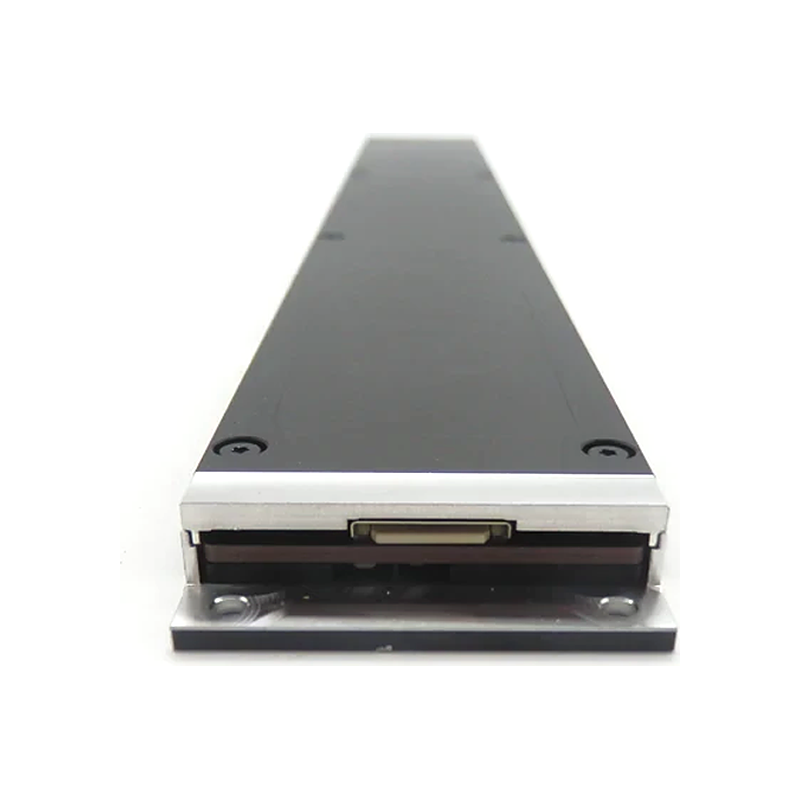
15.36 TB E1.L 1U long ruler NVMe SSD, PCIe 4.0, ordering code MZEL215THBLA-00AMV
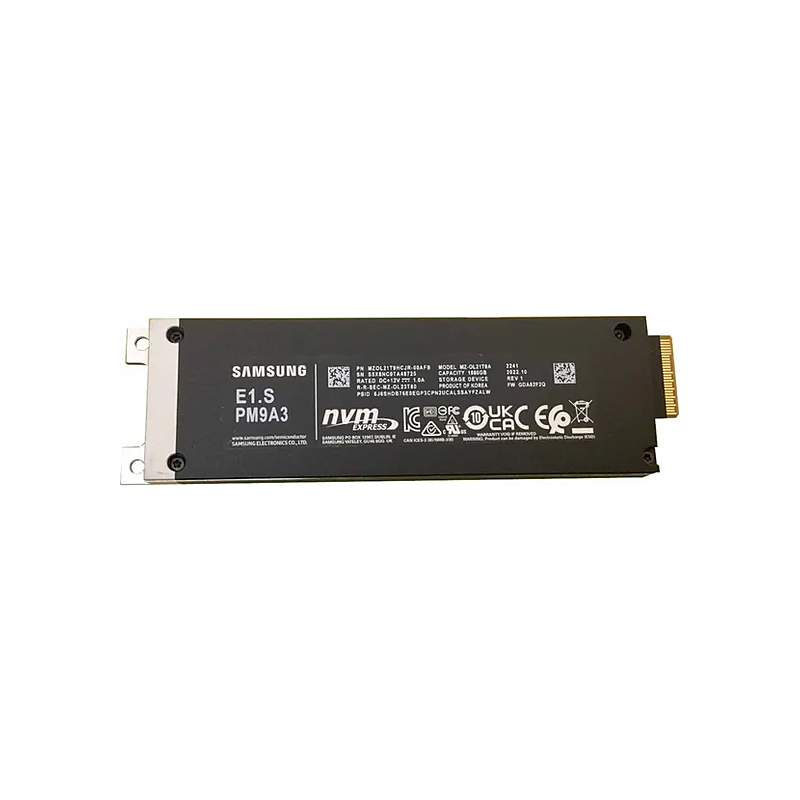
7.68 TB E1.S 1T NVMe SSD, PCIe 4.0, ordering codes MZCL27T6HBLA-00AMV / MZTL27T6HBLA-00A07
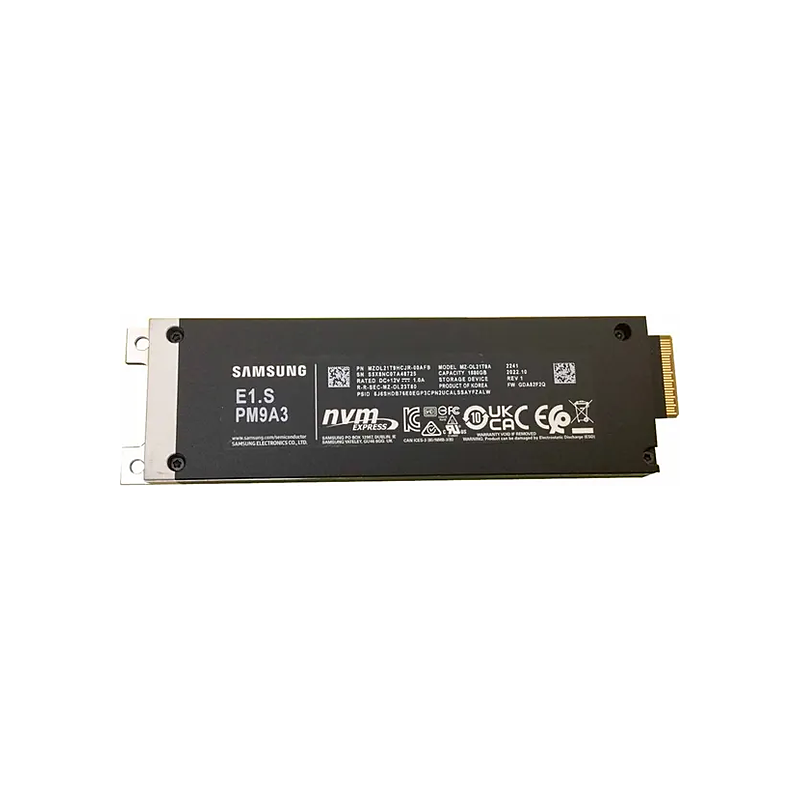
3.84 TB E1.S 1T NVMe SSD, PCIe 4.0, ordering codes MZCL23T8HCLS-00AMV / MZTL23T8HCLS-00A07
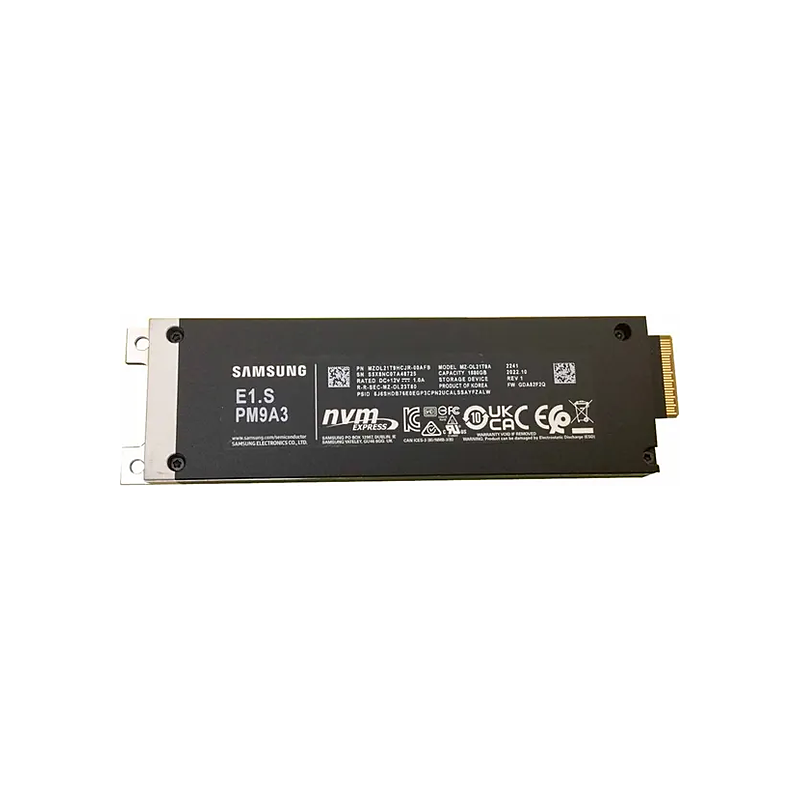
1.92 TB E1.S 1T (9.5 mm) NVMe SSD, PCIe 4.0, ordering code MZCL21T9HCJR-00AMV