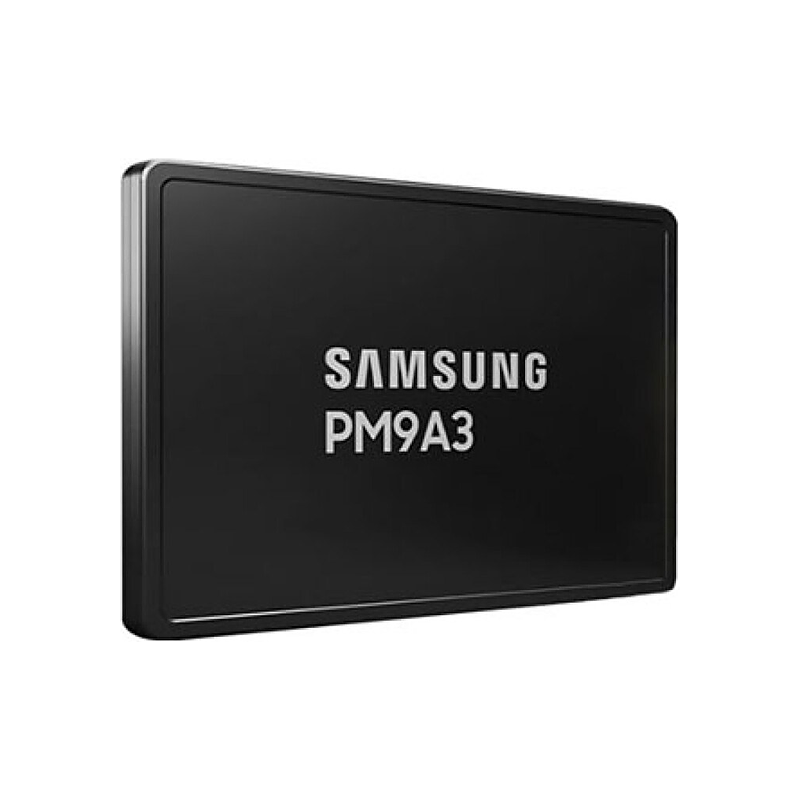
Samsung PM9A3 7.68TB PCIe 4.0 NVMe U.2 SSD (MZQL27T6HBLA)
7.68 TB 2.5-inch U.2 NVMe SSD, PCIe 4.0, ordering codes MZQL27T6HBLA-00A07 / -00W07 / -00B7C
- Part Number
- MZQL27T6HBLA
- Brand
- Samsung
- Category
- Enterprise & Data Center SSD
- Accepted Payments
- T/T Bank Transfer PayPal Western Union
Technical Specifications
| Capacity | 7.68 TB |
|---|---|
| Interface | NVMe |
| Form Factor | U.2 7mm |
| PCIe Version | PCIe 4.0 |
| NAND Type | TLC |
| Endurance (DWPD) | 1 |
| TBW | 14,016 TB |
| Sequential Read | 6,700 MB/s |
| Sequential Write | 4,000 MB/s |
| Random Read IOPS | 1,100K IOPS |
| Random Write IOPS | 200K IOPS |
| Power | 11 W |
| DRAM Cache | Yes |
| Power Loss Protection | Yes |
| Encryption | AES-XTS 256 |
| Condition | New · Used |
Frequently Asked Questions
Samsung PM9A3 7.68 TB, 2.5-inch U.2 at 7 mm, catalogue code MZQL27T6HBLA, orderable as -00A07, -00W07 and -00B7C. 6,700 MB/s sequential read and 4,000 MB/s write on PCIe 4.0 x4, 1,100K random read and 200K random write IOPS, 14,016 TBW at 1 DWPD. TLC V-NAND, capacitor-backed PLP, AES 256-bit full disk encryption, 11.0 W reading and 13.5 W writing. New and used both stocked.
This capacity draws the same eleven watts as the 3.84 TB drive and holds twice the data, which is the whole argument for it. The controller, the DRAM and the PHY are a fixed cost that the flash has to pay for; below this point that cost is spread over too few terabytes, and above it the sequential path starts to give some back. Seven point six eight terabytes is where the two effects cross.
Technical specifications
| Product family | Samsung PM9A3 (PCIe 4.0 data centre NVMe SSD, 1 DWPD) |
|---|---|
| PN | MZQL27T6HBLA (catalogue code) |
| Ordering codes | MZQL27T6HBLA-00A07 / MZQL27T6HBLA-00W07 / MZQL27T6HBLA-00B7C |
| Capacity | 7.68 TB (unformatted; 1 GB = 1 billion bytes, formatted capacity is less) |
| Form factor | 2.5-inch U.2, 7 mm (100.20 × 69.85 × 7.0 mm) |
| Interface | PCIe 4.0 x4, NVMe 1.4, single port |
| NAND | Samsung V-NAND TLC |
| Sequential read | 6,700 MB/s (up to, 4 KB transfer size, queue depth 32, four workers) |
| Sequential write | 4,000 MB/s |
| Random 4K read | 1,100K IOPS (queue depth 32) |
| Random 4K write | 200K IOPS (queue depth 32) |
| Endurance (TBW) | 14,016 TB |
| Endurance (DWPD) | 1 drive write per day for five years |
| Power | 11.0 W active read, 13.5 W active write, 3.5 W idle with DIPM off |
| Power-loss protection | Yes, capacitor-backed, with end-to-end data path protection |
| Encryption | AES 256-bit full disk encryption, TCG Opal 2.0, IEEE 1667 encrypted drive |
| MTBF | 2.0 million hours |
| Environment | 0 to 70 °C operating, −40 to 85 °C non-operating, 5 to 95% non-condensing |
| Features | TRIM, garbage collection, S.M.A.R.T. |
Five drives at 7.68 TB
| Model | Capacity | Interface | Seq read / write | Random 4 KB | TBW | Power |
|---|---|---|---|---|---|---|
| PM983 | 7.68 TB | PCIe 3.0 x4 | 3,100 / 2,000 MB/s | 500K / 55K | 10,932 TB | 10.6 W |
| PM1733a | 7.68 TB | PCIe 4.0 x4 | 7,500 / 4,100 MB/s | 1,600K / 170K | 14,016 TB | 18 W |
| PM9A3 | 7.68 TB | PCIe 4.0 x4 | 6,700 / 4,000 MB/s | 1,100K / 200K | 14,016 TB | 11.0 W |
| PM9D3a | 7.68 TB | PCIe 5.0 x4 | 12,000 / 7,000 MB/s | 1,700K / 400K | 14,016 TB | 13.5 W |
| PM1753 | 7.68 TB | PCIe 5.0 x4 | 14,000 / 10,000 MB/s | 3,200K / 580K | 14,016 TB | 18.7 W |
The Gen3 row sets the floor and it is worth reading carefully: 3,100 MB/s read, 500K random read. Everything above it in the table is a Gen4 or Gen5 part, and the gap between the Gen3 PM983 and this drive is roughly a doubling of everything except endurance, which moved from 10,932 TB to 14,016 TB because the capacity grew rather than because the rating did.
Against the PM1733a at the same capacity this drive gives up sequential read, 6,700 against 7,500, and random read, 1,100K against 1,600K, in exchange for three watts less and a shell half the height. Against the Gen5 parts it gives up a great deal more on paper; what it keeps is the 7 mm carrier, the 11 W draw, and the fact that it does not need a Gen5 slot to reach its rating.
The random-IOPS peak of the range
Samsung's data sheet gives this capacity 1,100K random read and 200K random write, which is the highest pair in the PM9A3 U.2 range. The 15.36 TB part falls back to 850K and 160K, and its sequential read drops from 6,700 to 5,200 MB/s. That is the same effect that capped the small capacities on write, arriving at the top of the range on read: the mapping table and block count eventually cost more than the extra dies buy back.
So the ordering of the range is not a straight line, and it is worth stating plainly because catalogues present it as one. Sequential read peaks at 3.84 TB with 6,900, random IOPS peak here, and endurance keeps doubling all the way up. A fleet that standardises on the largest capacity is trading read performance and random IOPS for capacity and endurance, which is the right trade only if capacity is the constraint.
The 3.84 TB page covers the step below this one, where sequential throughput is at its maximum and this drive's random IOPS advantage does not yet exist.
Same eleven watts as the smaller drive, twice the data
Power is where this capacity separates itself from everything below it. The 3.84 TB part draws 11.0 W on read and this one draws 11.0 W, so twenty-four bays holding 92 TB and twenty-four bays holding 184 TB cost the same 264 W. Per terabyte that is 2.87 W falling to 1.43 W, with no change to the chassis, the backplane or the cooling design.
The idle figure is worth noting separately for a shelf that is provisioned but not busy: 3.5 W with DIPM off, which is 84 W across twenty-four bays before a single byte is read. In a rack where drives sit idle waiting for a workload, that is the number that shows up on the PDU, not the active figure.
The step above this one is where the arithmetic stops improving: the 15.36 TB part keeps the same 11.0 W and reaches 0.72 W per terabyte, but it gives back 1,500 MB/s of sequential read and 250K of random read to get there. Whether that is a good trade depends on whether the workload reads or stores.
What 14,016 TBW buys
One drive write a day for five years on 7.68 TB is 7.68 TB of host writes a day, or 89 MB/s average. At the rated 4,000 MB/s a full fill takes about thirty-two minutes, so the daily budget covers a complete rewrite with hours to spare. At the random write ceiling of 200K IOPS the drive absorbs 819 MB/s, and 14,016 TB at that rate lasts about two hundred days.
The figure that matters for capacity planning is write per terabyte, because it is the lowest in this family: 4,000 MB/s over 7.68 TB is 521 MB/s per terabyte, against 1,068 at 3.84 TB and 1,406 at 1.92 TB. This drive is a read-and-hold tier. If a workload is defined by sustained writes, the same money buys more write bandwidth one or two capacities down, and it buys it in the same 7 mm slot.
Ordering codes and what to check at goods-in
| Code | Type | Capacity | Condition | Quote |
|---|---|---|---|---|
| MZQL27T6HBLA | Catalogue code | 7.68 TB | New / used | Enquire |
| MZQL27T6HBLA-00A07 | Ordering code | 7.68 TB | New / used | Enquire |
| MZQL27T6HBLA-00W07 | Ordering code | 7.68 TB | New / used | Enquire |
| MZQL27T6HBLA-00B7C | Ordering code | 7.68 TB | New / used | Enquire |
The suffix is a distribution and build marker, so all three describe the same drive; Samsung prints -00W07 in its own part list and the other two are the same hardware through other channels. Quote the string the buyer's system holds, then check the packing list against it. The catalogue code ends in HBLA at this capacity: the tail tracks density in this family, HCJR at 960 GB and 1.92 TB, HCLS at 3.84 TB, HBLA here, while MZQL stays the 2.5-inch U.2 carrier throughout.
- HBLA, not HBLC. The Gen5 part at this capacity ends in HBLC and is a different drive; one letter separates two generations of hardware.
- 7 mm. Every PM9A3 U.2 drive is 7 mm, and a 15 mm shell at this capacity belongs to another product line.
- 14,016 TBW. That is 1 DWPD at 7.68 TB for five years. Anything lower is a drive rated below one full write a day.
- Host bytes written against power-on hours. A pull of this size has usually been a backup target or a datastore, and the ratio between the two figures tells you which.
- Firmware revision and over-provisioning. Secondary stock at this capacity is often re-provisioned; ask for the SMART record against the serial before accepting a lot.
Warranty, lead time and purchasing
Purchases are covered for one year, whether the goods are sealed or a tested pull, and the cover is tied to the drive's serial rather than to the chassis it was removed from, so a drive redeployed into another server keeps it. Tested pulls are erased, graded and photographed before packing, and the SMART log is archived against the serial. Dispatch happens within three to seven working days and the tracking number is sent at that point. Two pieces is the minimum per line, other capacities in this family can be added to the same order, and a quotation follows the same working day once the part number, condition and quantity are settled.
Get Pricing For This Part
Tell us who you are — we reply within one working day with a firm quote, stock status and lead time. Volume discounts available.
Related Products
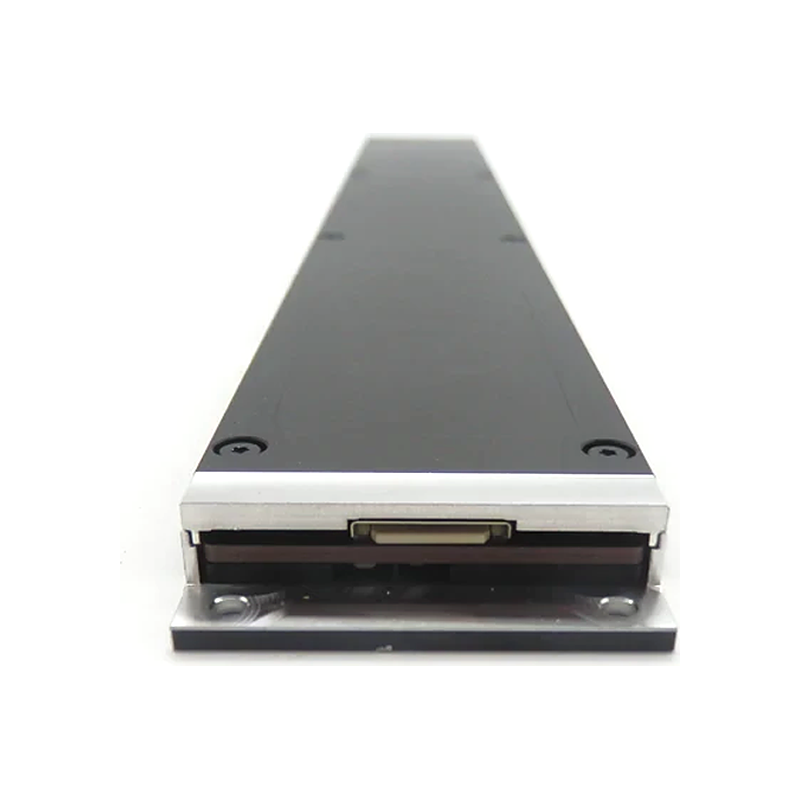
15.36 TB E1.L 1U long ruler NVMe SSD, PCIe 4.0, ordering code MZEL215THBLA-00AMV
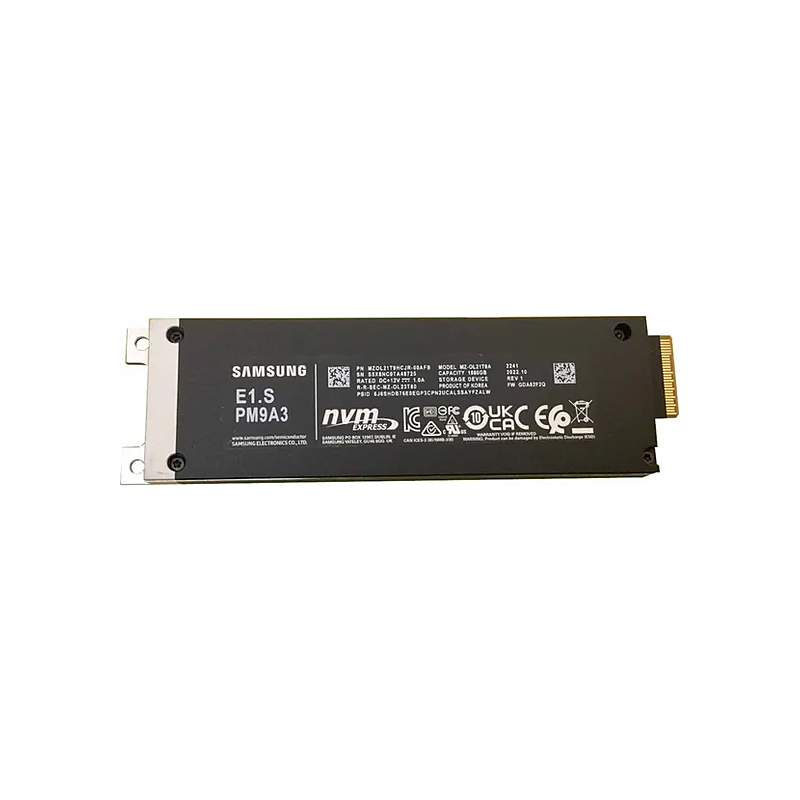
7.68 TB E1.S 1T NVMe SSD, PCIe 4.0, ordering codes MZCL27T6HBLA-00AMV / MZTL27T6HBLA-00A07
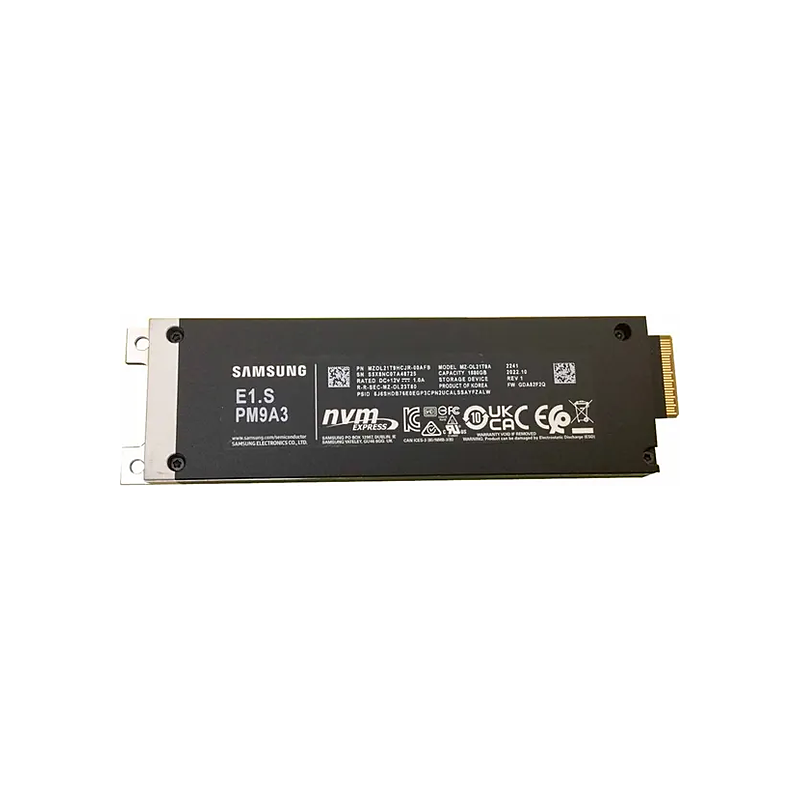
3.84 TB E1.S 1T NVMe SSD, PCIe 4.0, ordering codes MZCL23T8HCLS-00AMV / MZTL23T8HCLS-00A07
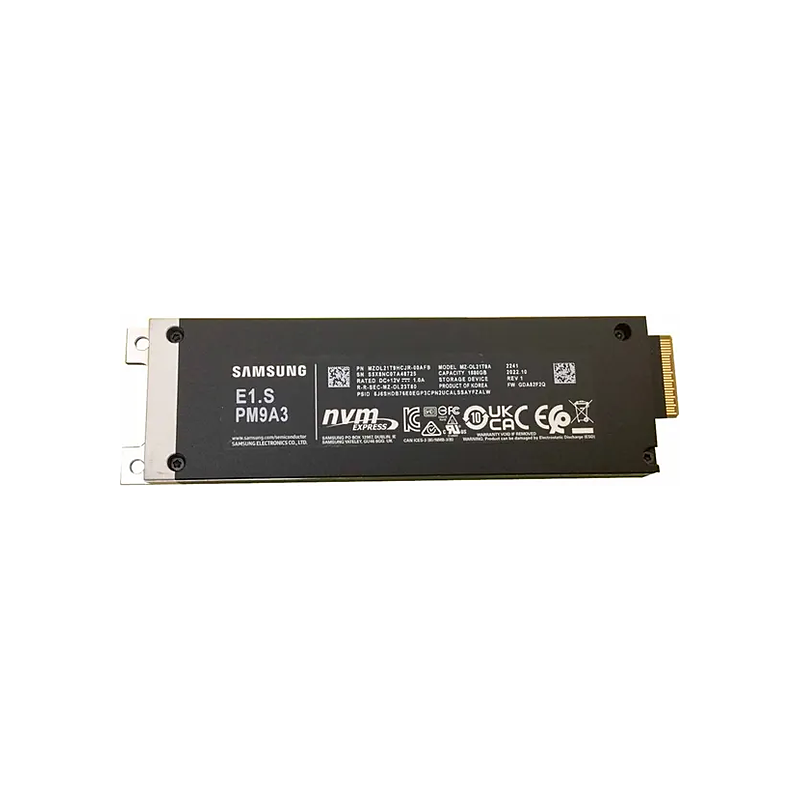
1.92 TB E1.S 1T (9.5 mm) NVMe SSD, PCIe 4.0, ordering code MZCL21T9HCJR-00AMV