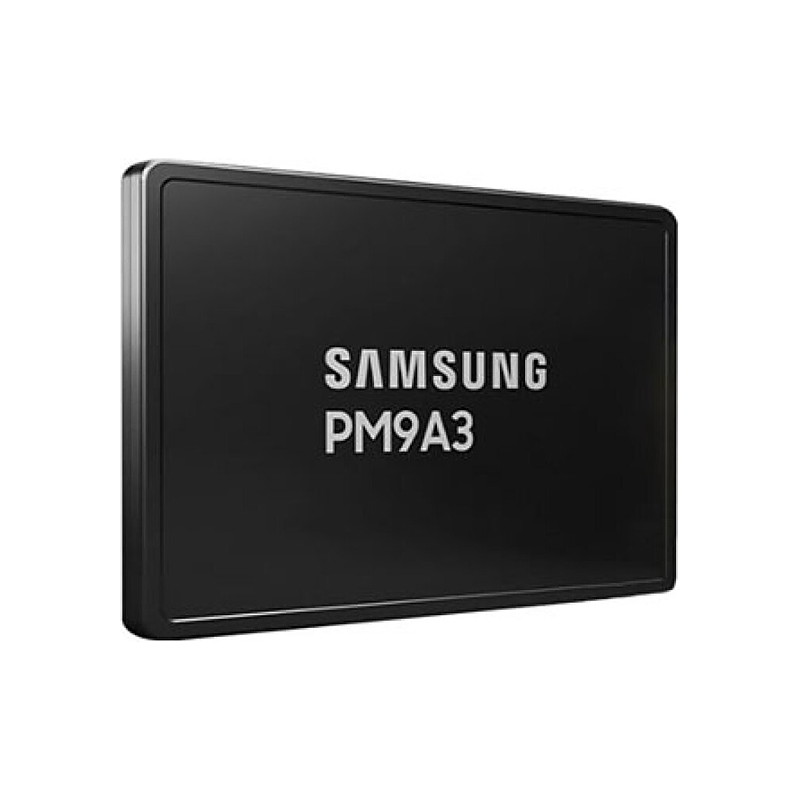
Samsung PM9A3 3.84TB PCIe 4.0 NVMe U.2 SSD (MZQL23T8HCLS)
3.84 TB 2.5-inch U.2 NVMe SSD, PCIe 4.0, ordering codes MZQL23T8HCLS-00A07 / -00W07 / -00B7C
- Part Number
- MZQL23T8HCLS
- Brand
- Samsung
- Category
- Enterprise & Data Center SSD
- Accepted Payments
- T/T Bank Transfer PayPal Western Union
Technical Specifications
| Capacity | 3.84 TB |
|---|---|
| Interface | NVMe |
| Form Factor | U.2 7mm |
| PCIe Version | PCIe 4.0 |
| NAND Type | TLC |
| Endurance (DWPD) | 1 |
| TBW | 7,008 TB |
| Sequential Read | 6,900 MB/s |
| Sequential Write | 4,100 MB/s |
| Random Read IOPS | 1,000K IOPS |
| Random Write IOPS | 180K IOPS |
| Power | 11 W |
| DRAM Cache | Yes |
| Power Loss Protection | Yes |
| Encryption | AES-XTS 256 |
| Condition | New · Used |
Frequently Asked Questions
Samsung PM9A3 3.84 TB, 2.5-inch U.2 at 7 mm, catalogue code MZQL23T8HCLS, orderable as -00A07, -00W07 and -00B7C. 6,900 MB/s sequential read and 4,100 MB/s write on PCIe 4.0 x4, 1,000K random read and 180K random write IOPS, 7,008 TBW at 1 DWPD. TLC V-NAND, capacitor-backed PLP, AES 256-bit full disk encryption, 11.0 W reading and 13.5 W writing. New and used both stocked.
This is the fastest capacity in the PM9A3 U.2 range on both sequential columns, and the last one where write bandwidth per terabyte stays above a gigabyte per second. Above it the family keeps adding endurance and random IOPS but stops adding throughput, which makes this the natural ceiling for a general-purpose NVMe volume and the point where the buying question changes from performance to capacity.
Technical specifications
| Product family | Samsung PM9A3 (PCIe 4.0 data centre NVMe SSD, 1 DWPD) |
|---|---|
| PN | MZQL23T8HCLS (catalogue code) |
| Ordering codes | MZQL23T8HCLS-00A07 / MZQL23T8HCLS-00W07 / MZQL23T8HCLS-00B7C |
| Capacity | 3.84 TB (unformatted; 1 GB = 1 billion bytes, formatted capacity is less) |
| Form factor | 2.5-inch U.2, 7 mm (100.20 × 69.85 × 7.0 mm) |
| Interface | PCIe 4.0 x4, NVMe 1.4, single port |
| NAND | Samsung V-NAND TLC |
| Sequential read | 6,900 MB/s (up to, 4 KB transfer size, queue depth 32, four workers) |
| Sequential write | 4,100 MB/s |
| Random 4K read | 1,000K IOPS (queue depth 32) |
| Random 4K write | 180K IOPS (queue depth 32) |
| Endurance (TBW) | 7,008 TB |
| Endurance (DWPD) | 1 drive write per day for five years |
| Power | 11.0 W active read, 13.5 W active write, 3.5 W idle with DIPM off |
| Power-loss protection | Yes, capacitor-backed, with end-to-end data path protection |
| Encryption | AES 256-bit full disk encryption, TCG Opal 2.0, IEEE 1667 encrypted drive |
| MTBF | 2.0 million hours |
| Environment | 0 to 70 °C operating, −40 to 85 °C non-operating, 5 to 95% non-condensing |
| Features | TRIM, garbage collection, S.M.A.R.T. |
Five drives at 3.84 TB, three generations
| Model | Capacity | Interface | Seq read / write | Random 4 KB | TBW | Power |
|---|---|---|---|---|---|---|
| PM963 | 3.84 TB | PCIe 3.0 x4 | 2,000 / 1,200 MB/s | 430K / 40K | 5,466 TB | 7.6 W |
| PM983 | 3.84 TB | PCIe 3.0 x4 | 3,200 / 2,000 MB/s | 540K / 50K | 5,466 TB | 10.6 W |
| PM1733a | 3.84 TB | PCIe 4.0 x4 | 7,500 / 4,100 MB/s | 1,600K / 170K | 7,008 TB | 17.5 W |
| PM9A3 | 3.84 TB | PCIe 4.0 x4 | 6,900 / 4,100 MB/s | 1,000K / 180K | 7,008 TB | 11.0 W |
| PM9D3a | 3.84 TB | PCIe 5.0 x4 | 12,000 / 6,700 MB/s | 1,700K / 250K | 7,008 TB | 12.8 W |
The two Gen3 rows and the Gen4 rows are in the same carrier and the same capacity, which makes the progression unusually clean: sequential read doubled from 3,200 to 6,900 between PM983 and this drive, sequential write doubled from 2,000 to 4,100, random read roughly doubled from 540K to 1,000K, and random write more than tripled from 50K to 180K. Endurance moved from 5,466 TB to 7,008 TB, which is the 1 DWPD rating at the larger capacity rather than a firmware change.
The Gen5 column on the same shelf shows what a newer generation buys at this size: 12,000 MB/s read and 6,700 MB/s write, against 6,900 and 4,100 here. That is the largest generational step in this family on the write side, and it is the reason a Gen5 part makes sense at 3.84 TB in a way it does not at 960 GB.
The peak of the range on both sequential columns
Samsung's own data sheet puts the range at 6,500, 6,800, 6,900 and 6,700 MB/s sequential read across 960 GB, 1.92, 3.84 and 7.68 TB, and at 1,500, 2,700, 4,100 and 4,000 MB/s sequential write. Both curves peak here. The larger capacity is not slower because of a link limit; it is slower because doubling the flash again adds addressing work without adding lanes, and the controller pays for it in the sequential path while the random path keeps improving.
That matters for how a fleet gets sized. Random read and random write do continue upward above this capacity, from 1,000K and 180K here to 1,100K and 200K at 7.68 TB. So the choice between this capacity and the next one up is not "faster or bigger": it is ten percent more random IOPS and double the endurance, paid for with slightly lower sequential throughput and half the write bandwidth per terabyte. The 1.92 TB page shows the same curve from below, where the write rating is 2,700 rather than 4,100.
Where PM1733a is genuinely faster, and when that matters
There is no point pretending this drive wins everything at its own capacity. The PM1733a in the table above quotes 7,500 MB/s read against 6,900, and 1,600K random read against 1,000K. Those are real gaps, not rounding: eight percent on sequential and sixty percent on random read. A workload whose bottleneck is random read IOPS per drive should be looking at the PM1733a, and that is the honest answer even on a page selling the PM9A3.
What this drive has instead is power and height. Eleven watts against 17.5, which is 264 W against 420 W for twenty-four bays, and a 7 mm shell against 15 mm. It also edges ahead on random write, 180K against 170K, and it matches the PM1733a on sequential write at 4,100 MB/s. Both carry 7,008 TBW at 1 DWPD, so endurance cannot separate them.
The practical split is thermal and mechanical rather than numerical. A shallow chassis with constrained airflow and 7 mm caddies cannot use the PM1733a at all, and a chassis with 15 mm bays and plenty of cooling will get more read IOPS for its money from it. Neither drive is the wrong answer in the abstract; one of them is the wrong answer in a specific rack.
What 7,008 TBW buys, and the power per terabyte curve
One drive write a day for five years on 3.84 TB is 3.84 TB of host writes a day, which averages 44 MB/s. At the rated 4,100 MB/s a full fill takes about sixteen minutes, so one complete rewrite per day is comfortably inside the rating. At the random write ceiling of 180K IOPS the drive absorbs 737 MB/s, and 7,008 TB at that rate lasts about a hundred and ten days, which is the number to check against a log or ingest workload rather than the headline TBW.
Power per terabyte is where this capacity turns a corner. Twenty-four bays hold 92 TB and draw 264 W, which is 2.87 W per terabyte, against 5.2 at 1.92 TB and 9.9 at 960 GB in the same carrier. That is the point at which a shelf of these stops looking like a cache and starts looking like a tier. It is still four times the 0.72 W per terabyte of the 15.36 TB part, so it is not yet a bulk store, but the arithmetic has changed direction.
Ordering codes and what to check at goods-in
| Code | Type | Capacity | Condition | Quote |
|---|---|---|---|---|
| MZQL23T8HCLS | Catalogue code | 3.84 TB | New / used | Enquire |
| MZQL23T8HCLS-00A07 | Ordering code | 3.84 TB | New / used | Enquire |
| MZQL23T8HCLS-00W07 | Ordering code | 3.84 TB | New / used | Enquire |
| MZQL23T8HCLS-00B7C | Ordering code | 3.84 TB | New / used | Enquire |
The suffix records the distribution block and the build, so all three strings describe one drive; Samsung prints -00W07 in its own part list and the other two are the same hardware through different channels. Quote the string the buyer's system holds and verify the packing list against it. At this capacity the catalogue code ends in HCLS rather than HCJR, which is a capacity marker and not a carrier change: MZQL is still the 2.5-inch U.2 carrier, and MZ1L at the same capacity is still the M.2 part.
- HCLS, not HCJR. The last four characters track the density in this family. A 3.84 TB drive reading HCJR is either mislabelled or a different capacity.
- 7 mm. Every PM9A3 U.2 drive is 7 mm; a 15 mm shell at this capacity belongs to another product line.
- 7,008 TBW. That is 1 DWPD at this capacity for five years. A lower figure means a drive rated below one full write a day.
- Host bytes written against power-on hours. A pull of this size has often been a virtualisation datastore; the ratio tells you whether it was busy or merely powered.
- Firmware revision and over-provisioning. Re-provisioned drives are common in secondary stock at this capacity, so ask for the SMART record against the serial.
Warranty, lead time and purchasing
A one year warranty applies to new drives and tested pulls without distinction, and it attaches to the drive rather than to the machine it came out of, so a pull that later moves to another chassis keeps its cover. Each used unit is wiped, graded and photographed before it is packed, and its SMART log is filed against the serial number. Stock is dispatched within three to seven working days and the tracking number goes out with it. Two pieces is the minimum per line, other capacities and carriers in this family can travel on the same order, and a quotation is issued the same working day once the part number, condition and quantity are confirmed.
Get Pricing For This Part
Tell us who you are — we reply within one working day with a firm quote, stock status and lead time. Volume discounts available.
Related Products
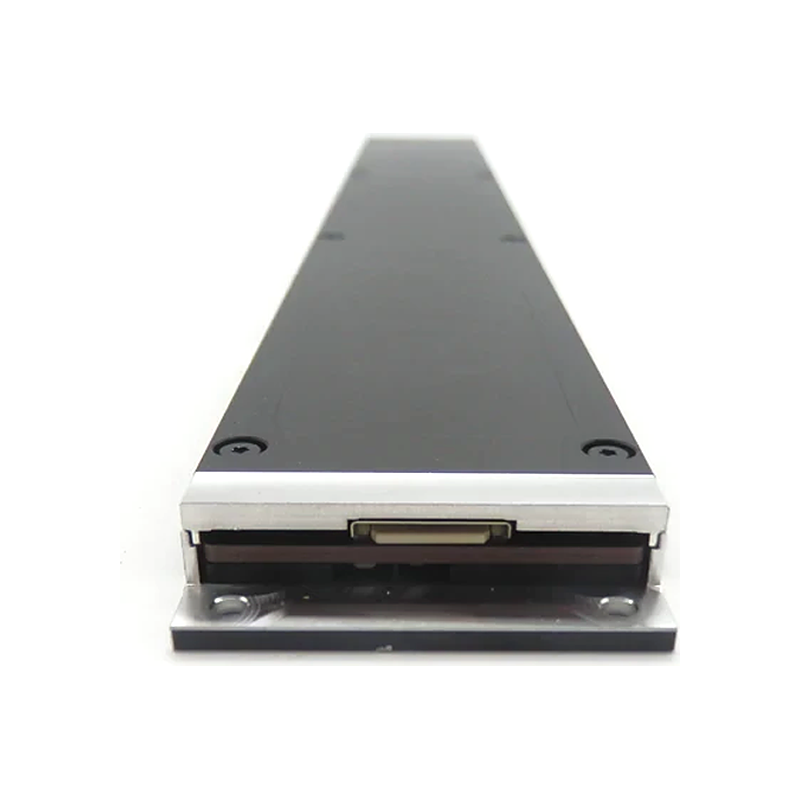
15.36 TB E1.L 1U long ruler NVMe SSD, PCIe 4.0, ordering code MZEL215THBLA-00AMV
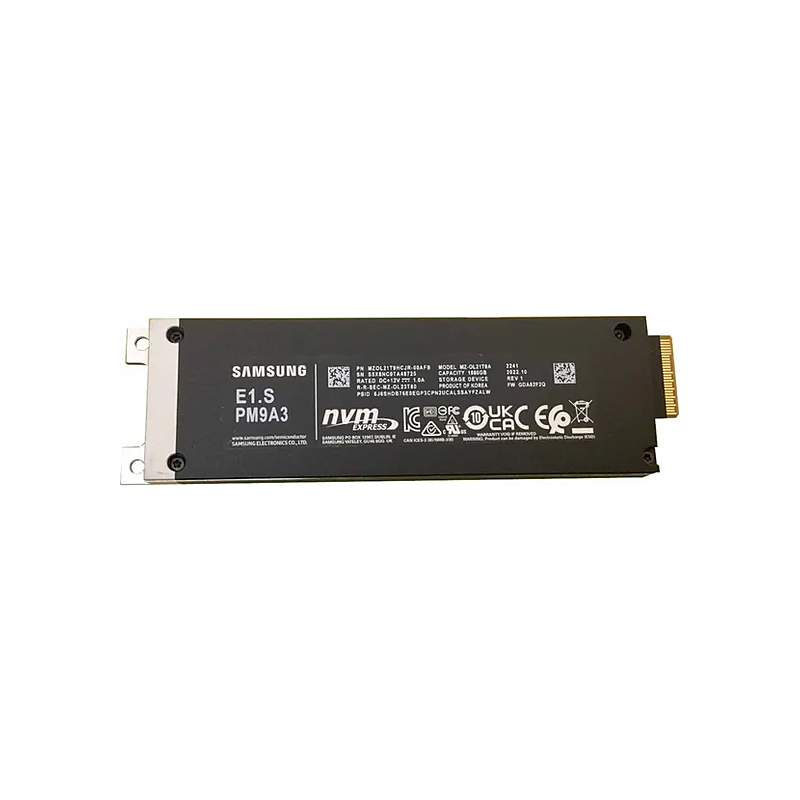
7.68 TB E1.S 1T NVMe SSD, PCIe 4.0, ordering codes MZCL27T6HBLA-00AMV / MZTL27T6HBLA-00A07
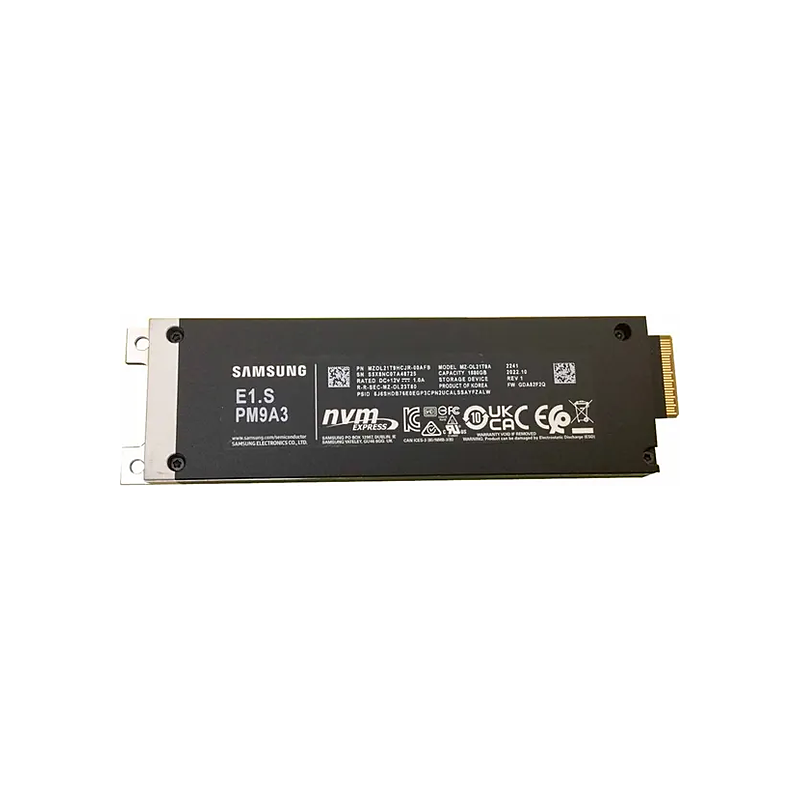
3.84 TB E1.S 1T NVMe SSD, PCIe 4.0, ordering codes MZCL23T8HCLS-00AMV / MZTL23T8HCLS-00A07
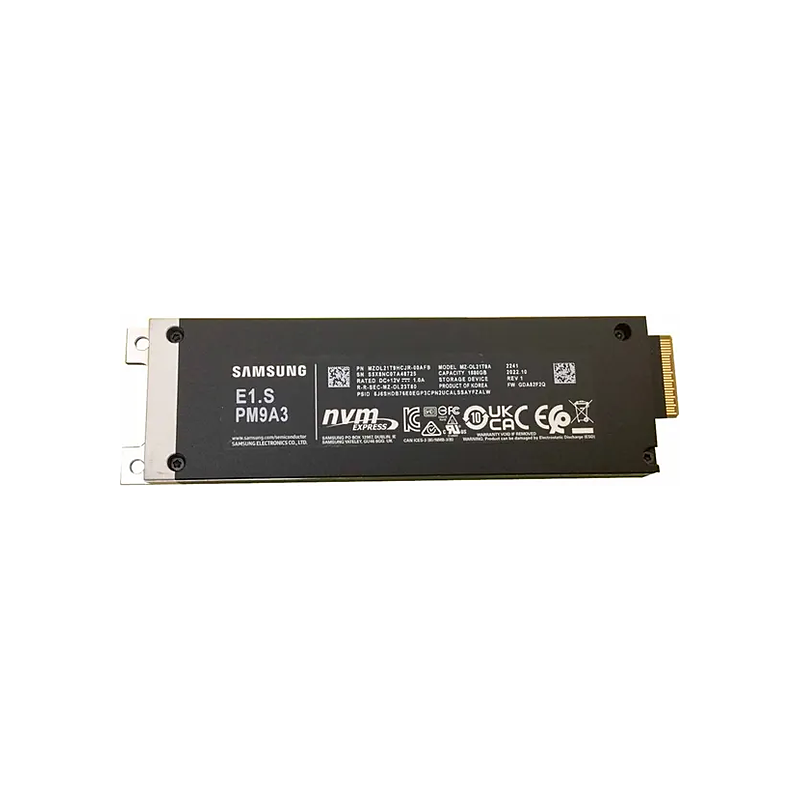
1.92 TB E1.S 1T (9.5 mm) NVMe SSD, PCIe 4.0, ordering code MZCL21T9HCJR-00AMV