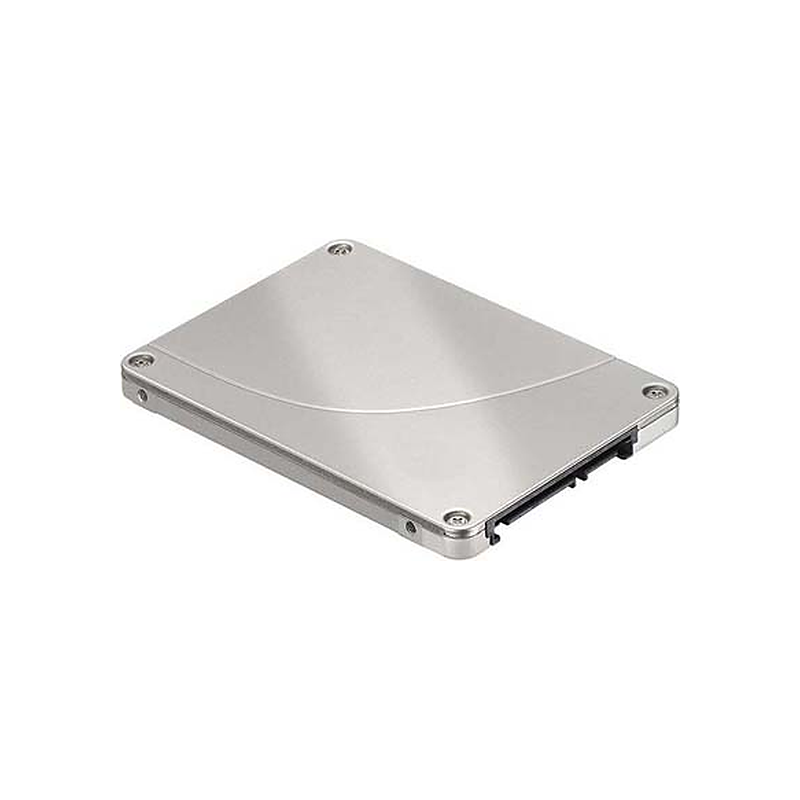
Samsung PM1753 7.68TB PCIe 5.0 NVMe U.2 SSD (MZWL97T6HFLA)
7.68 TB 2.5-inch U.2 NVMe SSD, PCIe 5.0, ordering code MZWL97T6HFLA-00AW7
- Part Number
- MZWL97T6HFLA
- Brand
- Samsung
- Category
- Enterprise & Data Center SSD
- Accepted Payments
- T/T Bank Transfer PayPal Western Union
Technical Specifications
| Capacity | 7.68 TB |
|---|---|
| Interface | NVMe |
| Form Factor | U.2 15mm |
| PCIe Version | PCIe 5.0 |
| NAND Type | TLC |
| Endurance (DWPD) | 1 |
| TBW | 14,016 TB |
| Sequential Read | 14,000 MB/s |
| Sequential Write | 10,000 MB/s |
| Random Read IOPS | 3,200K IOPS |
| Random Write IOPS | 580K IOPS |
| Power | 18.7 W |
| DRAM Cache | Yes |
| Power Loss Protection | Yes |
| Encryption | AES-XTS 256 |
| Condition | New · Used |
Frequently Asked Questions
Samsung PM1753 7.68 TB, 2.5-inch U.2 at 15 mm, catalogue code MZWL97T6HFLA, ordering code MZWL97T6HFLA-00AW7. 14,000 MB/s sequential read and 10,000 MB/s write on PCIe 5.0 x4, 3,200K random read and 580K random write IOPS, 14,016 TBW at one drive write a day for five years. PLP, AES-XTS 256-bit, 18.7 W reading and 19.6 W writing. New and used both stocked.
This is the capacity where the sequential write rating reaches the top of the range. The PM1753 line stops at 10,000 MB/s and no larger capacity quotes more, so a 15.36 TB or 30.72 TB part buys capacity and random write depth and nothing at all on the sequential path. Two figures keep moving from here, and one of them moves in the wrong direction.
Technical specifications
| Product family | Samsung PM1753 (PCIe 5.0 high-performance data centre NVMe SSD, 1 DWPD) |
|---|---|
| PN | MZWL97T6HFLA (catalogue code) |
| Ordering code | MZWL97T6HFLA-00AW7 |
| Capacity | 7.68 TB (unformatted; 1 GB = 1 billion bytes, formatted capacity is less) |
| Form factor | 2.5-inch U.2, 15 mm (100.2 × 69.85 × 15 mm, about 165 g) |
| Interface | PCIe 5.0 x4, NVMe 2.0, single port, 12 V ±10% |
| NAND | Samsung V-NAND TLC |
| Sequential read | 14,000 MB/s (PCIe 5.0) / 7,500 MB/s (PCIe 4.0) |
| Sequential write | 10,000 MB/s (PCIe 5.0) / 7,100 MB/s (PCIe 4.0) |
| Random 4K read | 3,200K IOPS (PCIe 5.0) / 1,700K IOPS (PCIe 4.0) |
| Random 4K write | 580K IOPS in both modes |
| Latency | 75 µs random read, 10 µs random write (queue depth 1) |
| QoS 99% | 90 µs read, 20 µs write, identical on PCIe 4.0 |
| Endurance (TBW) | 14,016 TB |
| Endurance (DWPD) | 1 drive write per day for five years |
| Power | 18.7 W typical read, 19.6 W typical write, 4 W idle |
| Power-loss protection | Yes, capacitor-backed, with end-to-end data protection |
| Encryption | AES-XTS 256-bit engine, TCG Opal compliant |
| Sector size | 512 (default), 520, 4096, 4104, 4112 or 4160 bytes |
| MTBF / UBER | 2.5 million hours / 1 sector per 1017 bits read |
| Drive ready | 2 s or less from power-on to accepting commands |
Where the write rating runs out
Sequential write climbs 4,800 at 1.92 TB, 9,000 at 3.84 TB, 10,000 here, and 10,000 again at 15.36 and 30.72 TB. The last eleven percent of the line's write bandwidth arrives at this step and then stops arriving. Sequential read never moved at all, because 14,000 MB/s is already what four Gen5 lanes deliver after encoding and packet overhead.
Random read plateaued one step earlier: 2,200K at 1.92 TB, then 3,200K at 3.84, 7.68, 15.36 and 30.72 TB. So the read IOPS ceiling is a controller property and it was already reached at half this capacity.
That leaves random write as the only column still climbing with any slope. It runs 220K, 440K, 580K here, 620K at 15.36 TB and 650K at the top, so this drive carries 89 percent of the best random write figure in the family while costing a third of the largest part. If a workload needs sequential bandwidth, this capacity has all of it; if it needs random write depth, this capacity has most of it; anything above this point is being bought for terabytes.
Same capacity, two classes of Gen5
| Model | Capacity | Form factor | Seq read / write | Random 4 KB | TBW | Power |
|---|---|---|---|---|---|---|
| PM9D3a | 7.68 TB | U.2 2.5-inch, 15 mm | 12,000 / 7,000 MB/s | 1,700K / 400K | 14,016 TB | 13.5 W |
| PM1753 | 7.68 TB | U.2 2.5-inch, 15 mm | 14,000 / 10,000 MB/s | 3,200K / 580K | 14,016 TB | 18.7 W |
| PM1753 | 15.36 TB | U.2 2.5-inch, 15 mm | 14,000 / 10,000 MB/s | 3,200K / 620K | 28,032 TB | 20.8 W |
The first two rows share a capacity, a shell, a 1 DWPD rating and 14,016 TBW. The difference is the controller and 5.2 W. Sequential write is 43 percent higher, random read 88 percent, random write 45 percent and sequential read 17 percent. Across a 24-bay shelf that is 125 W for 184 TB, which works out at 171K random read IOPS per watt against 126K for the cheaper drive — the more expensive part is also the more efficient one per watt of work done, which is not usually how this trade reads.
The third row is the honest counterargument. Two point one watts more per drive buys double the flash, the same sequential numbers and 40K more random write. Anyone whose constraint is terabytes per rack unit, rather than IOPS per watt, should be looking at that row instead of this one.
Read latency moves the wrong way
Random read latency is quoted at 75 µs here and 65 µs at 1.92 and 3.84 TB. The difference is the mapping table. Doubling the capacity doubles the logical block space the controller has to translate, so the DRAM index that holds the translation grows with it, and an index miss costs one more memory round trip before the flash is even touched.
Fifteen percent on a queue-depth-one figure sounds small and is not, because that is the number that appears in OLTP response time rather than in a throughput benchmark. A workload that is latency-bound at low queue depth and does not need 7.68 TB should know that the smaller drive in this range is genuinely faster per operation, not just cheaper.
The tail does not move with it. The 99th percentile is quoted at 90 µs read and 20 µs write at both capacities, so capacity widens the middle of the distribution without widening the end. Queue depth is what normally sets the tail, and it is the same controller on both parts.
Write power sits just above read power here
18.7 W reading and 19.6 W writing. At 3.84 TB the order was the other way round, 17.0 against 16.7, and at 1.92 TB it was 13.0 against 11.6. Read power is dominated by the link and the DRAM index and scales weakly with capacity; write power is dominated by programming flash and scales with the number of dies being written at once. By this capacity the program side has edged in front of the link side, and at 30.72 TB the link side edges back in front by half a watt — so the two are best treated as equal in practice rather than as a trend.
Twenty-four drives hold 184 TB and draw 449 W, or 2.44 W per terabyte. The same shelf of PM9D3a parts at this capacity draws 324 W, and the same shelf of 15.36 TB PM1753 parts holds twice the data for 499 W. That last figure deserves a second look: going from 7.68 TB to 15.36 TB costs 50 W per shelf for double the capacity, which makes the larger part the cheaper one per terabyte by a wide margin. Power efficiency is a reason to climb this range, not a reason to sit in the middle of it.
Fourteen petabytes, and what it lasts at the peak
14,016 TBW is 7.68 TB of host writes a day for 1,825 days, or 88.9 MB/s sustained. Every 7.68 TB drive rated at one drive write a day carries the same number, including the PM9D3a in the table above, so endurance separates nothing at this capacity.
What changes with capacity is how long the budget survives at the peak. 580K of 4 KB writes is 2.38 GB/s, and 14,016 TB at that rate lasts about 68 days, against 46 days for the 3.84 TB part at its own peak. Capacity doubled while random write rose 32 percent, so the ratio improved. That is the general rule in this line: flash is added faster than write throughput, which is why big drives look more durable under a fixed write rate even though the DWPD rating never changes.
Sixty-eight days is still not a working rate, and that is the point of quoting it. Size by sustained writes, put host bytes written into monitoring at commissioning, and the terabyte rating stops being either a selling point or a worry.
Ordering codes: MZWL97T6 and the -00AW7 suffix
| Code | Type | Capacity | Condition | Quote |
|---|---|---|---|---|
| MZWL97T6HFLA | Catalogue code | 7.68 TB | New / used | Enquire |
| MZWL97T6HFLA-00AW7 | Ordering code | 7.68 TB | New / used | Enquire |
The suffix records the distribution block, and -00AW7 and -00BW7 both appear on this capacity for the same physical drive. The four characters before the dash are not shared across capacities: 1.92 TB is HFJA, 3.84 TB is HFLT and 7.68 TB is HFLA. So the tail cannot confirm what is in the box, and neither can the fifth character on its own — MZWL9 says PM1753, MZWLO says PM1743, MZWL6 says PM9D3a, but all three exist at this capacity.
Checks worth running on delivery:
- 7T6 in the middle of the string. That is the capacity marker; HFLA at the tail only tells you it is this generation of the family.
- Sequential write near 10,000. The PM9D3a at this capacity is rated 7,000, so one benchmark separates the two classes faster than any label.
- Random write near 580K. Not 440K, which is the 3.84 TB part, and not 620K, which is the 15.36 TB part.
- Host bytes written against 14,016 TB. At this capacity a used pull has usually seen real traffic, so get the figure before the wipe rather than after.
Warranty, lead time and purchasing
The drive carries a one year warranty in either condition, and it is the drive that is covered rather than the machine it came out of; used units are tested and wiped before packing. Stock leaves the warehouse in three to seven working days with tracking issued at dispatch. Two pieces is the minimum on a line, capacities in this series can ride one order together, and a quotation comes back the same working day once the part number, condition and quantity are clear.
Get Pricing For This Part
Tell us who you are — we reply within one working day with a firm quote, stock status and lead time. Volume discounts available.
Related Products
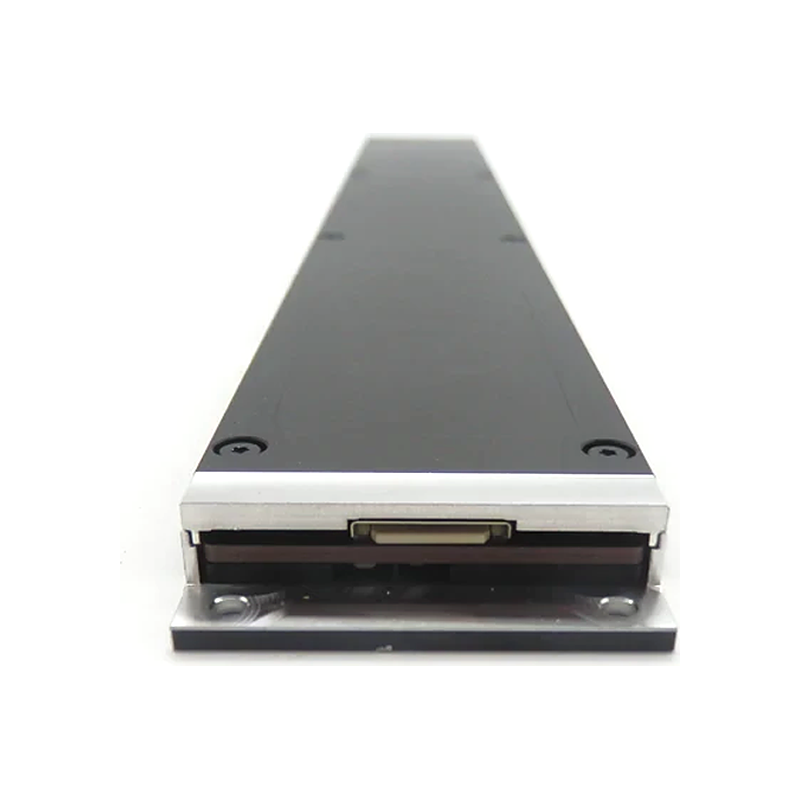
15.36 TB E1.L 1U long ruler NVMe SSD, PCIe 4.0, ordering code MZEL215THBLA-00AMV
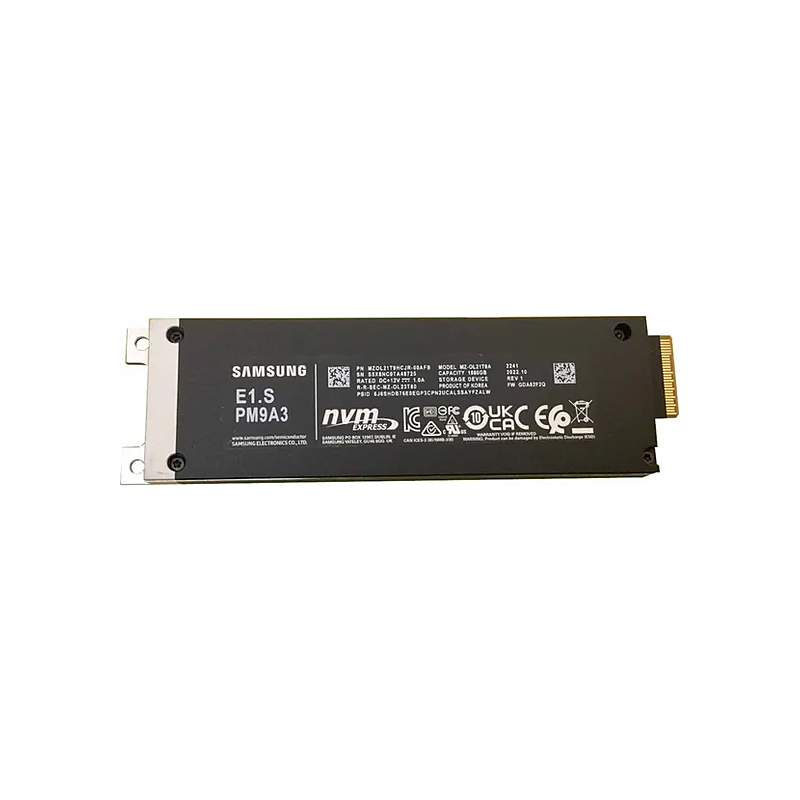
7.68 TB E1.S 1T NVMe SSD, PCIe 4.0, ordering codes MZCL27T6HBLA-00AMV / MZTL27T6HBLA-00A07
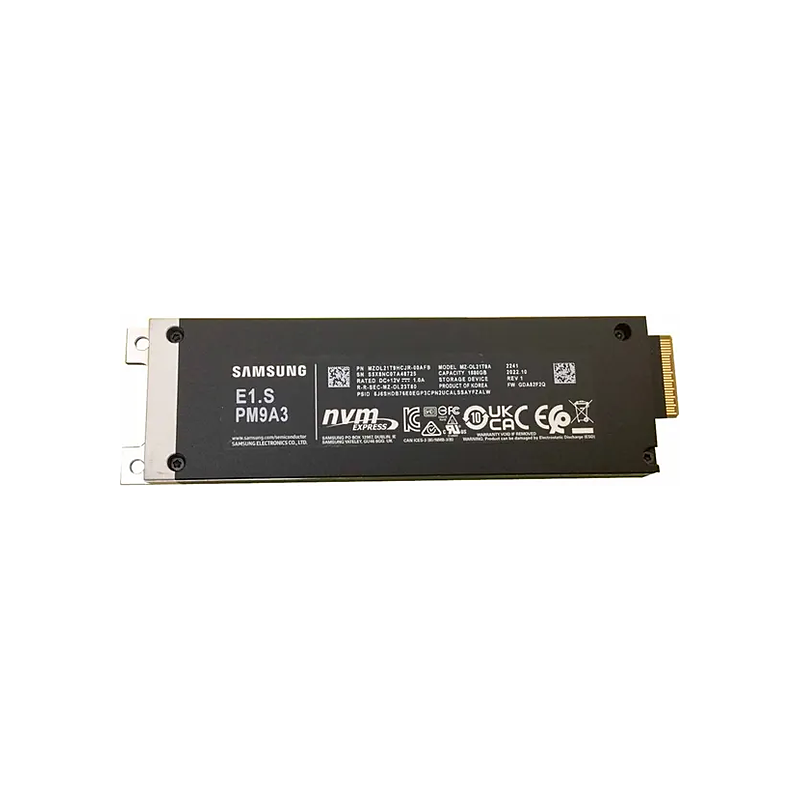
3.84 TB E1.S 1T NVMe SSD, PCIe 4.0, ordering codes MZCL23T8HCLS-00AMV / MZTL23T8HCLS-00A07
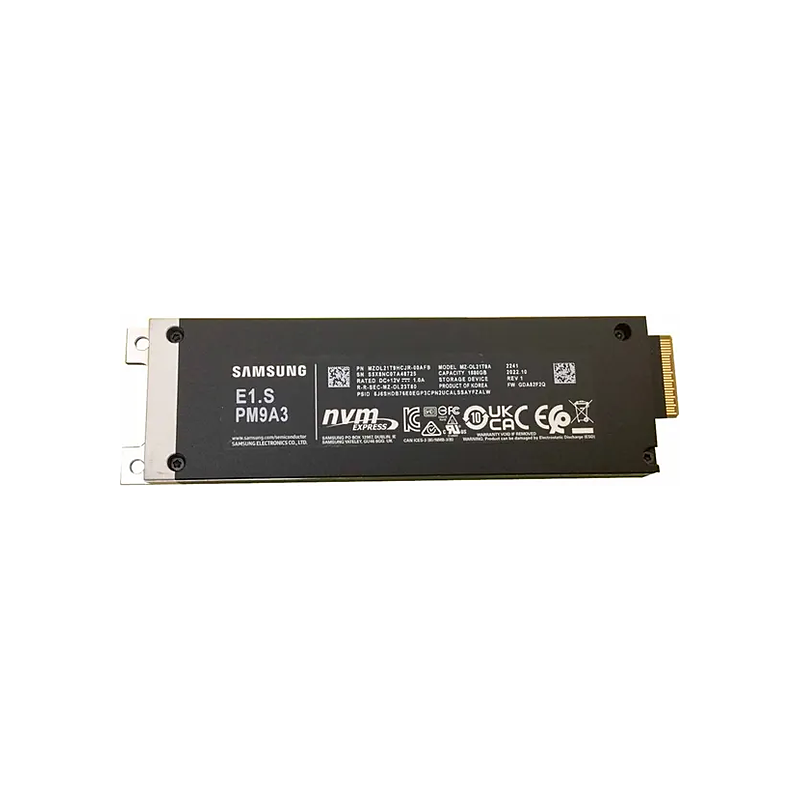
1.92 TB E1.S 1T (9.5 mm) NVMe SSD, PCIe 4.0, ordering code MZCL21T9HCJR-00AMV