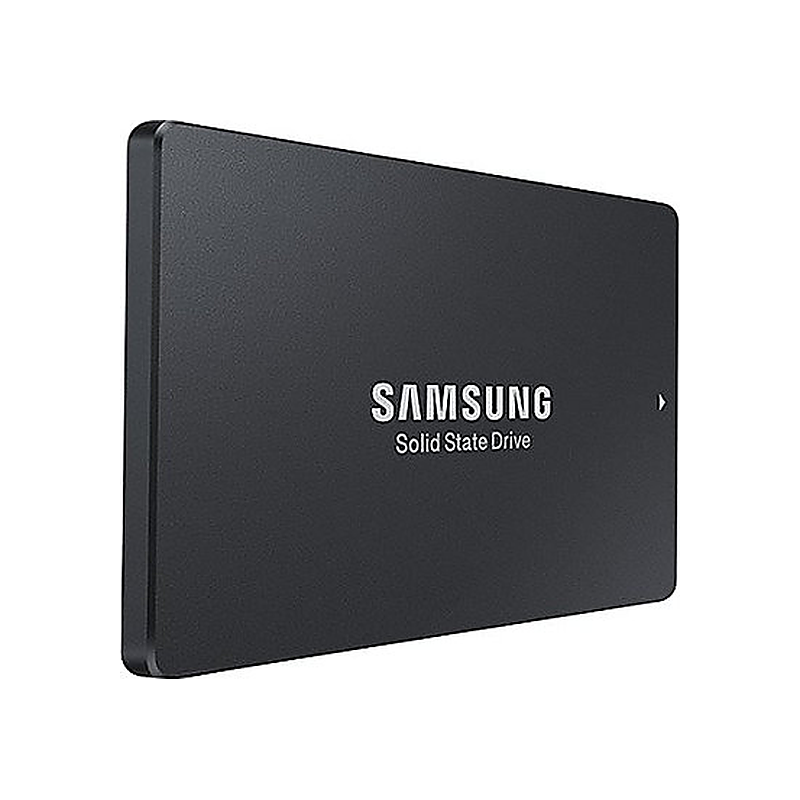
Samsung PM963 1.92TB PCIe 3.0 NVMe U.2 SSD (MZQLW1T9HMJP)
1.92 TB 2.5-inch U.2 NVMe SSD, ordering code MZQLW1T9HMJP-00003
- Part Number
- MZQLW1T9HMJP
- Brand
- Samsung
- Category
- Enterprise & Data Center SSD
- Accepted Payments
- T/T Bank Transfer PayPal Western Union
Technical Specifications
| Capacity | 1.92 TB |
|---|---|
| Interface | NVMe |
| Form Factor | U.2 7mm |
| PCIe Version | PCIe 3.0 |
| NAND Type | TLC |
| Endurance (DWPD) | 0.78 |
| TBW | 2,733 TB |
| Sequential Read | 2,000 MB/s |
| Sequential Write | 1,200 MB/s |
| Random Read IOPS | 430K IOPS |
| Random Write IOPS | 40K IOPS |
| Power | 7.5 W |
| DRAM Cache | Yes |
| Power Loss Protection | Yes |
| Encryption | AES-XTS 256 |
| Condition | New · Used |
Frequently Asked Questions
Samsung PM963 1.92 TB, 2.5-inch U.2 (SFF-8639), catalogue code MZQLW1T9HMJP, ordering code MZQLW1T9HMJP-00003. 2,000 MB/s sequential read, 1,200 MB/s sequential write, 430K random read and 40K random write IOPS at 4 KB, 2,733 TBW at 1.3 drive writes a day over three years. V-NAND TLC, PCIe 3.0 x4, NVMe 1.2, seven millimetres tall. Both conditions stocked, one-year warranty either way.
The PM963 was Samsung's faster sibling to the PM953, sold into the same sockets a year later. It roughly doubles the bandwidth of that drive at the same capacity, and it does it without changing the connector, the depth or the power envelope. Most of them went into read caches, index stores and virtualisation hosts, which is where the extra queue depth earns its keep.
Twice the bandwidth of the PM953, almost the same endurance
Set the two 1.92 TB drives side by side and the performance gap is the whole story until you reach the last column. Sequential read goes from 1,000 to 2,000 MB/s and sequential write from 870 to 1,200. Random read nearly doubles, from 240K to 430K IOPS, and random write more than doubles, from 19K to 40K. That is a different class of device on paper, from the same vendor, in the same bay.
Endurance does not follow. This drive carries 2,733 TB; the PM953 at the same capacity carries 2,800. The faster drive is the one with slightly less life in it — two and a half percent, well inside measurement noise, but worth knowing before someone assumes the higher model number means more of everything. Speed and endurance were separate decisions in this generation.
Technical specifications
| Product family | Samsung PM963 (PCIe 3.0 enterprise NVMe SSD, read-centric) |
|---|---|
| PN | MZQLW1T9HMJP (catalogue code) |
| Ordering code | MZQLW1T9HMJP-00003 |
| Capacity | 1.92 TB (unformatted; 1 GB = 1 billion bytes, formatted capacity is less) |
| Form factor | 2.5-inch U.2, SFF-8639, 7 mm (100 × 70 × 7 mm) |
| Interface | PCIe 3.0 x4, NVMe 1.2 |
| NAND | Samsung V-NAND TLC (48-layer) |
| Sequential read | 2,000 MB/s (128 KB) |
| Sequential write | 1,200 MB/s (128 KB) |
| Random 4K read | 430K IOPS |
| Random 4K write | 40K IOPS |
| Endurance (TBW) | 2,733 TB |
| Endurance (DWPD) | 1.3 for three years, which is 0.78 over five years |
| Power | 7.5 W active read and write, 2.5 W idle |
| DRAM cache | Yes |
| Power-loss protection | Yes, capacitor-backed |
| Encryption | AES 256-bit hardware encryption |
| MTTF | 2 million hours |
1.3 DWPD is a three-year figure, and that matters
Samsung rates this family at 1.3 drive writes a day for three years, and the brochure says so in as many words. The 2,733 TB follows from that: 1.92 TB × 1.3 × 1,095 days. Stretch the same tonnage over the five years most of the industry uses and the daily figure falls to 0.78 DWPD, or 1.50 TB of host writes a day.
This is the single most common way a comparison goes wrong. A drive quoted at 1.3 DWPD against one quoted at 5 DWPD looks like a rout until you notice the first number covers three years and the second five. Put both on the same clock and this drive is a read-intensive part with a modest write budget, which is exactly what it is. The 5,466 TB figure on the 3.84 TB member of the family follows the same three-year convention, so the ratio never changes with capacity.
Where it sits against the PM953 and the SATA drives
| Model | Interface | Capacity | Seq read / write | Random 4 KB | TBW | DWPD |
|---|---|---|---|---|---|---|
| PM963 1.92 TB | PCIe 3.0 x4 | 1.92 TB | 2,000 / 1,200 MB/s | 430K / 40K | 2,733 TB | 0.78 |
| PM953 1.92 TB | PCIe 3.0 x4 | 1.92 TB | 1,000 / 870 MB/s | 240K / 19K | 2,800 TB | 0.8 |
| 5400 MAX 1.92 TB | SATA 6 Gb/s | 1.92 TB | 540 / 520 MB/s | 94K / 63K | 17,520 TB | 5 |
| 5210 ION 1.92 TB | SATA 6 Gb/s | 1.92 TB | 540 / 260 MB/s | 70K / 13K | 2,800 TB | 0.8 |
The PM953 row is the direct upgrade question, and the answer depends on one thing: whether the workload queues. At low queue depth, where a single thread reads a file at a time, 2,000 and 1,000 MB/s feel much the same and the SATA drives in the lower rows feel perfectly adequate. The gap opens when hundreds of outstanding commands are in flight, which is what the 430K read figure describes. A database index, a virtualisation host or a CDN cache lives in that regime. A file server does not.
The 5400 MAX row is there to keep the endurance comparison honest: 17,520 TB against 2,733, six times the write budget, at a quarter of the read bandwidth. If the server writes as much as it reads, that is the drive to buy, and no amount of NVMe queue depth compensates for running out of lifetime.
NVMe 1.2, and what "partial" means
Samsung's own brochure lists compliance as "NVMe spec rev. 1.2 (partial)". In practice this drive runs on the NVMe driver that ships with Linux, Windows Server and VMware, with no vendor package and no kernel patching — which was not a given in 2016. The qualifier means the controller does not implement every optional feature the revision defines. Nothing in a normal block-storage deployment depends on those options; a management stack that expects a later revision's telemetry or namespace features will find them missing.
Also worth knowing at the rack level: 7.5 W active per drive across 24 bays is 180 W before fans, against roughly 90 W for the same shelf of SATA parts. The read bandwidth is real, and so is the power bill that comes with it.
Ordering codes and the MZQLW block
| Code | Type | Capacity | Condition | Quote |
|---|---|---|---|---|
| MZQLW1T9HMJP | Catalogue code | 1.92 TB | New / used | Enquire |
| MZQLW1T9HMJP-00003 | Ordering code | 1.92 TB | New / used | Enquire |
The fifth character separates the two families: MZQLW is the PM963, MZQLV is the PM953. Everything else about the string reads the same way — 1T9 for 1.92 TB, HMJP for the build, -00003 for the OEM channel. The two drives are physically identical in the hand: same shell, same depth, same label layout, same connector, and the model line is the only thing on the label that tells them apart.
That is a real risk at goods-in on a mixed pallet. A PM953 and a PM963 at the same capacity will both enumerate, both format and both run; the only symptom of a mix-up is half the expected read throughput on the drives that turned out to be the slower model. Check the W before the drives go into the shelf, not after the benchmark.
What to check at goods-in
- The fifth character. MZQLW, not MZQLV. Same capacity, half the speed, indistinguishable in a photograph.
- Host bytes written against 2,733 TB. At 0.78 drive writes a day over five years the budget is modest. Read the SMART counter before wiping and price accordingly.
- Capacitor health. The power-loss protection is the reason this is a server part. It degrades silently, so every pull is discharged and measured on our bench before it is listed as tested.
- Firmware revision. Ask for the string out of the SMART output and check it against the server vendor's list; these shipped across several revisions through 2016 and 2017.
- Bay wiring. U.2 needs a PCIe-routed backplane. On a SAS or SATA backplane the drive takes power and never links, which reads as a dead drive if nobody checks the wiring first.
Warranty, lead time and purchasing
Sealed drives and tested pulls are both covered for a year, and the cover travels with the drive rather than the server. Warehouse stock normally turns round in three to seven working days, and tracking is issued at that point. Two pieces is the minimum order, the capacities in this family can be mixed on one order, and we price from part number, condition and quantity — usually the same working day.
Get Pricing For This Part
Tell us who you are — we reply within one working day with a firm quote, stock status and lead time. Volume discounts available.
Related Products
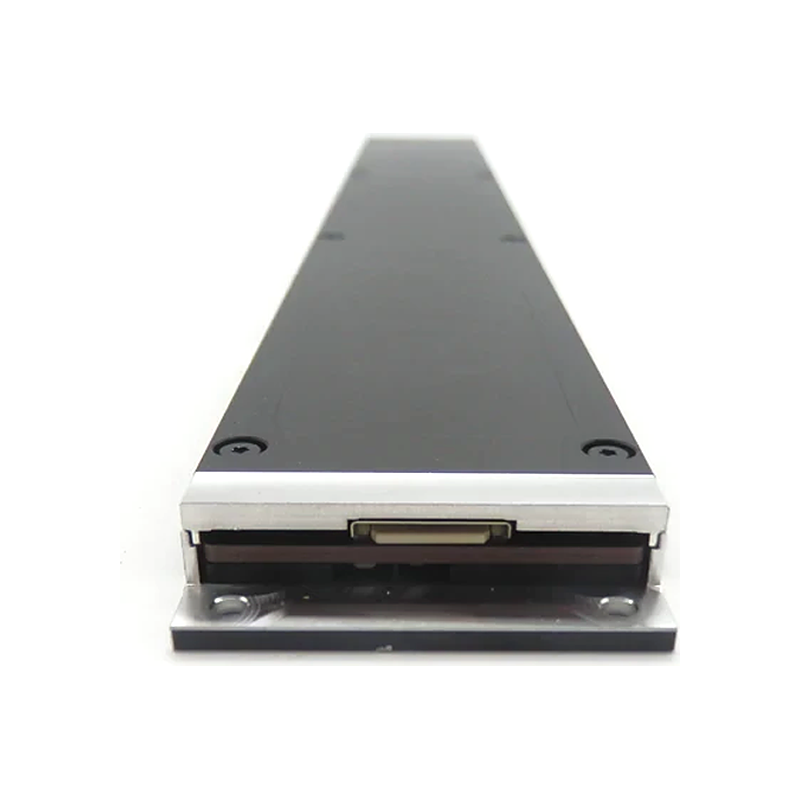
15.36 TB E1.L 1U long ruler NVMe SSD, PCIe 4.0, ordering code MZEL215THBLA-00AMV
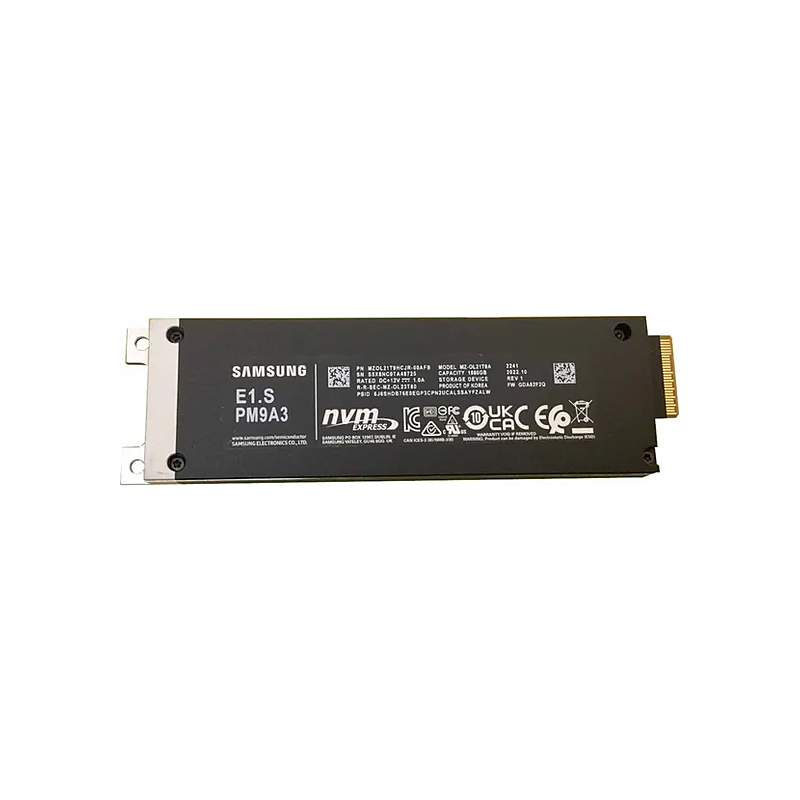
7.68 TB E1.S 1T NVMe SSD, PCIe 4.0, ordering codes MZCL27T6HBLA-00AMV / MZTL27T6HBLA-00A07
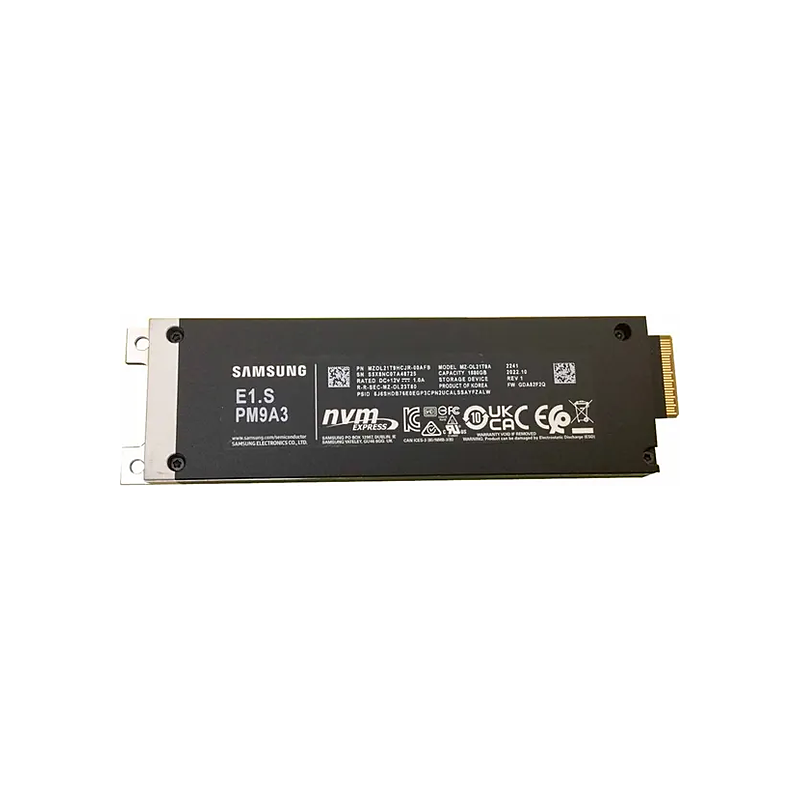
3.84 TB E1.S 1T NVMe SSD, PCIe 4.0, ordering codes MZCL23T8HCLS-00AMV / MZTL23T8HCLS-00A07
1.92 TB E1.S 1T (9.5 mm) NVMe SSD, PCIe 4.0, ordering code MZCL21T9HCJR-00AMV