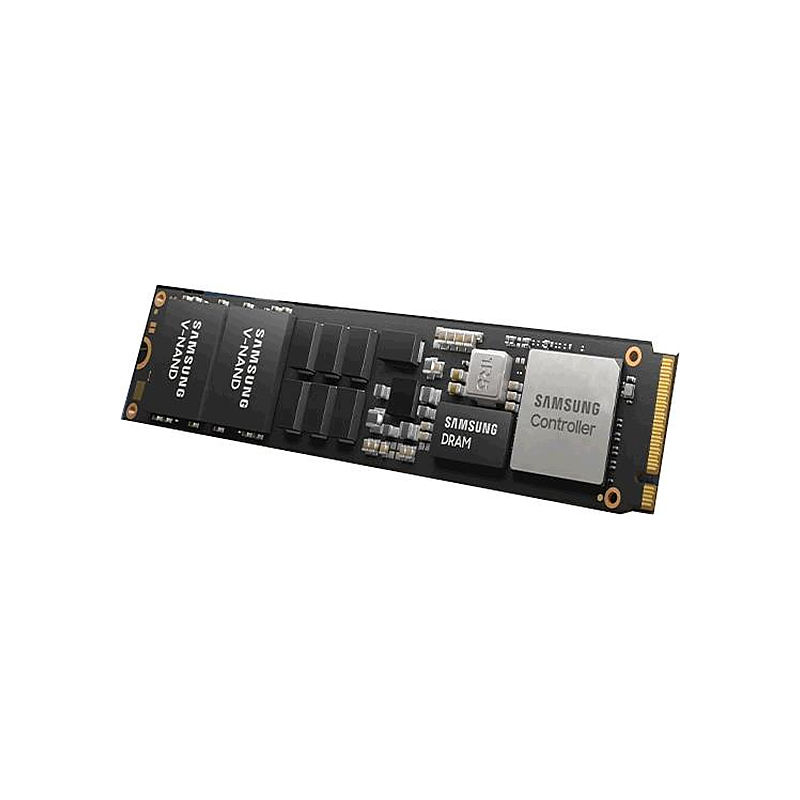
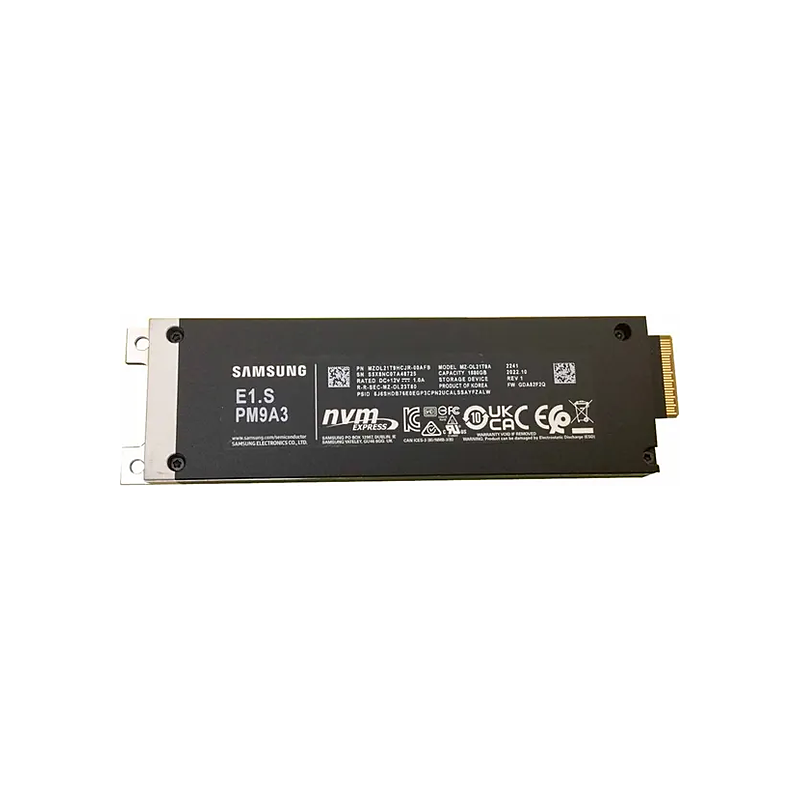
Samsung PM9A3 3.84TB M.2 22110 PCIe 4.0 NVMe SSD (MZ1L23T8HBLA)
3.84 TB M.2 22110 NVMe SSD, PCIe 4.0, ordering codes MZ1L23T8HBLA-00A07 / -00B7C
- Part Number
- MZ1L23T8HBLA
- Brand
- Samsung
- Category
- Enterprise & Data Center SSD
- Accepted Payments
- T/T Bank Transfer PayPal Western Union
Technical Specifications
| Capacity | 3.84 TB |
|---|---|
| Interface | NVMe |
| Form Factor | M.2 22110 |
| PCIe Version | PCIe 4.0 |
| NAND Type | TLC |
| Endurance (DWPD) | 1 |
| TBW | 7,008 TB |
| Sequential Read | 5,500 MB/s |
| Sequential Write | 2,000 MB/s |
| Random Read IOPS | 800K IOPS |
| Random Write IOPS | 85K IOPS |
| Power | 8.2 W |
| DRAM Cache | Yes |
| Power Loss Protection | Yes |
| Encryption | AES-XTS 256 |
| Condition | New · Used |
Frequently Asked Questions
Samsung PM9A3 3.84 TB M.2 22110, catalogue code MZ1L23T8HBLA, orderable as -00A07 and -00B7C. 5,500 MB/s sequential read and 2,000 MB/s write on PCIe 4.0 x4, 800K random read and 85K random write IOPS, 7,008 TBW at 1 DWPD. 110 mm long, 22 mm wide, 3.8 mm thick, 128-layer TLC V-NAND, capacitor-backed PLP, AES 256-bit full disk encryption, 8.2 W active and 2.5 W idle.
This is the largest capacity Samsung lists for this carrier, and the last one that changes nothing except the numbers in the endurance column. Every performance figure is identical to the 1.92 TB module — same 5,500 MB/s read, same 2,000 MB/s write, same 800K and 85K IOPS — for 0.2 W more and twice the write budget. Buying this capacity over the one below is a decision about terabytes and endurance, not about speed.
Technical specifications
| Product family | Samsung PM9A3 (PCIe 4.0 data centre NVMe SSD, 1 DWPD) |
|---|---|
| PN | MZ1L23T8HBLA (catalogue code) |
| Ordering codes | MZ1L23T8HBLA-00A07 / MZ1L23T8HBLA-00B7C |
| Capacity | 3.84 TB (unformatted; 1 GB = 1 billion bytes, formatted capacity is less) |
| Form factor | M.2 22110, single-sided, 110.0 × 22.0 × 3.8 mm, about 20 g |
| Interface | PCIe 4.0 x4, NVMe 1.4, M-key |
| NAND | Samsung V6 (128-layer) V-NAND TLC |
| Sequential read | 5,500 MB/s (128 KB transfer size, queue depth 32) |
| Sequential write | 2,000 MB/s |
| Random 4K read | 800K IOPS (queue depth 32) |
| Random 4K write | 85K IOPS (queue depth 32) |
| Endurance (TBW) | 7,008 TB |
| Endurance (DWPD) | 1 drive write per day for five years |
| Power | 8.2 W active read, 8.2 W active write, 2.5 W idle with DIPM off |
| Power-loss protection | Yes, capacitor-backed, with end-to-end data path protection |
| Encryption | AES 256-bit full disk encryption, TCG Opal 2.0, IEEE 1667 encrypted drive |
| MTBF | 2.0 million hours |
| Environment | 0 to 70 °C operating, 5 to 95% non-condensing humidity |
| Features | TRIM, garbage collection, S.M.A.R.T., secure boot |
Five drives at 3.84 TB, two carriers, two generations
| Model | Capacity | Carrier | Seq read / write | Random 4 KB | TBW | Power |
|---|---|---|---|---|---|---|
| PM983 | 3.84 TB | M.2 22110 | 3,000 / 1,400 MB/s | 480K / 42K | 5,466 TB | 8 W |
| PM9A3 | 1.92 TB | M.2 22110 | 5,500 / 2,000 MB/s | 800K / 85K | 3,504 TB | 8 W |
| PM9A3 | 3.84 TB | M.2 22110 | 5,500 / 2,000 MB/s | 800K / 85K | 7,008 TB | 8.2 W |
| PM9A3 | 3.84 TB | U.2 7 mm | 6,900 / 4,100 MB/s | 1,000K / 180K | 7,008 TB | 11 W |
| PM9D3a | 3.84 TB | U.2 15 mm | 12,000 / 6,700 MB/s | 1,700K / 250K | 7,008 TB | 12.8 W |
The first row is the previous-generation module at this capacity: 3,000 and 1,400 MB/s on 8 W, against 5,500 and 2,000 here on 8.2 W. The Gen4 controller bought eighty-three percent more sequential read and forty-three percent more write inside the same power envelope, which is a larger gain than this carrier usually gets credit for.
The second and third rows are the two larger capacities of this series in this module, and the two are identical on every performance column. That is worth stating plainly because catalogues invite the opposite assumption: a bigger drive in the same family normally performs better, and here it does not. The 3.84 TB version carries twice the endurance and nothing else.
Half the write of the U.2 drive at the same capacity
The comparison with the U.2 part at 3.84 TB is the widest gap in this whole carrier series, and it is worth being blunt about. Sequential write is 2,000 against 4,100 MB/s, random write 85K against 180K, sequential read 5,500 against 6,900, random read 800K against 1,000K. Two of those are a little over half.
The power columns say why the gap widened. The U.2 drive at this capacity runs 11.0 W on read and 13.5 W on write; this module is capped at 8.2 W in both directions, and at 3.84 TB of flash that ceiling is doing real work. At 960 GB the same ceiling cost only 100 MB/s of write; here it costs 2,100. A 110 mm module has no shell to dissipate into and no 12 V rail, so the power budget is fixed while the flash is not.
That does not make it a bad drive, but it does fix its role. If a chassis has U.2 bays and the workload writes, this module is the wrong choice at this capacity and the U.2 drive is the right one. If the chassis has only M.2 positions and the data has to live inside the node, this is the largest and most durable module Samsung made in this family, and the write ceiling is simply the price of the slot.
What 7,008 TBW buys
One drive write a day for five years on 3.84 TB is 3.84 TB of host writes a day, or 44 MB/s averaged. At the rated 2,000 MB/s a full fill takes about thirty-two minutes, so one complete rewrite a day sits well inside the rating. At the random write ceiling of 85K IOPS the module absorbs 348 MB/s, and 7,008 TB at that rate lasts about two hundred and thirty days, which is roughly double the 1.92 TB module at the same ceiling — the capacity doubled and the ceiling did not move.
Power per terabyte is the other number worth carrying: 8.2 W across 3.84 TB is 2.14 W per terabyte, against 4.17 at 1.92 TB and 7.81 at 960 GB in the same carrier. A node with two of these in a mirror holds 7.68 TB of usable capacity for 16.4 W under load. That is the configuration this capacity exists for.
The slot is not always four lanes
A data-centre M.2 position is usually wired straight to the CPU with four dedicated lanes, but not always. On boards where the M.2 slot shares a bifurcated x16 PCIe slot, or where a riser splits lanes between two modules, the drive negotiates x2 or even x1 and the sequential rating on this page becomes unattainable. The drive will not report an error; it will simply deliver half or a quarter of 5,500 MB/s and look slow for reasons nobody can find in the drive's own logs.
That is worth checking before blaming the module, and it takes one command. Under Linux, lspci -vv on the NVMe device prints the negotiated link width and speed next to the maximum, and a drive reporting LnkSta 2.5GT/s x2 while LnkCap says 16GT/s x4 is being starved by the slot rather than by its own firmware. Random IOPS are affected far less than sequential throughput, because a 4 KB operation at 85K never needed four lanes to begin with.
In a 1U server the same slot is sometimes shared with a boot-only SATA M.2 position through a switch, which is worse: the drive may enumerate at Gen4 x4 and still contend for bandwidth with the other device behind the switch. If a fleet shows wide variance in sequential results across identical nodes, the slot wiring is the first thing to compare, before the drives.
Ordering codes and what to check at goods-in
| Code | Type | Capacity | Condition | Quote |
|---|---|---|---|---|
| MZ1L23T8HBLA | Catalogue code | 3.84 TB | New / used | Enquire |
| MZ1L23T8HBLA-00A07 | Ordering code | 3.84 TB | New / used | Enquire |
| MZ1L23T8HBLA-00B7C | Ordering code | 3.84 TB | New / used | Enquire |
Two suffixes, both the same module. The prefix identifies the carrier and it is the only part of the string that cannot be guessed from the capacity: MZ1L is M.2 22110, MZQL is 2.5-inch U.2 at the same capacity and a much higher write rating, MZTL is E1.S. The tail here reads HBLA, which is the same tail the U.2 3.84 TB drive carries, so the tail cannot be used to work out which carrier arrived.
- MZ1L, not MZQL. Same capacity, same tail, different carrier and roughly twice the write in the U.2 version.
- 110 mm. The retaining screw has to reach the 22110 position; a 2280 standoff leaves the far end of the card unsupported.
- 7,008 TBW. Twice the 1.92 TB module, which is the only real difference between them.
- Host bytes written. A pull at this capacity may have been a cache or a datastore, so the ratio of writes to power-on hours is the figure to read.
- Thermal interface. Single-sided 3.8 mm, 8.2 W. A pad cut for a double-sided 2280 module will not contact the controller evenly.
Warranty, lead time and purchasing
Each order is covered for one year from dispatch, whether the drives are new or tested pulls, and the cover is registered against the serial numbers rather than against the order, so it stays with the hardware if it moves. Pulls are wiped, graded and photographed before packing and their SMART logs are filed the same way. Warehouse stock ships in three to seven working days, with tracking issued as it leaves. Two pieces is the minimum on a line, other capacities and carriers in this family can ride one order together, and a price is returned the same working day once the part number, condition and quantity are confirmed.
Get Pricing For This Part
Tell us who you are — we reply within one working day with a firm quote, stock status and lead time. Volume discounts available.
Related Products
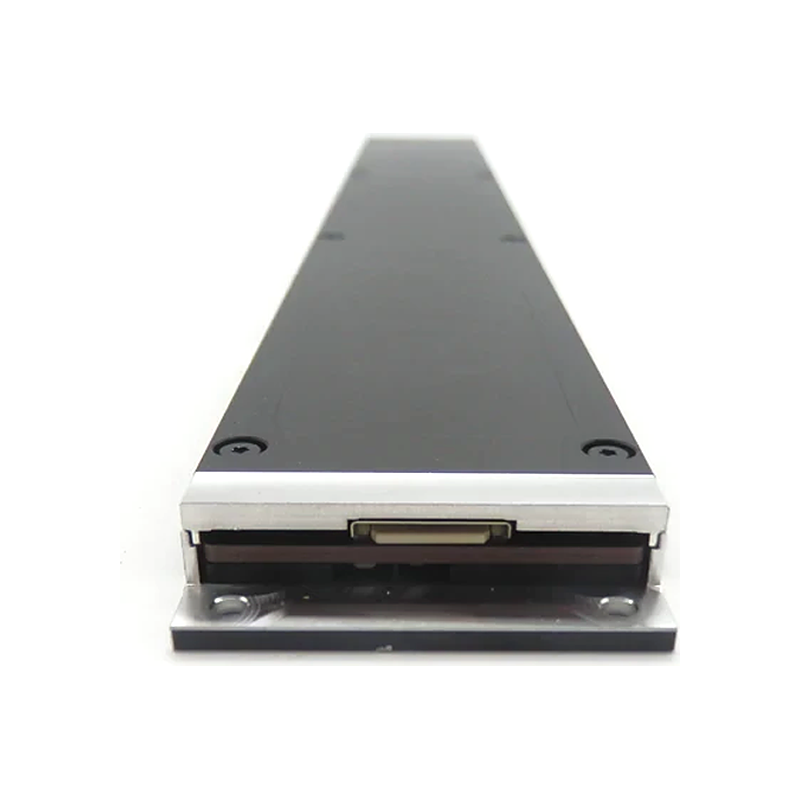
15.36 TB E1.L 1U long ruler NVMe SSD, PCIe 4.0, ordering code MZEL215THBLA-00AMV
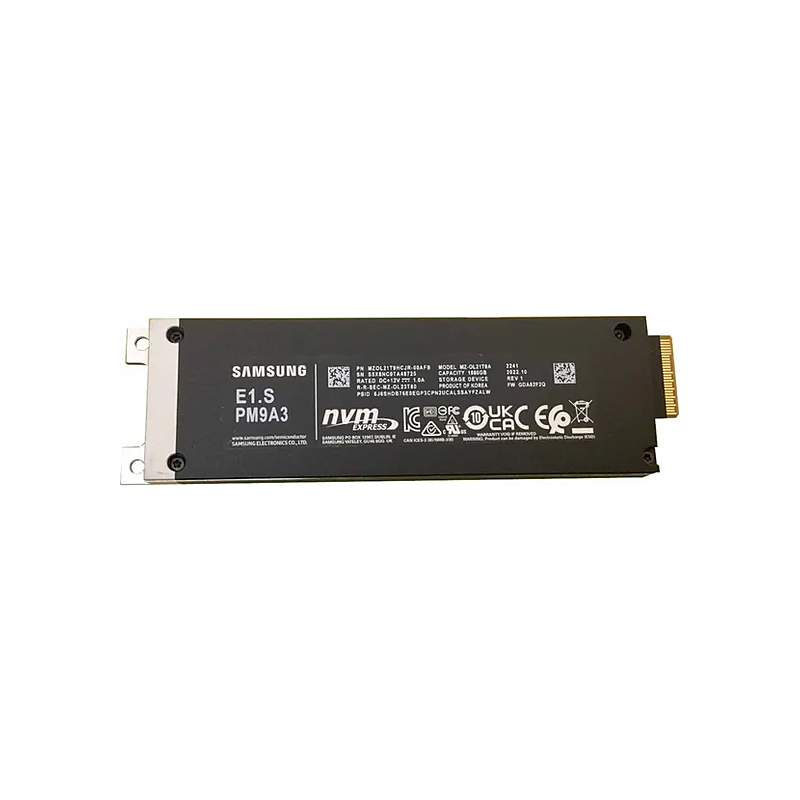
7.68 TB E1.S 1T NVMe SSD, PCIe 4.0, ordering codes MZCL27T6HBLA-00AMV / MZTL27T6HBLA-00A07
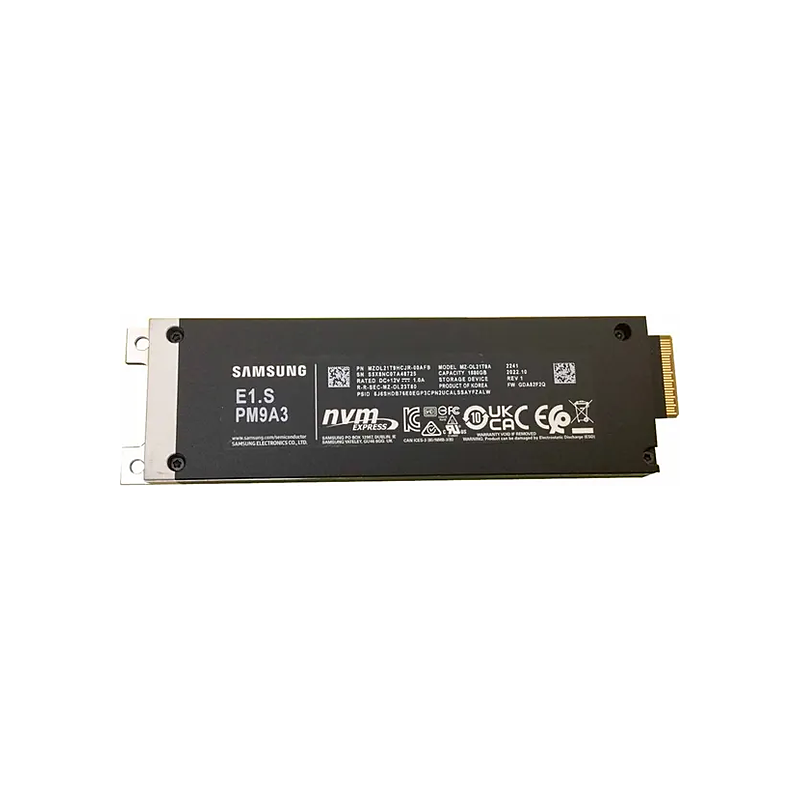
3.84 TB E1.S 1T NVMe SSD, PCIe 4.0, ordering codes MZCL23T8HCLS-00AMV / MZTL23T8HCLS-00A07
1.92 TB E1.S 1T (9.5 mm) NVMe SSD, PCIe 4.0, ordering code MZCL21T9HCJR-00AMV