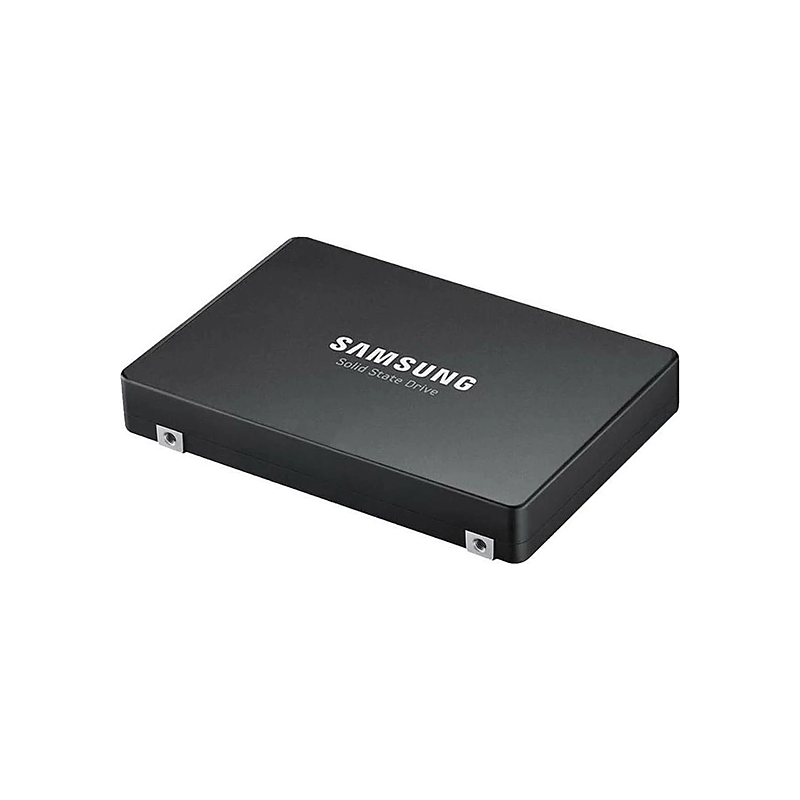
Samsung PM1743 15.36TB PCIe 5.0 NVMe U.2 SSD (MZWLO15THBLA)
15.36 TB 2.5-inch U.2 NVMe SSD, PCIe 5.0, ordering code MZWLO15THBLA-00A07
- Part Number
- MZWLO15THBLA
- Brand
- Samsung
- Category
- Enterprise & Data Center SSD
- Accepted Payments
- T/T Bank Transfer PayPal Western Union
Technical Specifications
| Capacity | 15.36 TB |
|---|---|
| Interface | NVMe |
| Form Factor | U.2 15mm |
| PCIe Version | PCIe 5.0 |
| NAND Type | TLC |
| Endurance (DWPD) | 1 |
| TBW | 28,032 TB |
| Sequential Read | 14,000 MB/s |
| Sequential Write | 7,100 MB/s |
| Random Read IOPS | 2,500K IOPS |
| Random Write IOPS | 360K IOPS |
| Power | 24.6 W |
| DRAM Cache | Yes |
| Power Loss Protection | Yes |
| Encryption | AES-XTS 256 |
| Condition | New · Used |
Frequently Asked Questions
Samsung PM1743 15.36 TB, 2.5-inch U.2 at 15 mm, catalogue code MZWLO15THBLA, ordering code MZWLO15THBLA-00A07. 14,000 MB/s sequential read and 7,100 MB/s write on PCIe 5.0 x4, 2,500K random read and 360K random write IOPS, 28,032 TBW at one drive write a day for five years. 128-layer V-NAND TLC, NVMe 1.4, 24.6 W reading and 25 W writing. New and used both stocked.
Two things change at the top of this range, and only one of them is good news. Sequential write finally moves off six thousand, to 7,100, with random write at 360K. Read latency moves too, from 60 microseconds to 90. Which of those matters depends entirely on what the box does.
The one capacity where write throughput moves
From 1.92 to 3.84 the write path doubles, then it sits still: 3.84 and 7.68 both quote 6,000 MB/s sequential and 280K to 300K random write. Only at 15.36 does it climb again, to 7,100 and 360K — twenty percent on both counts, and the highest write figure in the family.
That is a real gain for ingest, log archiving and backup targets, where the drive is filling rather than serving. It is worth nothing to a read fleet, which is already at the same 14,000 MB/s and 2,500K IOPS the 3.84 TB part delivers for a quarter of the price.
Technical specifications
| Product family | Samsung PM1743 (PCIe 5.0 enterprise NVMe SSD, 1 DWPD) |
|---|---|
| PN | MZWLO15THBLA (catalogue code) |
| Ordering code | MZWLO15THBLA-00A07 |
| Capacity | 15.36 TB (unformatted; 1 GB = 1 billion bytes, formatted capacity is less) |
| Form factor | 2.5-inch U.2, 15 mm (100.2 × 69.85 × 15 mm, about 190 g) |
| Interface | PCIe 5.0 x4, NVMe 1.4, backwards compatible with PCIe 4.0 and 3.0 |
| NAND | Samsung V-NAND TLC (6th generation, 128-layer) |
| Sequential read | 14,000 MB/s |
| Sequential write | 7,100 MB/s |
| Random 4K read | 2,500K IOPS |
| Random 4K write | 360K IOPS |
| Endurance (TBW) | 28,032 TB |
| Endurance (DWPD) | 1 drive write per day for five years |
| Latency | 90 µs random read, 20 µs random write (99th percentile 90 / 20 µs) |
| Power | 24.6 W typical read, 25 W typical write, 5 W idle (12 V rail) |
| Power-loss protection | Yes, capacitor-backed, with end-to-end data protection |
| Encryption | AES-XTS 256-bit, TCG Opal 2.0 compliant |
| MTTF | 2.5 million hours |
Where each step in the range happens
| Model | Capacity | Seq read / write | Random 4 KB | TBW | DWPD | Read latency |
|---|---|---|---|---|---|---|
| PM1743 1.92 TB | 1.92 TB | 14,000 / 3,000 MB/s | 2,000K / 150K | 3,504 TB | 1 | 60 µs |
| PM1743 3.84 TB | 3.84 TB | 14,000 / 6,000 MB/s | 2,500K / 280K | 7,008 TB | 1 | 60 µs |
| PM1743 7.68 TB | 7.68 TB | 14,000 / 6,000 MB/s | 2,500K / 300K | 14,016 TB | 1 | 60 µs |
| PM1743 15.36 TB | 15.36 TB | 14,000 / 7,100 MB/s | 2,500K / 360K | 28,032 TB | 1 | 90 µs |
Read the columns in order. Random read stops moving at 3.84. Sequential write jumps once at 3.84 and once here. Endurance doubles at every step, because one drive write a day of a bigger drive is a bigger number. And read latency holds at 60 through three of the four capacities before giving way at this one.
The practical reading: if a quotation needs more than 3.84 TB per drive and nothing else, the extra spend from 7.68 to 15.36 buys 20 percent more write throughput, twice the lifetime budget, half the drive count — and a read latency that is 50 percent higher.
Ninety microseconds instead of sixty
At one outstanding request, 90 µs caps read throughput near 11.1K IOPS, against about 16.7K at 60 µs. Both drives quote 2,500K IOPS because that is measured across a queue deep enough to hide the difference, so the two numbers will look identical on a datasheet comparison and behave differently in front of a synchronous workload.
Two more operational facts belong with it. Drive-ready time at this capacity is up to 28 seconds, against 8 at 3.84 TB, which matters when a full shelf is powered on at once and every drive in it draws inrush current. And the write latency is unchanged at 20 µs, so anything that writes rather than reads sees none of this.
Twenty-five watts and 1.6 watts per terabyte
Read power is 24.6 W, write 25 W, idle 5 W. A 24-bay shelf of these is 590 W under read load holding 368 TB, or 1.6 W per terabyte. The same shelf filled with 3.84 TB drives holds 92 TB at 502 W, which is 5.4 W per terabyte — the density case is a power case before it is a slot case.
It is also a heat case. Twenty-five watts in a 15 mm carrier with no heat spreader needs airflow across the drive, not just through the chassis. And rebuilding one member means moving 15.36 TB: at 500 MB/s of sustained rebuild that is roughly eight and a half hours, which is the figure to hold against the redundancy level, not the capacity on the label.
What 28,032 TB does and does not mean
The rating is 15.36 TB of host writes a day for five years, double the 7.68 TB part and equal to the PM1733a at the same capacity. It is a warranty budget, not a prediction: a host writing 4 TB a day would take nineteen years to reach it, and very few servers at this density write anything like 15 TB a day.
What it does mean is that a shelf of twenty-four holds a daily write budget of 368 TB. That is the number worth putting next to a backup window, because it says what the shelf can absorb every night without touching the warranty — and it is the only endurance figure on this page that scales with the drive count rather than with the drive.
Ordering codes: MZWLO with a letter O
| Code | Type | Capacity | Condition | Quote |
|---|---|---|---|---|
| MZWLO15THBLA | Catalogue code | 15.36 TB | New / used | Enquire |
| MZWLO15THBLA-00A07 | Ordering code | 15.36 TB | New / used | Enquire |
The fifth character is a letter O, not a zero: MZWLO is PM1743, MZWLJ is the Gen4 PM1733. Samsung lists -00B07 next to -00A07 for this capacity, and -00AH5 appears on OEM-route stock; the drive underneath is the same and the difference is the distribution block.
Three strings are easily mistaken for this one. MZWLO7T6HBLA is the 7.68 TB part and shares the last four characters. MZWLR15THBLA is the U.3 connector version, same link, different shell. MZ3LO is the E3.S drive, 7.5 mm thick, which will not fit a 2.5-inch carrier at all.
Checks worth running on delivery:
- Letter O in the model. MZWLO, never MZWL0, and read it off the label rather than the purchase order.
- Reported capacity. 15.36 TB reports about 13.96 TiB. A 7.68 TB drive in the same carrier looks identical and reports half that.
- Host bytes written against 28,032 TB. Record it before wiping; even a heavily used pull has room, but the number belongs in the asset record.
- Backplane rating and airflow. 32 GT/s for the read figure, and enough air for 25 W in a bare carrier.
- Staggered power-on. 28-second drive-ready time and inrush current on twenty-four drives at once is a power-supply question, not a drive question.
Warranty, lead time and purchasing
Sealed drives and tested pulls each carry a year of cover from us, and the cover follows the drive rather than the machine it came out of. Warehouse stock normally turns round in three to seven working days, with tracking issued when it goes. Minimum order is two pieces, the capacities in this family combine on one order, and a price follows once part number, condition and quantity are with us.
Get Pricing For This Part
Tell us who you are — we reply within one working day with a firm quote, stock status and lead time. Volume discounts available.
Related Products
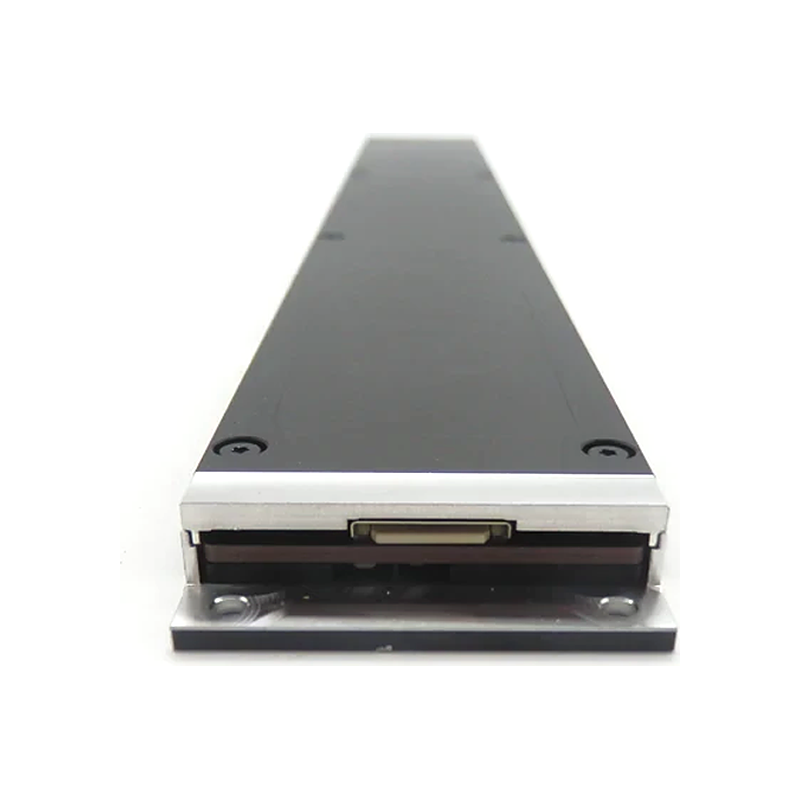
15.36 TB E1.L 1U long ruler NVMe SSD, PCIe 4.0, ordering code MZEL215THBLA-00AMV
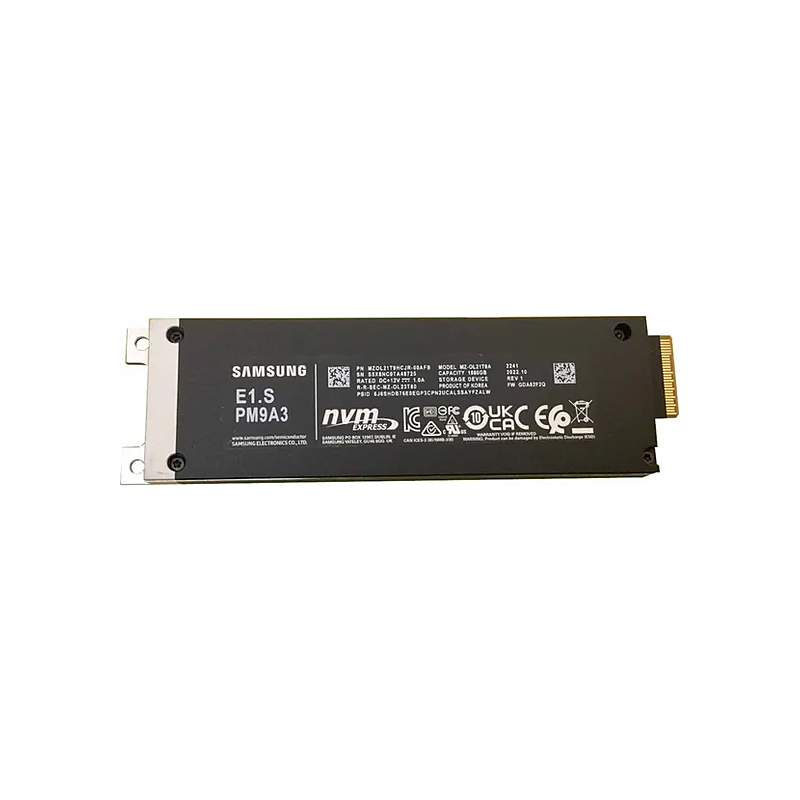
7.68 TB E1.S 1T NVMe SSD, PCIe 4.0, ordering codes MZCL27T6HBLA-00AMV / MZTL27T6HBLA-00A07
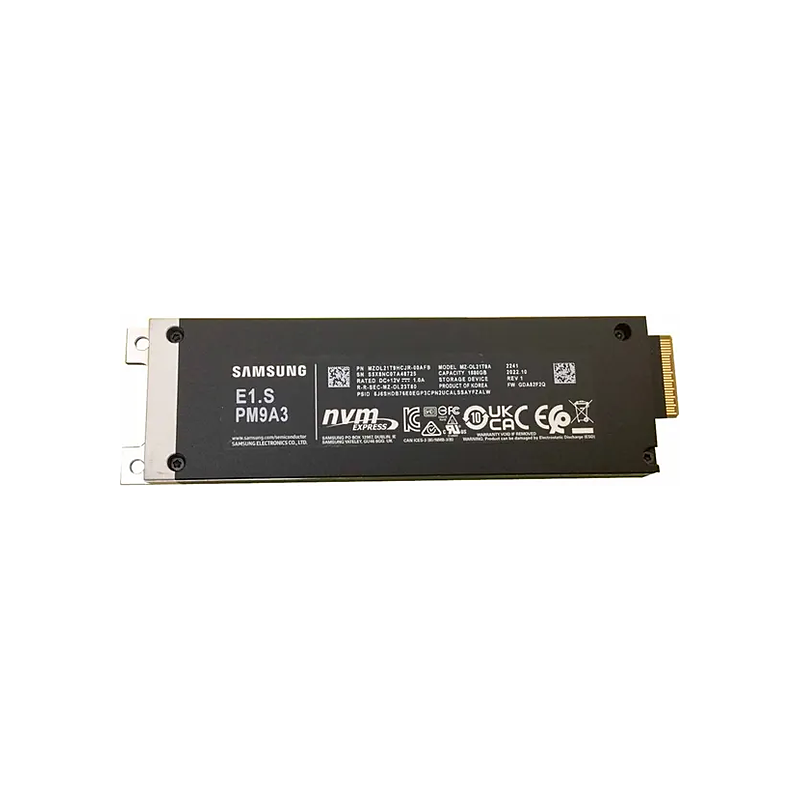
3.84 TB E1.S 1T NVMe SSD, PCIe 4.0, ordering codes MZCL23T8HCLS-00AMV / MZTL23T8HCLS-00A07
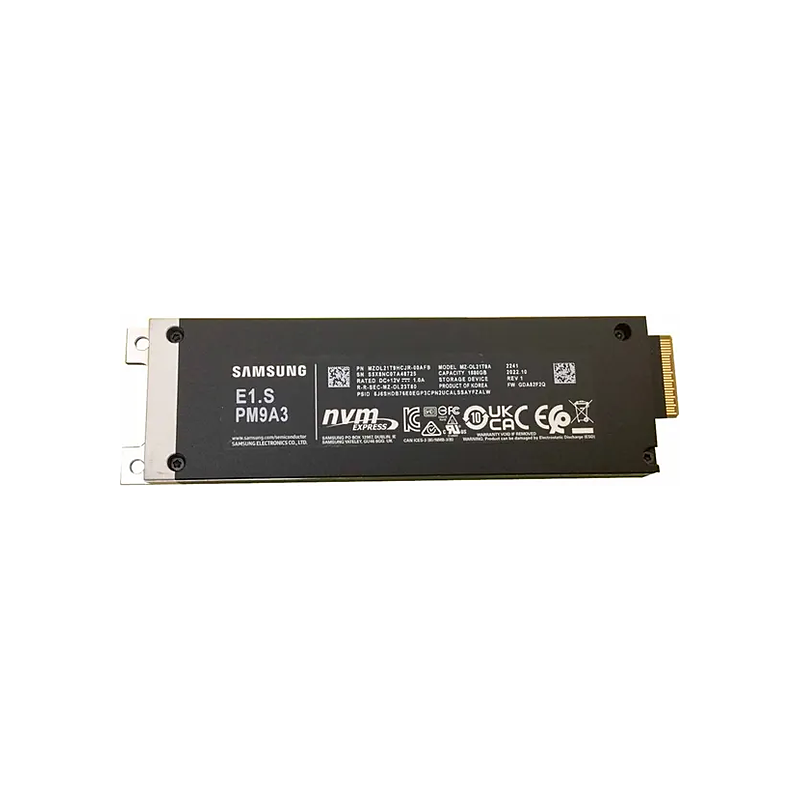
1.92 TB E1.S 1T (9.5 mm) NVMe SSD, PCIe 4.0, ordering code MZCL21T9HCJR-00AMV