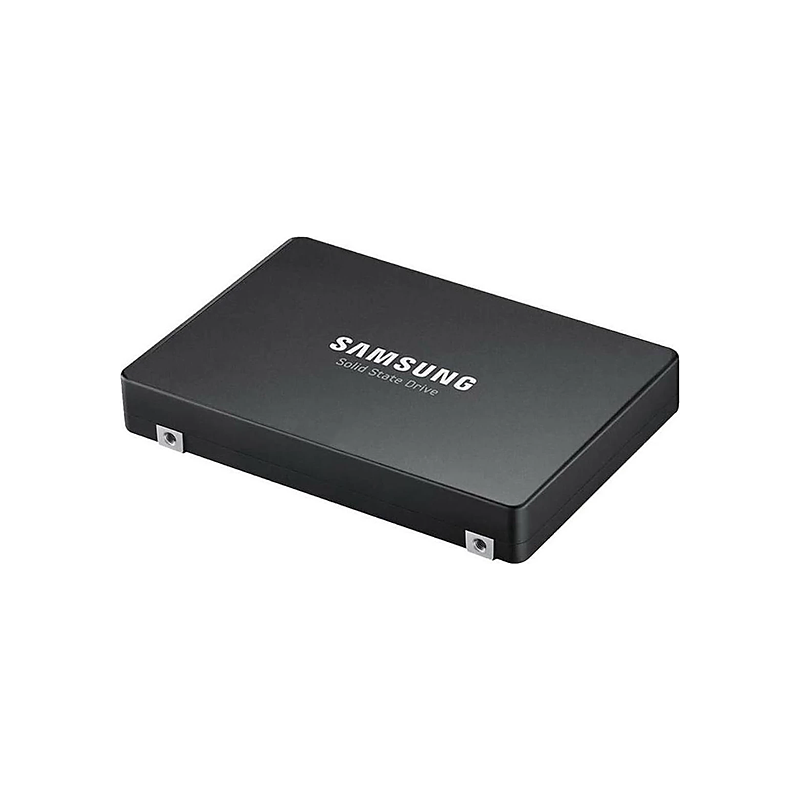
Samsung PM1743 3.84TB PCIe 5.0 NVMe U.2 SSD (MZWLO3T8HCLS)
3.84 TB 2.5-inch U.2 NVMe SSD, PCIe 5.0, ordering code MZWLO3T8HCLS-00A07
- Part Number
- MZWLO3T8HCLS
- Brand
- Samsung
- Category
- Enterprise & Data Center SSD
- Accepted Payments
- T/T Bank Transfer PayPal Western Union
Technical Specifications
| Capacity | 3.84 TB |
|---|---|
| Interface | NVMe |
| Form Factor | U.2 15mm |
| PCIe Version | PCIe 5.0 |
| NAND Type | TLC |
| Endurance (DWPD) | 1 |
| TBW | 7,008 TB |
| Sequential Read | 14,000 MB/s |
| Sequential Write | 6,000 MB/s |
| Random Read IOPS | 2,500K IOPS |
| Random Write IOPS | 280K IOPS |
| Power | 20.9 W |
| DRAM Cache | Yes |
| Power Loss Protection | Yes |
| Encryption | AES-XTS 256 |
| Condition | New · Used |
Frequently Asked Questions
Samsung PM1743 3.84 TB in the 2.5-inch U.2 carrier at 15 mm. Catalogue code MZWLO3T8HCLS, ordering code MZWLO3T8HCLS-00A07. On PCIe 5.0 x4 it runs 14,000 MB/s sequential read and 6,000 MB/s write, 2,500K random read and 280K random write IOPS, with 7,008 TBW at one drive write a day for five years. 128-layer V-NAND TLC, NVMe 1.4, 20.9 W reading and 21.2 W writing. New and used both stocked, one-year warranty on either.
This is the smallest capacity in the family that reaches the full random read figure, and the first one where the write path stops being the compromise. Below it, at 1.92 TB, the drive reads fast and writes like a larger Gen4 part. Here the write numbers double and the endurance doubles with them.
The capacity where the write path catches up
At 1.92 TB this family writes at 3,000 MB/s with 150K random write IOPS. At 3.84 TB the figures become 6,000 and 280K, and random read goes from 2,000K to 2,500K. Nothing about the controller changed; there are simply twice as many dies behind it, so the scheduling that was starved at the smaller size now has somewhere to put the work.
The useful consequence is that this is the first capacity where a write-heavy job is not paying Gen5 money for Gen4 behaviour. Below it, a workload that writes is better served by the Gen4 parts at the same size; at this size the interface and the media are finally pulling in the same direction.
Above it the picture flattens. The 7.68 TB keeps the same 6,000 MB/s and moves random write to 300K, and the 15.36 TB takes sequential write to 7,000 and random write to 360K. Random read stays at 2,500K from here to the top of the range, so this drive already has the read side the whole family is rated at.
Technical specifications
| Product family | Samsung PM1743 (PCIe 5.0 enterprise NVMe SSD, 1 DWPD) |
|---|---|
| PN | MZWLO3T8HCLS (catalogue code) |
| Ordering code | MZWLO3T8HCLS-00A07 |
| Capacity | 3.84 TB (unformatted; 1 GB = 1 billion bytes, formatted capacity is less) |
| Form factor | 2.5-inch U.2, 15 mm (100.2 × 69.85 × 15 mm, about 190 g) |
| Interface | PCIe 5.0 x4, NVMe 1.4, backwards compatible with PCIe 4.0 and 3.0 |
| NAND | Samsung V-NAND TLC (6th generation, 128-layer) |
| Sequential read | 14,000 MB/s |
| Sequential write | 6,000 MB/s |
| Random 4K read | 2,500K IOPS |
| Random 4K write | 280K IOPS |
| Endurance (TBW) | 7,008 TB |
| Endurance (DWPD) | 1 drive write per day for five years |
| Latency | 60 µs random read, 20 µs random write (99th percentile 90 / 20 µs) |
| Power | 20.9 W typical read, 21.2 W typical write, 5 W idle (12 V rail) |
| Power-loss protection | Yes, capacitor-backed, with end-to-end data protection |
| Encryption | AES-XTS 256-bit, TCG Opal 2.0 compliant |
| MTTF | 2.5 million hours |
On a Gen4 slot, only the read moves
Six thousand megabytes a second of write is close to what the NAND and the controller can do, not what the bus allows, so it survives the drop to a Gen4 slot. Samsung's own comparison table lists this capacity at 7,500 MB/s read and 6,000 MB/s write on a fourth-generation host. Put another way: the write figure in the specification above is real on either platform, and the read figure is the part that needs 32 GT/s.
That changes the buying decision. If the workload is write-heavy, a Gen4 host costs nothing here and the drive is still worth the price. If it is read-heavy, the same drive on the wrong backplane delivers a little over half its rating, and the money went to a link that was never used.
Twenty-one watts, and a backplane
Read power is 20.9 W and write 21.2 W, which is higher than the 1.92 TB part because there is twice the flash to keep fed. Twenty-four of these is 502 W under read load and 120 W at idle, so a full shelf needs the airflow to match. There is no heat spreader on the 15 mm carrier; the drive relies on the chassis.
The harder constraint is signal integrity. A Gen4 backplane will train down and you lose the read bandwidth described above. The drive is also dual-ported, which is worth knowing before it is put behind a single expander — the second path is there for availability and is part of what the price buys.
Endurance doubles once, then flattens
7,008 TB is 3.84 TB of host writes a day for five years, and it is exactly twice the rating of the 1.92 TB drive. From here the rating stops tracking capacity in the same way: the 7.68 TB carries 14,016 and the 15.36 TB 28,032, so the per-day figure stays at one drive write. The number grows, the ratio does not.
Which means endurance is not a reason to climb past this capacity, and it is not a reason to buy this drive over a Gen4 one either — the PM1733a at 3.84 TB carries the same 7,008 TB. If lifetime writes are the requirement, the part to look at is the PM1735 at three drive writes a day, or a mixed-use SATA drive, both of which sit well above this figure.
Three generations at 3.84 TB
| Model | Interface | Capacity | Seq read / write | Random 4 KB | TBW | DWPD |
|---|---|---|---|---|---|---|
| PM1743 3.84 TB | PCIe 5.0 x4 | 3.84 TB | 14,000 / 6,000 MB/s | 2,500K / 280K | 7,008 TB | 1 |
| PM1733a 3.84 TB | PCIe 4.0 x4 | 3.84 TB | 7,500 / 4,100 MB/s | 1,600K / 170K | 7,008 TB | 1 |
| PM1733 3.84 TB | PCIe 4.0 x4 | 3.84 TB | 7,000 / 3,800 MB/s | 1,500K / 135K | 7,008 TB | 1 |
| 5400 MAX 3.84 TB | SATA 6 Gb/s | 3.84 TB | 540 / 520 MB/s | 95K / 34K | 23,827 TB | 3.4 |
The first three rows carry the same endurance figure for the third generation running, and the interface is the only column that changes. The fourth row is the one that surprises people: a SATA drive with three times the lifetime budget, at one twenty-sixth of the sequential read. Both numbers are honest, they just answer different questions — one is about watts and lanes, the other about how much you intend to write.
Ordering codes: MZWLO with a letter O
| Code | Type | Capacity | Condition | Quote |
|---|---|---|---|---|
| MZWLO3T8HCLS | Catalogue code | 3.84 TB | New / used | Enquire |
| MZWLO3T8HCLS-00A07 | Ordering code | 3.84 TB | New / used | Enquire |
The fifth character is the letter O, not a zero. MZWLO is PM1743, MZWLJ is the Gen4 PM1733, and a typed zero produces a part number that does not exist. Samsung also lists -00B07 for this capacity alongside -00A07; the difference is the distribution block, not the drive.
Two other strings get confused with this one. The E3.S version of the same drive is MZ3LO and 7.5 mm thick, which doubles rack density and needs a different bay. And MZWLR3T8HCLS is the U.3 connector version sold through OEM channels: same PCIe 5.0 x4 link, different connector shell.
Five things worth checking when this drive reaches the goods-in bench:
- Letter O in the model. MZWLO, never MZWL0. Photograph the label rather than retyping it.
- Host bytes written against 7,008 TB. Read the counter before wiping; pulls from a write-heavy tier can be well into the budget.
- Backplane generation. 32 GT/s or the read rating is cut in half. Confirm the slot, not just the drive.
- 15 mm clearance. A 7 mm carrier will not close over this drive.
- Drive-ready time. Up to 8 seconds at this capacity, which matters for staggered power-on in a full shelf.
Warranty, lead time and purchasing
Both conditions ship with a year of cover that stays with the drive if it moves to another chassis. Stock normally turns round in three to seven working days and tracking is issued when it leaves. Minimum order is two pieces, the capacities in this family combine on one order, and a quote follows once part number, condition and quantity are in hand.
Get Pricing For This Part
Tell us who you are — we reply within one working day with a firm quote, stock status and lead time. Volume discounts available.
Related Products
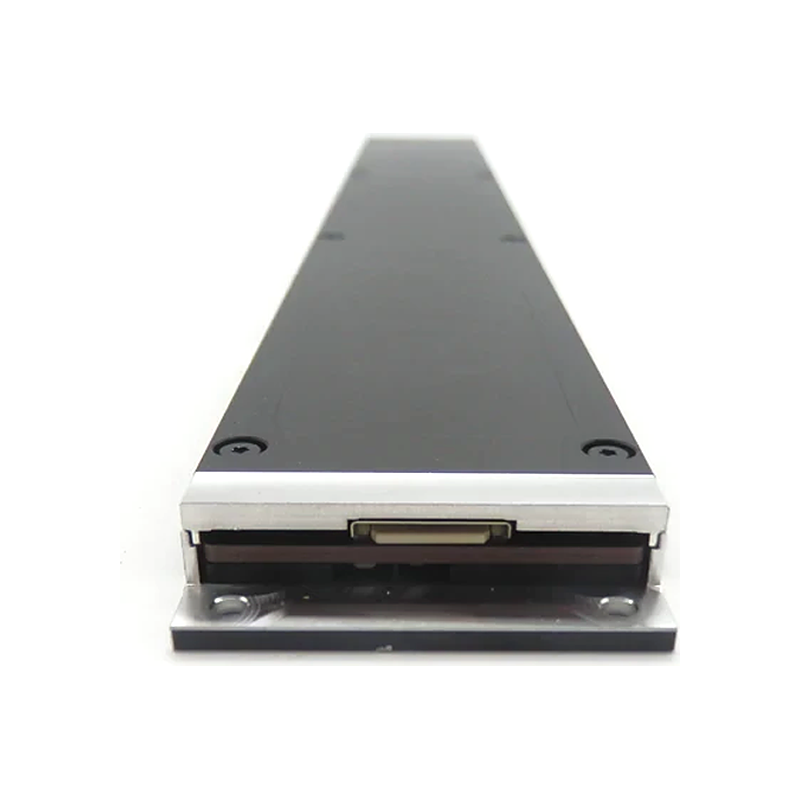
15.36 TB E1.L 1U long ruler NVMe SSD, PCIe 4.0, ordering code MZEL215THBLA-00AMV
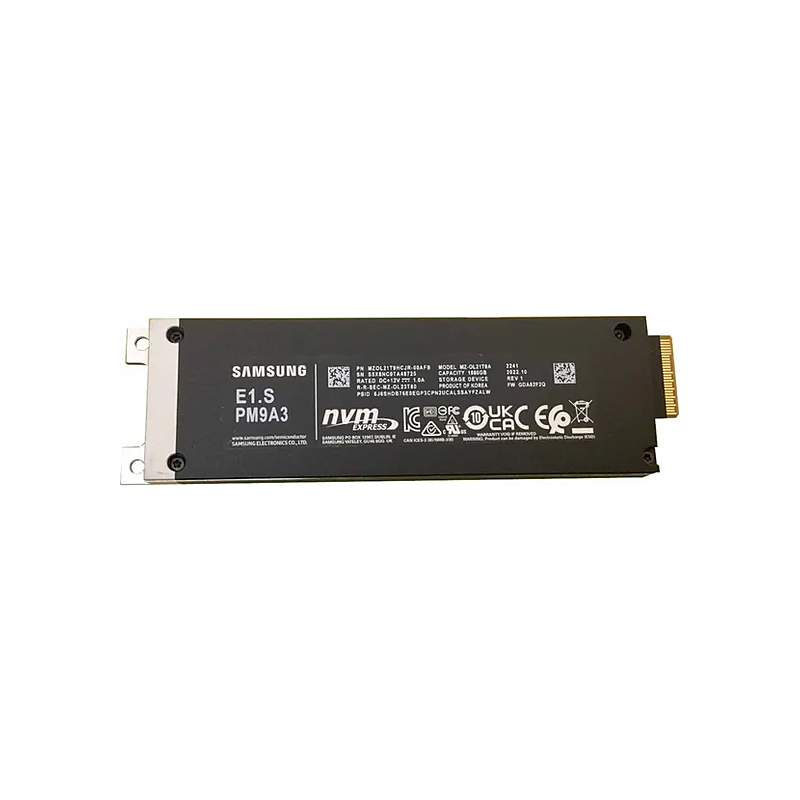
7.68 TB E1.S 1T NVMe SSD, PCIe 4.0, ordering codes MZCL27T6HBLA-00AMV / MZTL27T6HBLA-00A07
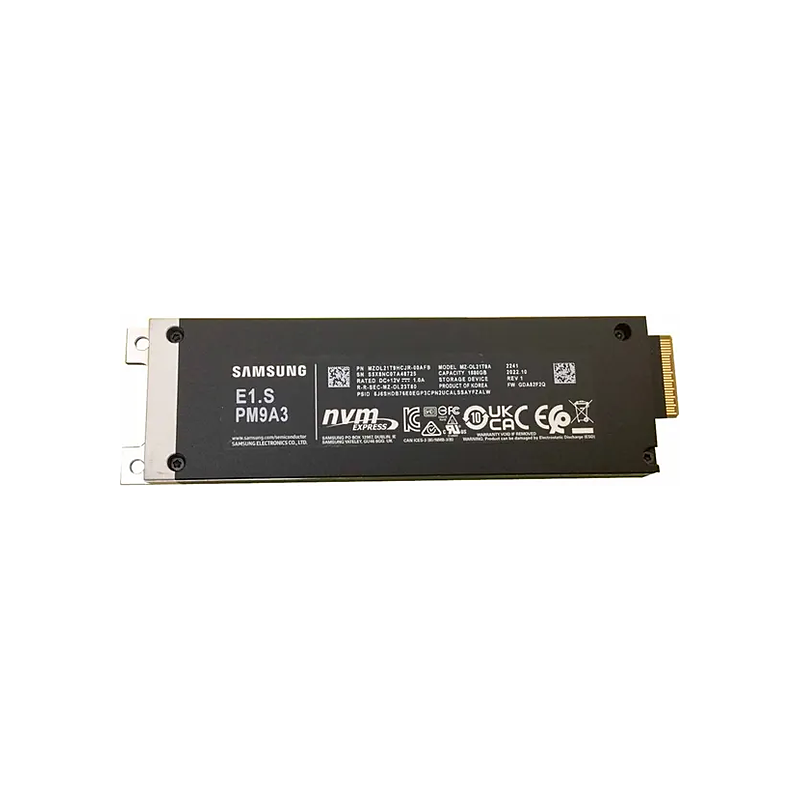
3.84 TB E1.S 1T NVMe SSD, PCIe 4.0, ordering codes MZCL23T8HCLS-00AMV / MZTL23T8HCLS-00A07
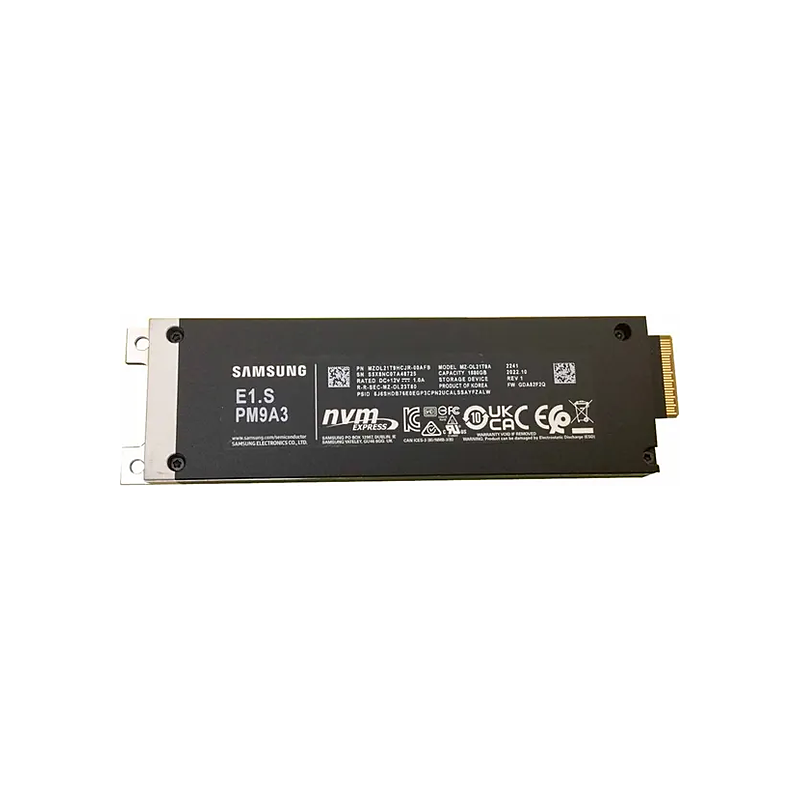
1.92 TB E1.S 1T (9.5 mm) NVMe SSD, PCIe 4.0, ordering code MZCL21T9HCJR-00AMV