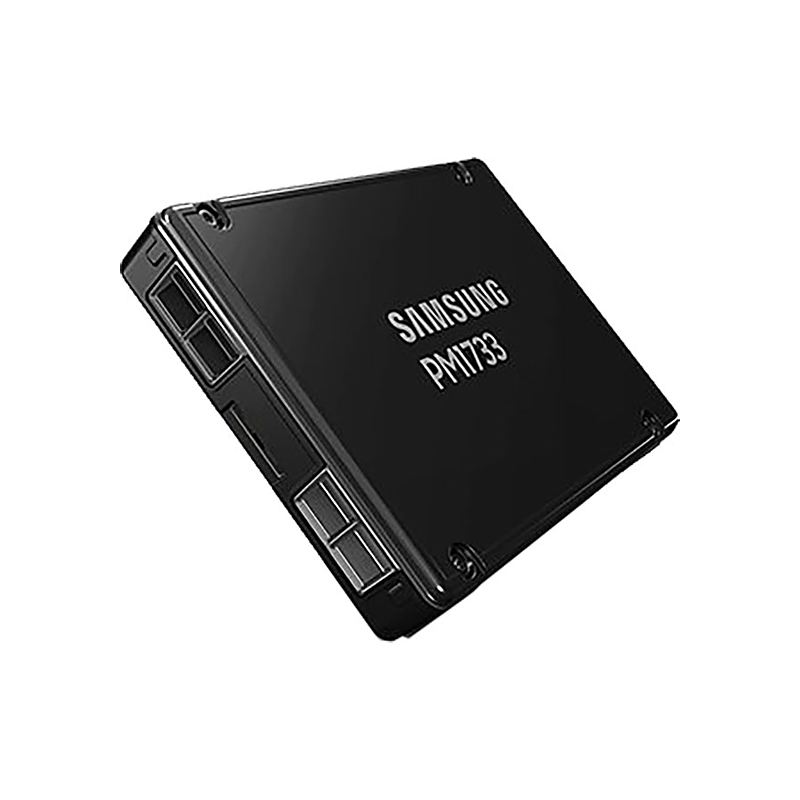
Samsung PM1733 1.92TB PCIe 4.0 NVMe U.2 SSD (MZWLJ1T9HBJR)
1.92 TB 2.5-inch U.2 NVMe SSD, PCIe 4.0, ordering code MZWLJ1T9HBJR-00007
- Part Number
- MZWLJ1T9HBJR
- Brand
- Samsung
- Category
- Enterprise & Data Center SSD
- Accepted Payments
- T/T Bank Transfer PayPal Western Union
Technical Specifications
| Capacity | 1.92 TB |
|---|---|
| Interface | NVMe |
| Form Factor | U.2 15mm |
| PCIe Version | PCIe 4.0 |
| NAND Type | TLC |
| Endurance (DWPD) | 1 |
| TBW | 3,504 TB |
| Sequential Read | 7,000 MB/s |
| Sequential Write | 2,400 MB/s |
| Random Read IOPS | 800K IOPS |
| Random Write IOPS | 100K IOPS |
| Power | 15 W |
| DRAM Cache | Yes |
| Power Loss Protection | Yes |
| Encryption | AES-XTS 256 |
| Condition | New · Used |
Frequently Asked Questions
Samsung PM1733 1.92 TB, 2.5-inch U.2 at 15 mm, catalogue code MZWLJ1T9HBJR, ordering code MZWLJ1T9HBJR-00007. 7,000 MB/s sequential read and 2,400 MB/s write on a PCIe 4.0 host, 800K random read and 100K random write IOPS, 3,504 TBW at one drive write a day for five years. V-NAND TLC, PCIe 4.0 x4, NVMe 1.3, 15 W. Both conditions stocked, one-year warranty either way.
This is the first drive in this catalogue that is faster than the bus most of our customers have. 7,000 MB/s needs a PCIe 4.0 lane, and on a PCIe 3.0 host the same drive reads at 3,400 MB/s — still the fastest thing in the 3.x range, but less than half the number on the box. Which of the two you get is decided by the server, not the drive.
Two numbers, and only one of them is yours
Samsung publishes both. On a Gen4 host the PM1733 reads at 7,000 MB/s; on a Gen3 host it reads at 3,400, with the write figure unchanged at 2,400 because that path was never bus-limited. Latency shifts slightly too: 220 µs sequential on Gen4 against 250 on Gen3, and the random figures stay at 100 µs read and 25 µs write either way.
So the honest way to read this drive is as two products. On an EPYC 7002 or a second-generation Xeon Scalable platform it is a 7 GB/s device that doubles the sequential read of anything Gen3. On the older fleet it is a 3.4 GB/s device that still beats the PM983 by 200 MB/s and carries a much larger write budget. Both are true; neither is the whole datasheet.
Technical specifications
| Product family | Samsung PM1733 (PCIe 4.0 enterprise NVMe SSD, 1 DWPD) |
|---|---|
| PN | MZWLJ1T9HBJR (catalogue code) |
| Ordering code | MZWLJ1T9HBJR-00007 |
| Capacity | 1.92 TB (unformatted; 1 GB = 1 billion bytes, formatted capacity is less) |
| Form factor | 2.5-inch U.2, SFF-8639, 15 mm (100 × 70 × 15 mm) |
| Interface | PCIe 4.0 x4, NVMe 1.3, backwards compatible with PCIe 3.0 x4 |
| NAND | Samsung V-NAND TLC (5th generation) |
| Sequential read | 7,000 MB/s on PCIe 4.0; 3,400 MB/s on PCIe 3.0 |
| Sequential write | 2,400 MB/s (both host generations) |
| Random 4K read | 800K IOPS |
| Random 4K write | 100K IOPS |
| Latency, random read / write | 100 µs / 25 µs |
| Latency, sequential read / write | 220 µs / 80 µs on PCIe 4.0 |
| Endurance (TBW) | 3,504 TB |
| Endurance (DWPD) | 1 drive write per day for five years |
| Power | 15 W typical read, 15 W typical write (12 V rail) |
| DRAM cache | Yes |
| Power-loss protection | Yes, capacitor-backed, with end-to-end data protection and surge handling |
| Encryption | AES-XTS 256-bit, TCG Opal 2.0 compliant |
| MTTF | 2 million hours |
What one drive write a day actually buys
3,504 TB over 1,825 days is 1.92 TB of host writes a day — a full drive capacity, every day, for five years. That is a different class of budget from the read-intensive drives we list at this capacity, which carry 2,733 TB and 0.78 DWPD. The extra 771 TB is roughly 420 GB a day of headroom, enough to move a database off a SATA mixed-use drive without the arithmetic arguing back.
It is still not a write-intensive part. Three drive writes a day is what the PM1735 exists for, and anything doing that much writing needs a different model rather than a bigger one. One a day is the level at which a general-purpose server drive stops being a compromise.
Where it sits against the Gen3 drives we list
| Model | Interface | Capacity | Seq read / write | Random 4 KB | TBW | DWPD |
|---|---|---|---|---|---|---|
| PM1733 1.92 TB | PCIe 4.0 x4 | 1.92 TB | 7,000 / 2,400 MB/s | 800K / 100K | 3,504 TB | 1 |
| PM983 1.92 TB | PCIe 3.0 x4 | 1.92 TB | 3,200 / 2,000 MB/s | 540K / 50K | 2,733 TB | 0.78 |
| PM963 1.92 TB | PCIe 3.0 x4 | 1.92 TB | 2,000 / 1,200 MB/s | 430K / 40K | 2,733 TB | 0.78 |
| 5400 MAX 1.92 TB | SATA 6 Gb/s | 1.92 TB | 540 / 520 MB/s | 94K / 63K | 17,520 TB | 5 |
Read the table on a Gen3 host and the PM1733 still wins every performance column, by 200 MB/s of sequential read and 260K of random read over the PM983, with half again the write budget. Read it on a Gen4 host and the gap becomes 3,800 MB/s. Either way the SATA row wins endurance by five times, which is the trade that never changes.
The generation gap worth noting is random write: 100K here against 50K on the PM983 and 40K on the PM963. That is the column that decides whether a database replica keeps up, and it doubled twice in two generations while sequential read only doubled once.
Fifteen millimetres, fifteen watts
This drive is 15 mm tall, not the 7 mm of every other 2.5-inch drive in this catalogue. It will not go into a bay designed for 7 mm carriers, and a 24-bay shelf built for thin drives will take half as many of these. Check the chassis before the spec sheet: the 15 mm form factor is a platform decision, not a detail.
Power follows the same logic. 15 W typical, read or write, against 10.6 W for the PM983 and 7.5 W for the M.2 drives. Twenty-four of them is 360 W of flash in one shelf, and the backplane has to deliver it through 12 V with surge handling on hot insert. Samsung builds that in; the chassis still has to cool it.
Ordering codes and the MZWL prefix
| Code | Type | Capacity | Condition | Quote |
|---|---|---|---|---|
| MZWLJ1T9HBJR | Catalogue code | 1.92 TB | New / used | Enquire |
| MZWLJ1T9HBJR-00007 | Ordering code | 1.92 TB | New / used | Enquire |
MZWL is the PM1733 family in its U.2 form, J the generation marker, 1T9 the capacity, HBJR the build, -00007 the channel suffix. The same drive also ships as an HHHL card with an MZWL prefix and a different build block; that version is 8,000 MB/s on eight lanes, and it will not go into a U.2 bay no matter what the first four characters say.
One thing to watch on the used market: PM1733 units pulled from OEM servers often carry a vendor label over the Samsung one, and the model line is the only reliable identifier. Read it, or scan it, before the drive goes into a shelf.
What to check at goods-in
- 15 mm clearance. Measure before ordering, not after. A 7 mm carrier will not close on this drive.
- Host bytes written against 3,504 TB. Read the SMART counter before wiping. At 1.92 TB a day the budget is a real five-year allowance, and a pull at 80 percent is worth less than one at 20.
- Capacitor health. Power-loss protection on this generation also handles inrush current on hot insert. Both functions depend on the same capacitors, and both fail silently.
- Firmware revision. The PM1733 shipped across several revisions and OEM builds from 2019 onward, and behaviour under PCIe 3.0 hosts differs between them. Ask for the string.
- U.2 backplane wiring. On a SAS or SATA backplane the drive powers up and never links. This is still the single most common cause of a "dead" NVMe drive.
Warranty, lead time and purchasing
Sealed drives and tested pulls both carry a year of cover, and the warranty travels with the drive rather than the server. Stock normally turns round in three to seven working days, with tracking issued as it leaves. Two pieces is the minimum order, capacities in this family combine on one order, and we price from part number, condition and quantity — usually the same working day.
Get Pricing For This Part
Tell us who you are — we reply within one working day with a firm quote, stock status and lead time. Volume discounts available.
Related Products
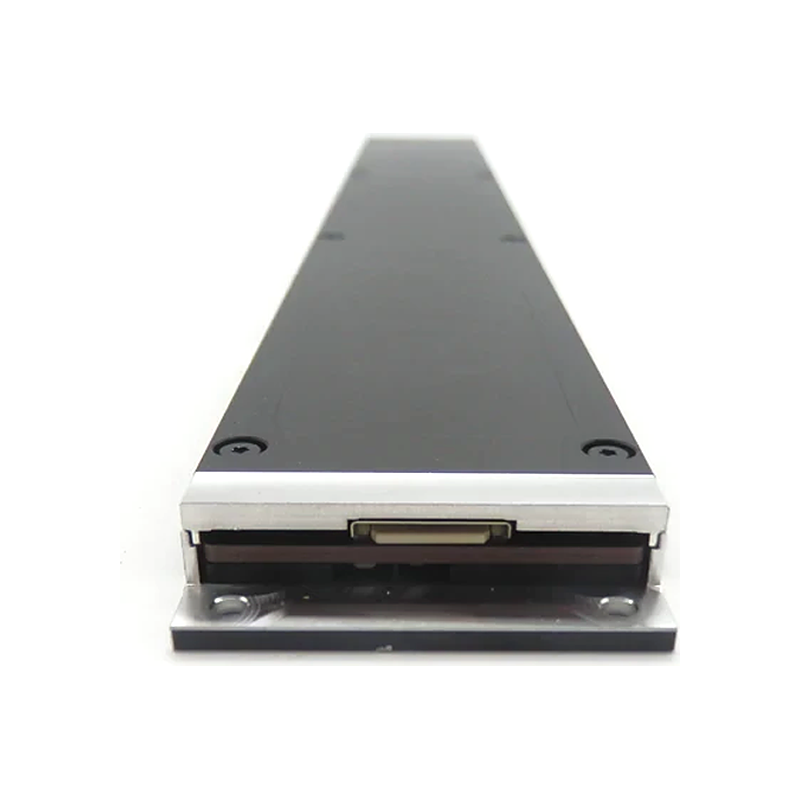
15.36 TB E1.L 1U long ruler NVMe SSD, PCIe 4.0, ordering code MZEL215THBLA-00AMV
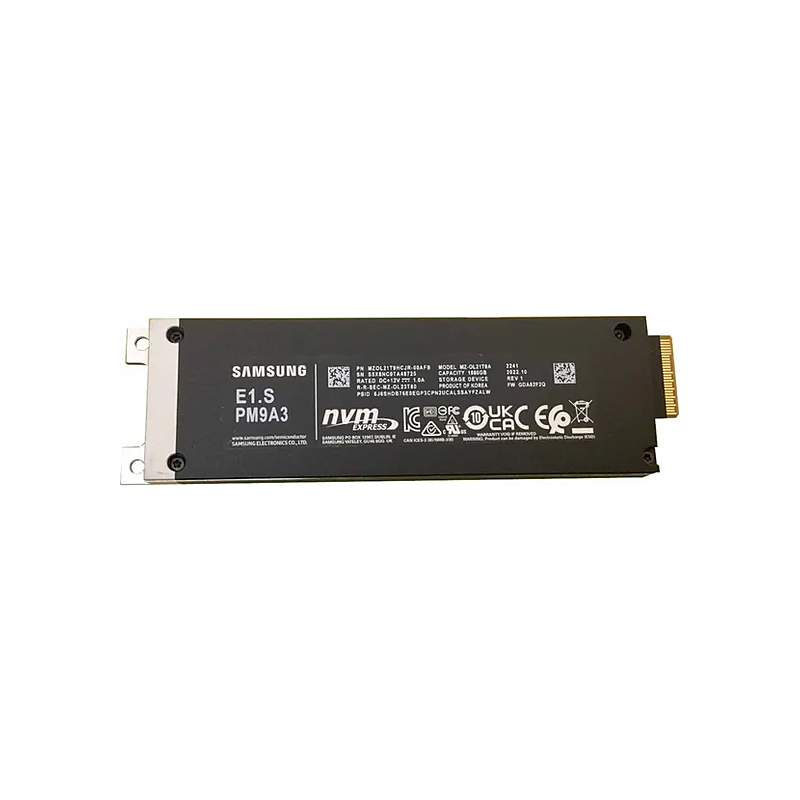
7.68 TB E1.S 1T NVMe SSD, PCIe 4.0, ordering codes MZCL27T6HBLA-00AMV / MZTL27T6HBLA-00A07
3.84 TB E1.S 1T NVMe SSD, PCIe 4.0, ordering codes MZCL23T8HCLS-00AMV / MZTL23T8HCLS-00A07
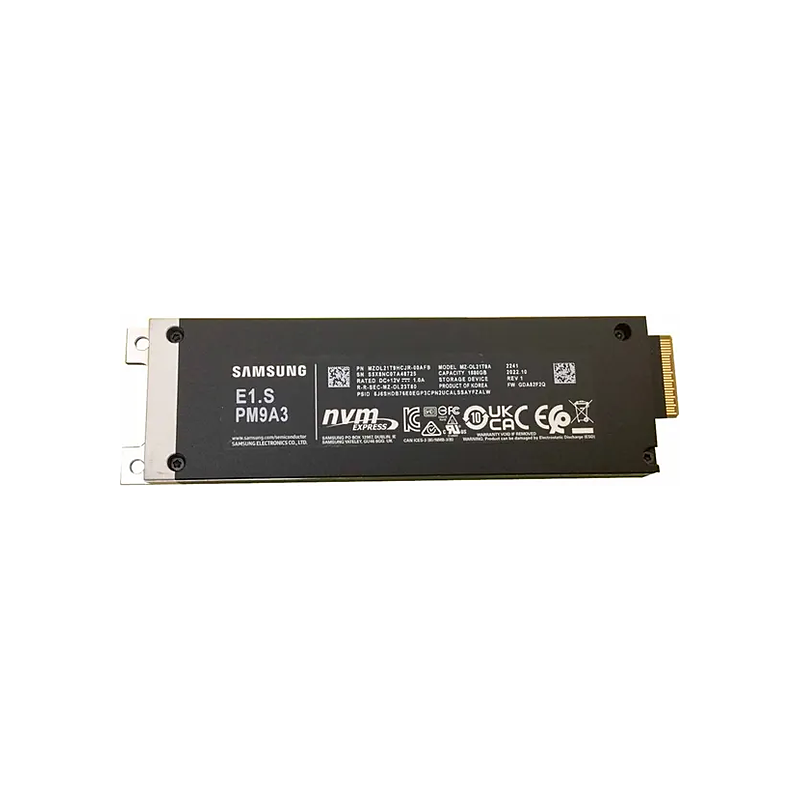
1.92 TB E1.S 1T (9.5 mm) NVMe SSD, PCIe 4.0, ordering code MZCL21T9HCJR-00AMV