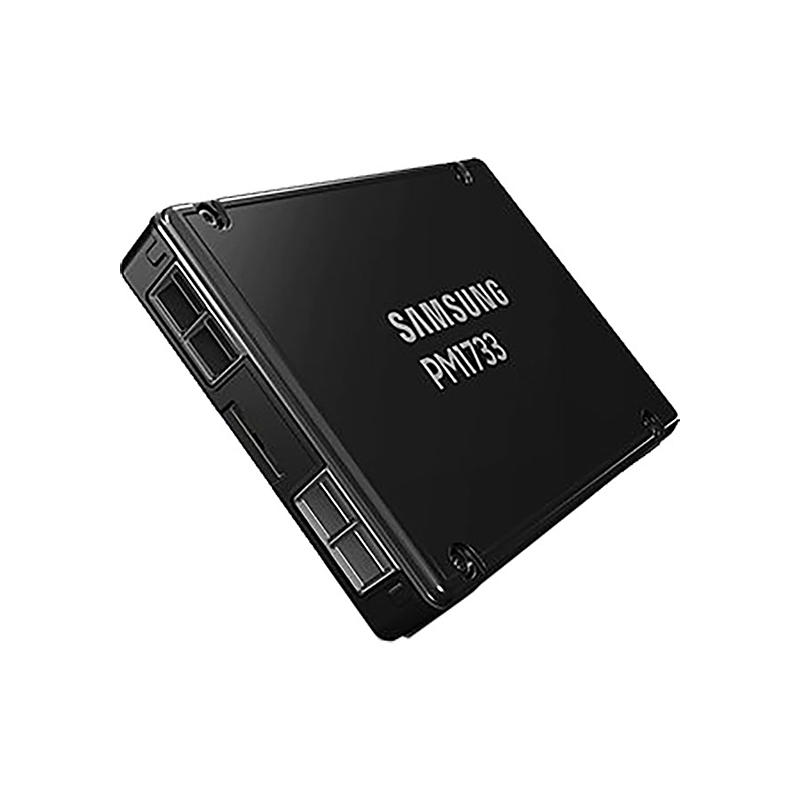
Samsung PM1733 15.36TB PCIe 4.0 NVMe U.2 SSD (MZWLJ15THALA)
15.36 TB 2.5-inch U.2 NVMe SSD, PCIe 4.0, ordering code MZWLJ15THALA-00007
- Part Number
- MZWLJ15THALA
- Brand
- Samsung
- Category
- Enterprise & Data Center SSD
- Accepted Payments
- T/T Bank Transfer PayPal Western Union
Technical Specifications
| Capacity | 15.36 TB |
|---|---|
| Interface | NVMe |
| Form Factor | U.2 15mm |
| PCIe Version | PCIe 4.0 |
| NAND Type | TLC |
| Endurance (DWPD) | 1 |
| TBW | 28,032 TB |
| Sequential Read | 7,000 MB/s |
| Sequential Write | 3,500 MB/s |
| Random Read IOPS | 1,450K IOPS |
| Random Write IOPS | 135K IOPS |
| Power | 22 W |
| DRAM Cache | Yes |
| Power Loss Protection | Yes |
| Encryption | AES-XTS 256 |
| Condition | New · Used |
Frequently Asked Questions
Samsung PM1733 15.36 TB, 2.5-inch U.2 at 15 mm, catalogue code MZWLJ15THALA, ordering code MZWLJ15THALA-00007. 7,000 MB/s sequential read and 3,500 MB/s write on a PCIe 4.0 host, 1,450K random read and 135K random write IOPS, 28,032 TBW at one drive write a day for five years. V-NAND TLC, PCIe 4.0 x4, NVMe 1.3, 20 W read and 22 W write. Both conditions stocked, one-year warranty either way.
The top of the range does not add a single megabyte per second. Every performance row on this drive is identical to the 7.68 TB part: 7,000 read, 3,500 write, 1,450K and 135K. What doubles is the storage and the lifetime bytes. A 24-bay shelf that held 184 TB now holds 368 TB with the same number of slots, cables and failure points, which is the whole reason this capacity exists.
The same drive, twice over
Nothing here is new silicon. The controller reached its limit at 3.84 TB — write peaked there at 3,800 MB/s and random read at 1,500K — and the two capacities above it run at 3,500 and 1,450K with more flash behind the same chip. That is not a complaint about the design; it is how a four-lane Gen4 controller behaves once it is saturated. It does mean that any performance argument for buying this capacity over the 7.68 TB one does not exist.
On a PCIe 3.0 host the gap widens in the other direction. Sequential drops to 3,400 read and 3,200 write, and random read halves to 800K, while random write stays at 135K because that path is limited by the controller rather than the bus. The larger the drive, the more of its cost sits in bandwidth an older platform cannot deliver.
Technical specifications
| Product family | Samsung PM1733 (PCIe 4.0 enterprise NVMe SSD, 1 DWPD) |
|---|---|
| PN | MZWLJ15THALA (catalogue code) |
| Ordering code | MZWLJ15THALA-00007 |
| Capacity | 15.36 TB (unformatted; 1 GB = 1 billion bytes, formatted capacity is less) |
| Form factor | 2.5-inch U.2, SFF-8639, 15 mm (100 × 70 × 15 mm) |
| Interface | PCIe 4.0 x4, dual-port x2, NVMe 1.3, backwards compatible with PCIe 3.0 x4 |
| NAND | Samsung V-NAND TLC (5th generation) |
| Sequential read | 7,000 MB/s on PCIe 4.0; 3,400 MB/s on PCIe 3.0 |
| Sequential write | 3,500 MB/s on PCIe 4.0; 3,200 MB/s on PCIe 3.0 |
| Random 4K read | 1,450K IOPS on PCIe 4.0; 800K on PCIe 3.0 |
| Random 4K write | 135K IOPS on either host generation |
| Latency, random read / write | 100 µs / 25 µs |
| Latency, sequential read / write | 220 µs / 80 µs on PCIe 4.0; 250 µs / 100 µs on PCIe 3.0 |
| Endurance (TBW) | 28,032 TB |
| Endurance (DWPD) | 1 drive write per day for five years |
| Power | 20 W typical read, 22 W typical write on a PCIe 4.0 host (15 W read on PCIe 3.0); 8.5 W idle; 22 W maximum |
| DRAM cache | Yes |
| Power-loss protection | Yes, capacitor-backed, with end-to-end data protection and surge handling |
| Encryption | AES-XTS 256-bit, TCG Opal 2.0 compliant |
| MTTF | 2 million hours |
28,032 TB, day by day
Divided by 1,825 days, the rating is 15.36 TB of host writes a day — one full drive, every day, for the warranty period. It is exactly double the 7.68 TB part, because the rating is a flat 1 DWPD rather than a capped lifetime total.
That is the distinction worth carrying into a quote. The read-intensive families cap endurance instead of scaling it: the PM983 at 7.68 TB carries 10,932 TB, and no capacity in that family goes much beyond it. Here the number grows with the drive, so this one holds 2.6 times the lifetime writes of the largest read-intensive part we list at the same physical size.
Standing next to the alternatives
| Model | Interface | Capacity | Seq read / write | Random 4 KB | TBW | DWPD |
|---|---|---|---|---|---|---|
| PM1733 15.36 TB | PCIe 4.0 x4 | 15.36 TB | 7,000 / 3,500 MB/s | 1,450K / 135K | 28,032 TB | 1 |
| PM1733 7.68 TB | PCIe 4.0 x4 | 7.68 TB | 7,000 / 3,500 MB/s | 1,450K / 135K | 14,016 TB | 1 |
| PM983 7.68 TB | PCIe 3.0 x4 | 7.68 TB | 3,100 / 2,000 MB/s | 500K / 55K | 10,932 TB | 0.78 |
| 5210 ION 7.68 TB | SATA 6 Gb/s | 7.68 TB | 540 / 360 MB/s | 90K / 4.5K | 11,200 TB | 0.8 |
The first two rows are the same drive at two sizes, and they read identically. The only columns that move are capacity and TBW. If a requirement is written around throughput, the 7.68 TB part satisfies it for half the money; if it is written around terabytes per rack unit, this one does.
The bottom two rows are there for the endurance question. Both are read-intensive parts at half the capacity, and neither comes close on lifetime writes — 10,932 and 11,200 TB against 28,032. Buying a bigger read-intensive drive does not close that gap, because the rating is a capped total rather than a per-day allowance.
What 15.36 TB does to a shelf
Twenty-four of these is 368 TB in a 2U chassis. The same shelf filled with 7.68 TB drives holds 184 TB; filled with 1.92 TB drives, 46 TB. Power per terabyte falls the same way: 528 W for 368 TB is 1.4 W per TB, against 2.6 at 7.68 TB and 7.8 at 1.92 TB. Density is the entire case for this part, and it is a fivefold one against the smallest capacity.
Two platform notes that come with it. First, the drives are 15 mm thick, so a carrier built for 7 mm drives will not close and a shelf designed around thin drives takes half as many. Second, rebuilds get longer: replacing one failed 15.36 TB drive means moving 15 TB across the bus, which at an effective 500 MB/s is about eight and a half hours, and that window is what the array's redundancy has to survive.
Ordering codes, and a build block that repeats
| Code | Type | Capacity | Condition | Quote |
|---|---|---|---|---|
| MZWLJ15THALA | Catalogue code | 15.36 TB | New / used | Enquire |
| MZWLJ15THALA-00007 | Ordering code | 15.36 TB | New / used | Enquire |
Compare this with the 7.68 TB code, MZWLJ7T6HALA: the only characters that differ are the capacity block, 15T against 7T6. The build is HALA on both, which makes this pair harder to tell apart than any other two drives in the family. A 7.68 TB unit carrying a 15.36 label, or the reverse, passes every visual check except the one that matters.
The only reliable test is what the drive reports. An NVMe identify against namespace 1 returns the capacity in logical blocks, and 15.36 TB reads as roughly 13.96 TiB in an operating system. Anything near 6.98 TiB is a 7.68 TB part.
What to check at goods-in
- Reported capacity. 15,360 GB unformatted, about 13.96 TiB formatted. Given the shared HALA build, this is the first check, not the last.
- Host bytes written against 28,032 TB. A pull at 20 percent still has 22 PB of allowance, which is why the counter matters more here than the calendar.
- 15 mm clearance. A 7 mm carrier will not close on it, and a thin-drive shelf will only take half a load.
- Dual-port wiring. Wired as PCIe 4.0 x4 / dual-port x2. In a dual-path array both paths need presenting, or failover does nothing.
- Firmware and OEM labels. Pulls often carry a vendor label over the Samsung one. The model line and the identify response are the two things worth photographing on arrival.
Warranty, lead time and purchasing
Sealed drives and tested pulls both come with a year of cover, and it stays with the drive if it moves chassis. Warehouse stock normally leaves inside three to seven working days, tracking issued at dispatch. Minimum order is two pieces, all four PM1733 capacities combine on one order, and a price follows part number, condition and quantity — usually the same working day.
Get Pricing For This Part
Tell us who you are — we reply within one working day with a firm quote, stock status and lead time. Volume discounts available.
Related Products
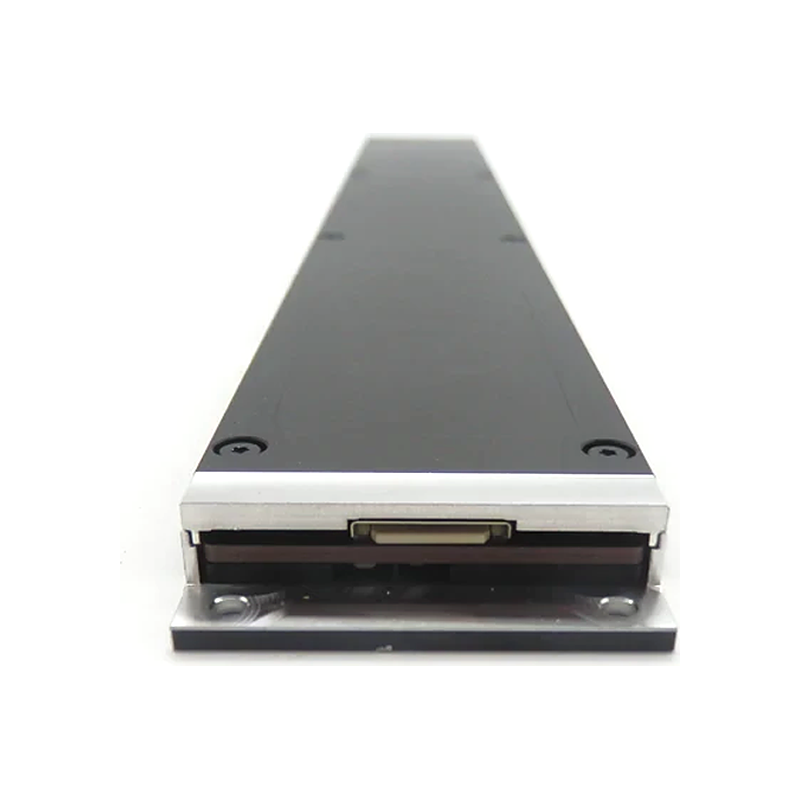
15.36 TB E1.L 1U long ruler NVMe SSD, PCIe 4.0, ordering code MZEL215THBLA-00AMV
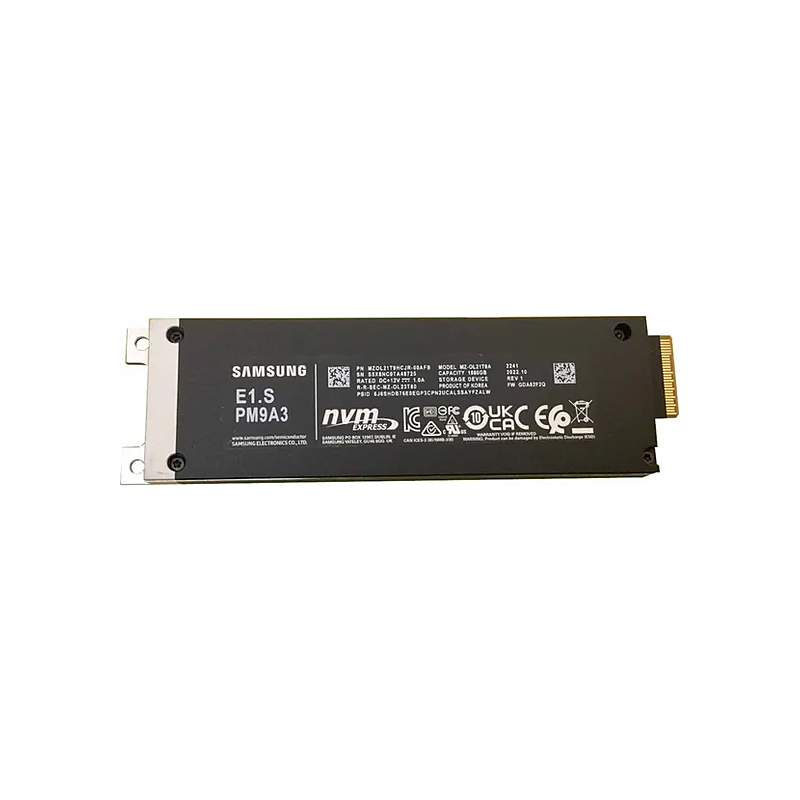
7.68 TB E1.S 1T NVMe SSD, PCIe 4.0, ordering codes MZCL27T6HBLA-00AMV / MZTL27T6HBLA-00A07
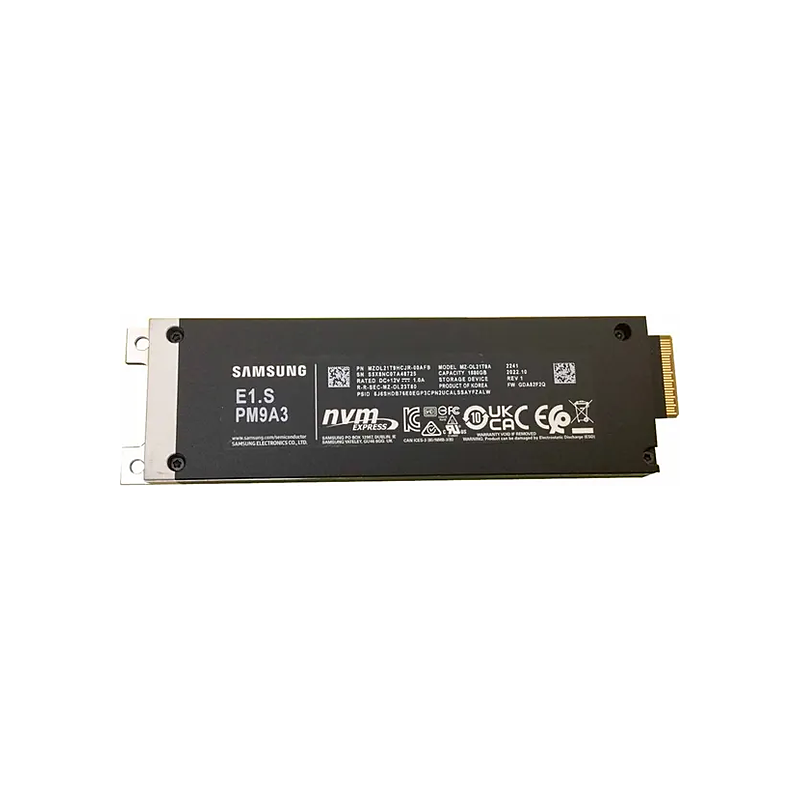
3.84 TB E1.S 1T NVMe SSD, PCIe 4.0, ordering codes MZCL23T8HCLS-00AMV / MZTL23T8HCLS-00A07
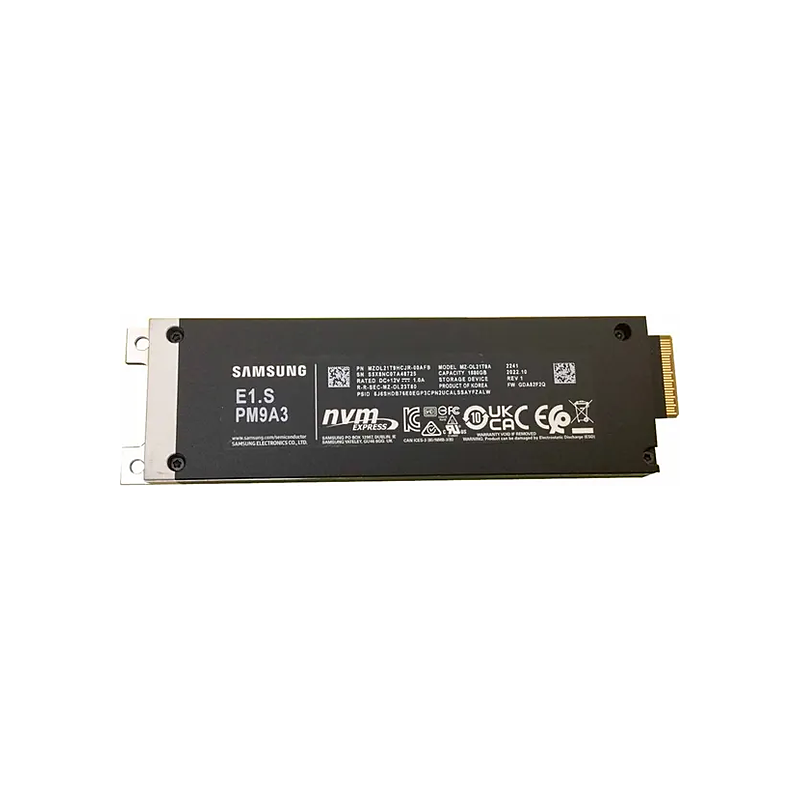
1.92 TB E1.S 1T (9.5 mm) NVMe SSD, PCIe 4.0, ordering code MZCL21T9HCJR-00AMV