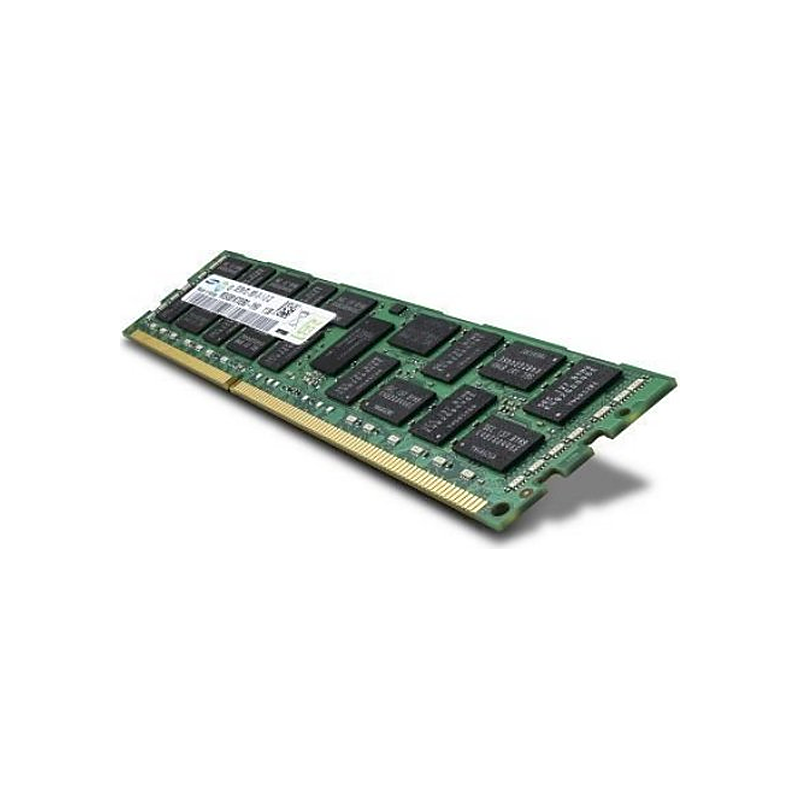
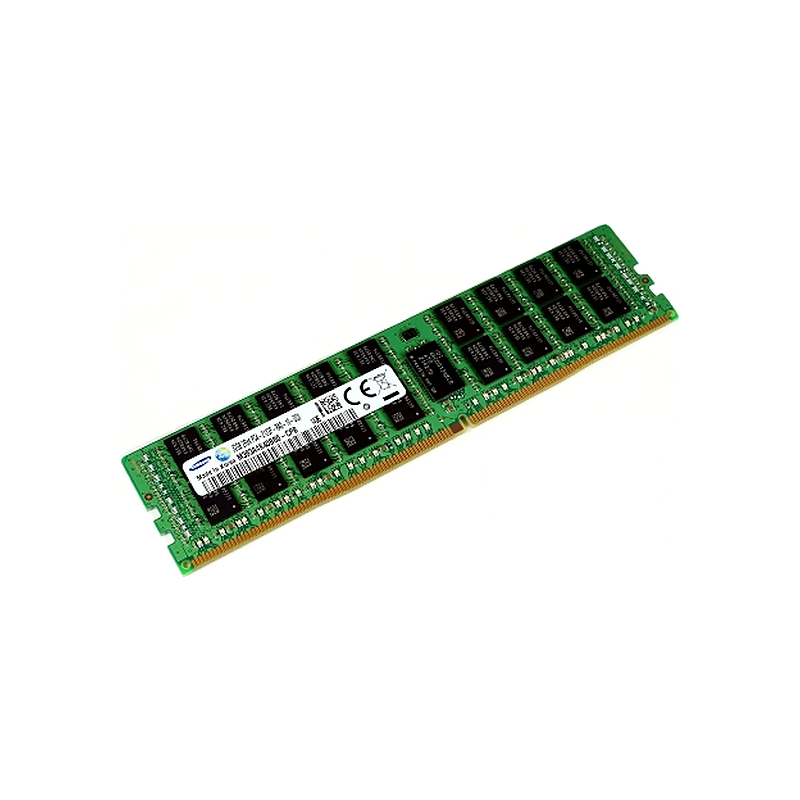
Samsung 16GB DDR4-2133 VLP RDIMM 2Rx4 Server Memory (M392A2G40DM0-CPB)
16 GB DDR4-2133 PC4-17000 ECC registered VLP RDIMM, 2Rx4, 1.2 V, 288-pin; eight ordering codes from M392A2G40DM0-CPB0 to -CPBQ
- Part Number
- M392A2G40DM0-CPB
- Brand
- Samsung
- Category
- Server Memory
- Accepted Payments
- T/T Bank Transfer PayPal Western Union
Technical Specifications
| Capacity | 16 GB |
|---|---|
| Memory Type | DDR4 |
| Speed | 2133 MT/s |
| Form Factor | RDIMM |
| Rank | 2Rx4 |
| ECC | ECC |
| Voltage | 1.2 V |
| Module Height | VLP |
| Condition | New · Used |
Frequently Asked Questions
Samsung 16 GB DDR4-2133 ECC registered VLP RDIMM, two ranks of x4 devices on a low-profile 288-pin board at 1.2 V. PC4-17000 at CAS latency 15, 14.06 ns at the 1,066 MHz clock, and 17.1 GB/s peak per 64-bit channel.
The prefix is the part worth noticing: M392 is Samsung's very-low-profile registered module, where M393 is the standard-height one. Same pinout, same signalling, same register, roughly eighteen and three-quarter millimetres tall instead of thirty-one and a quarter. That eleven millimetres is the whole reason this part number exists, and it is the first thing to check before substituting anything for it.
Eight ordering codes ship against it, all on the same catalogue code, and they are in one table near the foot of the page.
Technical specifications
| Part number | M392A2G40DM0-CPB, with the eight ordering codes listed under Ordering codes (catalogue code M392A2G40DM0) |
|---|---|
| Capacity | 16 GB per module, single module |
| Organisation | 2Rx4 — two ranks of eighteen x4 devices, thirty-six 4 Gb packages in total, 144 Gb of silicon for 128 Gb of data plus its check bits |
| Speed | DDR4-2133, PC4-17000, 2,133 MT/s, 17.1 GB/s peak per 64-bit channel |
| Timings | CL15 at 1,066 MHz, 14.06 ns; JEDEC 2133P bin |
| Voltage | 1.2 V nominal |
| Form factor | 288-pin RDIMM, very low profile — about 18.75 mm tall against 31.25 mm for a standard module, bare PCB with no heatspreader |
| Register | On-module register buffers the command and address bus, so the module needs a controller that supports registered memory |
| Error handling | ECC across the 64-bit data path, plus parity on the registered command and address path |
| Manufacture | Samsung; assembly site and date code vary by production run and are printed on the module, not fixed by the part number |
| Condition | New and tested pulls, both stocked |
Reading the label, field by field
The code on a registered module is dense, and one character of it decides whether the part fits a chassis at all. The table separates what is fixed by the part number from what merely describes the run it came out of.
| Printed as | Means | Why it decides a purchase |
|---|---|---|
| M392 | Very low profile registered module | The height class, and the one field that decides whether it clears a heatsink or a 1U lid; M393 in the same position would be standard height |
| 16GB | Capacity of this one module | Sets what the slot is worth; on a slim chassis with few slots it is the only lever on total capacity |
| 2Rx4 | Two ranks, x4 device width | Thirty-six packages behind two 72-bit paths, which is what a population guide counts when it limits ranks per channel |
| PC4-17000P | DDR4-2133, bin P, which is CL15 | The bin letter is the latency grade; without it a listing has named a frequency and left the timing open |
| -R | Registered, not unbuffered | Same outline as an unbuffered part at arm's length and electrically wrong for a registered board |
| DM0 | Die generation and earlier revision of the raw card | Records which silicon the board was built from; capacity, rank and clock are settled before it appears |
| CPB0 … CPBQ | Build suffix after the speed block, one to three characters | What a BOM or an invoice names. The suffixes here are not all the same length, so copy rather than retype |
| SPD revision | Two-digit JEDEC SPD revision | Firmware on 2,133 platforms reads old revisions conservatively, which surfaces as a derate rather than a fault |
| YYWW | Date code, year and week | On a pull it is the only honest measure of service life, and slim-chassis stock has usually been running hot |
What the low profile changes, and what it does not
Electrically, nothing. The pinout is the 288-pin DDR4 registered layout, the register is in the same place, the SPD describes the same 2Rx4 organisation at the same clock and the same timings. A VLP module will train in a board that expects a standard-height one, provided there is nothing above it to foul.
Mechanically it changes everything that matters in a dense box. At roughly 18.75 mm the module clears a 1U lid, a low-profile heatsink and the airflow shroud that sits over the DIMM row on a GPU server. Those are the machines this part number was created for: blades, 1U compute nodes, and 2U chassis where the processor heatsink overhangs the first memory slot.
The reverse substitution is the one that fails. A standard-height module will not fit where a VLP was specified because the obstacle above the slot has not moved. If a machine came with M392 parts and the exact code is unavailable, the correct answer is another VLP part at the same capacity, rank and speed — not a standard M393 module that will be returned at goods-in.
Two smaller consequences are worth knowing. The shorter board has less copper and less surface, so it runs a little warmer for the same load; at 2,133 that is not a constraint, and it is one reason VLP parts are rarely specified at the top of the speed range. And the lower profile leaves less to grip, so insertion and removal want care rather than force.
Thirty-six devices, and what the density buys
A rank is 72 bits wide and an x4 device supplies four of them, so eighteen packages fill one rank; two ranks means thirty-six. That is 144 Gb of silicon carrying 128 Gb of data and the check bits that go with it. Sixteen gigabytes in two x4 ranks is the standard way to reach this capacity on 4 Gb components.
The device count is the cost. Thirty-six loads per module, split across two ranks, against nine on a single-rank 8 GB part. Rank count is what the controller budgets, so this module counts as two against a channel, and two of them per channel is four — the point where most 2,133 guides start suggesting a derate if the population gets any denser.
In exchange it halves the slot count needed for a given total. On a slim chassis where the slot count is fixed and small, that is the entire argument: sixteen slots of these is 256 GB, where the same slots of 8 GB parts is 128 GB.
Eight slots of 16 GB is 128 GB, twelve is 192 GB, sixteen is 256 GB, twenty-four is 384 GB. Those totals are reached at one or two modules per channel, which keeps a channel at two or four ranks and inside every published table at this speed.
Where the slots are the constraint and the budget is not, this is the part that solves the problem without a platform change — and where the budget is the constraint, the density per module is what makes the build possible at all. The 8 GB alternative in the same chassis needs twice the slots for the same total, and a 1U node usually does not have them.
Mixing rules and what breaks first
Height does not mix as a rule of space, but it does not conflict electrically: a VLP module and a standard-height module of the same specification will share a channel with no complaint from the controller, as long as each slot has the clearance its own module needs. The mixed population to avoid is the one inside a 1U chassis, where only one of the two heights fits.
Rank and speed behave as they do everywhere in DDR4. Rank is the budget: two of these per channel is four ranks, and adding a single-rank module anywhere in that channel takes it to five, outside the tables. Speed settles downward silently — a 2,400 or 2,666 module in this channel runs at 2,133 and reports nothing.
Generation and buffering do not mix at all. DDR3 will not key into the slot, DDR5 uses another notch, and an unbuffered module is electrically wrong for a registered board regardless of height.
Which platforms run these at rated speed
DDR4-2133 is the floor of the registered DDR4 generation, so every platform that takes DDR4 registered memory accepts this module and runs it at 2,133 or above. The question is not compatibility but whether the chassis has the clearance, which is a mechanical drawing rather than a datasheet figure. Three pages in the catalogue are the natural neighbours:
- Xeon E5-2667 v4 is the LGA2011-3 part most often found under a low-profile DIMM row, in 1U and blade chassis where this module belongs.
- Xeon Silver 4210 is rated 2,400 and accepts the module at 2,133, which is the common case in a 1U node built to a cost.
- Xeon Platinum 8260 is rated 2,933 and runs the channel at 2,133, so the memory rather than the processor sets the ceiling.
In all three the module is compatible and the clock is the module's own. Read a 2,133 part number as a statement about the module, not about the machine it goes into.
Ordering codes and what to check at goods-in
Eight codes ship against this module, all under M392A2G40DM0. The first block fixes the height class, the density and the device width; DM0 carries the die generation and raw card revision; CPB is the 2,133 speed block; what follows is the ordering tail, and that tail is the only thing that varies across the list below. The tails are not uniform in length — one, two and three characters all appear — which is the detail to watch when a code is copied by hand.
| Code | Type | Build tail | Condition | Quote |
|---|---|---|---|---|
| M392A2G40DM0 | Catalogue code | Family code without a speed block; the P build listed here is the PC4-17000 / 2,133 MT/s one | New / used | Enquire |
| M392A2G40DM0-CPB | Ordering code | Base code, no suffix appended | New / used | Enquire |
| M392A2G40DM0-CPB0 | Ordering code | 0 — one character | New / used | Enquire |
| M392A2G40DM0-CPB00 | Ordering code | 00 — two characters | New / used | Enquire |
| M392A2G40DM0-CPB0Q | Ordering code | 0Q | New / used | Enquire |
| M392A2G40DM0-CPB0QS | Ordering code | 0QS — three characters | New / used | Enquire |
| M392A2G40DM0-CPB20 | Ordering code | 20 | New / used | Enquire |
| M392A2G40DM0-CPB2Q | Ordering code | 2Q | New / used | Enquire |
| M392A2G40DM0-CPBQ | Ordering code | Q — one character | New / used | Enquire |
- M392 first, everything else second. The height class is the one field that cannot be worked around at installation time; check it before comparing prices.
- Copy the tail instead of retyping it. The suffix length varies from one to three characters inside this single family, and a trimmed code names a part that does not exist.
- Count ranks before filling a channel. Two of these per channel is four ranks, and a third module of any rank puts the channel outside the guide.
- Ask what the module came out of. Slim chassis run warm, so on a pull the test record matters more than the date code alone.
Warranty, lead time and purchasing
Cover runs for one year from dispatch on both conditions, new stock and tested pulls, logged against the part number and the batch so a claim survives a lost invoice. Pulled modules are verified in matched sets before packing and the record ships with the order. Warehouse stock leaves in three to seven working days with tracking issued at dispatch, and the minimum order is two pieces.
No figure is printed because the line is quoted. A low-profile part sits in a narrower market than the standard-height equivalent, and condition, quantity and what is available that week all move the number, so the enquiry is answered the same working day.
Get Pricing For This Part
Tell us who you are — we reply within one working day with a firm quote, stock status and lead time. Volume discounts available.
Related Products
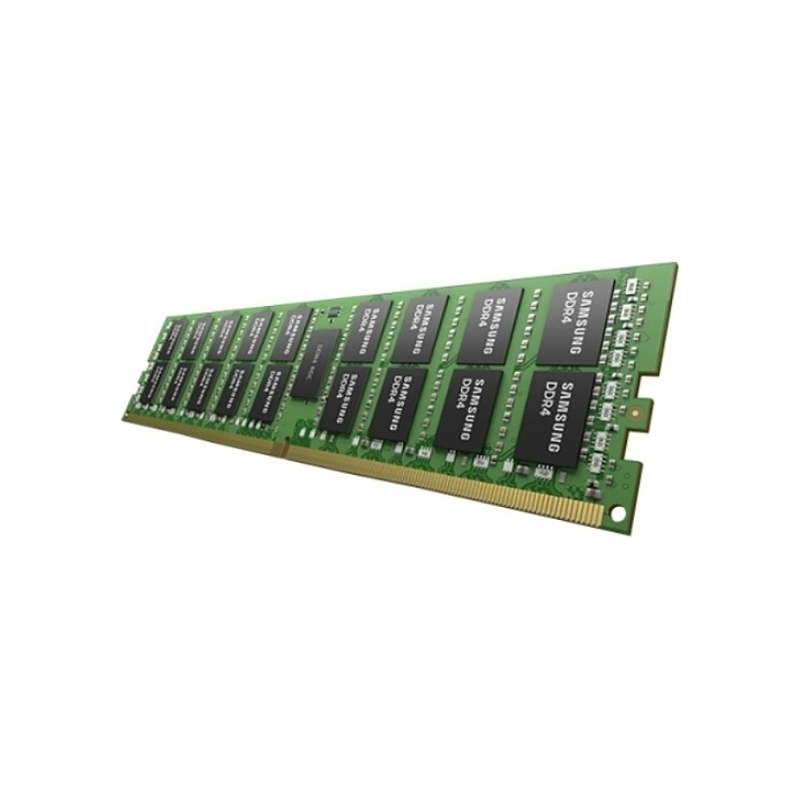
16 GB DDR4-2933 PC4-23400 ECC registered RDIMM, 2Rx8 on eighteen 8 Gb x8 packages, 1.2 V, 288-pin; six ordering codes under M393A2K43CB2-CVF with BY, CO, BQ, C0 and GQ tails
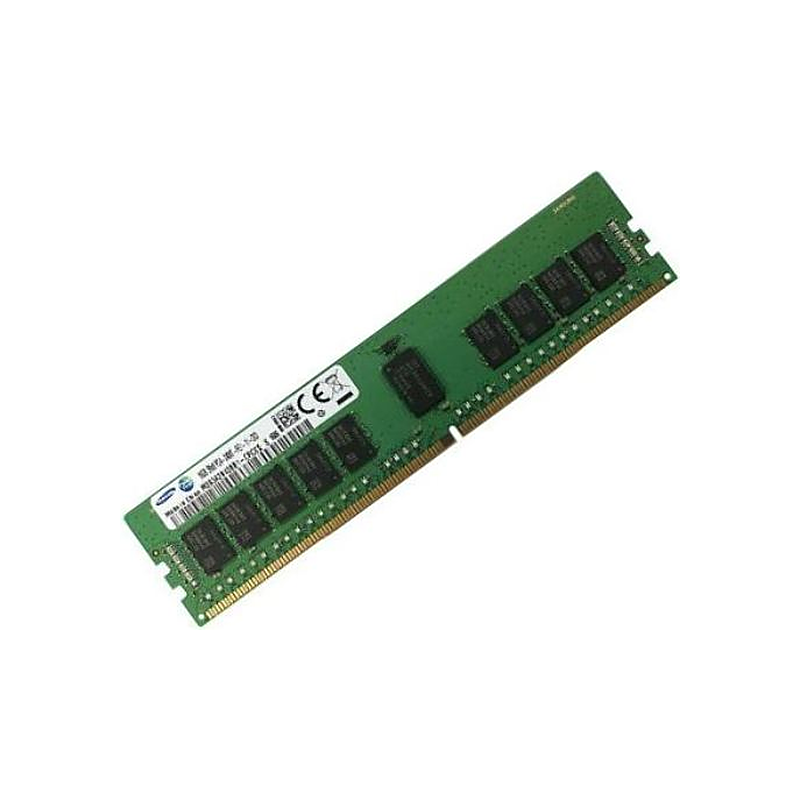
16 GB DDR4-2400 PC4-19200 ECC registered RDIMM, 2Rx8 on eighteen 8 Gb x8 packages, 1.2 V, 288-pin; eighteen ordering codes under the M393A2K43BB1 and M393A2K43CB1 revisions
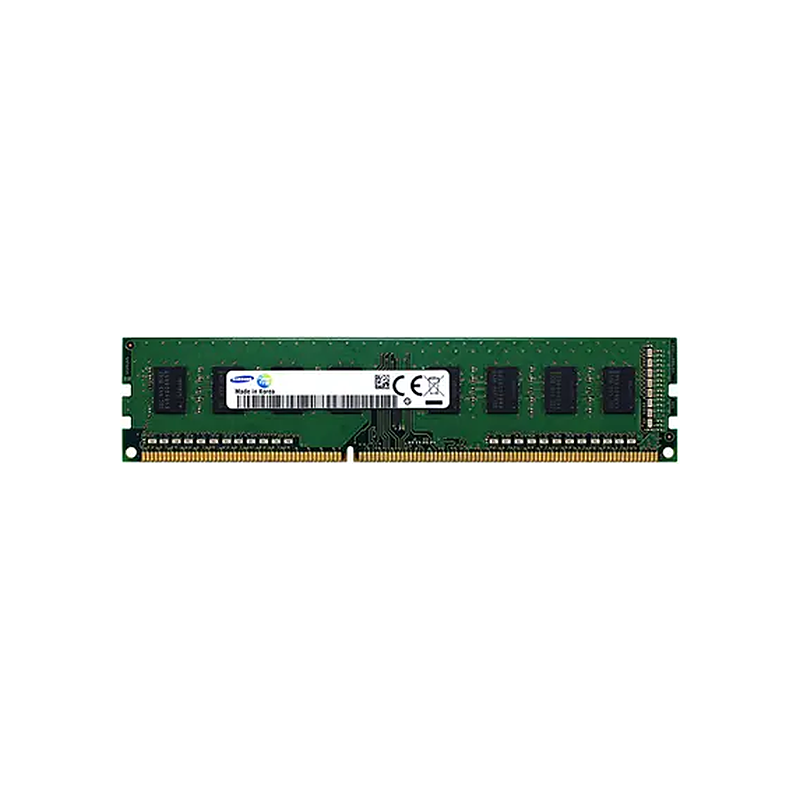
16 GB DDR4-2133 PC4-17000 ECC registered RDIMM, 2Rx8 on eighteen 8 Gb x8 packages, 1.2 V, 288-pin; nine ordering codes from M393A2K43BB1-CPB through the CPBQ tail
16 GB DDR4-2666 PC4-21300 ECC registered RDIMM, 2Rx8 on eighteen 8 Gb x8 packages, 1.2 V, 288-pin; six ordering codes under M393A2K43BB1-CTD with 6Q, 6Y, 7Q, 7Y and 8Q tails