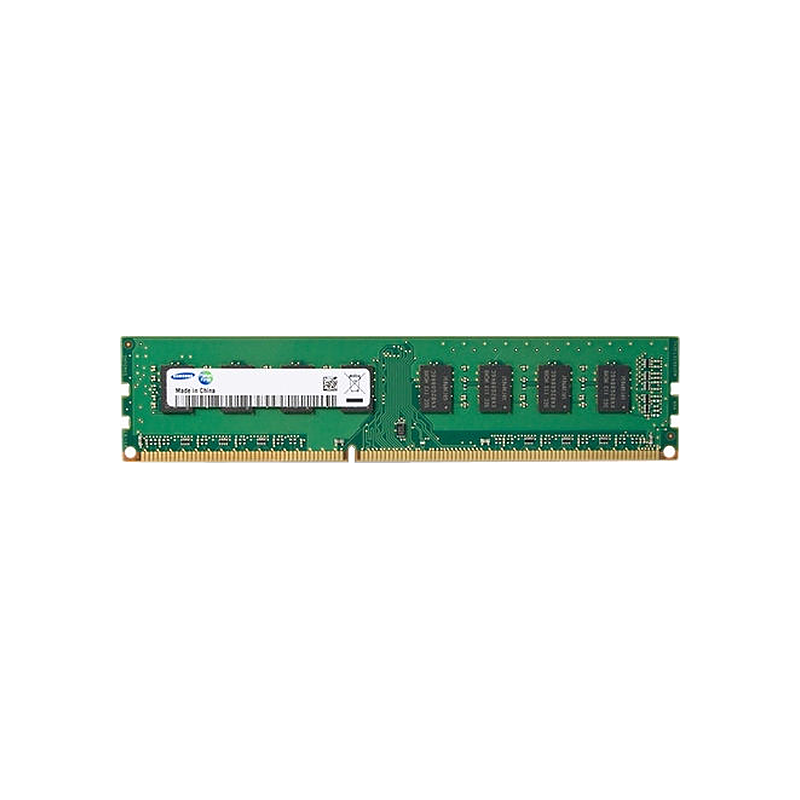
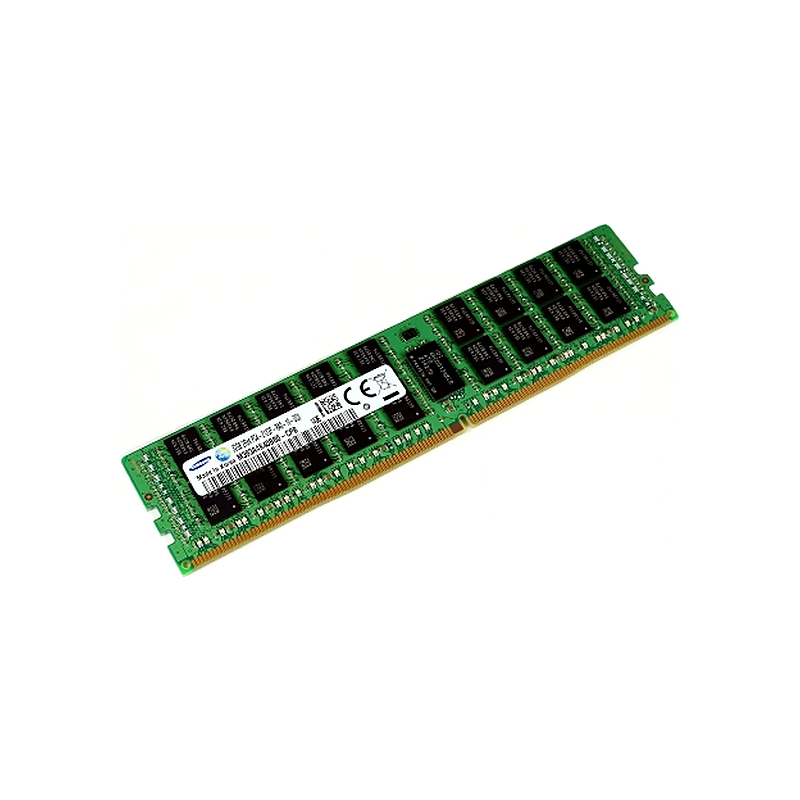
Samsung 16GB DDR4-2133 RDIMM 1Rx4 Server Memory (M393A2K40BB0-CPB)
16 GB DDR4-2133 PC4-17000 ECC registered RDIMM, 1Rx4 on eighteen 8 Gb x4 packages, 1.2 V, 288-pin; eight ordering codes from M393A2K40BB0-CPB through the CPB0QS tail
- Part Number
- M393A2K40BB0-CPB
- Brand
- Samsung
- Category
- Server Memory
- Accepted Payments
- T/T Bank Transfer PayPal Western Union
Technical Specifications
| Capacity | 16 GB |
|---|---|
| Memory Type | DDR4 |
| Speed | 2133 MT/s |
| Form Factor | RDIMM |
| Rank | 1Rx4 |
| ECC | ECC |
| Voltage | 1.2 V |
| Module Height | Standard |
| Condition | New · Used |
Frequently Asked Questions
Samsung 16 GB DDR4-2133 ECC registered RDIMM at standard height, one rank of eighteen x4 devices on a 288-pin board at 1.2 V. PC4-17000 at CAS latency 15, 14.06 ns at the 1,066 MHz clock, and 17.1 GB/s peak per 64-bit channel.
Sixteen gigabytes is the middle of the DDR4 register market, and there are two ways to build it: thirty-six 4 Gb packages in two ranks, or eighteen 8 Gb packages in one. Both put 128 Gb of data plus check bits in a slot; they differ in how much rank the slot consumes and how much work the controller has to do per access. This page is the single-rank version, and the case for it is entirely about rank arithmetic rather than throughput.
Eight ordering codes carry the module, one base and seven suffixes, listed at the foot of the page.
Technical specifications
| Part number | M393A2K40BB0-CPB, with the eight ordering codes listed under Ordering codes (catalogue code M393A2K40BB0) |
|---|---|
| Capacity | 16 GB per module, single module |
| Organisation | 1Rx4 — one rank of eighteen x4 devices, 8 Gb each, 144 Gb of silicon for 128 Gb of data plus two check-bit devices; 2G x 72 at module level |
| Speed | DDR4-2133, PC4-17000, 2,133 MT/s, 17.1 GB/s peak per 64-bit channel |
| Timings | CL15 at 1,066 MHz, 14.06 ns; JEDEC 2133P bin |
| Voltage | 1.2 V nominal |
| Form factor | 288-pin RDIMM at standard height, 31.25 mm, bare PCB with no heatspreader |
| Register | On-module register buffers the command and address bus, so the board must be specified for registered memory |
| Error handling | ECC across the 64-bit data path with x4 device granularity, so a controller that supports chipkill can retire a whole device and keep running on the spare bits |
| Manufacture | Samsung; assembly site and date code vary by production run and are printed on the module rather than fixed by the part number |
| Condition | New and tested pulls, both stocked |
What the part number encodes
Every field that decides whether the module trains in a given board sits inside the part number. The label adds batch information around it, and the two should not be read as one string.
| Printed as | Means | Why it matters at purchase |
|---|---|---|
| M393 | Standard-height registered module | The 31.25 mm board; the low-profile equivalent carries M392 and about twelve millimetres less height |
| 2K | Sixteen-gigabyte class built from 8 Gb devices | Sets both the capacity and the device density, which is what makes eighteen packages enough |
| 40 | x4 device width | Gives the controller chipkill granularity; an x8 part of the same capacity loses that |
| 1Rx4 as printed on many listings | One rank, x4 | The number that decides how many modules a channel will take at full clock |
| PC4-17000P | DDR4-2133, bin P, which is CL15 | The letter fixes the timing grade; without it the listing has quoted a clock and left latency open |
| -R | Registered, not unbuffered | Different electrical interface from an unbuffered module of the same capacity, and it will not train in that slot |
| BB0 | Die and raw-card generation | Records which silicon revision and which raw card built the assembly; it constrains nothing upstream of it |
| CPB | The 2,133 speed block | Neighbouring blocks in the same family are other clocks, so the block letter has to be checked rather than assumed |
| 0Q, 0QS, 20 … Q | Ordering suffix, none to three characters | What the purchase order quotes; the only field that varies across the eight codes stocked |
| YYWW | Date code, year and week | The only service history a pull carries, and the first field to read when judging remaining life |
Eighteen packages rather than thirty-six
Halving the package count is the whole point of the 8 Gb die. A x4 rank needs seventy-two bits, so eighteen devices of four bits each; with 4 Gb silicon that is 8 GB of data and the module needs a second rank to reach sixteen. With 8 Gb silicon the same eighteen packages carry twice the depth, and one rank covers the capacity on its own.
What that buys is not bandwidth. Two modules of either type in a channel deliver the same 17.1 GB/s and the same latency, because both are rated at 2,133 CL15. What it buys is room: one rank per module against two, which shows up the moment a channel is asked to hold more than two modules or the board's rank table is tight. It also halves the number of solder joints and DRAM packages on each board, which is why the single-rank build was the volume OEM part for this density while 4 Gb supply lasted.
The costs are real but narrow. Chipkill is identical because both use x4 devices, and capacity is identical because the silicon total is identical. What differs is failure granularity inside a rank and the fact that one bad device takes half the module's data path out of service instead of a quarter of it. On a stocked spare that difference matters at replacement time, not at design time.
The rank budget at 2,133
DDR4 server boards usually allow four ranks per channel. With 2Rx4 modules that is two slots and the channel is done; with these it is four slots, so a board that populates three or four modules per channel stays inside the table instead of dropping clock. At 2,133 the timing window is generous enough that many boards will hold speed even past that point, but holding speed while leaving the documented envelope is the kind of configuration that survives a lab and fails an audit.
The other side of the ledger is the register. Two single-rank modules per channel put two register loads on the command bus; two 2Rx4 modules put the same two loads and twice the rank logic behind them. Neither is a problem at this clock. It becomes one on the last generation of boards that still take DDR4, where the same channel is asked to carry two modules at 2,666 or 3,200 and the register load, not the rank count, is what erodes the eye.
So the purchase decision is a population decision first. If the target machine will be filled two modules per channel, either organisation works and the 2Rx4 part is often the cheaper one on the secondary market. If it will be filled three or four modules per channel, or if the same stock has to serve both a two-slot and a four-slot machine, the single-rank part is the one that fits everywhere.
Throughput, latency, and where 2,133 stops being enough
17.1 GB/s per channel against 19.2 at 2,400 and 21.3 at 2,666. In eight-channel terms that is 137 GB/s against 154 and 171, and absolute latency moves hardly at all across the three: 14.06 ns, 14.17, 14.25. The step from 2,133 to 2,400 is worth roughly twelve per cent of bandwidth for about one per cent of latency, which is why the faster grades were adopted wholesale once platforms rated them.
That makes 2,133 a capacity play rather than a speed play. It is the grade that fills a 256 GB machine from sixteen slots at the lowest cost per gigabyte, and the grade that a DDR4-2400 or DDR4-2666 platform will happily accept at a derate. It is not the grade to specify for a workload that is bandwidth-bound and already short of it, and no amount of rank arithmetic changes that.
Which platforms run it, and at what speed
The module caps the channel at its own rating. On each of these processors it fits and trains, and the clock it runs at is the lower of the two ratings:
- Xeon E5-2667 v4 is rated 2,400, so a channel built from this part runs at 2,133 — the common denominator that lets one stock serve a mixed LGA2011-3 estate.
- Xeon Silver 4210 is also rated 2,400 on the newer socket; this module simply leaves the extra step unused.
- Xeon Platinum 8260 is rated 2,933 and will report the module's own grade, which is the correct behaviour and not a fault.
Nothing needs configuring in any of the three cases, and nothing is damaged. The part number describes the module; the platform decides what it can do with it.
Ordering codes and what to check at goods-in
Eight codes carry this module: the base M393A2K40BB0-CPB and seven suffixed variants. The family code fixes height class, density, device width and revision, CPB fixes the 2,133 speed block, and the tail is the build variant the paperwork names. Tail length runs from nothing to three characters, so a goods-in check that compares only the first two characters will conflate codes that are genuinely different builds.
| Code | Type | Build tail | Condition | Quote |
|---|---|---|---|---|
| M393A2K40BB0 | Catalogue code | Family code without a speed block; the P build listed here is the PC4-17000 / 2,133 MT/s one | New / used | Enquire |
| M393A2K40BB0-CPB | Ordering code | Base code, no suffix appended | New / used | Enquire |
| M393A2K40BB0-CPB0 | Ordering code | 0 | New / used | Enquire |
| M393A2K40BB0-CPB00 | Ordering code | 00 | New / used | Enquire |
| M393A2K40BB0-CPB0Q | Ordering code | 0Q | New / used | Enquire |
| M393A2K40BB0-CPB0QS | Ordering code | 0QS | New / used | Enquire |
| M393A2K40BB0-CPB20 | Ordering code | 20 | New / used | Enquire |
| M393A2K40BB0-CPB2Q | Ordering code | 2Q | New / used | Enquire |
| M393A2K40BB0-CPBQ | Ordering code | Q | New / used | Enquire |
- CPB is 2,133. Speed blocks that look adjacent in this family are other clocks; a quote naming only capacity and brand has not settled which one ships.
- Tails are not a sequence. CPB0Q and CPB0QS differ by one character and are different builds, and CPBQ is a single character on its own.
- Single rank is the field to confirm. 2Rx4 modules of the same capacity and speed exist and will work, but they consume twice the rank budget.
- Read the date code on pulls. Year and week in YYWW, the field that says most about how much service life is left.
Warranty, lead time and purchasing
New stock and tested pulls both carry one year of cover from the day the parcel leaves the warehouse, logged against the ordering code and the batch so that a claim does not depend on an invoice surviving a move or two. Pulls are screened in matched sets and the screening sheet travels inside the box. Stock on the shelf leaves within three to seven working days with tracking, two pieces minimum.
No price is printed because the line is quoted. Two conditions, eight codes and a per-piece figure that moves with quantity make a page number unreliable, so send the code, the quantity, the condition and the platform and the answer comes back the same working day.
Get Pricing For This Part
Tell us who you are — we reply within one working day with a firm quote, stock status and lead time. Volume discounts available.
Related Products
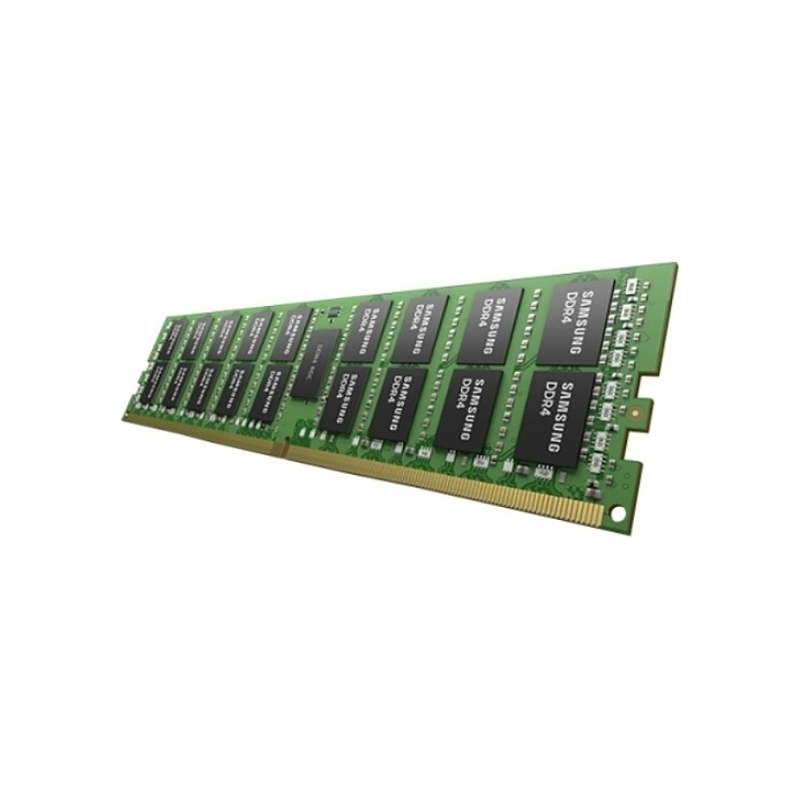
16 GB DDR4-2933 PC4-23400 ECC registered RDIMM, 2Rx8 on eighteen 8 Gb x8 packages, 1.2 V, 288-pin; six ordering codes under M393A2K43CB2-CVF with BY, CO, BQ, C0 and GQ tails
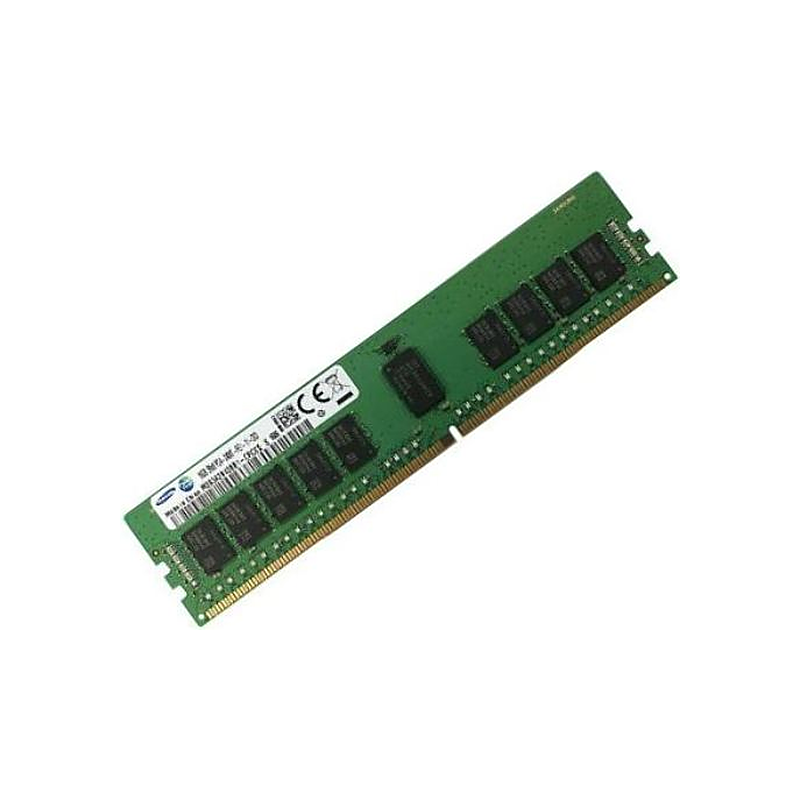
16 GB DDR4-2400 PC4-19200 ECC registered RDIMM, 2Rx8 on eighteen 8 Gb x8 packages, 1.2 V, 288-pin; eighteen ordering codes under the M393A2K43BB1 and M393A2K43CB1 revisions
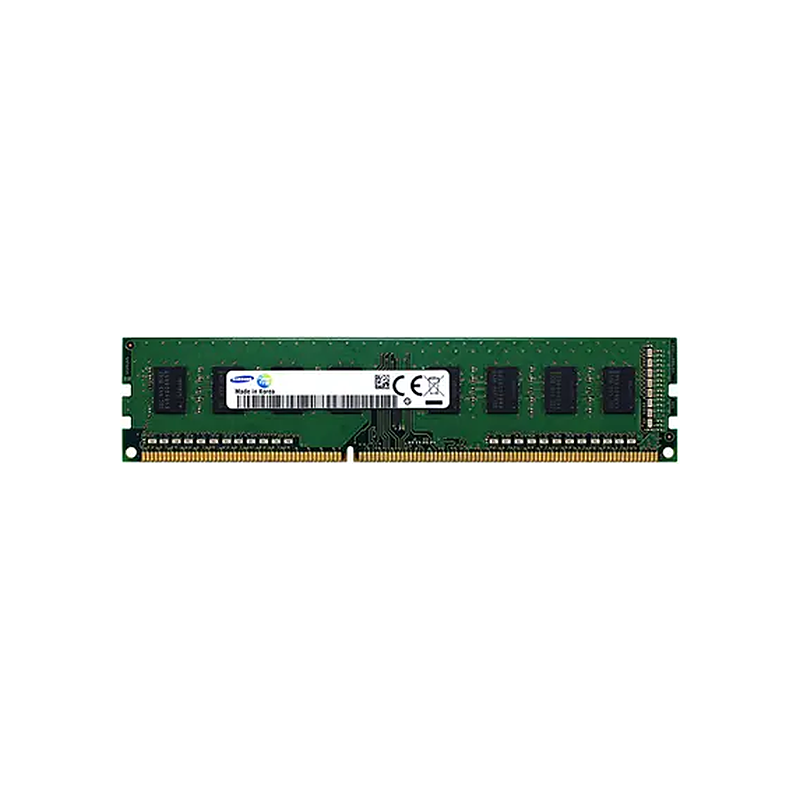
16 GB DDR4-2133 PC4-17000 ECC registered RDIMM, 2Rx8 on eighteen 8 Gb x8 packages, 1.2 V, 288-pin; nine ordering codes from M393A2K43BB1-CPB through the CPBQ tail
16 GB DDR4-2666 PC4-21300 ECC registered RDIMM, 2Rx8 on eighteen 8 Gb x8 packages, 1.2 V, 288-pin; six ordering codes under M393A2K43BB1-CTD with 6Q, 6Y, 7Q, 7Y and 8Q tails