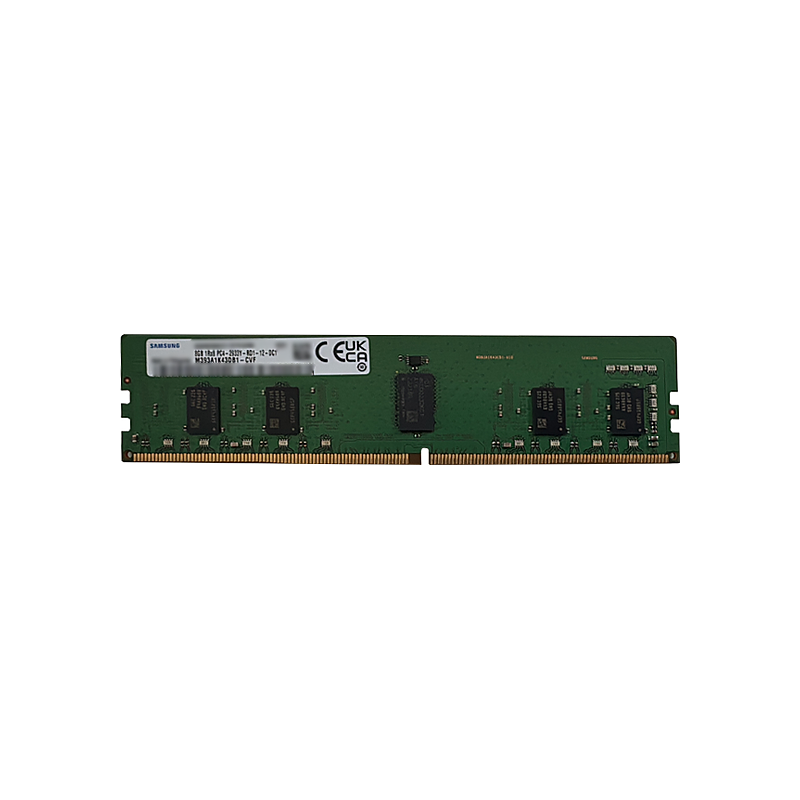
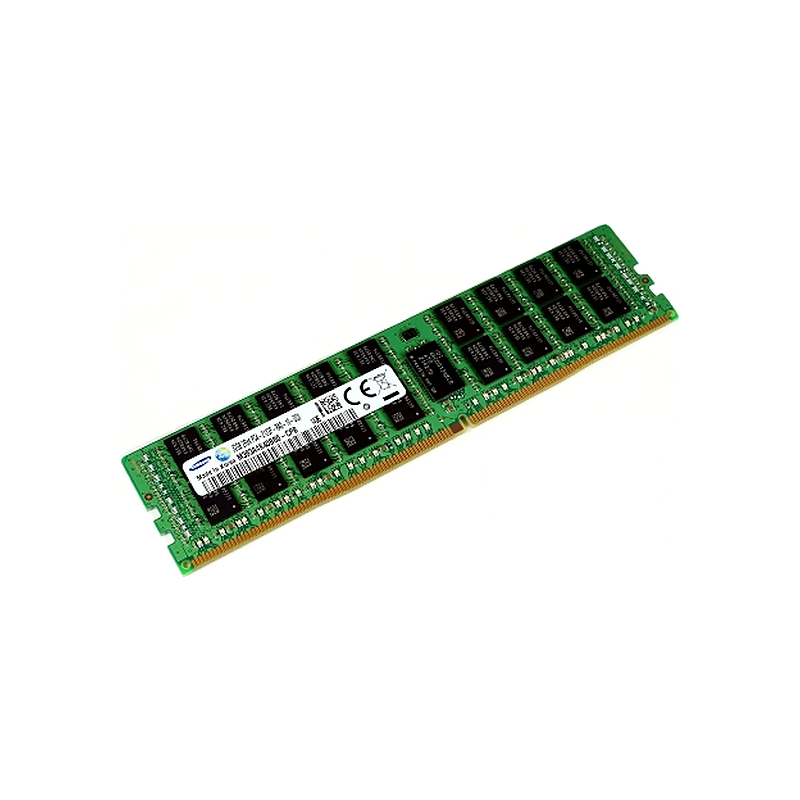
Samsung 8GB DDR4-2933 RDIMM 1Rx8 Server Memory (M393A1K43DB1-CVF)
8 GB DDR4-2933 PC4-23400 ECC registered RDIMM, 1Rx8, 1.2 V, 288-pin; five ordering codes from M393A1K43DB1-CVF to -CVFCQ
- Part Number
- M393A1K43DB1-CVF
- Brand
- Samsung
- Category
- Server Memory
- Accepted Payments
- T/T Bank Transfer PayPal Western Union
Technical Specifications
| Capacity | 8 GB |
|---|---|
| Memory Type | DDR4 |
| Speed | 2933 MT/s |
| Form Factor | RDIMM |
| Rank | 1Rx8 |
| ECC | ECC |
| Voltage | 1.2 V |
| Module Height | Standard |
| Condition | New · Used |
Frequently Asked Questions
Samsung 8 GB DDR4-2933 ECC registered RDIMM, one rank of nine x8 devices at 1.2 V on a 288-pin module. PC4-23400, CAS latency 21 at 1,466 MHz, 14.32 ns, and 23.4 GB/s peak per 64-bit channel.
2,933 is a strange step in the DDR4 ladder and it is worth saying so before the specifications: it is the only common bin where the absolute latency is worse than the slower grade below it. The detail is on this page because it changes how the part should be bought, not because it is a defect.
Five ordering codes carry it, all under M393A1K43DB1, and all of them are two characters after the speed block. The table at the foot of the page lists them.
Technical specifications
| Part number | M393A1K43DB1-CVF, with the five ordering codes listed under Ordering codes (catalogue code M393A1K43DB1) |
|---|---|
| Capacity | 8 GB per module, single module |
| Organisation | 1Rx8 — one rank of nine x8 devices, (1G x 8) x 9 as Samsung prints it, 72 Gb in total on 8 Gb components |
| Speed | DDR4-2933, PC4-23400, 2,933 MT/s, 23.4 GB/s peak per 64-bit channel |
| Timings | CL21 at 1,466 MHz, 14.32 ns |
| Voltage | 1.2 V nominal |
| Form factor | 288-pin RDIMM, standard height 31.25 mm, bare PCB with no heatspreader |
| Register | On-module register buffers the command and address bus, so the module needs a controller that supports registered memory |
| Error handling | ECC across the 64-bit data path, plus parity on the registered command and address path |
| Manufacture | Samsung; assembly site and date code vary by production run and are printed on the module, not fixed by the part number |
| Condition | New and tested pulls, both stocked |
Reading the label, field by field
One line of code on a DDR4 RDIMM carries the whole buying decision. Anything outside that line describes the batch instead, and getting the two categories confused is how a correct part number ends up shipping the wrong stock.
| Printed as | Means | Why it decides a purchase |
|---|---|---|
| 8GB | Capacity of this one module | Sets what the slot is worth, and unlike every other field it cannot be altered by firmware settings |
| 1Rx8 | One rank, x8 device width | A single rank keeps the channel at two ranks when two modules are fitted, which is where 2,933 populations usually live |
| PC4-23400 | DDR4-2933 at 23.4 GB/s per channel | The bandwidth figure, not a tier name; it is what separates this part from the 2,666 and 3,200 modules around it |
| -R | Registered, not unbuffered | Only a registered board will train it; the module looks identical to an unbuffered part from a distance |
| DB1 | Die generation and raw card revision | Tells you which silicon the board was built from; it leaves capacity, rank and clock untouched |
| CVF | Speed block for the 2,933 bin | The one field most often misread — the neighbouring blocks are other speeds, so check the datasheet rather than the shape of the letters |
| CVFBQ … CVFCQ | Two-character ordering suffix | What a purchase order quotes, and the only part of the code that varies between the five stocked versions |
| SPD revision | Two-digit JEDEC SPD revision | Firmware on 2,933 platforms reads old revisions conservatively, which shows up as a derate rather than an error |
| YYWW | Date code, year and week | The only service record a pull carries, and this whole speed grade is out of production |
The one DDR4 speed where latency gets worse
Absolute latency is the clock period times the CAS count, and the DDR4 ladder normally moves the two together so the product stays flat. It does not stay flat here. A 2,666 module runs 19 cycles at 0.750 ns for 14.25 ns. This one runs 21 cycles at 0.682 ns, which is 14.32 ns — slower, despite the higher clock.
The reason is arithmetic: going from 2,666 to 2,933 is a ten per cent frequency step, but the CAS count steps from 19 to 21, which is nearly eleven per cent. The extra cycle costs slightly more than the shorter period saves. Compare the step above it: 3,200 runs 22 cycles at 0.625 ns for 13.75 ns, because the CAS count there rises by less than the frequency does.
What that means in practice: 2,933 buys bandwidth, a little over nine per cent over 2,666, and gives back a fraction of a nanosecond of latency. For a memory-bound workload that is a fair trade. For a latency-sensitive one it is the one rung of the ladder where a slower module can actually be faster, and it is worth knowing before paying a premium for the higher number on the label.
Where 2,933 is native, and where it lands short
2,933 arrived with the Cascade Lake refresh of the second Scalable generation, and it is the top step for those parts. Third-generation boards, rated 3,200, accept it and run the channel at 2,933; older boards rated 2,666 drop it to 2,666. The only machines that use the full clock are the ones built around this exact grade.
Three pages in the catalogue mark the three cases:
- Xeon Platinum 8260 is rated 2,933, which makes it the natural home for this module — the channel runs at label speed and the population tables are written for it.
- Xeon Gold 6338 is rated 3,200 on LGA4189, so the module is accepted and capped at 2,933 by its own rating rather than by the board.
- Xeon Silver 4314 is rated 2,666, which pulls the module down a full step and makes the 2,933 grade pointless in that machine.
The pattern is the same in each: the module never refuses a socket, it just runs at whichever clock is the lower of the two.
Capacity arithmetic and the rank budget
Eight slots of 8 GB is 64 GB, twelve is 96 GB, sixteen is 128 GB, twenty-four is 192 GB. With one or two modules per channel all of those stay at one or two ranks and hold the rated clock; Cascade Lake boards generally publish their highest frequency for exactly that population.
Rank count is the budget that runs out first. Two single-rank modules per channel is two ranks and fits every published table; add a two-rank module of the same capacity and the channel carries four, where firmware begins trading frequency for signal integrity on its own. Because 2,933 has a narrow margin to begin with, that trade shows up earlier here than it would on a 2,400 build.
Mixing rules and what breaks first
Speed mixes down without complaint. A 2,666 module alongside these pulls the channel to 2,666 and nothing reports it; the only trace is a benchmark figure or a firmware log line. On this grade that costs the whole reason for buying 2,933, so a mixed population is usually a false economy.
Generation and buffering are absolute. DDR3 will not key into the slot, DDR5 uses a different notch, and an unbuffered module of the same capacity is electrically wrong for a registered board no matter how alike the two look.
Rank mixing is the one that catches careful buyers. This module pairs cleanly with a 1Rx4 part of the same capacity, because both are single rank and the channel stays at two. Pairing it with a 2Rx8 part gives three ranks, outside the tables, and on a 2,933 board that is where the derate appears first.
Ordering codes and what to check at goods-in
Five codes carry this module: a base code and four two-character suffixes. M393A1K43DB1 fixes family, device width and revision; CVF is the 2,933 speed block; the suffix is what a purchase order names. Samsung publishes no decoder for it, and one warning is worth repeating in this family — speed blocks cluster. Several different letter pairs map to the same clock, and the 3DS variants share a block with the standard parts, so a code that looks unfamiliar is not necessarily a different speed.
Availability: Samsung lists this part as discontinued. The line has left the catalogue and lives on in the secondary market, in the form of stock that was never deployed and tested pulls from retired estates. Both are held here under the same cover, and neither is described as current production.
| Code | Type | Build tail | Condition | Quote |
|---|---|---|---|---|
| M393A1K43DB1 | Catalogue code | Family code without a speed block; the 2,933 build listed here is the PC4-23400 / 2,933 MT/s one | New / used | Enquire |
| M393A1K43DB1-CVF | Ordering code | Base code, no suffix appended | New / used | Enquire |
| M393A1K43DB1-CVFBQ | Ordering code | BQ | New / used | Enquire |
| M393A1K43DB1-CVFBY | Ordering code | BY | New / used | Enquire |
| M393A1K43DB1-CVFC0 | Ordering code | C0 | New / used | Enquire |
| M393A1K43DB1-CVFCQ | Ordering code | CQ | New / used | Enquire |
- CVF is 2,933, not 3,200. The two blocks sit next to each other alphabetically and describe different clocks; a quote that says only "the 8 GB Samsung" will not settle which one arrives.
- The suffix is two characters throughout. Base, BQ, BY, C0, CQ — four stocked variants behind one module, and no gaps to memorise.
- Check the platform ceiling first. A 2,666 board will run this at 2,666, so the premium for 2,933 is wasted there.
- Look at the date code. The part is discontinued, so the week code is the closest thing to a service history on anything that came out of a chassis.
Warranty, lead time and purchasing
Cover is one year from dispatch, on new stock and on tested pulls alike, recorded against the part number and the batch so a claim does not depend on an invoice surviving. Pulled modules are verified in matched sets before packing, and the record travels with the order. Warehouse stock ships in three to seven working days, tracking issued at dispatch, minimum order two pieces.
No price is printed because the line is quoted. Five codes, two conditions and a discontinued supply position make the per-piece figure depend on the order rather than on the page, so send what you need and the answer comes back the same working day.
Get Pricing For This Part
Tell us who you are — we reply within one working day with a firm quote, stock status and lead time. Volume discounts available.
Related Products
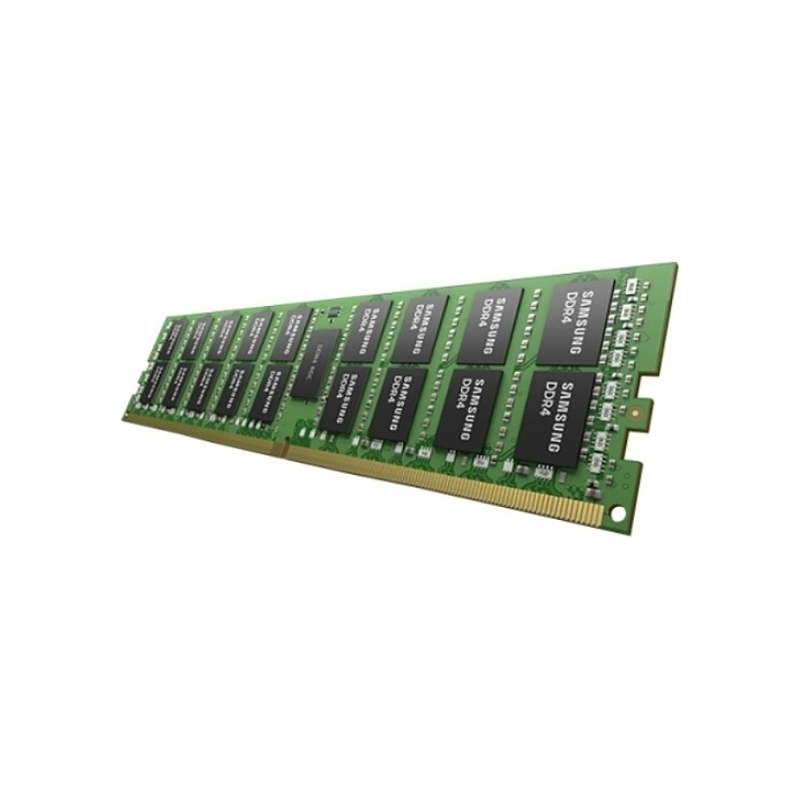
16 GB DDR4-2933 PC4-23400 ECC registered RDIMM, 2Rx8 on eighteen 8 Gb x8 packages, 1.2 V, 288-pin; six ordering codes under M393A2K43CB2-CVF with BY, CO, BQ, C0 and GQ tails
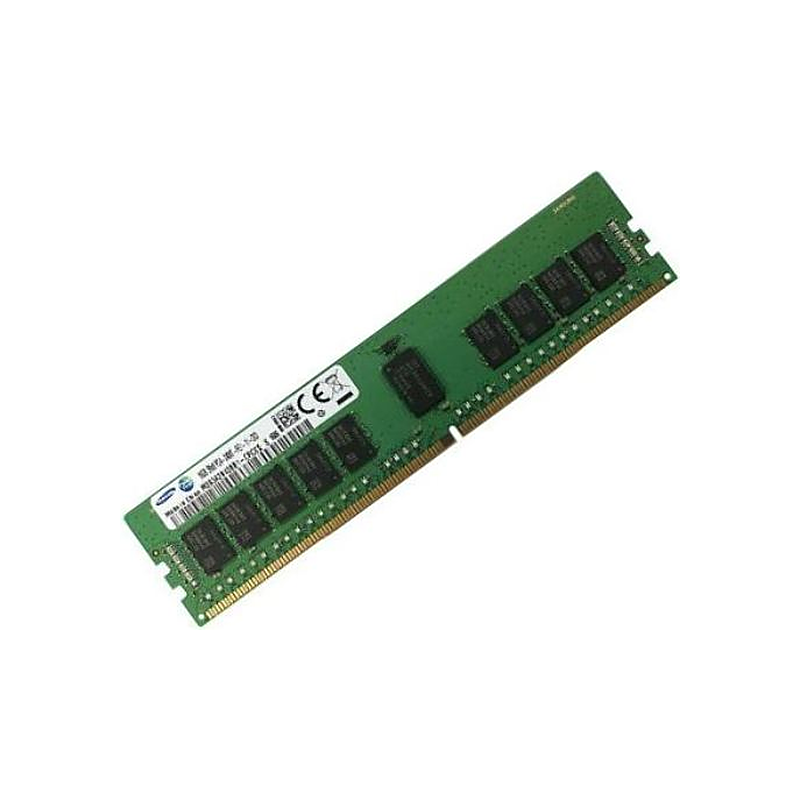
16 GB DDR4-2400 PC4-19200 ECC registered RDIMM, 2Rx8 on eighteen 8 Gb x8 packages, 1.2 V, 288-pin; eighteen ordering codes under the M393A2K43BB1 and M393A2K43CB1 revisions
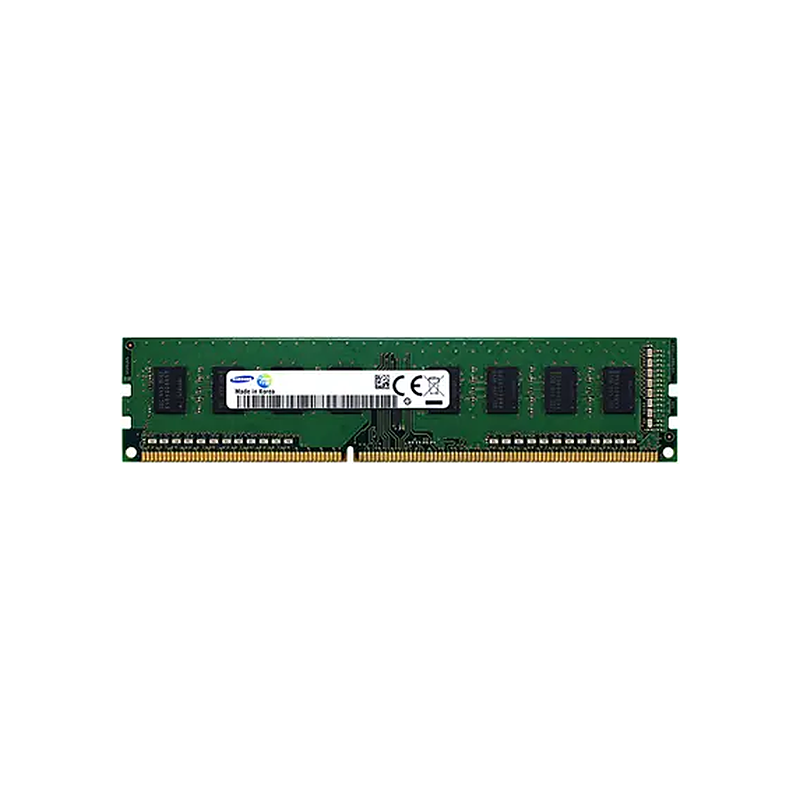
16 GB DDR4-2133 PC4-17000 ECC registered RDIMM, 2Rx8 on eighteen 8 Gb x8 packages, 1.2 V, 288-pin; nine ordering codes from M393A2K43BB1-CPB through the CPBQ tail
16 GB DDR4-2666 PC4-21300 ECC registered RDIMM, 2Rx8 on eighteen 8 Gb x8 packages, 1.2 V, 288-pin; six ordering codes under M393A2K43BB1-CTD with 6Q, 6Y, 7Q, 7Y and 8Q tails