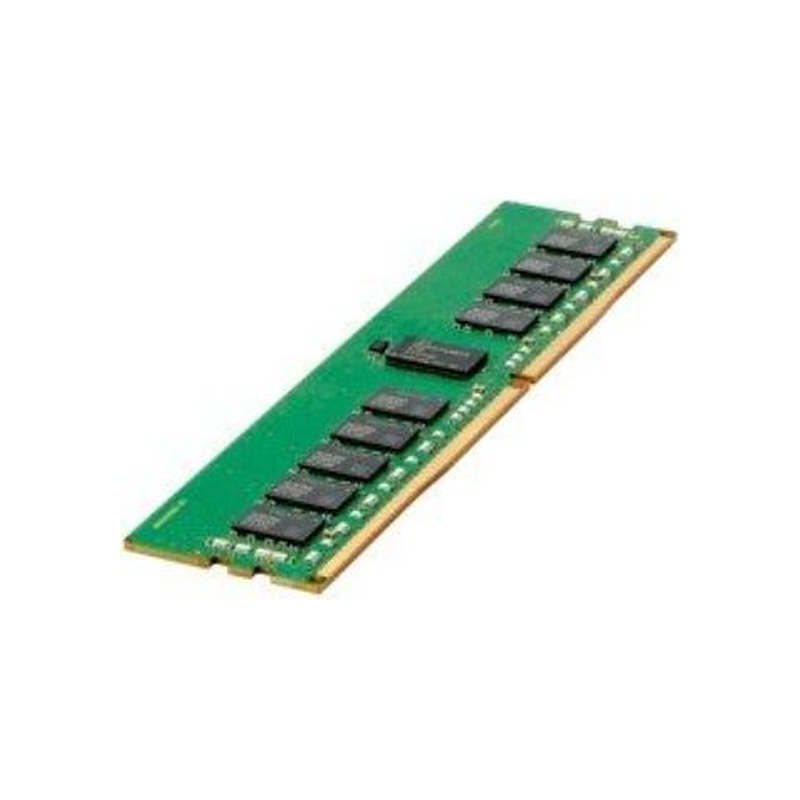
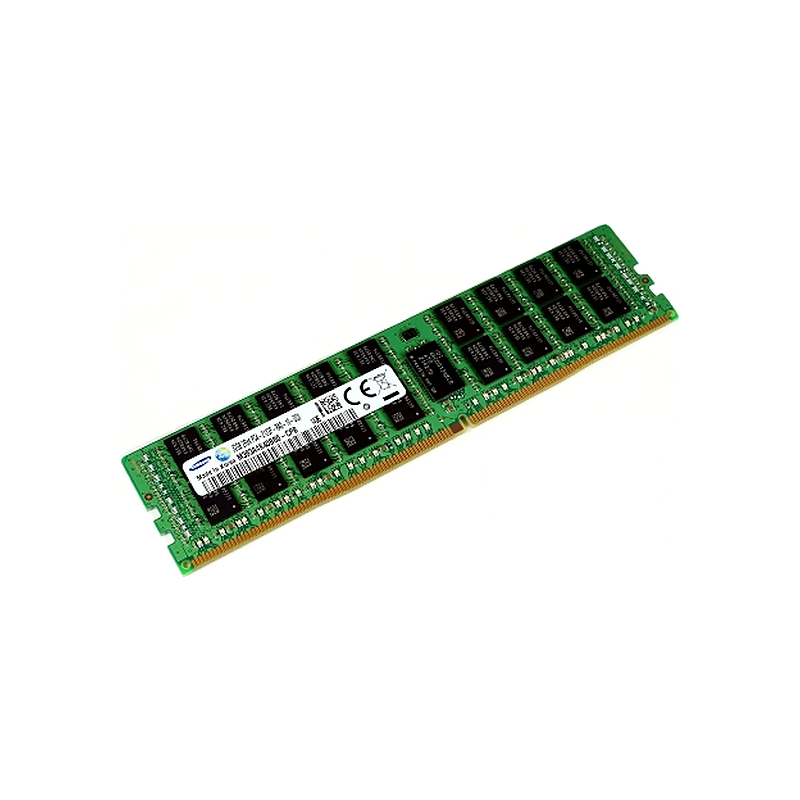
Samsung 4GB DDR4-2400 RDIMM 1Rx8 Server Memory (M393A5143DB0-CRC)
4 GB DDR4-2400 PC4-19200 ECC registered RDIMM, 1Rx8, 1.2 V, 288-pin; nine ordering codes from M393A5143DB0-CRC00 to -CRC4Y
- Part Number
- M393A5143DB0-CRC
- Brand
- Samsung
- Category
- Server Memory
- Accepted Payments
- T/T Bank Transfer PayPal Western Union
Technical Specifications
| Capacity | 4 GB |
|---|---|
| Memory Type | DDR4 |
| Speed | 2400 MT/s |
| Form Factor | RDIMM |
| Rank | 1Rx8 |
| ECC | ECC |
| Voltage | 1.2 V |
| Module Height | Standard |
| Condition | New · Used |
Frequently Asked Questions
Samsung 4 GB DDR4-2400 ECC registered RDIMM, single rank of x8 devices on a standard 288-pin registered module at 1.2 V. Rated PC4-19200 with CAS latency 17, which works out at 14.17 ns at the 1,200 MHz clock — a little slower in absolute terms than a 3,200 CL22 part, and the reason a 2,400 module belongs on a platform whose controller runs at 2,400 rather than behind one that does not.
It is sold under nine ordering codes, all built on the same catalogue code and all the same module. The table further down lists them so a buyer can match the tail on a BOM or an invoice without ordering the wrong line, and the differences are explained there rather than spread across nine pages.
Technical specifications
| Part number | M393A5143DB0-CRC, with the nine ordering codes listed under Ordering codes (catalogue code M393A5143DB0) |
|---|---|
| Capacity | 4 GB per module, single module |
| Organisation | 1Rx8 — one rank of x8 devices, nine devices for the 72-bit path, eight for data and one for the check bits |
| Speed | DDR4-2400, PC4-19200, 2,400 MT/s, 19.2 GB/s peak per 64-bit channel |
| Timings | CL17 at 1,200 MHz, 14.17 ns; JEDEC 2400T bin |
| Voltage | 1.2 V nominal |
| Form factor | 288-pin RDIMM, standard height 31.25 mm, bare PCB with no heatspreader |
| Register | On-module register buffers the command and address bus, so the module needs a controller that supports registered memory |
| Error handling | ECC across the 64-bit data path, plus parity on the registered command and address path |
| Manufacture | Samsung; assembly site and date code vary by production run and are printed on the module, not fixed by the part number |
| Condition | New and tested pulls, both stocked |
Reading the label, field by field
The label on this 2,400 MT/s module settles three things at a glance: capacity, the 1Rx8 organisation and the PC4-19200 bin, whose T letter fixes CL17. Everything else on it — revision letters, SPD level and the YYWW date — belongs to the production run, and is decoded below rather than asserted.
| Printed as | Means | Why it decides a purchase |
|---|---|---|
| 4GB | Capacity of this one module | Sets how many slots are needed for the target memory size, and it is the one number a platform setting cannot change |
| 1Rx8 | Single rank, x8 device width | One rank is the lightest load a channel can carry, which is what keeps a fully populated machine at its rated speed |
| PC4-2400T | DDR4-2400, JEDEC bin T, which is CL17 | The bin letter is the timing grade, not a vendor code; a listing that says PC4-2400 without the letter has not specified latency |
| -R | Registered, not unbuffered | An unbuffered module of the same capacity looks similar from above and will not post in a registered-only board |
| CRC00 … CRC4Y | Ordering tail, the last two characters of the code | The field a BOM or an invoice names. It does not change capacity, rank or speed, all of which are fixed earlier in the code |
| Raw card block | Revision and raw card design, the characters before the SPD number | Matters where a platform qualification list names a specific raw card for a slot population |
| SPD revision | Two-digit JEDEC SPD revision level | Older firmware reads lower revisions more reliably; this generation is old enough that the difference still shows up |
| Die revision | Letter in the part number, after the density field | Mixed die revisions inside one channel are the usual cause of a machine that trains below its label speed |
| YYWW | Date code, year and week | Age of the stock; on pulls it is the first evidence of how long the module has been in service |
One rank of nine at four gigabytes
Four gigabytes in a single rank on the 2,400 MT/s bin is nine x8 devices of 4 Gb each — 72 bits, one rank, the lightest load a channel can be asked to carry. Nine devices is the floor for a registered module, and the 8 GB 2Rx8 part that looks similar on the shelf uses eighteen of them in two ranks to double the capacity.
That matters at two modules per channel: a 4 GB 1Rx8 population at 2,400 stays at two ranks per channel where 8 GB 2Rx8 parts would be at four, so the rated clock is easier to hold on a fully populated older board. The cost is capacity per slot, which on a machine that needs tens of gigabytes is the right trade.
Where 4 GB per slot still makes sense
The arithmetic is short. Eight slots is 32 GB, twelve is 48 GB, sixteen is 64 GB and twenty-four is 96 GB. For a virtualisation host that is not enough to be interesting, but for a bare-metal appliance, a build server, a storage controller pair or a lab machine kept alive for a specific application, it is exactly the right number, and the cost per slot is the lowest in the DDR4 range.
The second use is repair. When one module in a matched set fails, replacing it with the same capacity and the same rank is cheaper than reseating a whole channel with larger parts, and it keeps the population symmetrical, which is what the firmware expects. The third is qualification: a four gigabyte module is a cheap way to prove that a board and a BIOS revision will take registered memory before committing to a full set of 32 GB parts.
What this module is not for is density. Four modules per channel of 4 GB is 16 GB per channel, and the same four slots with 32 GB parts is 128 GB. Anyone planning a capacity build should start from the 16 GB and 32 GB pages and treat this one as the small-quantity line.
Mixing rules and what breaks first
Compatibility is settled before anything else: DDR3 will not seat in a DDR4 slot, an unbuffered module will not post in a registered-only board, and DDR5 changes the notch. What remains to choose for a 4 GB 1Rx8 part at 2,400 is capacity, rank and clock.
Mixing capacities in one channel is allowed but leaves the channel running at the interleaving pattern of the smaller module, so the extra capacity of the larger one is partly wasted. Mixing ranks inside a channel is the case that most often costs a speed step, because the controller has to serve two or four banks behind one register. Mixing speeds drops everything to the slowest module present, which is why a 2,400 part in a 2,666 population quietly pulls the whole channel down.
The safe pattern is to populate one module per channel with matched parts, then add a second matched set, and to keep rank and die revision uniform inside a channel. On this module that means buying in even numbers and keeping the batch together, which is why the minimum order is two.
Which platforms run these at rated speed
2,400 MT/s arrived with the first Xeon Scalable generation and stayed native through the second, which is the speed most DDR4 servers were actually specified at. For a 1Rx8 module at this clock, three pages are the natural counterparts:
- Xeon Silver 4210 is rated at 2,400 MT/s, so a module at this speed runs at its label value with no derating.
- Xeon Gold 5218 is rated at 2,666 MT/s; the module trains down to 2,400 and nothing is lost by pairing them.
- Xeon Platinum 8260 runs its memory at 2,933 MT/s, so a 2,400 module is the slowest part of that channel and sets the ceiling.
None of them rejects a 1Rx8 module at 2,400; what varies is the clock the host applies to it. The speed on the code describes capability, never the machine's setting.
Ordering codes and what to check at goods-in
Every code in the table below is the same 4 GB 1Rx8 module at 2,400 MT/s. The block before the dash fixes family, device width and die revision; the dash and its tail are what a purchase order or an invoice actually names, and Samsung publishes no public decoder for them.
| Code | Type | Build tail | Condition | Quote |
|---|---|---|---|---|
| M393A5143DB0 | Catalogue code | Family code without a speed block; the T build listed here is the PC4-19200 / 2,400 MT/s one | New / used | Enquire |
| M393A5143DB0-CRC | Ordering code | Base ordering code, tail not appended | New / used | Enquire |
| M393A5143DB0-CRC00 | Ordering code | 00 | New / used | Enquire |
| M393A5143DB0-CRC0Q | Ordering code | 0Q | New / used | Enquire |
| M393A5143DB0-CRC0Y | Ordering code | 0Y | New / used | Enquire |
| M393A5143DB0-CRC30 | Ordering code | 30 | New / used | Enquire |
| M393A5143DB0-CRC3Q | Ordering code | 3Q | New / used | Enquire |
| M393A5143DB0-CRC40 | Ordering code | 40 | New / used | Enquire |
| M393A5143DB0-CRC4Q | Ordering code | 4Q | New / used | Enquire |
| M393A5143DB0-CRC4Y | Ordering code | 4Y | New / used | Enquire |
- Match the tail, not the listing. If the BOM or the last invoice carries a two-character tail, quote that code; the module behind it is the same, and matching the tail avoids a goods-in query.
- Read the label, not the listing. Capacity, rank and the PC4 bin are printed on the module; a listing that omits the bin has not told you the latency.
- Check the register chip. A registered module carries one extra device in the middle of the board; an unbuffered module of the same capacity does not.
- Note the date code on pulls. Year and week in the YYWW field; the older the code, the more service is behind the module and the more the test result matters.
Warranty, lead time and purchasing
Cover runs one year from dispatch on both conditions, new and pulled, logged against M393A5143DB0-CRC and the batch so a claim never rests on the invoice surviving. Pulled stock is matched and tested before packing and the sheet travels with the order; warehouse stock leaves in three to seven working days with tracking at dispatch, two pieces minimum.
The page carries no figure because the M393A5143DB0-CRC line is quoted per order: name the code, the quantity, the condition and the host platform, and a number comes back the same working day. With nine codes behind one 2,400 module, a whole-set quote is the cleaner way to buy.
Get Pricing For This Part
Tell us who you are — we reply within one working day with a firm quote, stock status and lead time. Volume discounts available.
Related Products
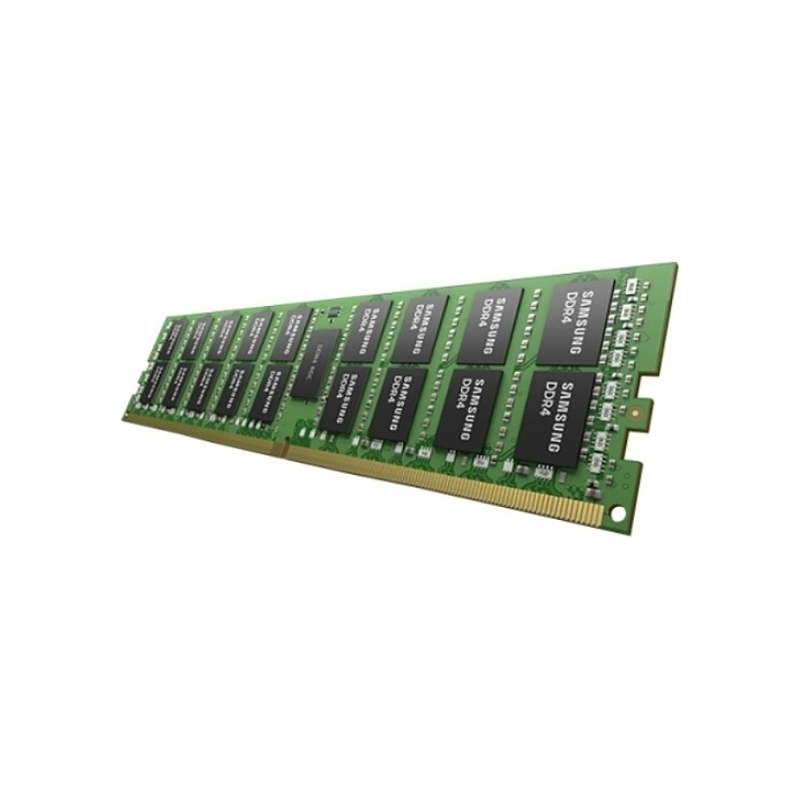
16 GB DDR4-2933 PC4-23400 ECC registered RDIMM, 2Rx8 on eighteen 8 Gb x8 packages, 1.2 V, 288-pin; six ordering codes under M393A2K43CB2-CVF with BY, CO, BQ, C0 and GQ tails
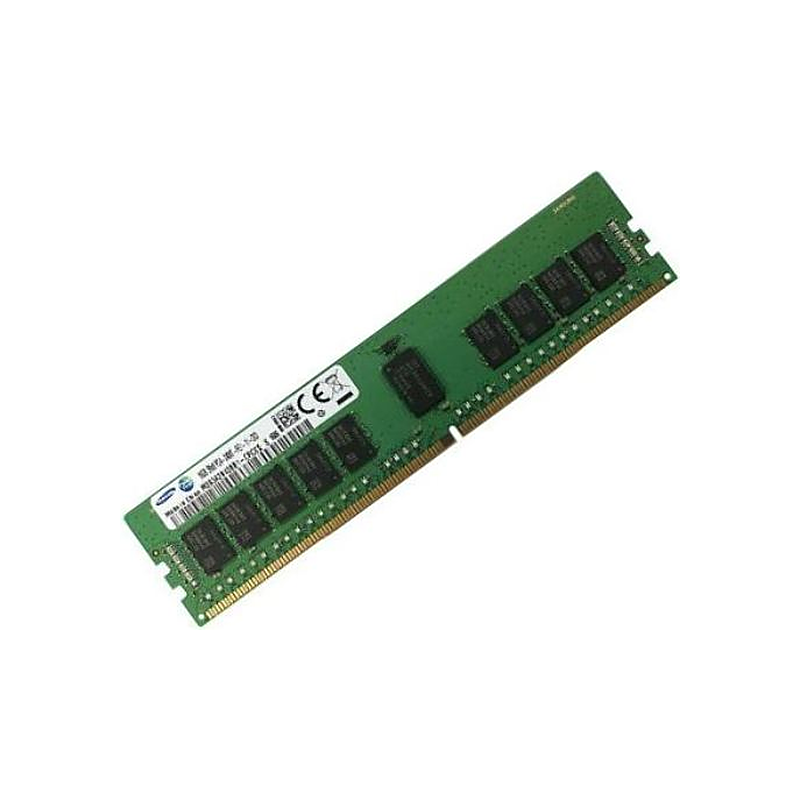
16 GB DDR4-2400 PC4-19200 ECC registered RDIMM, 2Rx8 on eighteen 8 Gb x8 packages, 1.2 V, 288-pin; eighteen ordering codes under the M393A2K43BB1 and M393A2K43CB1 revisions
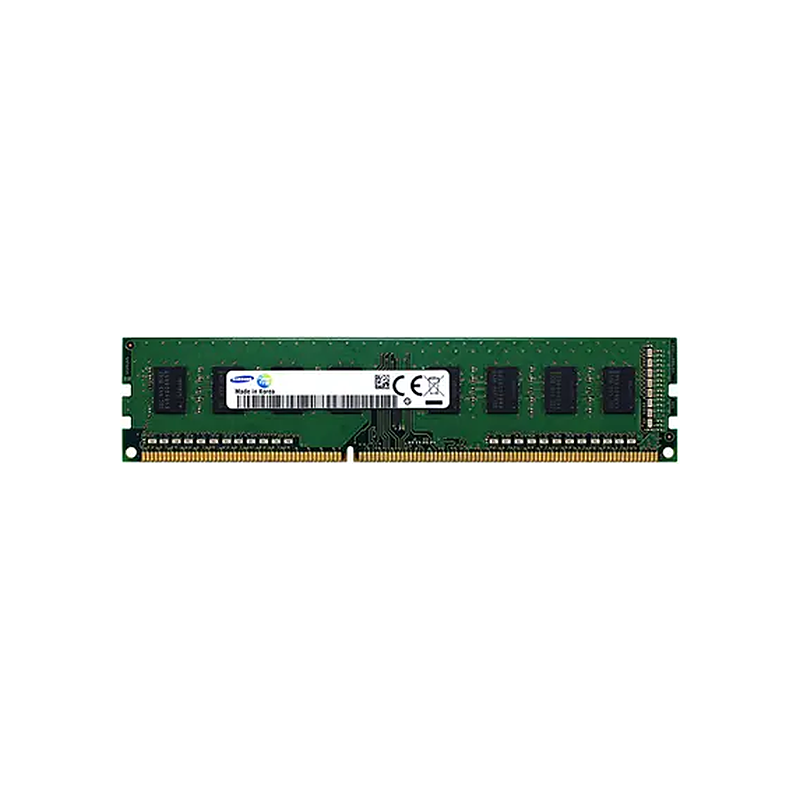
16 GB DDR4-2133 PC4-17000 ECC registered RDIMM, 2Rx8 on eighteen 8 Gb x8 packages, 1.2 V, 288-pin; nine ordering codes from M393A2K43BB1-CPB through the CPBQ tail
16 GB DDR4-2666 PC4-21300 ECC registered RDIMM, 2Rx8 on eighteen 8 Gb x8 packages, 1.2 V, 288-pin; six ordering codes under M393A2K43BB1-CTD with 6Q, 6Y, 7Q, 7Y and 8Q tails