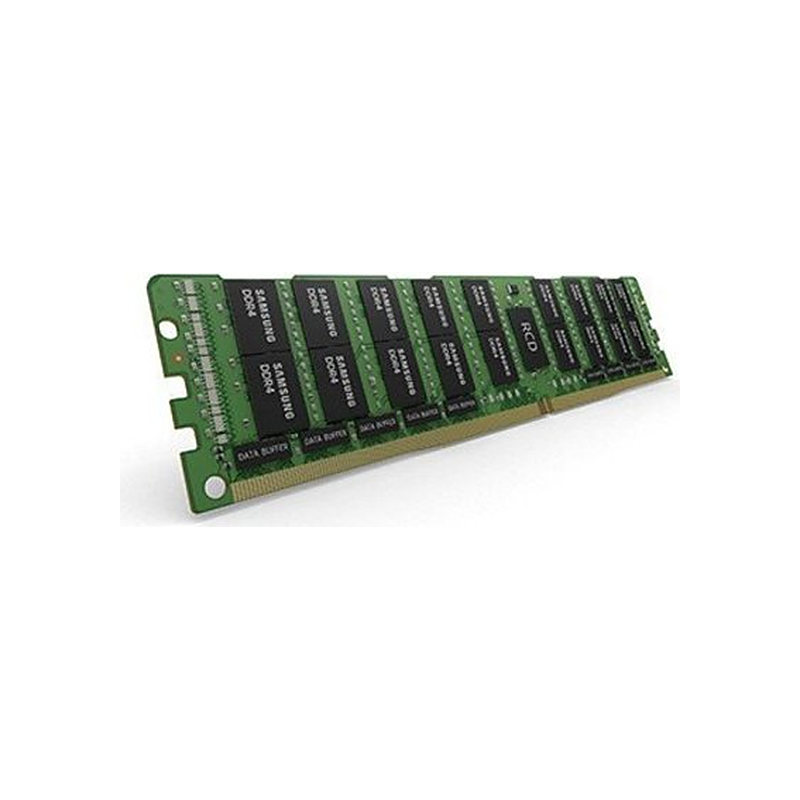
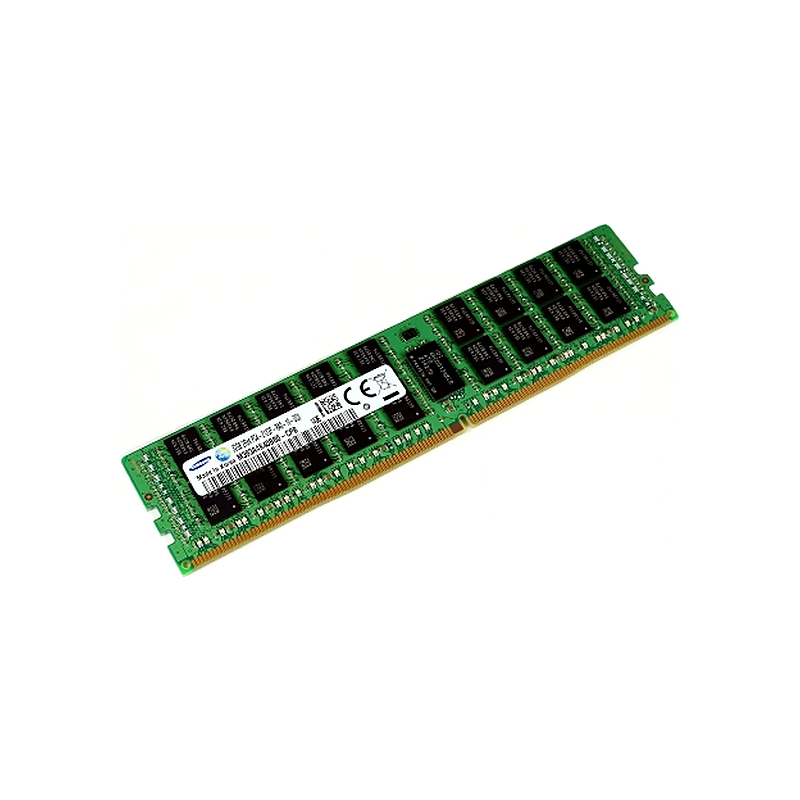
Samsung 16GB DDR4-2933 RDIMM 1Rx4 Server Memory (M393A2K40CB2-CVF)
16 GB DDR4-2933 PC4-23400 ECC registered RDIMM, 1Rx4 on eighteen 8 Gb x4 packages, 1.2 V, 288-pin; eleven ordering codes under the M393A2K40CB2 and M393A2K40DB2 revisions
- Part Number
- M393A2K40CB2-CVF
- Brand
- Samsung
- Category
- Server Memory
- Accepted Payments
- T/T Bank Transfer PayPal Western Union
Technical Specifications
| Capacity | 16 GB |
|---|---|
| Memory Type | DDR4 |
| Speed | 2933 MT/s |
| Form Factor | RDIMM |
| Rank | 1Rx4 |
| ECC | ECC |
| Voltage | 1.2 V |
| Module Height | Standard |
| Condition | New · Used |
Frequently Asked Questions
Samsung 16 GB DDR4-2933 ECC registered RDIMM at standard height, one rank of eighteen x4 devices on a 288-pin board at 1.2 V. PC4-23400 at CAS latency 21, 14.32 ns at the 1,466.5 MHz clock, and 23.4 GB/s peak per 64-bit channel.
2,933 is the odd bin of DDR4. It is not a doubling of anything, it does not sit on the ladder at an even spacing, and no server generation before Cascade Lake rated it as a native clock. It exists because one platform family asked for it, which makes a module rated at it a platform-matching purchase rather than a general upgrade — and that framing is most of what decides whether it is the right buy.
Two die revisions carry it, M393A2K40CB2 and M393A2K40DB2, with five and six ordering codes respectively. Eleven codes in one table at the foot of the page, one set of specifications above them.
Technical specifications
| Part number | M393A2K40CB2-CVF and M393A2K40DB2-CVF — two revisions of one module, with the eleven ordering codes listed under Ordering codes (catalogue codes M393A2K40CB2 and M393A2K40DB2) |
|---|---|
| Capacity | 16 GB per module, single module |
| Organisation | 1Rx4 — one rank of eighteen x4 devices at 8 Gb each, eighteen packages carrying 128 Gb of data plus the eight check bits that ride with every 64-bit transfer; 2G x 72 at module level |
| Speed | DDR4-2933, PC4-23400, 2,933 MT/s, 23.4 GB/s peak per 64-bit channel |
| Timings | CL21 at 1,466.5 MHz, 14.32 ns; JEDEC 2933 bin |
| Voltage | 1.2 V nominal |
| Form factor | 288-pin RDIMM at standard height, 31.25 mm, bare PCB with no heatspreader |
| Register | On-module register buffers the command and address bus, so the board has to accept registered memory |
| Error handling | ECC across the 64-bit data path with x4 granularity, which is what allows a failing device to be retired rather than tolerated |
| Manufacture | Samsung; assembly site and date code vary by production run and are printed on the module rather than fixed by the part number |
| Condition | New and tested pulls, both stocked |
What the part number encodes
Compatibility is settled inside the part number. The label adds batch detail around it, and confusing the two is how a 2,933 module ends up ordered for a machine that will only ever run it at 2,666.
| Printed as | Means | Why it matters at purchase |
|---|---|---|
| M393 | Standard-height registered module | The 31.25 mm board; the low-profile version of this capacity carries M392 |
| 2K | Sixteen-gigabyte class on 8 Gb devices | Fixes capacity and device density together, which is why eighteen packages reach sixteen gigabytes |
| 40 | x4 device width | The width that gives chipkill granularity, and the reason a rank here is eighteen devices rather than nine |
| 1Rx4 as printed on most listings | Single rank, x4 devices | One rank against a channel budget, which is the whole argument for this build at this clock |
| PC4-23400 | DDR4-2933, 23.4 GB/s per channel | The odd bin of the family; it does not follow from the neighbouring grades by any rule of thumb |
| -R | Registered, not unbuffered | A different electrical interface from an unbuffered module of the same capacity, and it will not train in that slot |
| CB2 / DB2 | Successive die revisions of one design | Records which silicon generation built the assembly; the same 8 Gb family appears as BB1 and CB1 at 2,400 |
| CVF | The 2,933 speed block | Sits next to the 3,200 block in the same family and is not the same clock; the letters have to be checked, not inferred |
| BY, CO, CQ … B0 | Ordering suffix, two characters each | What the purchase order quotes; the tail sets differ between the revisions, and two of them mix letters with a zero |
| YYWW | Date code, year and week | The only service history a pull carries, and the first field to read when judging remaining life |
The bin that only one generation rated
DDR4 clocks in the common server set run 2,133, 2,400, 2,666, 2,933 and 3,200. The first three were the progression of the first Scalable generation, 2,933 arrived with the refresh, and 3,200 belongs to the generation after it. Because 2,933 came in the middle of a platform cycle rather than at the start of one, it was never the clock that a broad set of boards was designed around, and a module rated at it spends most of its life either matched to that one generation or capped by something else.
That has a practical consequence for buying. On a board whose native ceiling is 2,666, this module runs at 2,666 and the price difference between the grades buys nothing. On a board that goes to 3,200, the module caps the channel at 2,933 and the platform's headroom goes unused. Only on a machine rated 2,933 does the label mean what it says, and that is a question about the machine, not about the module.
Sixteen gigabytes, one rank, and the ceiling at two modules per channel
The rank budget is tighter at this clock than at any of the lower ones. Most boards accept two ranks per channel at label speed and ease back to 2,666 once four ranks are populated, so two modules of this part — two ranks in total — is the arrangement that keeps 2,933. Eight channels at two modules is 256 GB; twelve channels is 384 GB, both at two ranks per channel.
Sixteen gigabytes per slot is also the top of the ladder for a plain registered build. Reaching 32 GB per slot at this clock means 2Rx4 modules, which double the rank count and put four ranks in a two-module channel, and that is exactly the population where the clock is surrendered. Going past it without surrendering means load-reduced modules, which change the electrical topology and the price bracket rather than the module count.
So this part sits at a specific point: the largest single-rank module at the highest clock a typical two-module channel will still hold. Below it, 2,666 is cheaper and nearly as fast. Above it, the build stops being a plain RDIMM build.
Reading the label against the platform
DDR4 takes the lower of the module rating and the platform rating, and the result is reported rather than negotiated. On a 2,400 platform this module runs at 2,400; on 2,666 it runs at 2,666; on 2,933 it runs at label speed; on 3,200 it runs at 2,933. Nothing needs setting and nothing is at risk in any of the four cases, but three of them mean the 2,933 premium was not collected.
The check takes one command after assembly, reading the configured speed the operating system reports. Doing it once per build is cheaper than discovering a year later that a fleet of 2,933 modules has been running at 2,666 since installation.
Which platforms run these at 2,933
Three catalogue pages mark the cases, one native and two where the module sets the ceiling:
- Xeon Platinum 8260 is rated 2,933, which is the pairing this grade was built for and the only one of the three where the label is collected in full.
- Xeon Gold 6230 is also rated 2,933 at one module per channel, so the same module runs at label speed with a smaller core count beside it.
- Xeon Gold 6338 is rated 3,200 and will run this module at 2,933, leaving the platform's extra step unused by design.
In all three the module trains without configuration. What differs is only how much of the number on the label the machine is willing to report.
Ordering codes, two revisions, and what to check at goods-in
Eleven codes carry this module: five under M393A2K40CB2 and six under M393A2K40DB2. The family code fixes height class, density, device width and revision, CVF fixes the 2,933 speed block, and the last two characters name the build. Every tail is two characters, and inside one family a tail names exactly one build.
The two families do not share a tail set. CB2 is stocked under BY, CO, BQ and CQ; DB2 under BY, CQ, GQ, GY and B0. Only BY and CQ exist in both, so a tail cannot be carried across the revision letters without checking that it was issued under the other. Two of these tails also mix characters that read alike: CO ends in the letter O, B0 ends in the digit zero. Both are real builds, and a transcription that swaps them names an order that looks right and is not.
On the revisions themselves: Samsung lists both as sixteen gigabytes of DDR4-2933 at 1.2 V in the 1R x 4 organisation of eighteen 8 Gb devices, and marks both end of life. The letters record successive silicon generations of one raw card, not a change in capability, and either runs beside the other in a channel.
| Code | Build | Build tail | Condition | Quote |
|---|---|---|---|---|
| M393A2K40CB2 | CB2 catalogue | Family code without a speed block; the CB2 build listed here is the PC4-23400 / 2,933 MT/s one | New / used | Enquire |
| M393A2K40CB2-CVF | CB2 | Base code, no suffix appended | New / used | Enquire |
| M393A2K40CB2-CVFBY | CB2 | BY | New / used | Enquire |
| M393A2K40CB2-CVFCO | CB2 | CO — letter O | New / used | Enquire |
| M393A2K40CB2-CVFBQ | CB2 | BQ | New / used | Enquire |
| M393A2K40CB2-CVFCQ | CB2 | CQ | New / used | Enquire |
| M393A2K40DB2 | DB2 catalogue | Family code without a speed block; the DB2 build listed here is the PC4-23400 / 2,933 MT/s one | New / used | Enquire |
| M393A2K40DB2-CVF | DB2 | Base code, no suffix appended | New / used | Enquire |
| M393A2K40DB2-CVFBY | DB2 | BY | New / used | Enquire |
| M393A2K40DB2-CVFCQ | DB2 | CQ | New / used | Enquire |
| M393A2K40DB2-CVFGQ | DB2 | GQ | New / used | Enquire |
| M393A2K40DB2-CVFGY | DB2 | GY | New / used | Enquire |
| M393A2K40DB2-CVFB0 | DB2 | B0 — digit zero | New / used | Enquire |
- CVF is 2,933, not 3,200. The two blocks sit beside each other in the same family; a quote that names capacity and brand has not settled which clock ships.
- Tails do not cross revisions by default. CO exists only under CB2 and GQ, GY and B0 only under DB2, so read the pair rather than the tail alone.
- CO is a letter, B0 is a zero. Both are orderable builds in this catalogue and they differ by a single glyph.
- Read the date code on pulls. Year and week in YYWW, the field that says most about how much service life has already been spent.
Warranty, lead time and purchasing
Cover runs for one year from dispatch on every module that leaves here, whether it was bought new or as a tested pull, and it is logged against the batch and the ordering code so that a claim does not need the invoice. Pulls are screened as matched sets and the screening sheet is packed with them. Stock on the shelf ships in three to seven working days with tracking, and the minimum order is two modules.
The line is quoted rather than priced, because two conditions, eleven codes and a quantity-sensitive per-piece figure make a printed number misleading. Send the code, the quantity, the condition and the platform, and the answer comes back the same working day.
Get Pricing For This Part
Tell us who you are — we reply within one working day with a firm quote, stock status and lead time. Volume discounts available.
Related Products
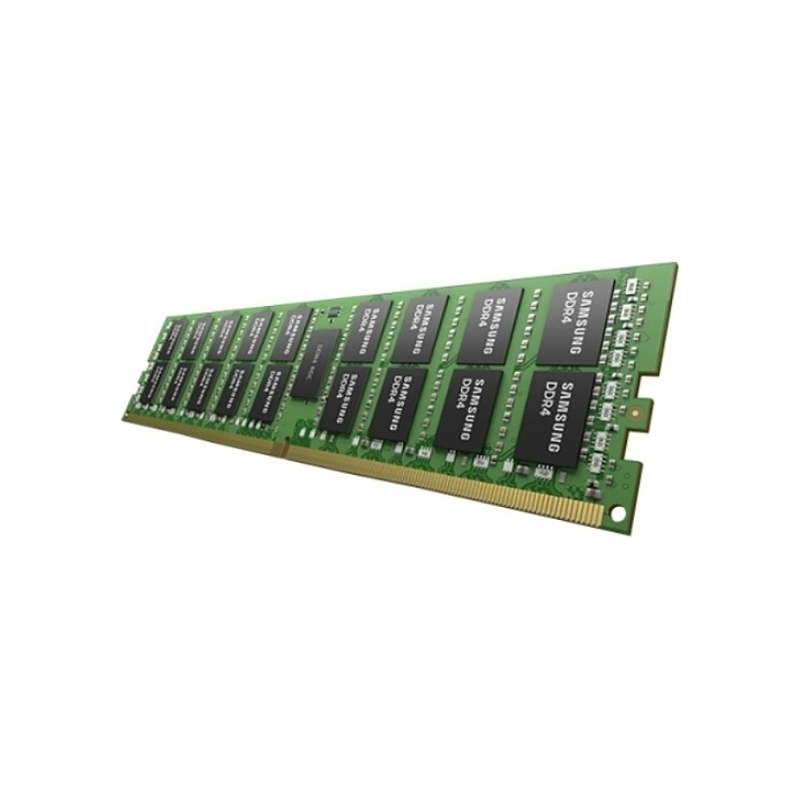
16 GB DDR4-2933 PC4-23400 ECC registered RDIMM, 2Rx8 on eighteen 8 Gb x8 packages, 1.2 V, 288-pin; six ordering codes under M393A2K43CB2-CVF with BY, CO, BQ, C0 and GQ tails
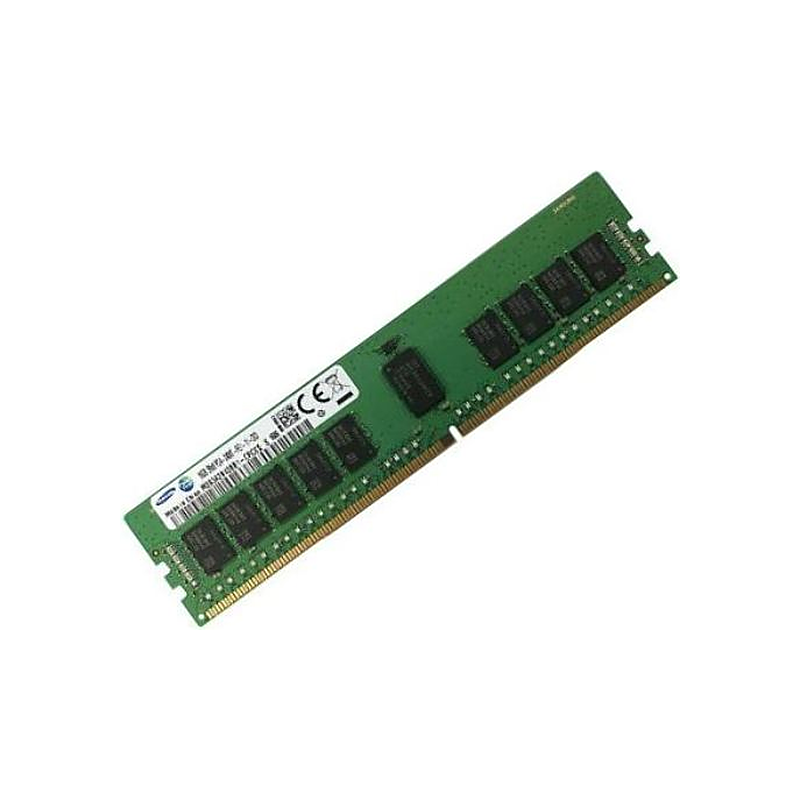
16 GB DDR4-2400 PC4-19200 ECC registered RDIMM, 2Rx8 on eighteen 8 Gb x8 packages, 1.2 V, 288-pin; eighteen ordering codes under the M393A2K43BB1 and M393A2K43CB1 revisions
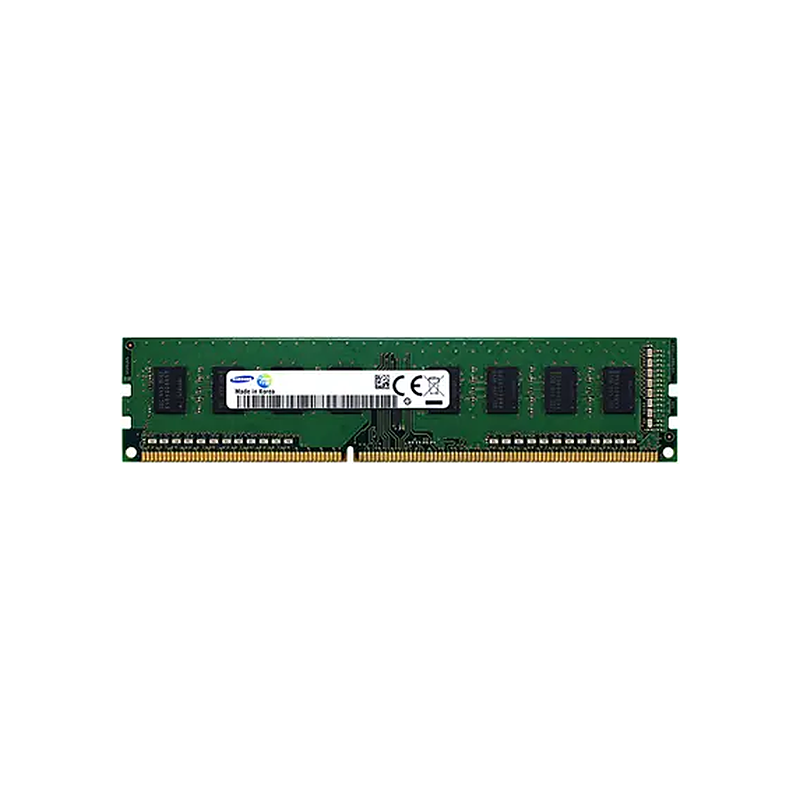
16 GB DDR4-2133 PC4-17000 ECC registered RDIMM, 2Rx8 on eighteen 8 Gb x8 packages, 1.2 V, 288-pin; nine ordering codes from M393A2K43BB1-CPB through the CPBQ tail
16 GB DDR4-2666 PC4-21300 ECC registered RDIMM, 2Rx8 on eighteen 8 Gb x8 packages, 1.2 V, 288-pin; six ordering codes under M393A2K43BB1-CTD with 6Q, 6Y, 7Q, 7Y and 8Q tails