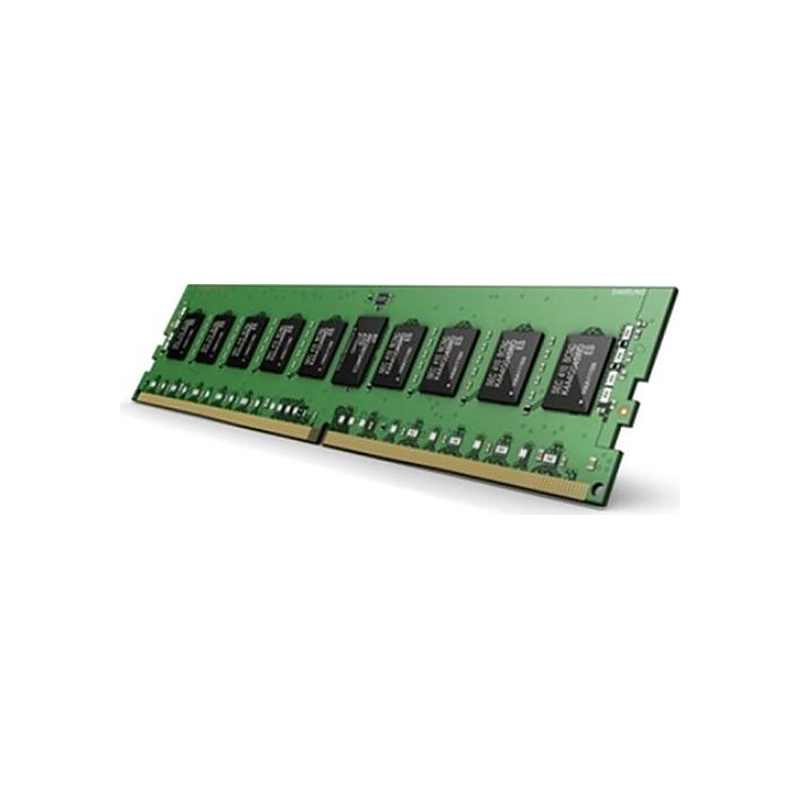
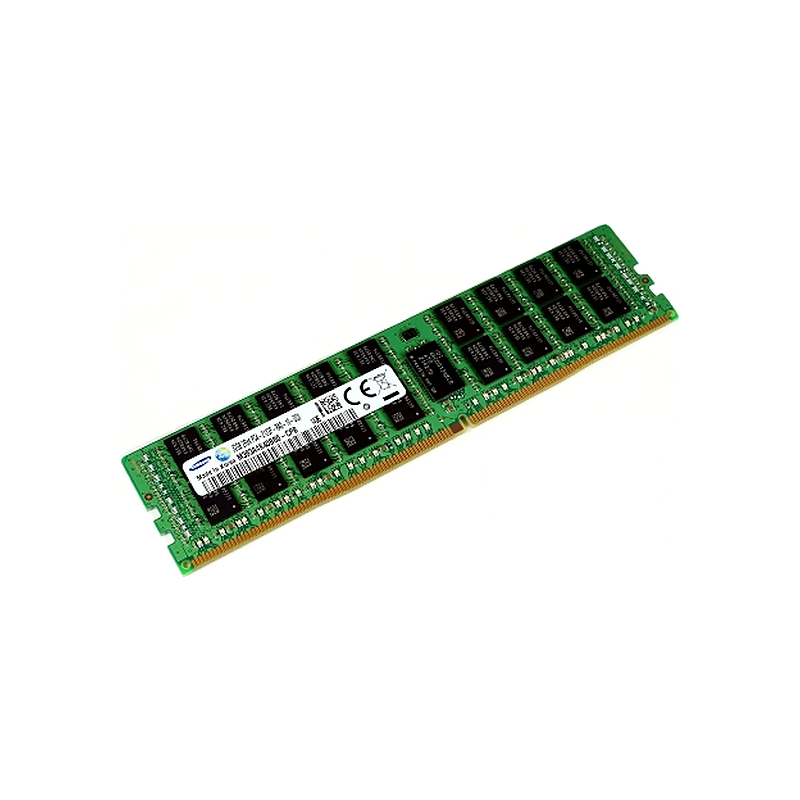
Samsung 16GB DDR4-2133 RDIMM 2Rx4 Server Memory (M393A2G40DB0-CPB)
16 GB DDR4-2133 PC4-17000 ECC registered RDIMM, 2Rx4, 1.2 V, 288-pin; eighteen ordering codes under the M393A2G40DB0 and M393A2G40EB1 revisions
- Part Number
- M393A2G40DB0-CPB
- Brand
- Samsung
- Category
- Server Memory
- Accepted Payments
- T/T Bank Transfer PayPal Western Union
Technical Specifications
| Capacity | 16 GB |
|---|---|
| Memory Type | DDR4 |
| Speed | 2133 MT/s |
| Form Factor | RDIMM |
| Rank | 2Rx4 |
| ECC | ECC |
| Voltage | 1.2 V |
| Module Height | Standard |
| Condition | New · Used |
Frequently Asked Questions
Samsung 16 GB DDR4-2133 ECC registered RDIMM at full standard height, two ranks of x4 devices on a 288-pin board at 1.2 V. PC4-17000 at CAS latency 15, 14.06 ns at the 1,066 MHz clock, and 17.1 GB/s peak per 64-bit channel.
There is a low-profile twin of this module, M392A2G40DM0-CPB, with the same capacity, organisation, speed and timing in a board roughly eleven millimetres shorter. This one is the full 31.25 mm part, which is the version that fits without asking any questions about the chassis.
Eighteen ordering codes ship against it, nine under each of two die revisions, M393A2G40DB0 and M393A2G40EB1. They are in one table at the foot of the page.
Technical specifications
| Part number | M393A2G40DB0-CPB and M393A2G40EB1-CPB — two revisions of one module, with the eighteen ordering codes listed under Ordering codes (catalogue codes M393A2G40DB0 and M393A2G40EB1) |
|---|---|
| Capacity | 16 GB per module, single module |
| Organisation | 2Rx4 — two ranks of eighteen x4 devices, thirty-six 4 Gb packages on the two faces of the board, 144 Gb of silicon carrying 128 Gb of data plus its check bits |
| Speed | DDR4-2133, PC4-17000, 2,133 MT/s, 17.1 GB/s peak per 64-bit channel |
| Timings | CL15 at 1,066 MHz, 14.06 ns; JEDEC 2133P bin |
| Voltage | 1.2 V nominal |
| Form factor | 288-pin RDIMM at standard height, 31.25 mm, bare PCB with no heatspreader |
| Register | On-module register buffers the command and address bus, so the module needs a controller that supports registered memory |
| Error handling | ECC across the 64-bit data path, plus parity on the registered command and address path |
| Manufacture | Samsung; assembly site and date code vary by production run and are printed on the module, not fixed by the part number |
| Condition | New and tested pulls, both stocked |
Reading the label, field by field
Two characters near the front of the code decide most of what happens at installation. The rest describes the batch. The table keeps the two apart so a correct part number does not end up shipping from the wrong bin.
| Printed as | Means | Why it decides a purchase |
|---|---|---|
| M393 | Standard-height registered module | The default height at 31.25 mm; the low-profile twin of this part carries M392 instead, and the difference is eleven millimetres of clearance |
| 16GB | Capacity of this one module | Sets the value of a slot, and on an eight-channel board it is the difference between a 128 GB machine and a 64 GB one |
| 2Rx4 | Two ranks, x4 device width | Thirty-six packages across two 72-bit paths; rank count per channel is what the population tables actually limit |
| PC4-17000P | DDR4-2133, bin P, which is CL15 | The bin letter is the latency grade; a listing that names only PC4-17000 has left the timing unspecified |
| -R | Registered, not unbuffered | An unbuffered module of the same capacity looks the same from above and will not train in a registered board |
| DB0 / EB1 | Two die revisions of one design | Both are specified identically by Samsung; the block records which component generation the board was built from |
| CPB0 … CPBQ | Build suffix after the speed block, one to three characters | What a purchase order quotes. The suffixes here are not all one length, so copy the string rather than retyping it |
| SPD revision | Two-digit JEDEC SPD revision | Old firmware on a 2,133 board reads early revisions conservatively, which shows up as a derate rather than an error |
| YYWW | Date code, year and week | The only service record a pull carries, and the field that matters most when the stock has been in a live chassis |
Standard height is the default, and that is the point
Almost every 2U and 4U chassis, every tower, and every board that is not squeezed against a lid will take this module without a drawing to check. That is not a technical advantage so much as an operational one, and it matters more than it sounds: a standard-height part is interchangeable across a mixed fleet, sits in the same spare-parts bin as everything else, and does not create a second stock line.
It also has more board area, and board area is what spreads heat. Thirty-six devices on a full-height module have more copper and more surface per package than the same thirty-six on a low-profile board, so at sustained load the standard part runs cooler for the same current. At 2,133 the margin is generous either way, but in a hot chassis the difference is real and it is the reason the standard height is still the default choice for anything that is not space-constrained.
The one thing this module cannot do is go where the low-profile part was specified. If a machine shipped with M392 modules, the obstruction above the slot is still there, and a 31.25 mm board will not clear it however electrically identical it is. Check the height class before the price, not after.
Thirty-six devices, and what sixteen gigabytes buys
Eighteen x4 packages fill one 72-bit rank because each supplies four bits, so two ranks is thirty-six packages, eighteen on each face of the board. That is how sixteen gigabytes is built from 4 Gb silicon, and it is the same construction the low-profile version uses.
The count is what the controller budgets against. This module is two ranks, so two per channel is four and three would be six — past the point where a 2,133 board starts easing the clock. Where the slot count is large enough to fill only one module per channel, the rank cost disappears and the density is free.
The capacity maths is the argument for the part. Eight slots is 128 GB, twelve is 192 GB, sixteen is 256 GB. On an eight-channel machine one module per channel is 128 GB, which is the configuration most first-generation DDR4 servers were specified at, and two per channel doubles it while staying inside the rank tables at a single module per rank count of two.
Mixing rules and what breaks first
Height is not an electrical property, so a standard-height module and a low-profile module of the same specification will share a channel happily — the controller has no way to tell them apart. What fails is physical: in a chassis that only has room for one of the two, the taller module simply does not seat.
Rank is the budget that matters. Two of these per channel is four ranks and inside every published table; adding a single-rank module to that channel takes it to five and out of the table. Speed settles downward without a word from the operating system, so one 2,400 module among these runs the whole channel at 2,133.
Revision does not constrain anything. DB0 and EB1 are built from successive component generations of one design and a channel holding one of each runs exactly as designed; a matched set is easier to account for, not more stable. Generation and buffering remain absolute exclusions: DDR3 does not key into the slot, DDR5 uses another notch, and an unbuffered module is electrically wrong for a registered board no matter how similar the outline.
Which platforms run these at rated speed
DDR4-2133 is the slowest of the registered DDR4 grades, which makes it the one every DDR4 registered platform accepts. Where it is the native speed, this module holds its label value with no derating. Three pages in the catalogue are the closest neighbours:
- Xeon E5-2667 v4 is the LGA2011-3 part these were commonly bought for; sixteen modules at 16 GB is 256 GB across two sockets.
- Xeon Silver 4210 is rated 2,400 and runs this module at 2,133, which is the usual arrangement in a first-generation Scalable node.
- Xeon Gold 5218 is rated 2,666, so the channel takes the memory's own ceiling rather than the processor's.
In all three the module is compatible and the clock is its own. The part number describes the module, never the machine.
Ordering codes, two revisions, and what to check at goods-in
Eighteen codes ship against this module, nine under each revision, and the nine suffixes are identical in both families. The first block fixes height class, density, device width and revision; CPB is the 2,133 speed block; what follows is the ordering tail. Lengths vary from one to three characters inside this one family, which is the trap when a code is retyped by hand rather than copied.
On the two revisions: DB0 and EB1 are listed by Samsung with the same density, the same 2R x 4 layout of thirty-six packages and the same 2,133 timing, and no functional difference is published between them. EB1 is the later of the two, which is why it appears more often in the stock that comes out of service.
Worth noting for planning: this generation left Samsung's catalogue years ago, and the retail channel recorded the part as discontinued in 2017. Supply today is undeployed stock and tested pulls, both held here under the same cover and neither described as current production.
| Code | Build | Build tail | Condition | Quote |
|---|---|---|---|---|
| M393A2G40DB0 | DB0 catalogue | Family code without a speed block; the DB0 build listed here is the PC4-17000 / 2,133 MT/s one | New / used | Enquire |
| M393A2G40DB0-CPB | DB0 | Base code, no suffix appended | New / used | Enquire |
| M393A2G40DB0-CPB0 | DB0 | 0 — one character | New / used | Enquire |
| M393A2G40DB0-CPB00 | DB0 | 00 | New / used | Enquire |
| M393A2G40DB0-CPB0Q | DB0 | 0Q | New / used | Enquire |
| M393A2G40DB0-CPB0QS | DB0 | 0QS — three characters | New / used | Enquire |
| M393A2G40DB0-CPB20 | DB0 | 20 | New / used | Enquire |
| M393A2G40DB0-CPB2Q | DB0 | 2Q | New / used | Enquire |
| M393A2G40DB0-CPB3Q | DB0 | 3Q | New / used | Enquire |
| M393A2G40DB0-CPBQ | DB0 | Q — one character | New / used | Enquire |
| M393A2G40EB1 | EB1 catalogue | Family code without a speed block; the EB1 build listed here is the PC4-17000 / 2,133 MT/s one | New / used | Enquire |
| M393A2G40EB1-CPB | EB1 | Base code, no suffix appended | New / used | Enquire |
| M393A2G40EB1-CPB0 | EB1 | 0 — one character | New / used | Enquire |
| M393A2G40EB1-CPB00 | EB1 | 00 | New / used | Enquire |
| M393A2G40EB1-CPB0Q | EB1 | 0Q | New / used | Enquire |
| M393A2G40EB1-CPB0QS | EB1 | 0QS — three characters | New / used | Enquire |
| M393A2G40EB1-CPB20 | EB1 | 20 | New / used | Enquire |
| M393A2G40EB1-CPB2Q | EB1 | 2Q | New / used | Enquire |
| M393A2G40EB1-CPB3Q | EB1 | 3Q | New / used | Enquire |
| M393A2G40EB1-CPBQ | EB1 | Q — one character | New / used | Enquire |
- M393 for full height, M392 for low profile. The two are electrically interchangeable and mechanically not; the letter after M39 is the whole decision in a slim chassis.
- Copy the tail from the paperwork. Four suffixes are two characters, three are one and one is three; a trimmed code names a part that was never built.
- Count ranks across the channel. Two of these is four ranks; a third module of any rank leaves the published table.
- Either revision satisfies the line. Quote the one the BOM names so the channel reports a single part number at goods-in.
Warranty, lead time and purchasing
Both conditions ship with one year of cover from dispatch, whether the module is new stock or a tested pull, and the cover is recorded against the part number and the batch so a claim does not depend on an invoice surviving. Pulled modules are verified in matched sets before packing and the record ships with the order. Warehouse stock leaves in three to seven working days with tracking issued at dispatch, and the minimum order is two pieces.
Price is quoted rather than printed. Two conditions, eighteen codes and a market that moves on what arrived that week make a page figure wrong more often than useful, so send the code, the quantity, the condition and the platform and the answer comes back the same working day.
Get Pricing For This Part
Tell us who you are — we reply within one working day with a firm quote, stock status and lead time. Volume discounts available.
Related Products
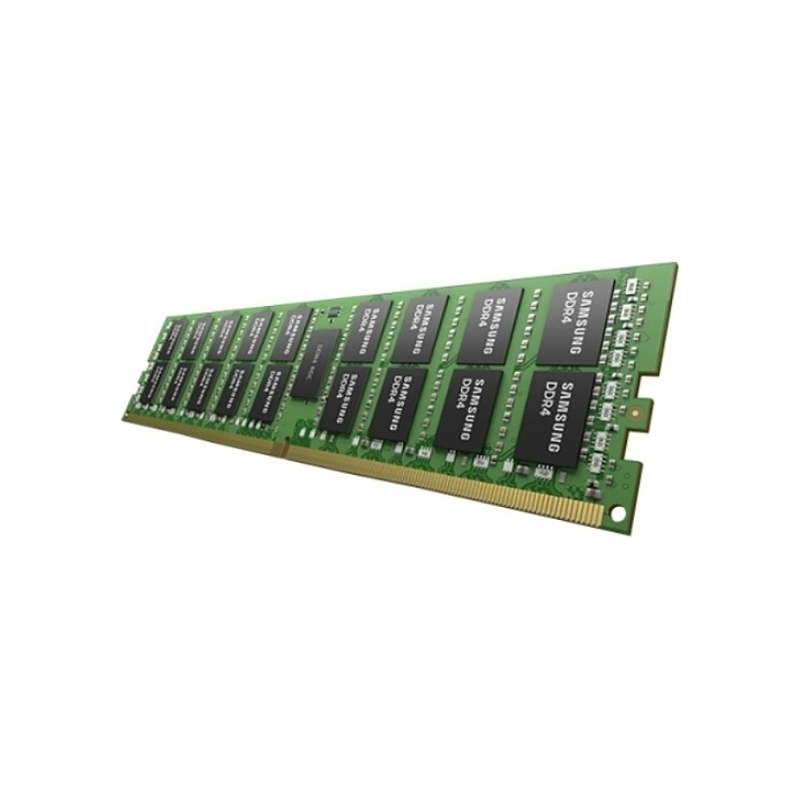
16 GB DDR4-2933 PC4-23400 ECC registered RDIMM, 2Rx8 on eighteen 8 Gb x8 packages, 1.2 V, 288-pin; six ordering codes under M393A2K43CB2-CVF with BY, CO, BQ, C0 and GQ tails
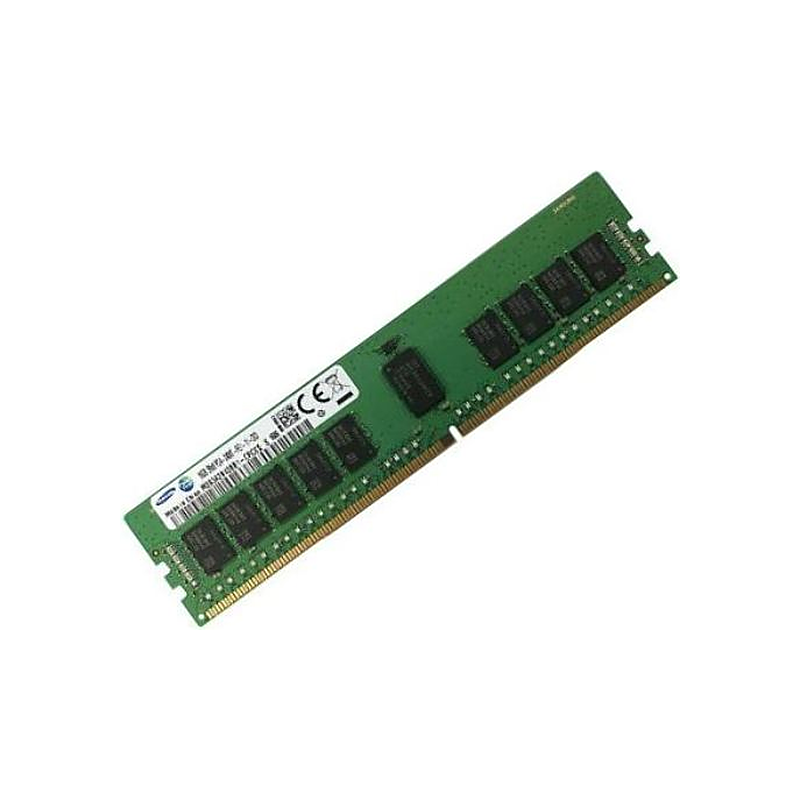
16 GB DDR4-2400 PC4-19200 ECC registered RDIMM, 2Rx8 on eighteen 8 Gb x8 packages, 1.2 V, 288-pin; eighteen ordering codes under the M393A2K43BB1 and M393A2K43CB1 revisions
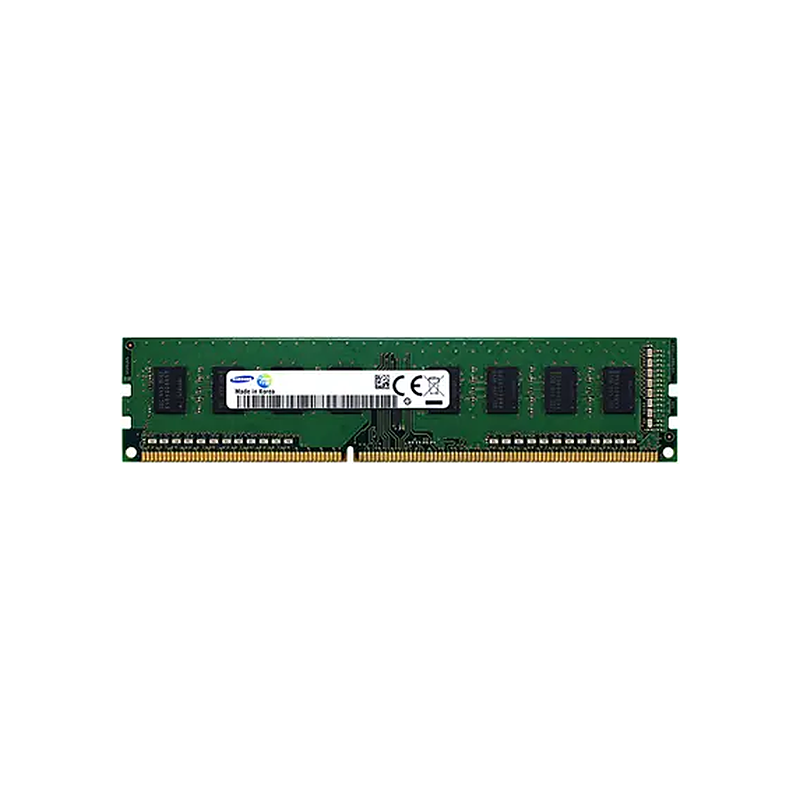
16 GB DDR4-2133 PC4-17000 ECC registered RDIMM, 2Rx8 on eighteen 8 Gb x8 packages, 1.2 V, 288-pin; nine ordering codes from M393A2K43BB1-CPB through the CPBQ tail
16 GB DDR4-2666 PC4-21300 ECC registered RDIMM, 2Rx8 on eighteen 8 Gb x8 packages, 1.2 V, 288-pin; six ordering codes under M393A2K43BB1-CTD with 6Q, 6Y, 7Q, 7Y and 8Q tails