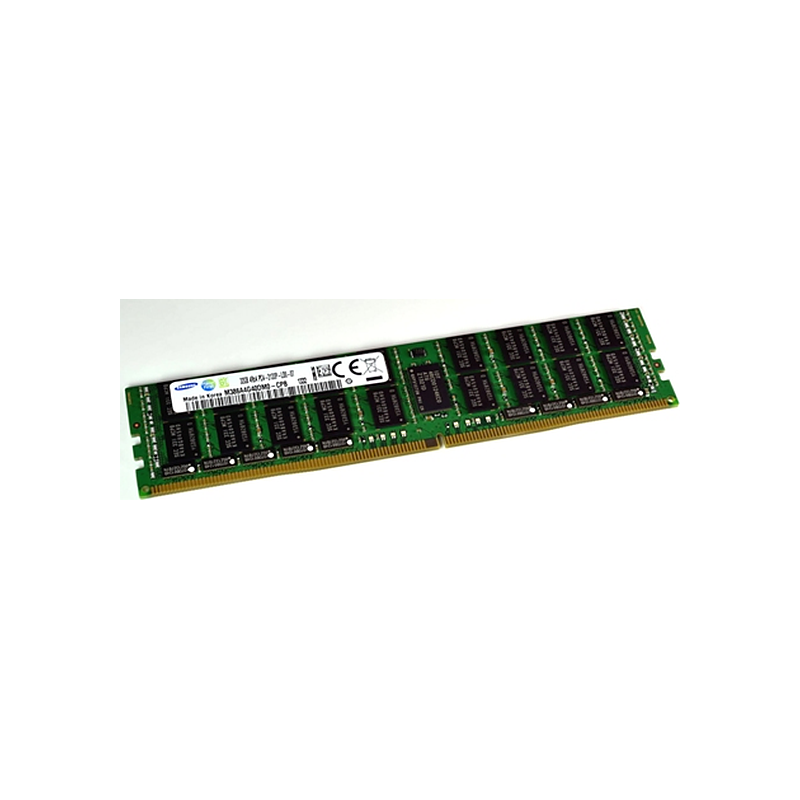
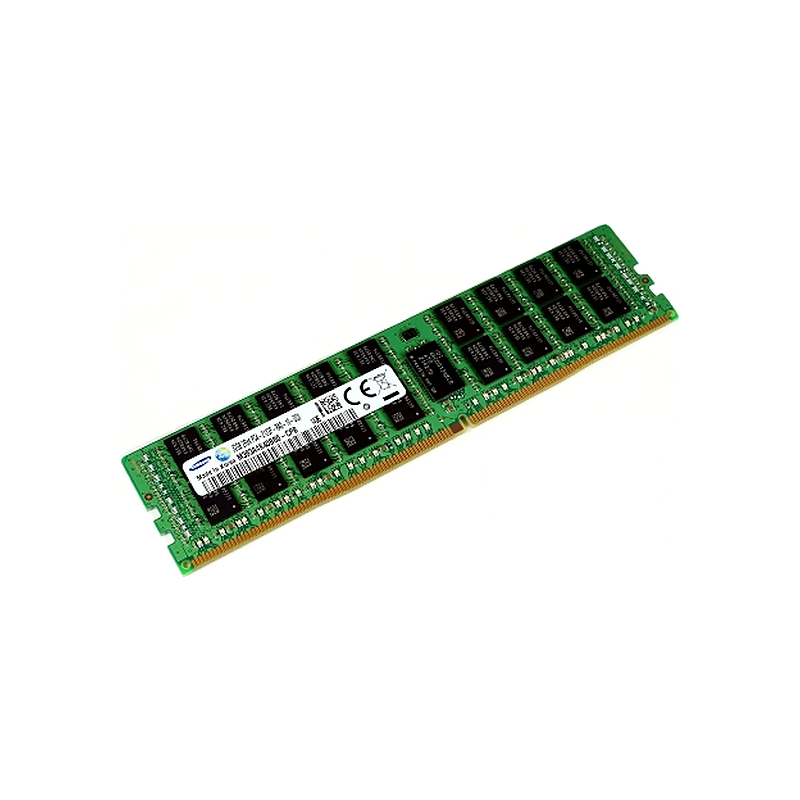
Samsung 16GB DDR4-2400 RDIMM 2Rx4 Server Memory (M393A2G40DB1-CRC)
16 GB DDR4-2400 PC4-19200 ECC registered RDIMM, 2Rx4, 1.2 V, 288-pin; eighteen ordering codes under the M393A2G40DB1 and M393A2G40EB1 revisions
- Part Number
- M393A2G40DB1-CRC
- Brand
- Samsung
- Category
- Server Memory
- Accepted Payments
- T/T Bank Transfer PayPal Western Union
Technical Specifications
| Capacity | 16 GB |
|---|---|
| Memory Type | DDR4 |
| Speed | 2400 MT/s |
| Form Factor | RDIMM |
| Rank | 2Rx4 |
| ECC | ECC |
| Voltage | 1.2 V |
| Module Height | Standard |
| Condition | New · Used |
Frequently Asked Questions
Samsung 16 GB DDR4-2400 ECC registered RDIMM, two ranks of x4 devices at standard height on a 288-pin board at 1.2 V. PC4-19200 at CAS latency 17, 14.17 ns at the 1,200 MHz clock, and 19.2 GB/s peak per 64-bit channel.
Sixteen gigabytes in a 2Rx4 build is the capacity that filled the second generation of DDR4 servers, and 2,400 is the clock most of them ran it at. That makes this the ordinary case rather than a special one: eight channels of one module each is 128 GB at label speed, and that is the shape most of these modules were bought for.
Eighteen ordering codes carry it, split across two die revisions, M393A2G40DB1 and M393A2G40EB1. They sit in one table at the foot of the page.
Technical specifications
| Part number | M393A2G40DB1-CRC and M393A2G40EB1-CRC — two revisions of one module, with the eighteen ordering codes listed under Ordering codes (catalogue codes M393A2G40DB1 and M393A2G40EB1) |
|---|---|
| Capacity | 16 GB per module, single module |
| Organisation | 2Rx4 — two ranks of eighteen x4 devices, thirty-six 4 Gb packages, 144 Gb of silicon for 128 Gb of data plus its check bits |
| Speed | DDR4-2400, PC4-19200, 2,400 MT/s, 19.2 GB/s peak per 64-bit channel |
| Timings | CL17 at 1,200 MHz, 14.17 ns; JEDEC 2400T bin |
| Voltage | 1.2 V nominal |
| Form factor | 288-pin RDIMM at standard height, 31.25 mm, bare PCB with no heatspreader |
| Register | On-module register buffers the command and address bus, so the module needs a controller that supports registered memory |
| Error handling | ECC across the 64-bit data path, plus parity on the registered command and address path |
| Manufacture | Samsung; assembly site and date code vary by production run and are printed on the module, not fixed by the part number |
| Condition | New and tested pulls, both stocked |
Reading the label, field by field
Everything that decides whether a module will work is inside the part number, and everything that describes the batch sits outside it. Reading one line of a label is enough once the two categories are kept apart.
| Printed as | Means | Why it decides a purchase |
|---|---|---|
| M393 | Standard-height registered module | 31.25 mm, the height that fits any chassis without a drawing check; M392 would be the low-profile build instead |
| 16GB | Capacity of this one module | At one module per channel on an eight-channel board it is a 128 GB machine, which is the configuration this part was bought for |
| 2Rx4 | Two ranks, x4 device width | Two ranks per module is what a population guide counts, and at two modules per channel that is four ranks in the channel |
| PC4-19200T | DDR4-2400, bin T, which is CL17 | The letter is the timing grade, not a vendor mark; a listing without it has named a clock and left the latency open |
| -R | Registered, not unbuffered | Same outline as an unbuffered part, and it will not train in a board wired for a register |
| DB1 / EB1 | Successive die revisions of the same design | Both are listed identically by Samsung; the letter records which component generation the board was built from |
| CRC00 … CRC4Y | Two-character ordering suffix | The field a BOM or an invoice names, and the only part of the code that varies inside one revision |
| SPD revision | Two-digit JEDEC SPD revision | Early firmware reads old revisions conservatively, which shows up as a derate rather than an error |
| YYWW | Date code, year and week | The only service record a pull carries, and the fastest way to judge how much life is already spent |
Sixteen gigabytes in two x4 ranks
Two ranks of eighteen packages is how sixteen gigabytes gets built from 4 Gb silicon at this width. Each rank is 72 bits, each x4 device supplies four of them, so eighteen packages complete a rank and thirty-six complete the module — 144 Gb of silicon carrying the 128 Gb of data plus its check bits.
That construction is why this capacity is offered at 2Rx4 rather than 1Rx8: a single rank of 8 GB is the most an x8 nine-package rank reaches at this die density, so anything denser moves to two ranks and narrower devices. The two-rank form is not a compromise, it is the only route to the number on the label.
In exchange the module brings interleaving. Two ranks give the controller twice the open banks per module to schedule across, which is worth a little in mixed read and write streams — and costs a little in the rank budget, which is the subject of the next section.
Where 2,400 changes the population maths
The rank budget and the clock interact. At one module per channel this module is two ranks, and every published guide allows that at the full 2,400. At two modules per channel the channel carries four ranks, and a good number of boards respond by easing the clock to 2,133 without telling anyone; the drop only appears in a benchmark or a firmware log.
That is the difference between this page and its 2,133 sibling. At 2,133 a four-rank channel usually holds its speed, so the second module is close to free. At 2,400 the margin is thinner, and a full population on a board with a conservative table can give back the whole reason for buying the faster grade. Check the platform's rank table before filling every slot.
The bandwidth step itself is modest: 19.2 GB/s against 17.1, about twelve per cent, with absolute latency almost unchanged at 14.17 ns against 14.06. That is a fair trade for throughput-bound work and a poor one for a machine that will derate to 2,133 the moment the channel is full.
Mixing rules and what breaks first
Speed mixes down silently. A 2,133 module in this channel pulls the whole channel to 2,133 and nothing in the operating system reports it. On a two-rank module that matters more than usual, because the reason for choosing this grade was the clock rather than the capacity.
Rank is the budget. Two of these per channel is four ranks; add a single-rank module and the channel carries five, outside every published table. Where a channel has to be mixed, match the rank first and the revision second — capacity can differ without consequence, rank cannot.
Revision is the freest variable of the three. DB1 and EB1 are the same module on different component generations, so a channel holding one of each runs normally; the reason to keep a channel on a single revision is bookkeeping and firmware reporting, not signal integrity. Generation and buffering remain hard exclusions: DDR3 will not key into the slot, DDR5 uses another notch, and an unbuffered module is electrically wrong for a registered board whatever it looks like.
Which platforms run these at rated speed
DDR4-2400 is native to the first and second Scalable generations, and accepted at a derate by later parts. Three pages in the catalogue show the three cases:
- Xeon Silver 4210 is rated 2,400, so one module per channel runs at label speed and a second module is the point to check the guide.
- Xeon Gold 5218 is rated 2,666 and takes the module at 2,400 with nothing lost, which makes it the safest pairing for this part.
- Xeon Gold 6338 is rated 3,200 on LGA4189, so the channel runs at this module's own ceiling rather than the processor's.
None of the three needs configuring for it. Read a 2,400 part number as a statement about the module, not about the machine.
Ordering codes, two revisions, and what to check at goods-in
Eighteen codes ship against this module, nine under each revision, and the nine suffixes are identical across the two families. M393A2G40DB1 and M393A2G40EB1 fix height class, density, device width and revision; CRC is the 2,400 speed block; the last two characters are what the paperwork names. Because the suffix set repeats exactly, a code read off one family can be transposed to the other without ambiguity.
On the two revisions: Samsung lists both with the same density, the same 2R x 4 organisation of thirty-six packages, the same 2,400 clock and the same 1.2 V supply, and publishes no functional difference between them. They are successive component generations of one design, which is why they are sold here as one line with two build families rather than two products.
Availability: the EB1 revision is marked end of life on Samsung's own product page. That describes the catalogue rather than the hardware — the line has moved to the secondary market, where supply is undeployed stock plus tested pulls from retired fleets. Both are held here under the same cover and neither is offered as current production.
| Code | Build | Build tail | Condition | Quote |
|---|---|---|---|---|
| M393A2G40DB1 | DB1 catalogue | Family code without a speed block; the DB1 build listed here is the PC4-19200 / 2,400 MT/s one | New / used | Enquire |
| M393A2G40DB1-CRC | DB1 | Base code, no suffix appended | New / used | Enquire |
| M393A2G40DB1-CRC00 | DB1 | 00 | New / used | Enquire |
| M393A2G40DB1-CRC0Q | DB1 | 0Q | New / used | Enquire |
| M393A2G40DB1-CRC0Y | DB1 | 0Y | New / used | Enquire |
| M393A2G40DB1-CRC30 | DB1 | 30 | New / used | Enquire |
| M393A2G40DB1-CRC3Q | DB1 | 3Q | New / used | Enquire |
| M393A2G40DB1-CRC40 | DB1 | 40 | New / used | Enquire |
| M393A2G40DB1-CRC4Q | DB1 | 4Q | New / used | Enquire |
| M393A2G40DB1-CRC4Y | DB1 | 4Y | New / used | Enquire |
| M393A2G40EB1 | EB1 catalogue | Family code without a speed block; the EB1 build listed here is the PC4-19200 / 2,400 MT/s one | New / used | Enquire |
| M393A2G40EB1-CRC | EB1 | Base code, no suffix appended | New / used | Enquire |
| M393A2G40EB1-CRC00 | EB1 | 00 | New / used | Enquire |
| M393A2G40EB1-CRC0Q | EB1 | 0Q | New / used | Enquire |
| M393A2G40EB1-CRC0Y | EB1 | 0Y | New / used | Enquire |
| M393A2G40EB1-CRC30 | EB1 | 30 | New / used | Enquire |
| M393A2G40EB1-CRC3Q | EB1 | 3Q | New / used | Enquire |
| M393A2G40EB1-CRC40 | EB1 | 40 | New / used | Enquire |
| M393A2G40EB1-CRC4Q | EB1 | 4Q | New / used | Enquire |
| M393A2G40EB1-CRC4Y | EB1 | 4Y | New / used | Enquire |
- CRC is 2,400. The neighbouring speed blocks in this family are other clocks entirely, and the difference is invisible unless the number is checked.
- Every suffix here is two characters. Nine per revision, and the set repeats exactly between DB1 and EB1, so a code transposes cleanly from one family to the other.
- Two ranks per module, two modules per channel, four ranks. That is the population to check against the guide before filling every slot at this clock.
- Quote the revision the BOM names. Either satisfies the line, but matching it avoids a goods-in query and keeps a channel reporting one part number.
Warranty, lead time and purchasing
New stock and tested pulls both carry one year of cover from dispatch, recorded against the part number and the batch so a claim does not rely on an invoice still existing. Pulled modules are checked as matched sets before packing and the test sheet travels with the order. Warehouse stock leaves in three to seven working days with tracking at dispatch, and the minimum order is two pieces.
The page shows no price because the line is quoted per order. Two conditions, eighteen codes and a per-piece number that moves with quantity make a printed figure unreliable, so send the code, the quantity, the condition and the platform and the answer comes back the same working day.
Get Pricing For This Part
Tell us who you are — we reply within one working day with a firm quote, stock status and lead time. Volume discounts available.
Related Products
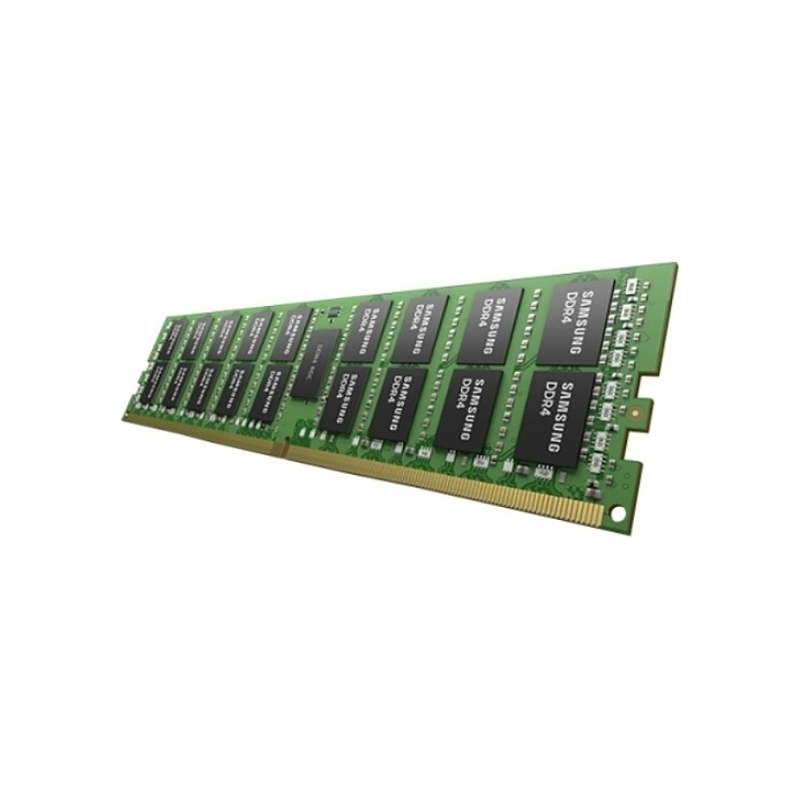
16 GB DDR4-2933 PC4-23400 ECC registered RDIMM, 2Rx8 on eighteen 8 Gb x8 packages, 1.2 V, 288-pin; six ordering codes under M393A2K43CB2-CVF with BY, CO, BQ, C0 and GQ tails
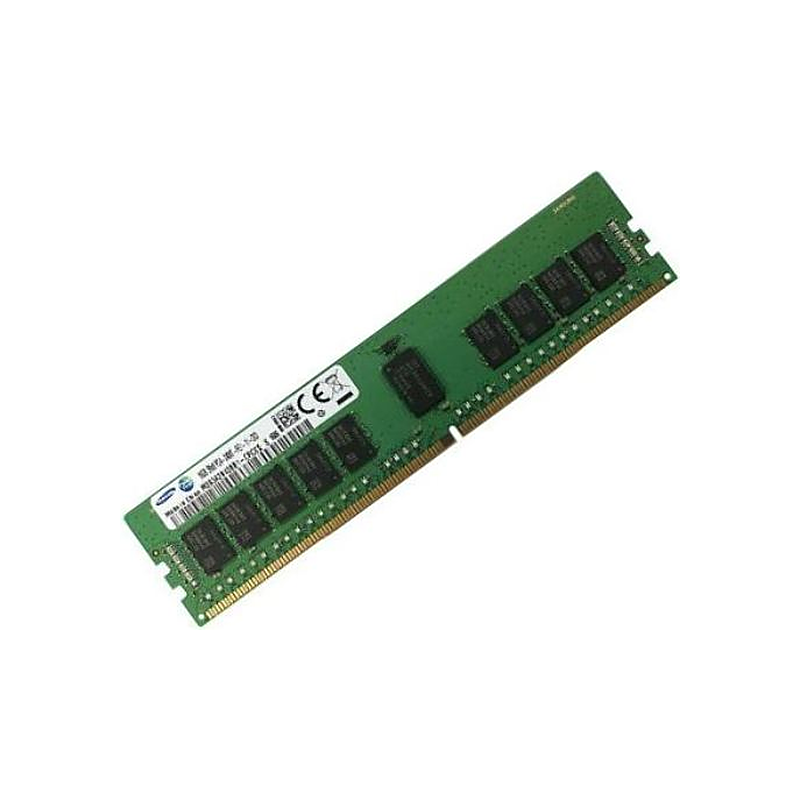
16 GB DDR4-2400 PC4-19200 ECC registered RDIMM, 2Rx8 on eighteen 8 Gb x8 packages, 1.2 V, 288-pin; eighteen ordering codes under the M393A2K43BB1 and M393A2K43CB1 revisions
16 GB DDR4-2133 PC4-17000 ECC registered RDIMM, 2Rx8 on eighteen 8 Gb x8 packages, 1.2 V, 288-pin; nine ordering codes from M393A2K43BB1-CPB through the CPBQ tail
16 GB DDR4-2666 PC4-21300 ECC registered RDIMM, 2Rx8 on eighteen 8 Gb x8 packages, 1.2 V, 288-pin; six ordering codes under M393A2K43BB1-CTD with 6Q, 6Y, 7Q, 7Y and 8Q tails