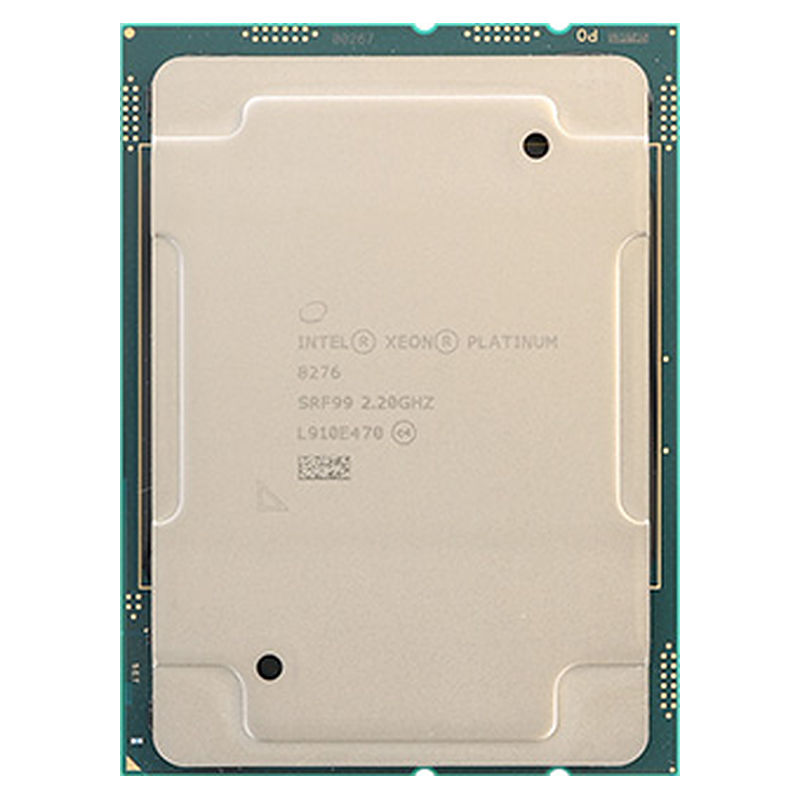
Intel Xeon Platinum 8276 Processor
2.2 GHz / 28 Cores / 56 Threads / 38.5 MB Cache / 165 W
- Part Number
- XEON-PLATINUM-8276
- Brand
- Intel
- Category
- Server Processor
- Accepted Payments
- T/T Bank Transfer PayPal Western Union
Technical Specifications
| Socket | LGA3647 |
|---|---|
| Series | Xeon Platinum |
| Generation | 2nd Gen (Cascade Lake) |
| Cores | 28 |
| Memory Type | DDR4 RDIMM · DDR4 LRDIMM · DDR4 3DS RDIMM |
| Max Memory Speed | 2933 MHz |
| PCIe Version | PCIe 3.0 |
| Lithography | 14 nm |
| Memory Channels | 6 channels |
| Condition | New · Used |
| Threads | 56 |
| Base Frequency | 2.2 GHz |
| Max Turbo Frequency | 4.0 GHz |
| Cache | 38.5 MB |
| TDP | 165 W |
Frequently Asked Questions
Intel Xeon Platinum 8276 — 28 cores and 56 threads at 2.2 GHz base / 4.0 GHz turbo inside a 165 W budget, with 38.5 MB cache, three UPI links, S8S scalability and FCLGA3647 packaging. Supplied from stock with a 1-year warranty.
Twenty-eight cores inside a 165 W budget
Every 28-core Platinum in the 2nd Gen line carries the same die, the same 38.5 MB of shared L3 and the same 4.0 GHz turbo ceiling. What separates them is where the bin sits on the voltage curve, and the 8276 sits low: 2.2 GHz base at 165 W, against the 2.7 GHz and 205 W of the 8280. That 500 MHz of sustained clock is what you trade for 40 W less heat per socket.
The thermal rating reflects the same trade. TCASE is 89 °C on this part, five degrees above the 8280's 84 °C, so a chassis built around two 8276s has a wider margin against inlet temperature and fan-curve headroom than the same chassis running 205 W parts. In dense racks and warm-aisle-limited rooms that margin is often what decides whether a node can be deployed at all, and 2 × 165 W is easier to cool than 2 × 205 W.
Everything else is the Platinum feature set of the generation: three UPI links, S8S scalability up to eight sockets, Optane persistent memory support and Run Sure reliability. Memory is six channels of DDR4-2933 with ECC up to 1 TB per socket; I/O is PCIe 3.0 with 48 lanes; the package is 76.0 mm × 56.5 mm. There is no Speed Select table on this SKU.
Choose it over the 8280 when the workload is core-count-bound but power- or cooling-bound as well — virtualisation hosts, web and application tiers, and scale-up nodes where 28 cores matter more than the last 500 MHz of sustained clock. Choose the 8280 instead when single-thread response time or sustained all-core clock is the constraint.
Plan around the lifecycle: Intel lists the 8276 as Discontinued, with End of Servicing Updates on 30 June 2025. No further microcode or specification updates will be issued and new production has stopped, so tested pulls are the practical supply route for keeping Purley and scale-up platforms in service. Every unit we ship is inspected and load-tested rather than assumed good.
Technical specifications
| Product collection | 2nd Gen Intel Xeon Scalable (Cascade Lake) |
|---|---|
| Processor number / sSpec | 8276 / SRF99 |
| Cores / Threads | 28 / 56 (Hyper-Threading) |
| Base / Max turbo frequency | 2.2 GHz / 4.0 GHz |
| Cache | 38.5 MB |
| TDP | 165 W (TCASE 89 °C) |
| Socket | FCLGA3647 (FC-LGA14B, 76.0 mm × 56.5 mm) |
| Memory | 6 channels DDR4-2933, up to 1 TB per socket, ECC RDIMM / LRDIMM / 3DS RDIMM, Optane persistent memory supported |
| PCI Express | PCIe 3.0, up to 48 lanes |
| Scalability | S8S (up to eight sockets), 3 UPI links |
| Accelerators | DL Boost, AVX-512 (2 FMA units), TSX-NI, VMD, RDT |
| Security & reliability | Run Sure, AES-NI, TXT, MBEC, VT-x / VT-d / EPT, vPro eligible |
| Lithography | 14 nm |
| Launch / Stepping | Q2 2019 / B1 (order code CD8069504195501); Embedded Options not available |
| Lifecycle | Discontinued; End of Servicing Updates 30 June 2025 |
Servers that commonly take this processor
The 8276 fits FCLGA3647 (Purley-generation) boards whose BIOS supports 2nd Gen Xeon Scalable Cascade Lake parts. Because the thermal budget is the reason to pick it, check the platform's cooling rating rather than assuming it: a chassis rated only for 165 W parts is a good match, and one rated for 205 W leaves you headroom.
- Dell PowerEdge R740 / R640, HPE ProLiant DL380 Gen10 / DL360 Gen10 and Lenovo ThinkSystem SR650 / SR630 in 1S and 2S configurations
- Dense virtualisation hosts and web or application tiers, where 28 cores per socket matter more than the top sustained clock
- Four- and eight-socket scale-up systems, where the S8S rating and three UPI links keep the fabric coherent
Confirm the BIOS lists Cascade Lake parts before ordering, and on eight-socket builds check that the whole fabric carries parts with the same UPI configuration.
How it compares with the 8280, the 6258R and the 8260
| Processor | Generation | Cores / Threads | Base / Max turbo | Cache | TDP | Memory support |
|---|---|---|---|---|---|---|
| Xeon Platinum 8380 | 3rd Gen (Ice Lake-SP) | 40 / 80 | 2.3 / 3.4 GHz | 60 MB | 270 W | 8ch DDR4-3200 |
| Xeon Platinum 8280 | 2nd Gen (Cascade Lake) | 28 / 56 | 2.7 / 4.0 GHz | 38.5 MB | 205 W | 6ch DDR4-2933 |
| Xeon Platinum 8276 | 2nd Gen (Cascade Lake) | 28 / 56 | 2.2 / 4.0 GHz | 38.5 MB | 165 W | 6ch DDR4-2933 |
| Xeon Gold 6258R | 2nd Gen (Cascade Lake) | 28 / 56 | 2.7 / 4.0 GHz | 38.5 MB | 205 W | 6ch DDR4-2933 |
| Xeon Platinum 8260 | 2nd Gen (Cascade Lake) | 24 / 48 | 2.4 / 3.9 GHz | 35.75 MB | 165 W | 6ch DDR4-2933 |
Against the 8280 the arithmetic is simple: the same 28 cores, the same 38.5 MB, the same 4.0 GHz turbo and the same 1 TB memory ceiling, but 500 MHz less base clock for 40 W less power and a TCASE ceiling five degrees higher. Nothing is lost in short bursts; what changes is how long all 28 cores hold their clock under a sustained load. The Gold 6258R runs the same 28 cores at the 8280's clocks and power, so the Platinum badge on the 8276 buys the S8S scalability and Run Sure reliability rather than clocks.
Against the 8260 the trade runs the other way. Both sit at 165 W, but the 8276 gives you 4 more cores and 2.75 MB more cache in exchange for 200 MHz less base clock, while gaining 100 MHz at the top. Between the two, more cores at the same thermal budget is usually the better trade for virtualisation density; the 8260 wins only where sustained per-core speed is the whole point. The 40-core Platinum 8380 is the cross-generation step up: 12 more cores, 21.5 MB more cache, eight DDR4-3200 channels and PCIe 4.0, at 100 MHz higher base, 600 MHz lower turbo and 105 W more.
How each processor is tested before it ships
- Visual inspection of the heat spreader, capacitors and substrate on arrival.
- Thermal paste residue cleaned from the IHS; socket contact pads checked under magnification.
- sSpec marking (SRF99) verified against the order line before testing.
- Full-core load test on an FCLGA3647 diagnostic board, confirming rated clocks and cache.
- Memory controller stress pass across all six channels at rated speed, then anti-static packing for dispatch.
Warranty and lead time
Every 8276 carries a 1-year warranty covering defects in workmanship and function; a verified faulty unit is replaced or refunded with return shipping covered. The part is discontinued by Intel, so new units come from remaining tray stock (order code CD8069504195501) and the rest of supply is tested pull units, labelled as such and priced separately. In-stock units normally dispatch within three to seven working days after payment confirmation, with tracking issued at dispatch.
Purchasing and volume enquiries
Pricing is quotation-based rather than fixed. Send the quantity, condition preference (new or tested) and delivery destination, and we reply with a firm quote including current stock and lead time. Volume and project pricing is available for multi-unit orders, and matched sets for multi-socket builds — same sSpec, same stepping — can be quoted on request.
Get Pricing For This Part
Tell us who you are — we reply within one working day with a firm quote, stock status and lead time. Volume discounts available.
Related Products
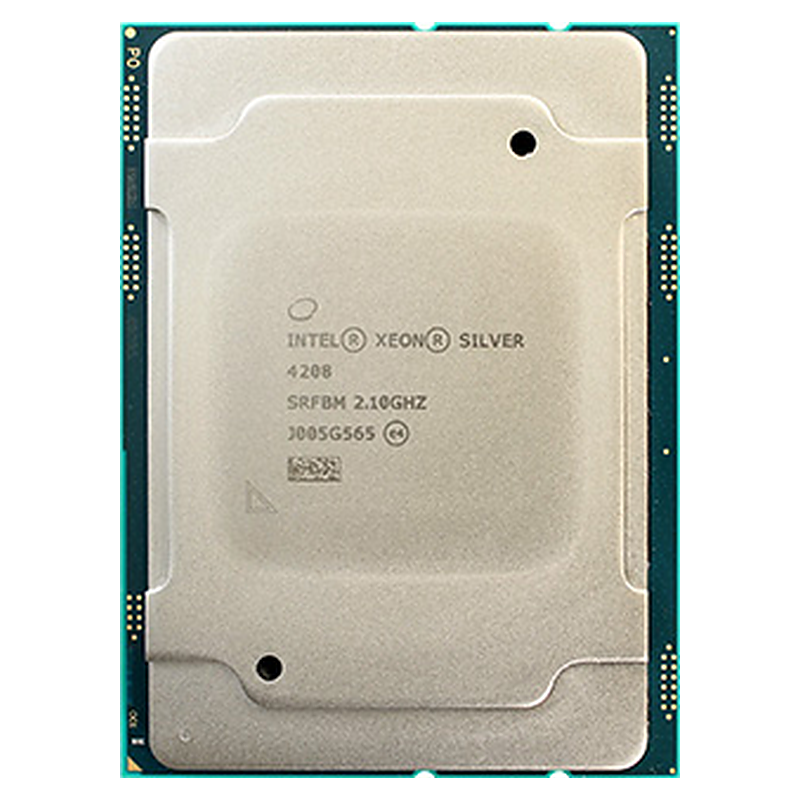
2.1 GHz / 8 Cores / 16 Threads / 11 MB Cache / 85 W / 78 °C TCASE
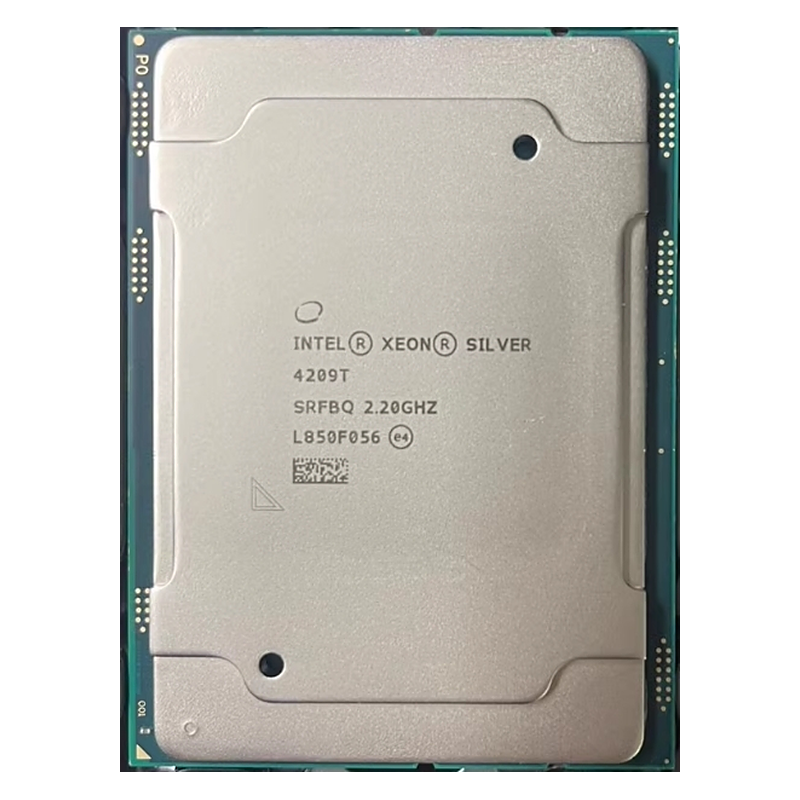
2.2 GHz / 8 Cores / 16 Threads / 11 MB Cache / 70 W / 91 °C TCASE
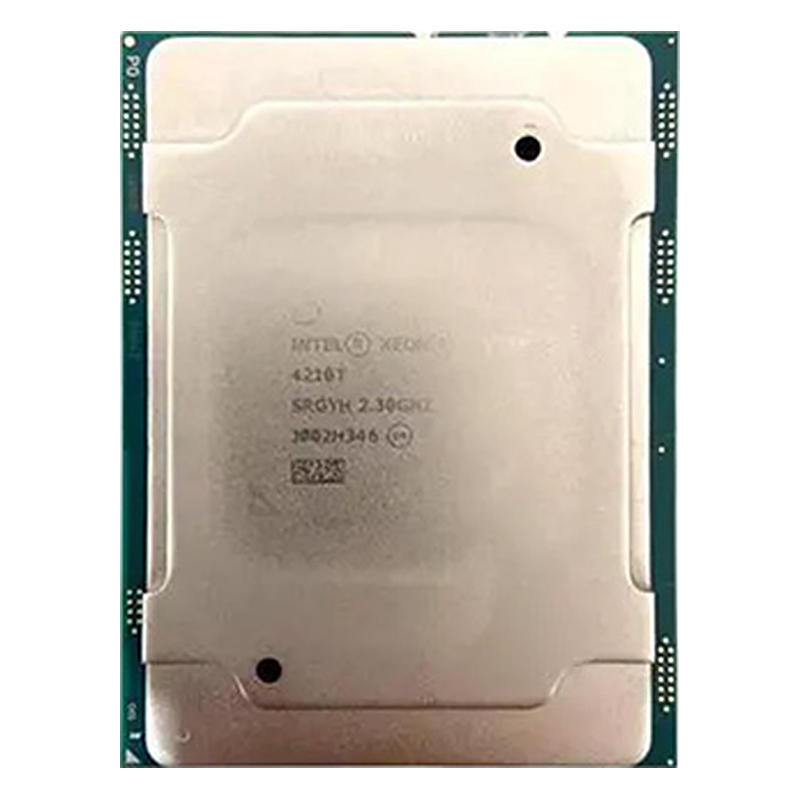
2.3 GHz / 10 Cores / 20 Threads / 13.75 MB Cache / 95 W / 91 °C TCASE
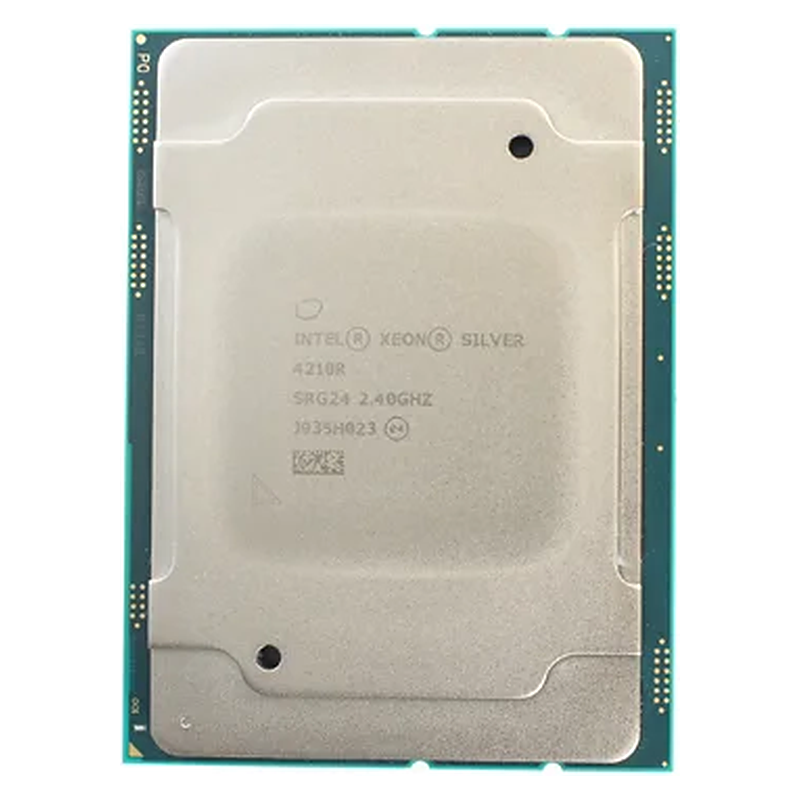
2.4 GHz / 10 Cores / 20 Threads / 13.75 MB Cache / 100 W / 2-Socket