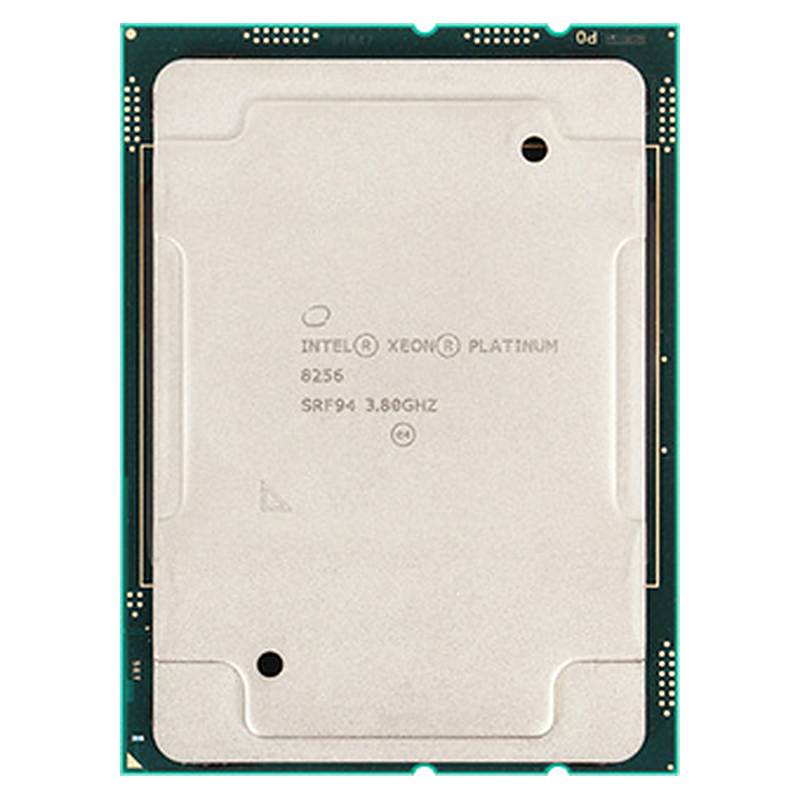
Intel Xeon Platinum 8256 Processor
3.8 GHz / 4 Cores / 8 Threads / 16.5 MB Cache / 105 W
- Part Number
- XEON-PLATINUM-8256
- Brand
- Intel
- Category
- Server Processor
- Accepted Payments
- T/T Bank Transfer PayPal Western Union
Technical Specifications
| Socket | LGA3647 |
|---|---|
| Series | Xeon Platinum |
| Generation | 2nd Gen (Cascade Lake) |
| Cores | 4 |
| Memory Type | DDR4 RDIMM · DDR4 LRDIMM · DDR4 3DS RDIMM |
| Max Memory Speed | 2933 MHz |
| PCIe Version | PCIe 3.0 |
| Lithography | 14 nm |
| Memory Channels | 6 channels |
| Condition | New · Used |
| Threads | 8 |
| Base Frequency | 3.8 GHz |
| Max Turbo Frequency | 3.9 GHz |
| Cache | 16.5 MB |
| TDP | 105 W |
Frequently Asked Questions
Intel Xeon Platinum 8256 — 4 cores and 8 threads at 3.8 GHz base / 3.9 GHz turbo, 16.5 MB cache, 105 W TDP, with three UPI links and S8S scalability in FCLGA3647 packaging. Supplied from stock with a 1-year warranty.
Four cores at 3.8 GHz, and still eight-socket
This is the outlier of the 2nd Gen Xeon Scalable Platinum line and it is worth being blunt about what it is: four cores, at a base clock of 3.8 GHz that turbos to only 3.9 GHz. That 100 MHz gap is the point — the part sits at 3.8 GHz almost continuously instead of trading sustained clock for burst headroom, so latency is flat rather than spiky. Cache is 16.5 MB, which works out to just over 4 MB per core, against roughly 1.5 MB per core on the 24-core 8260.
What makes it unusual is what Intel did not strip out. A four-core die still carries three UPI links and the S8S rating for up to eight sockets, along with six channels of DDR4-2933, PCIe 3.0 with 48 lanes, Optane persistent memory support and Run Sure reliability. The same die is also sold as the Xeon Gold 5222 with two UPI links and a 4S rating — identical clocks, cache, TDP and case limit — which is the cheaper order line whenever the machine has four sockets or fewer. So this is not a cut-down desktop chip in a server socket: it is a full Platinum part with server-grade memory, ECC, fabric coherence and eight-socket topology, configured around four very fast cores. TDP is 105 W, the lowest of any Platinum in the generation, and that low draw is what makes the part easy to cool. The TCASE limit is 72 °C, tighter than the 84–90 °C ceilings on the high-power parts, because TCASE caps the maximum IHS temperature rather than describing cooling headroom.
Buy it for the right reason, because on core count it loses badly to everything else in the family. The honest list of where four fast cores is the correct answer:
- Per-core licensing. Where software is licensed by core, a 4-core socket is the cheapest legal footprint in the generation while still delivering 3.8 GHz per core. Database and analytics vendors that price per core make this arithmetic decisive.
- Single-thread-bound work. EDA single-thread sign-off, some financial risk and pricing engines, and control-plane services that respond to latency rather than throughput.
- Scale-up control nodes. In a four- or eight-socket S8S fabric, a node that needs cache coherence and ECC but very little compute can run these instead of burning 28-core parts on housekeeping.
It is the wrong part for general virtualisation, container density or anything that scales on thread count — a 24-core 8260 carries six times the core count for 60 W more and will usually cost less per unit of throughput. Choose this one when a single fast core, a tiny licence footprint, or an eight-socket coherence domain is the actual requirement.
Plan around the lifecycle: Intel lists the 8256 as Discontinued, with End of Servicing Updates on 30 June 2025, and the SKU now sits in Intel's retired section. No further microcode or specification updates will be issued and new production has stopped, so tested pulls are the practical supply route. Every unit we ship is inspected and load-tested rather than assumed good.
Technical specifications
| Product collection | 2nd Gen Intel Xeon Scalable (Cascade Lake) |
|---|---|
| Processor number / sSpec | 8256 / SRF94 |
| Cores / Threads | 4 / 8 (Hyper-Threading) |
| Base / Max turbo frequency | 3.8 GHz / 3.9 GHz |
| Cache | 16.5 MB |
| TDP | 105 W (TCASE 72 °C) |
| Socket | FCLGA3647 (FC-LGA14B, 76.0 mm × 56.5 mm) |
| Memory | 6 channels DDR4-2933, up to 1 TB per socket, ECC RDIMM / LRDIMM / 3DS RDIMM, Optane persistent memory supported |
| PCI Express | PCIe 3.0, up to 48 lanes |
| Scalability | S8S (up to eight sockets), 3 UPI links |
| Speed Select | SST-PP and SST-BF both not available on this SKU |
| Accelerators | DL Boost, AVX-512 (2 FMA units), TSX-NI, VMD, RDT |
| Security & reliability | Run Sure, AES-NI, TXT, MBEC, VT-x / VT-d / EPT, vPro eligible |
| Lithography | 14 nm |
| Launch / Stepping | Q2 2019 / B1 (tray CD8069504194701, boxed BX806958256); Embedded Options not available |
| Lifecycle | Discontinued; End of Servicing Updates 30 June 2025 |
Servers that commonly take this processor
The 8256 fits FCLGA3647 (Purley-generation) boards whose BIOS supports 2nd Gen Xeon Scalable Cascade Lake parts. Its 105 W rating is what makes it the easiest Platinum in the family to cool. The 72 °C TCASE limit is on the strict side, so keep the heatsink and chassis airflow at the board vendor’s reference design rather than downgrading them:
- Dell PowerEdge R740 / R640 and HPE ProLiant DL380 Gen10 / DL360 Gen10 in 1S and 2S configurations, where per-core licensing sets the node footprint
- Four- and eight-socket scale-up systems, where the S8S rating and three UPI links keep a low-compute node inside the coherence domain
- Latency-sensitive services that need a flat 3.8 GHz rather than burst clock
Confirm the BIOS lists Cascade Lake parts before ordering. Because the part is only four cores, also confirm that the workload and the licence agreement both define core count the way you expect — that is the variable this processor exists to optimise.
How it compares with the 8260, the 8268 and the 8280
| Processor | Generation | Cores / Threads | Base / Max turbo | Cache | TDP | Memory support |
|---|---|---|---|---|---|---|
| Xeon Platinum 8280 | 2nd Gen (Cascade Lake) | 28 / 56 | 2.7 / 4.0 GHz | 38.5 MB | 205 W | 6ch DDR4-2933 |
| Xeon Platinum 8270 | 2nd Gen (Cascade Lake) | 26 / 52 | 2.7 / 4.0 GHz | 35.75 MB | 205 W | 6ch DDR4-2933 |
| Xeon Platinum 8268 | 2nd Gen (Cascade Lake) | 24 / 48 | 2.9 / 3.9 GHz | 35.75 MB | 205 W | 6ch DDR4-2933 |
| Xeon Platinum 8256 | 2nd Gen (Cascade Lake) | 4 / 8 | 3.8 / 3.9 GHz | 16.5 MB | 105 W | 6ch DDR4-2933 |
| Xeon Platinum 8260 | 2nd Gen (Cascade Lake) | 24 / 48 | 2.4 / 3.9 GHz | 35.75 MB | 165 W | 6ch DDR4-2933 |
Against the whole line the trade is the same one: core count out, clock in. The closest comparison is the 8268, which shares the 3.9 GHz turbo ceiling but starts at 2.9 GHz across 24 cores — 900 MHz less sustained clock per core for 20 more cores, 19.25 MB more cache and 100 W more heat. The 8260 goes further in the same direction: 1.4 GHz less base clock for 20 more cores and 60 W more power. Against the 26-core 8270 and 28-core 8280 the gap widens to 22 and 24 cores respectively, with a 1.1 GHz base-clock advantage to the 8256 and 100 MHz of turbo conceded.
So the table should be read as a licence-and-latency decision rather than a performance one. Every other row will beat four cores on aggregate throughput; none of them will hold 3.8 GHz on a single thread while costing four cores on a per-core licence.
How each processor is tested before it ships
- Visual inspection of the heat spreader, capacitors and substrate on arrival.
- Thermal paste residue cleaned from the IHS; socket contact pads checked under magnification.
- sSpec marking (SRF94) verified against the order line before testing.
- Full-core load test on an FCLGA3647 diagnostic board, confirming 3.8 GHz sustained on all four cores and the full 16.5 MB of cache.
- Memory controller stress pass across all six channels at rated speed, then anti-static packing for dispatch.
Warranty and lead time
Every 8256 carries a 1-year warranty covering defects in workmanship and function; a verified faulty unit is replaced or refunded with return shipping covered. The part is discontinued by Intel, so new units come from remaining tray stock (order code CD8069504194701) or boxed stock (BX806958256), and the rest of supply is tested pull units, labelled as such and priced separately. In-stock units normally dispatch within three to seven working days after payment confirmation, with tracking issued at dispatch.
Purchasing and volume enquiries
Pricing is quotation-based rather than fixed. Send the quantity, condition preference (new or tested) and delivery destination, and we reply with a firm quote including current stock and lead time. Volume and project pricing is available for multi-unit orders, and matched sets for multi-socket builds — same sSpec, same stepping — can be quoted on request.
Get Pricing For This Part
Tell us who you are — we reply within one working day with a firm quote, stock status and lead time. Volume discounts available.
Related Products
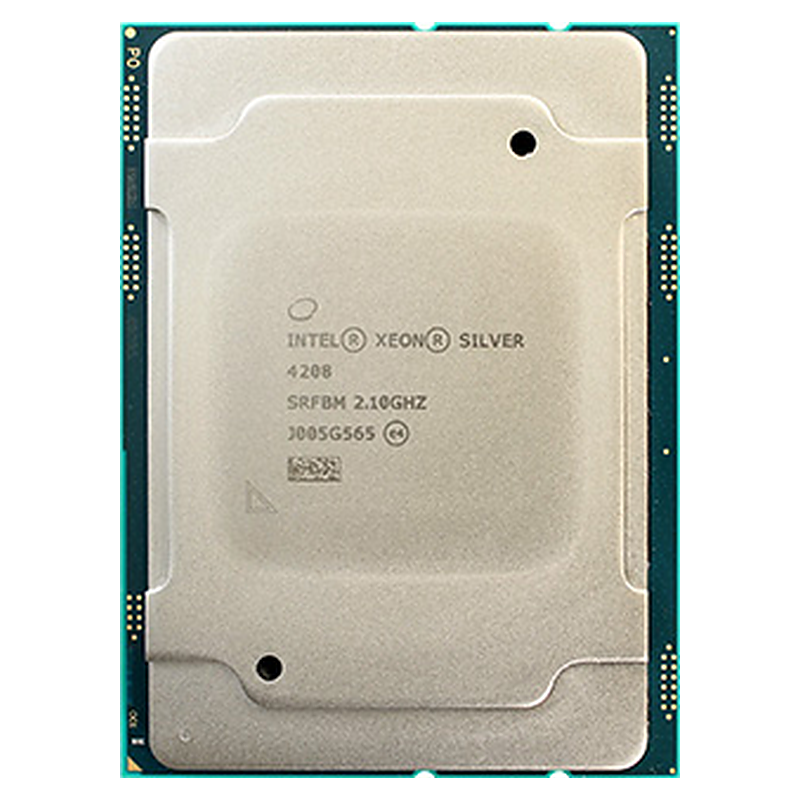
2.1 GHz / 8 Cores / 16 Threads / 11 MB Cache / 85 W / 78 °C TCASE
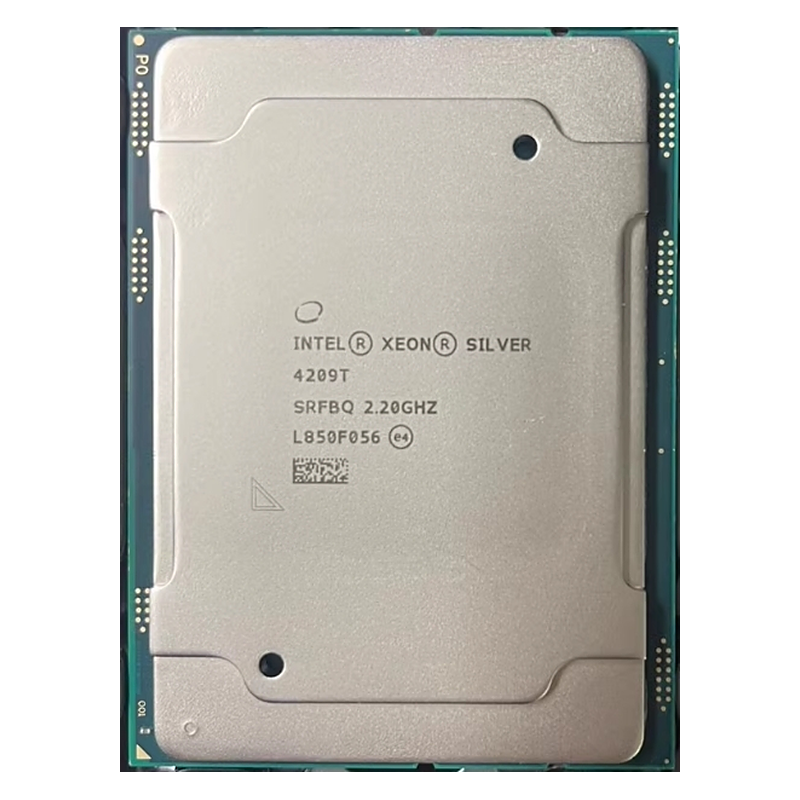
2.2 GHz / 8 Cores / 16 Threads / 11 MB Cache / 70 W / 91 °C TCASE
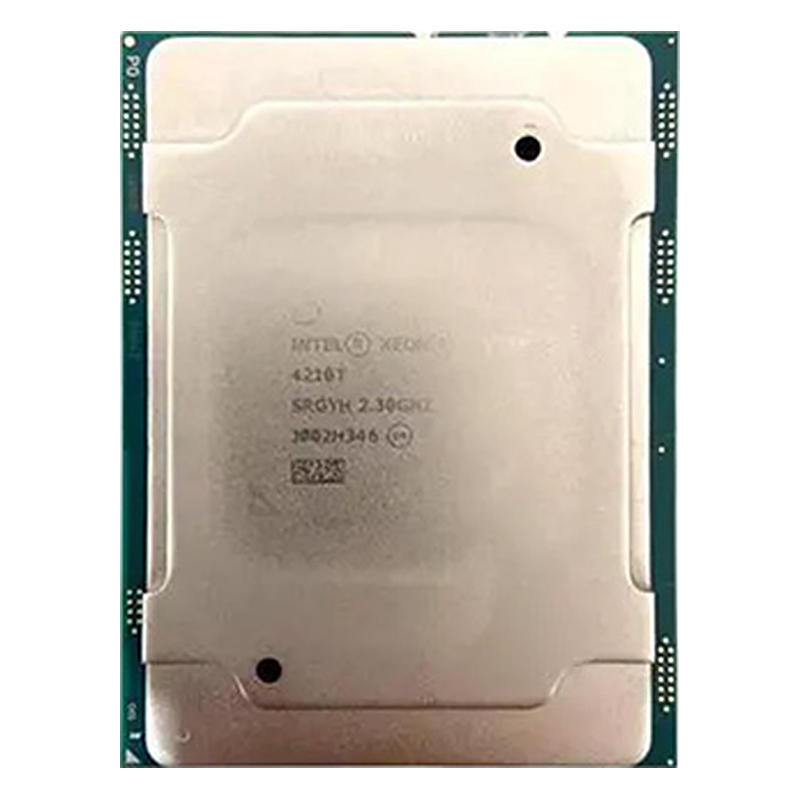
2.3 GHz / 10 Cores / 20 Threads / 13.75 MB Cache / 95 W / 91 °C TCASE
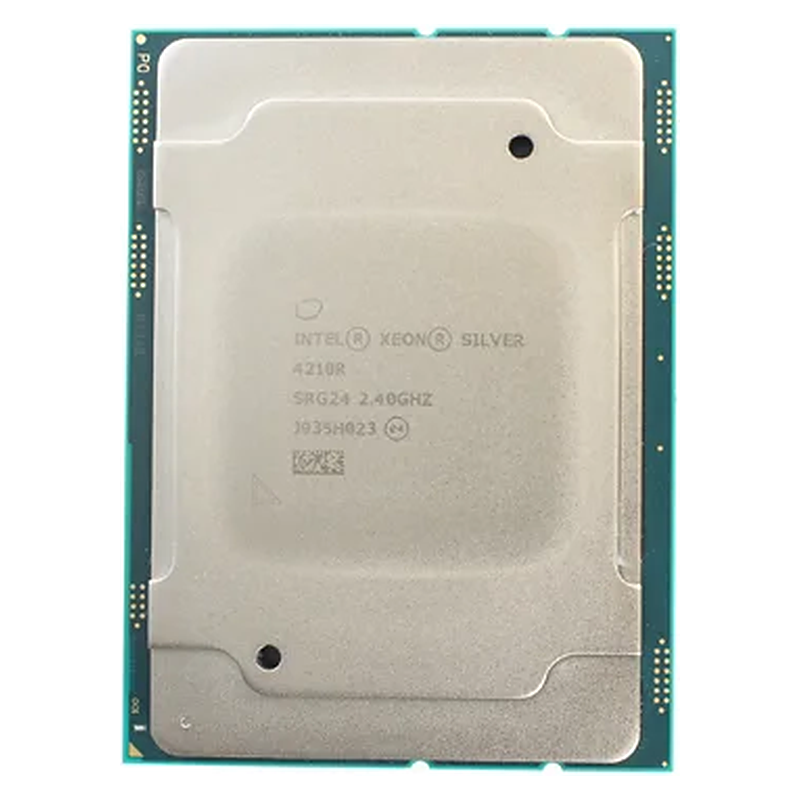
2.4 GHz / 10 Cores / 20 Threads / 13.75 MB Cache / 100 W / 2-Socket