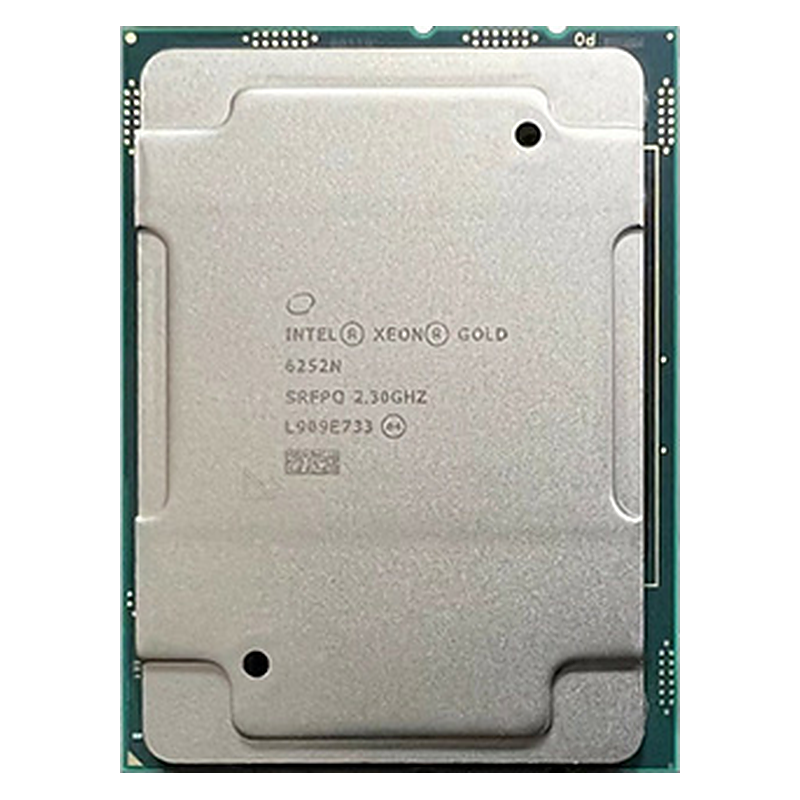
Intel Xeon Gold 6252N Processor
2.3 GHz / 24 Cores / 48 Threads / 35.75 MB Cache / 150 W
- Part Number
- XEON-GOLD-6252N
- Brand
- Intel
- Category
- Server Processor
- Accepted Payments
- T/T Bank Transfer PayPal Western Union
Technical Specifications
| Socket | LGA3647 |
|---|---|
| Series | Xeon Gold |
| Generation | 2nd Gen (Cascade Lake) |
| Cores | 24 |
| Memory Type | DDR4 RDIMM · DDR4 LRDIMM · DDR4 3DS RDIMM |
| Max Memory Speed | 2933 MHz |
| PCIe Version | PCIe 3.0 |
| Lithography | 14 nm |
| Memory Channels | 6 channels |
| Condition | New · Used |
| Threads | 48 |
| Base Frequency | 2.3 GHz |
| Max Turbo Frequency | 3.6 GHz |
| Cache | 35.75 MB |
| TDP | 150 W |
Frequently Asked Questions
Intel Xeon Gold 6252N — 24 cores and 48 threads at 2.3 GHz base / 3.6 GHz turbo, 35.75 MB cache, 150 W TDP, with three UPI links, S4S scalability and Intel Speed Select Technology – Base Frequency in FCLGA3647 packaging. Supplied from stock with a 1-year warranty.
A network-optimised 24-core with asymmetric clocks
The N suffix is not cosmetic. The 6252N carries Speed Select Technology – Base Frequency (SST-BF), which lets the same silicon be split into two clock domains instead of running every core at one speed. Enabled in BIOS and scheduled by the OS, it puts eight cores at 2.8 GHz and the remaining sixteen at 2.1 GHz, inside the same 150 W envelope. The symmetric default is all 24 cores at 2.3 GHz.
That layout is built for packet processing. In an NFV node the data plane — DPDK, OVS, a 5G UPF or a virtual router — is bound to a handful of poll-mode threads that are sensitive to per-core clock, while control-plane and management work sits on the rest. Pinning those data-plane threads to the eight 2.8 GHz cores buys roughly twenty percent more clock on the threads that set throughput, and the sixteen slower cores still carry the same aggregate work they did before. Deciding which cores are "high priority" is a runtime scheduling choice on current Linux kernels rather than a reboot-time profile, which is the practical difference from SST-PP parts.
Two other things separate this SKU from the plain 6252. Embedded options are available — Intel lists this part as embedded-capable where the 6252 is not, which is what you want for a fixed-function appliance or a long-lived network element. And its marketing status is Launched rather than Discontinued, the only 6200-series Gold on this list with that status; servicing updates end on 30 June 2025, so firmware and specification changes have stopped even though the SKU has not been formally retired.
The trade for all this is thermal. TCASE is 74 °C, which from a 35 °C inlet leaves about 0.26 °C/W for the heatsink — tighter than the 0.34 °C/W the plain 6252 asks for at the same 150 W, and tighter than the 0.33 °C/W of the 165 W Platinum 8260. TCASE is the maximum permitted IHS temperature rather than a measure of spare cooling, so a lower number demands a better cooler; treat this as a part for a properly specified 1U or 2U network chassis, not for a downgraded heatsink. Everything else is the Gold feature set: three UPI links, S4S up to four sockets, Optane persistent memory support, Run Sure, six channels of DDR4-2933 up to 1 TB, PCIe 3.0 with 48 lanes, and AVX-512 with two FMA units.
Technical specifications
| Product collection | 2nd Gen Intel Xeon Scalable (Cascade Lake) |
|---|---|
| Processor number / sSpec | 6252N / SRFPQ |
| Cores / Threads | 24 / 48 (Hyper-Threading) |
| Base / Max turbo frequency | 2.3 GHz / 3.6 GHz |
| Cache | 35.75 MB |
| TDP | 150 W (TCASE 74 °C) |
| Socket | FCLGA3647 (FC-LGA14B, 76.0 mm × 56.5 mm) |
| Memory | 6 channels DDR4-2933, up to 1 TB per socket, ECC RDIMM / LRDIMM / 3DS RDIMM, Optane persistent memory supported |
| Scalability | S4S (up to four sockets), 3 UPI links |
| PCIe | 3.0, 48 lanes |
| Speed Select | SST-BF (Base Frequency) supported; SST-PP not supported. 8 cores at 2.8 GHz / 16 cores at 2.1 GHz when enabled |
| Lithography | 14 nm |
| Launch | Q2 2019 |
| Status | Launched; End of Servicing Updates 30 June 2025 |
| Embedded options | Available |
| Accelerators | AVX-512 with 2 FMA units, Intel DL Boost (VNNI), Intel RDT, Intel VMD |
Servers that commonly take this processor
The 6252N fits FCLGA3647 (Purley-generation) boards whose BIOS supports 2nd Gen Xeon Scalable Cascade Lake parts and exposes the SST-BF controls. On a board without that BIOS support the part still runs, but only in its symmetric 2.3 GHz configuration, which is the whole point of buying it:
- NFV and universal-CPE platforms from Dell, HPE and Lenovo built on the C620-series chipset
- Single-socket and dual-socket 1U network appliances where the data plane needs the fastest core bins
- Embedded and fixed-function network elements, since Intel lists embedded options as available on this SKU
- Four-socket scale-up systems, since the part carries the S4S rating and three UPI links
How it compares with the 6252 and the other 24-core parts
| Processor | Generation | Cores / Threads | Base / Max turbo | Cache | TDP | Memory support |
|---|---|---|---|---|---|---|
| Xeon Gold 6254 | 2nd Gen (Cascade Lake) | 18 / 36 | 3.1 / 4.0 GHz | 24.75 MB | 200 W | 6ch DDR4-2933 |
| Xeon Gold 6252 | 2nd Gen (Cascade Lake) | 24 / 48 | 2.1 / 3.7 GHz | 35.75 MB | 150 W | 6ch DDR4-2933 |
| Xeon Gold 6252N | 2nd Gen (Cascade Lake) | 24 / 48 | 2.3 / 3.6 GHz | 35.75 MB | 150 W | 6ch DDR4-2933 |
| Xeon Platinum 8260 | 2nd Gen (Cascade Lake) | 24 / 48 | 2.4 / 3.9 GHz | 35.75 MB | 165 W | 6ch DDR4-2933 |
| Xeon Gold 6258R | 2nd Gen (Cascade Lake Refresh) | 28 / 56 | 2.7 / 4.0 GHz | 38.5 MB | 205 W | 6ch DDR4-2933 |
Against the plain 6252 the two are the same die, the same 24 cores, the same 35.75 MB of cache, the same 150 W and the same S4S platform. The 6252N runs 200 MHz more base clock and 100 MHz less turbo, and it adds SST-BF plus embedded availability. What it costs is thermal headroom: the case limit drops from 86 °C to 74 °C at identical power. If the workload is symmetric and the chassis is average, the plain 6252 is the easier fit; if the workload is a packet pipeline that needs eight fast cores, the 6252N is the only one of the two that can do it.
Against the Platinum 8260 the 6252N gives up 100 MHz of base and 300 MHz of turbo and takes back 15 W per socket. Both are 24 cores with 35.75 MB and three UPI links, but the 8260 adds S8S scalability, which the Gold tier does not reach, and it has a looser 90 °C case limit. Pick the Platinum when sockets matter more than power, the 6252N when the node is fixed at one or two sockets and the data plane wants the faster bins.
Against the 6258R the 6252N gives up 4 cores, 2.75 MB of cache, 400 MHz of base and 400 MHz of turbo, and takes back 55 W per socket. Twenty-eight cores of throughput, or twenty-four with asymmetric clocks — different problems, and the power numbers are not close.
Against the 6254 the 6252N has 6 more cores and 11 MB more cache for 50 W less, at the cost of 800 MHz of base clock and 400 MHz of turbo. Eighteen fast cores against twenty-four economical ones with eight fast bins on top.
How each processor is tested before it ships
- Visual inspection of the heat spreader, capacitors and substrate on arrival.
- Thermal paste residue cleaned from the IHS; socket contact pads checked under magnification.
- sSpec marking (SRFPQ) verified against the order line before testing.
- Full-core load test on an FCLGA3647 diagnostic board, confirming 2.3 GHz base and 3.6 GHz turbo across all twenty-four cores.
- SST-BF verification: the eight high-priority cores checked at 2.8 GHz and the remaining sixteen at 2.1 GHz where the test board BIOS exposes the controls.
- Cache verification at the full 35.75 MB, followed by a memory controller pass across all six channels.
- Thermal-run recorded so the unit's operating temperatures can be compared with the 74 °C case limit.
- Final clean, then packaging in an anti-static tray with foam.
Warranty and lead time
Every processor carries a 1-year warranty against defects in workmanship and function. Verified faulty units are replaced or refunded, and we cover return shipping. Stock is held in both new and used condition; the condition you order is confirmed before dispatch, and used units are the pull-tested stock rather than untested lots. Stock is held in our own warehouse and normally dispatches within three to seven working days, with tracking issued at dispatch; volume orders are quoted individually with lead time confirmed at the time of enquiry.
Purchasing and volume enquiries
Pricing is quoted per order because condition and quantity both move it. Send the quantity, the condition you need and the appliance or server model the part is going into, and you will get a quote with lead time the same working day. For NFV builds, tell us the data-plane thread count you are sizing for — that decides whether eight 2.8 GHz cores are enough or whether you need to look at a higher-core part.
Get Pricing For This Part
Tell us who you are — we reply within one working day with a firm quote, stock status and lead time. Volume discounts available.
Related Products
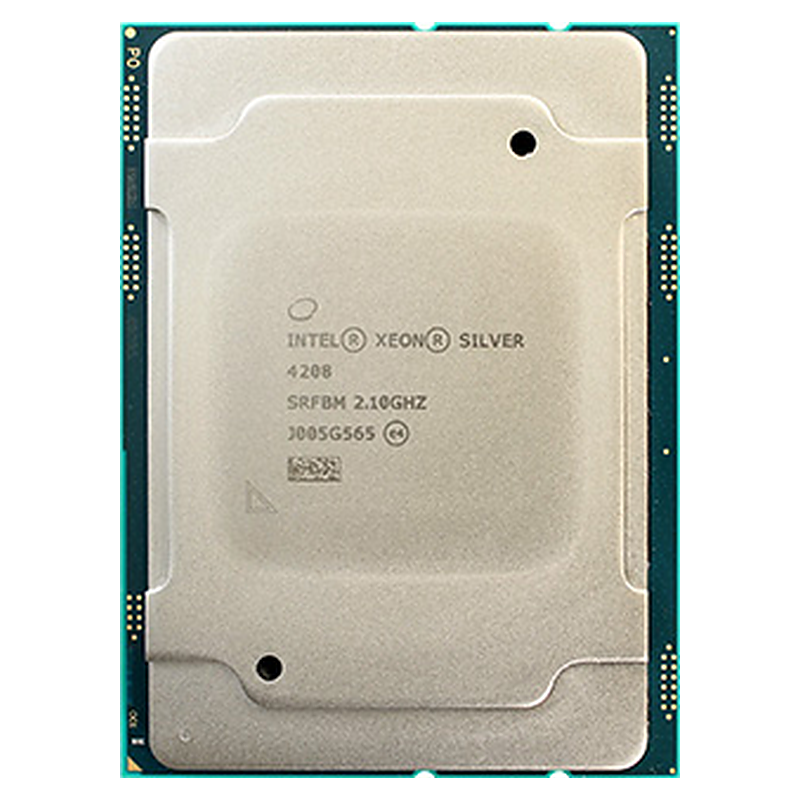
2.1 GHz / 8 Cores / 16 Threads / 11 MB Cache / 85 W / 78 °C TCASE
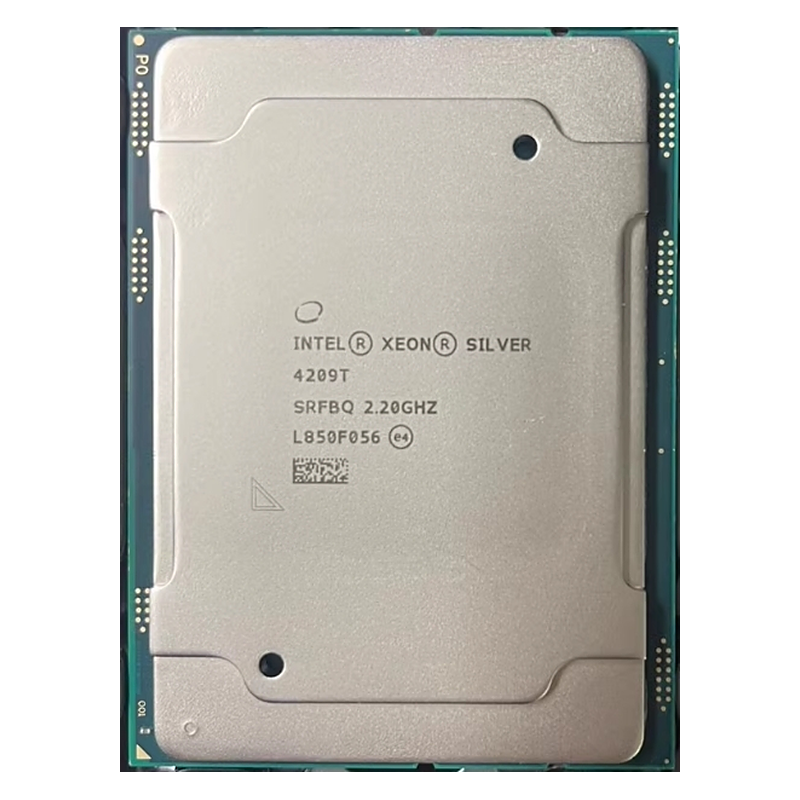
2.2 GHz / 8 Cores / 16 Threads / 11 MB Cache / 70 W / 91 °C TCASE
2.3 GHz / 10 Cores / 20 Threads / 13.75 MB Cache / 95 W / 91 °C TCASE
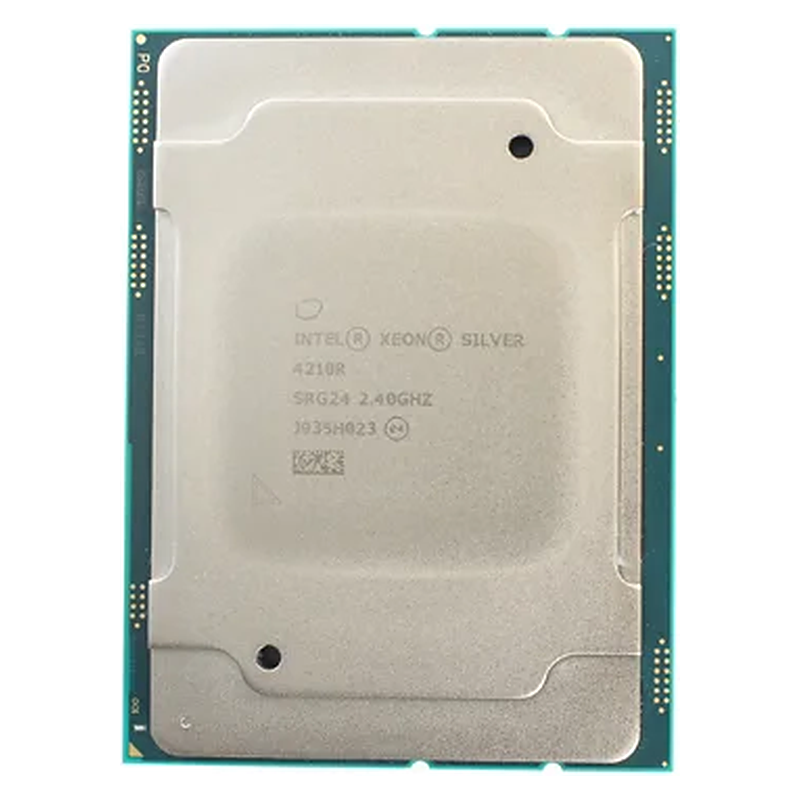
2.4 GHz / 10 Cores / 20 Threads / 13.75 MB Cache / 100 W / 2-Socket