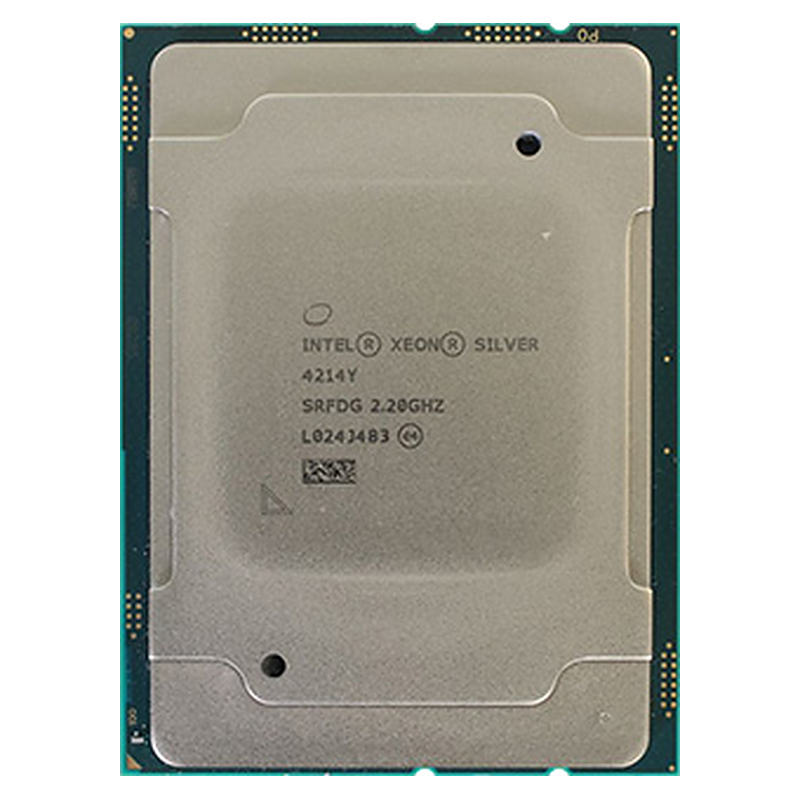
Intel Xeon Silver 4214Y Processor
2.2 GHz / 12 Cores / 24 Threads / 16.5 MB Cache / 85 W / SST-PP / 2-Socket
- Part Number
- XEON-SILVER-4214Y
- Brand
- Intel
- Category
- Server Processor
- Accepted Payments
- T/T Bank Transfer PayPal Western Union
Technical Specifications
| Socket | LGA3647 |
|---|---|
| Series | Xeon Silver |
| Generation | 2nd Gen (Cascade Lake) |
| Cores | 12 |
| Memory Type | DDR4 RDIMM · DDR4 LRDIMM · DDR4 3DS RDIMM |
| Max Memory Speed | 2400 MHz |
| PCIe Version | PCIe 3.0 |
| Lithography | 14 nm |
| Memory Channels | 6 channels |
| Condition | New · Used |
| Threads | 24 |
| Base Frequency | 2.2 GHz |
| Max Turbo Frequency | 3.2 GHz |
| Cache | 16.5 MB |
| TDP | 85 W |
Frequently Asked Questions
Intel Xeon Silver 4214Y — 12 cores and 24 threads at 2.2 GHz base / 3.2 GHz turbo, 16.5 MB cache, 85 W TDP, six-channel DDR4-2400, two-socket scalability, and Intel Speed Select Technology – Performance Profile in FCLGA3647 packaging. Supplied new or as tested pulls, with a 1-year warranty.
The Y suffix is the reason to buy this part. Where the plain 4214 is fixed at twelve cores and 2.2 GHz, the 4214Y carries three operating points in one processor, selected in the BIOS at boot: full width, a middle setting, and a narrower, faster one. The platform publishes them as 12 cores / 24 threads at 2.20 GHz, 10 cores / 20 threads at 2.30 GHz and 8 cores / 16 threads at 2.40 GHz.
Everything else is the familiar recipe: 16.5 MB over 12 cores is 1.375 MB per core, the same per-core cache as every other part in this generation, and the same six channels of DDR4-2400 to 1 TB per socket.
Three processors in one socket, chosen at boot
Speed Select Performance Profile is not a power-saving feature and it is not a runtime knob. At power-on the BIOS presents the profiles the platform supports, one is selected, and the processor runs at that core count and base frequency for the life of the boot. Changing it means a reboot with a different setting. What that buys is one part number covering three workload shapes: a hypervisor host can run the twelve-core profile for density, a latency-sensitive database node can be re-provisioned to the eight-core profile at 2.40 GHz, and a cost-optimised tier can sit in the middle.
Two caveats worth stating plainly. First, the profiles only exist if the server platform supports SST-PP and exposes them in its BIOS — Intel publishes the capability, the OEM publishes the menu, and the numbers above come from Dell's PowerEdge R640 and R740 technical guides rather than from Intel's public specifications, which list SST-PP simply as supported. Second, this is an end-of-life part: Intel lists the 4214Y as discontinued, and embedded availability is No, so there is no long-life supply commitment behind it. Stock is what the secondary market holds, which is precisely what we sell.
The thermal envelope is unchanged from the 4214: 85 W against a 77 °C case limit gives 0.494 °C/W, identical to the 4214, the 4215 and the Gold 5215, so one heatsink specification covers all of them. The Silver-tier limits carry over as well — 2S scalability, no Optane persistent memory and no Run Sure (Advanced RAS).
Technical specifications
| Product collection | 2nd Gen Intel Xeon Scalable (Cascade Lake) |
|---|---|
| Processor number / sSpec | 4214Y / SRFDG (L1 stepping) |
| Ordering code | CD8069504294401 (tray only; no boxed retail SKU) |
| Cores / Threads | 12 / 24 (Hyper-Threading) |
| Base / Max turbo frequency | 2.2 GHz / 3.2 GHz |
| Speed Select (SST-PP) | Supported — three boot-time profiles: 12C/24T at 2.20 GHz, 10C/20T at 2.30 GHz, 8C/16T at 2.40 GHz (per Dell PowerEdge R640 / R740 technical guides) |
| Cache | 16.5 MB (1.375 MB per core) |
| TDP | 85 W (TCASE 77 °C) |
| Socket | FCLGA3647 (FC-LGA14B, 76.0 mm × 56.5 mm) |
| Memory | 6 channels DDR4-2400, up to 1 TB per socket, ECC RDIMM / LRDIMM / 3DS RDIMM. Optane persistent memory: not supported |
| Scalability | 2S only (two sockets), 2 UPI links |
| PCIe | 3.0, 48 lanes |
| AVX-512 | One FMA unit per core (Gold 5000 and Silver rule; 5122 and 5222 are the exceptions with two) |
| RAS | Standard ECC and machine check; Run Sure (Advanced RAS) not available |
| Lithography | 14 nm |
| Launch | Q2 2019 |
| Status | Discontinued; servicing updates issued through 30 June 2025 |
| Embedded options | Not available — no long-life supply commitment |
Where a Speed Select Silver pays
Any dual-socket FCLGA3647 board whose BIOS carries Cascade Lake microcode and exposes the SST-PP profile menu. The deployments this part suits:
- Estate standardisation: one SKU that can be re-profiled per host instead of stocking three processor models
- Hypervisor hosts that want twelve cores for density, with the option to re-profile for a latency-sensitive workload later
- Database and application nodes where a licence is priced per core — the eight-core profile is a licensing lever as much as a clock lever
- Lab, test and staging fleets that must mirror production hardware at different densities
- Dell PowerEdge R640, R740 and R740xd, HPE ProLiant DL380 Gen10 — check the platform's SST-PP support before relying on the profiles
- Refurbishment and spares pools, where a Y part substitutes for several fixed-core SKUs
Two checks first. Confirm the BIOS on the actual chassis exposes SST-PP — a board that accepts the processor without the profile menu gives you the twelve-core setting only. And treat the part as end-of-life: buy against known stock rather than assuming replenishment.
How it compares across the Silver and Gold tiers
| Processor | Generation | Cores / Threads | Base / Max turbo | Cache | TDP | Memory support |
|---|---|---|---|---|---|---|
| Xeon Silver 4214Y | 2nd Gen (Cascade Lake) | 12 / 24 | 2.2 / 3.2 GHz | 16.5 MB | 85 W | 6ch DDR4-2400 · 1 TB · 2S |
| Xeon Silver 4214 | 2nd Gen (Cascade Lake) | 12 / 24 | 2.2 / 3.2 GHz | 16.5 MB | 85 W | 6ch DDR4-2400 · 1 TB · 2S |
| Xeon Silver 4214R | 2nd Gen Refresh (Cascade Lake) | 12 / 24 | 2.4 / 3.5 GHz | 16.5 MB | 100 W | 6ch DDR4-2400 · 1 TB · 2S |
| Xeon Silver 4215R | 2nd Gen Refresh (Cascade Lake) | 8 / 16 | 3.2 / 4.0 GHz | 11 MB | 130 W | 6ch DDR4-2400 · 1 TB · 2S |
| Xeon Silver 4216 | 2nd Gen (Cascade Lake) | 16 / 32 | 2.1 / 3.2 GHz | 22 MB | 100 W | 6ch DDR4-2400 · 1 TB · 2S |
| Xeon Gold 5218 | 2nd Gen (Cascade Lake) | 16 / 32 | 2.3 / 3.9 GHz | 22 MB | 125 W | 6ch DDR4-2667 · 1 TB · 4S |
Against the 4214 the paper numbers are identical — same cores, same clocks, same cache, same 85 W — and the difference is that the Y part can be re-profiled and the plain part cannot. If the platform exposes the menu and the estate changes shape, the Y is worth a premium; if a fixed twelve-core node is all that is needed, the plainer part is cheaper and still in production.
Against the 4214R you give up 200 MHz of base clock and 15 W of headroom to gain the profiles — and the R is an active part while this one is end-of-life, which matters for anyone buying more than a single batch. Against the 4216 it is four fewer cores and 5.5 MB of cache at 15 W less, with the same turbo.
Against the Gold 5218 the step up is four cores, 5.5 MB, DDR4-2667, four-socket support and Advanced RAS for 40 W more; the Gold 6230 reaches 20 cores and 27.5 MB on DDR4-2933 at 125 W. On the next generation, the Silver 4310 keeps twelve cores and adds 18 MB, DDR4-2667 and PCIe 4.0 for 20 W, and the Silver 4314 goes to sixteen cores at 135 W — both need an Ice Lake-capable board.
How each processor is tested before it ships
- Visual inspection of the heat spreader, capacitors and substrate on arrival.
- Thermal paste residue cleaned from the IHS; socket contact pads checked under magnification.
- sSpec marking verified against the order line. SRFDG is the 4214Y at L1 stepping; the plain 4214 is SRFB9 and the 4214R is SRG1W, so the code is checked character by character rather than by model number alone.
- Full-core load test on an FCLGA3647 diagnostic board, confirming 2.2 GHz sustained across all twelve cores and 3.2 GHz turbo on light threads.
- Cache verification at the full 16.5 MB, then a memory controller pass across all six channels at 2400 MT/s.
- UPI check across both links, plus a dual-socket topology run on a supported board.
- Thermal run recorded against the 77 °C case limit, with all-core power measured against the 85 W envelope.
- Final clean, then packaging in an anti-static tray with foam.
Warranty and lead time
Every processor carries a 1-year warranty against defects in workmanship and function. Verified faulty units are replaced or refunded and we cover return shipping. Stock is held in both new and used condition; the condition you order is confirmed before dispatch, and used units are pull-tested stock rather than untested lots. Stock is held in our own warehouse and normally dispatches within three to seven working days, with tracking issued at dispatch.
Purchasing and volume enquiries
Pricing is quoted per order because condition and quantity both move it. Send the quantity, the condition you need and the server model the part is going into — for a Y part, tell us the chassis as well, because whether the Speed Select profiles are usable depends on its BIOS, and we would rather confirm that before you buy than after. You will get a quote with lead time the same working day, and for two-socket pairs we supply matched units from the same stepping.
Get Pricing For This Part
Tell us who you are — we reply within one working day with a firm quote, stock status and lead time. Volume discounts available.
Related Products
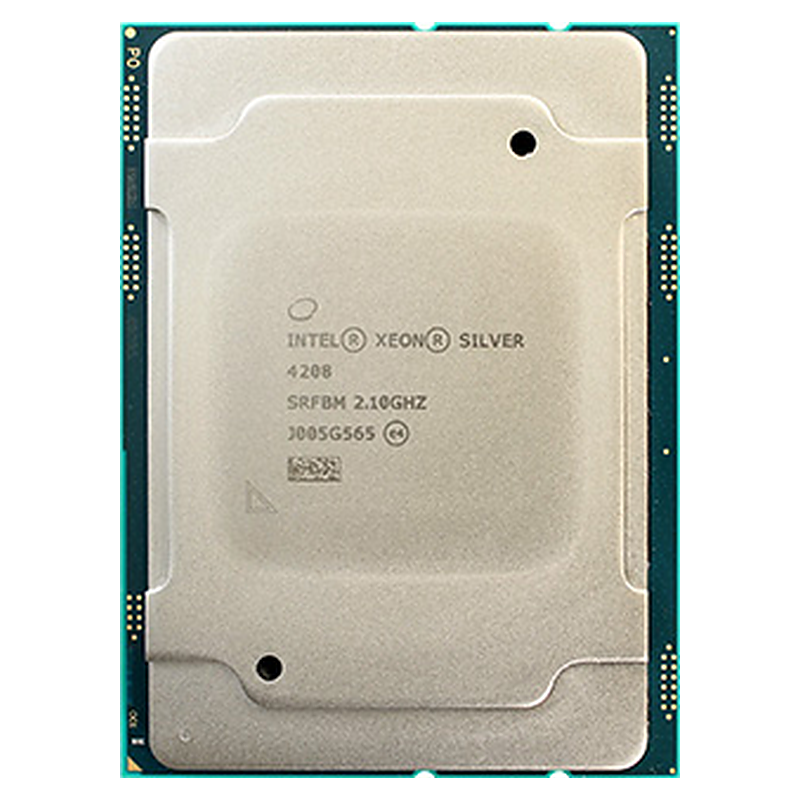
2.1 GHz / 8 Cores / 16 Threads / 11 MB Cache / 85 W / 78 °C TCASE
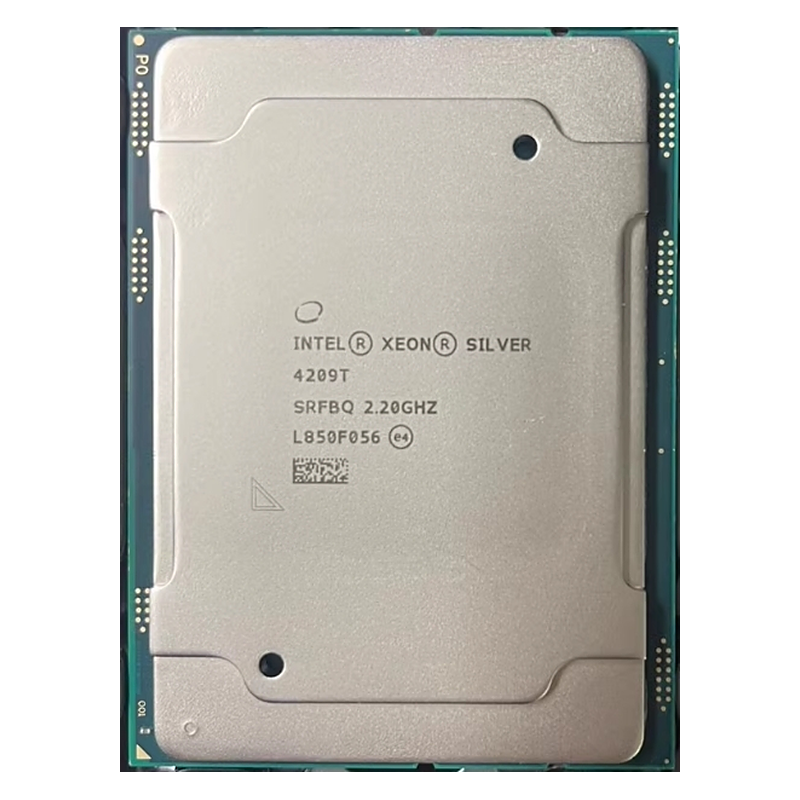
2.2 GHz / 8 Cores / 16 Threads / 11 MB Cache / 70 W / 91 °C TCASE
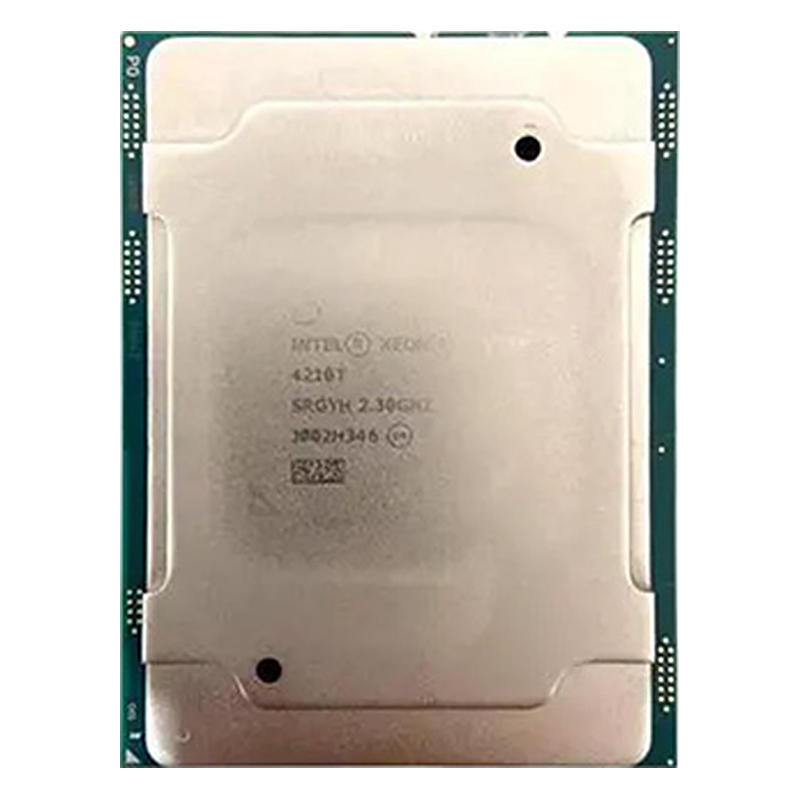
2.3 GHz / 10 Cores / 20 Threads / 13.75 MB Cache / 95 W / 91 °C TCASE
2.4 GHz / 10 Cores / 20 Threads / 13.75 MB Cache / 100 W / 2-Socket