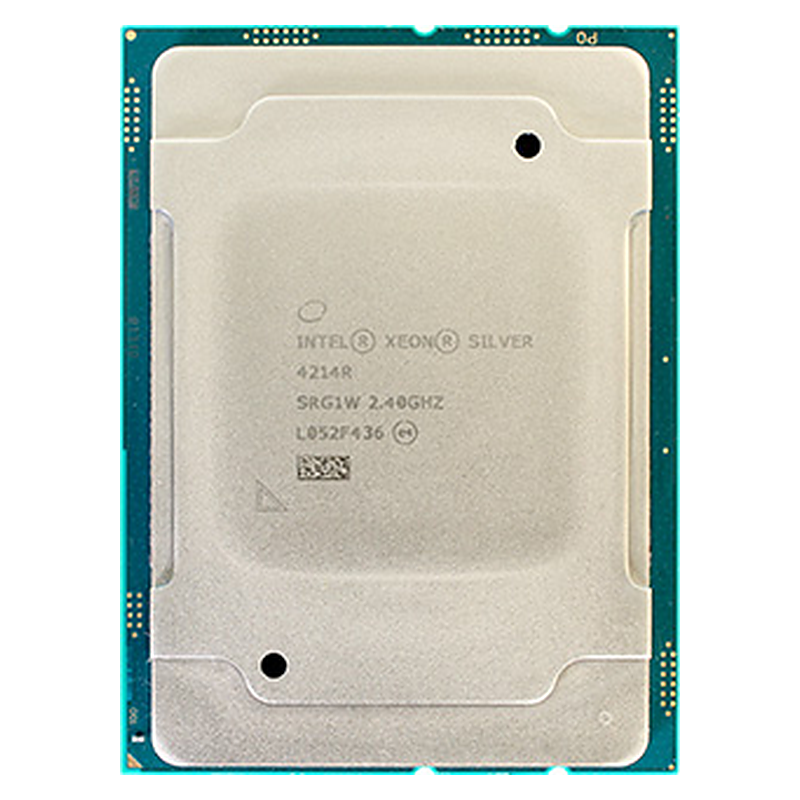
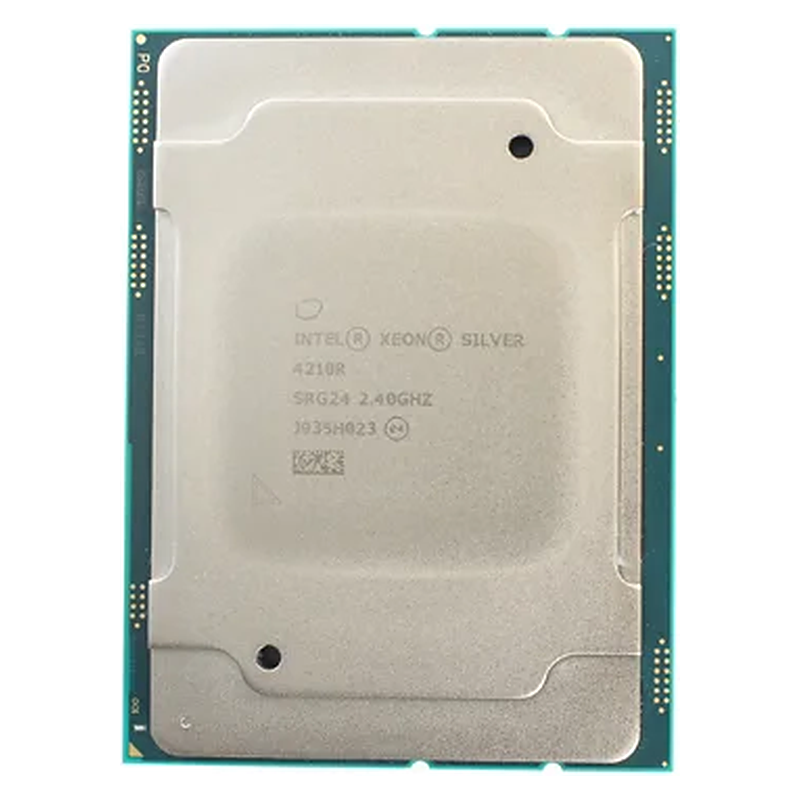
Intel Xeon Silver 4214R Processor
2.4 GHz / 12 Cores / 24 Threads / 16.5 MB Cache / 100 W / 2-Socket
- Part Number
- XEON-SILVER-4214R
- Brand
- Intel
- Category
- Server Processor
- Accepted Payments
- T/T Bank Transfer PayPal Western Union
Technical Specifications
| Socket | LGA3647 |
|---|---|
| Series | Xeon Silver |
| Generation | 2nd Gen (Cascade Lake) |
| Cores | 12 |
| Memory Type | DDR4 RDIMM · DDR4 LRDIMM · DDR4 3DS RDIMM |
| Max Memory Speed | 2400 MHz |
| PCIe Version | PCIe 3.0 |
| Lithography | 14 nm |
| Memory Channels | 6 channels |
| Condition | New · Used |
| Threads | 24 |
| Base Frequency | 2.4 GHz |
| Max Turbo Frequency | 3.5 GHz |
| Cache | 16.5 MB |
| TDP | 100 W |
Frequently Asked Questions
Intel Xeon Silver 4214R — 12 cores and 24 threads at 2.4 GHz base / 3.5 GHz turbo, 16.5 MB cache, 100 W TDP, six-channel DDR4-2400 and two-socket scalability in FCLGA3647 packaging. Supplied new or as tested pulls, with a 1-year warranty.
This is the 2020 Refresh of the twelve-core Silver, and the delta is worth stating precisely: 200 MHz more base clock and 300 MHz more turbo than the 4214, for 15 W more. Cores, cache, memory speed, socket count and feature set are unchanged. Intel moved the part to a new die revision to do it, so the two are told apart by sSpec, not by firmware.
The cache ratio stays where the whole generation keeps it: 16.5 MB over 12 cores is 1.375 MB per core, identical to the 4214, the 4216, the eight-core 4215 and every Gold part above them. Nothing is starved to create a tier.
The same 100 W and the same 79 C as the sixteen-core 4216
100 W against a 79 °C case limit gives 0.44 °C/W of heatsink allowance from a 35 °C inlet — and that is exactly the figure for the sixteen-core 4216, because Intel binned both onto the same thermal envelope. The practical consequence is useful: one heatsink specification covers both parts, so the choice between them is purely a core-versus-clock decision, not a cooling decision.
Twelve cores at 2.4 GHz against sixteen at 2.1 GHz, both inside 100 W. Work that scales across threads goes to the 4216; work that waits on a single thread, or that has to fit a fixed per-socket thread budget for licensing, goes here.
Two limits carry over from this tier. Scalability is 2S — two sockets, not four — and Optane persistent memory is listed as No for this SKU, as it is for the 4214 and 4216; only the eight-core 4215 and 4215R carry persistent-memory support in this generation. Run Sure (Advanced RAS) is absent as well, so anything that depends on Advanced RAS belongs in the Gold range.
Technical specifications
| Product collection | 2nd Gen Intel Xeon Scalable (Cascade Lake Refresh) |
|---|---|
| Processor number / sSpec | 4214R / SRG1W (L1 stepping) |
| Ordering code | CD8069504343701 (tray); BX806954214R (boxed, now discontinued) |
| Cores / Threads | 12 / 24 (Hyper-Threading) |
| Base / Max turbo frequency | 2.4 GHz / 3.5 GHz |
| Cache | 16.5 MB (1.375 MB per core) |
| TDP | 100 W (TCASE 79 °C) |
| Socket | FCLGA3647 (FC-LGA14B, 76.0 mm × 56.5 mm) |
| Memory | 6 channels DDR4-2400, up to 1 TB per socket, ECC RDIMM / LRDIMM / 3DS RDIMM. Optane persistent memory: not supported |
| Scalability | 2S only (two sockets), 2 UPI links |
| PCIe | 3.0, 48 lanes |
| AVX-512 | One FMA unit per core (Gold 5000 and Silver rule; 5122 and 5222 are the exceptions with two) |
| RAS | Standard ECC and machine check; Run Sure (Advanced RAS) not available |
| Speed Select | SST – Performance Profile: no; SST – Base Frequency: no |
| Lithography | 14 nm |
| Launch | Q1 2020 (Refresh) |
| Status | Launched; servicing updates issued through 30 June 2025 |
| Embedded options | Available (yes) — long-life supply qualification |
Where twelve refreshed cores fit
Any dual-socket FCLGA3647 board whose BIOS carries Cascade Lake Refresh microcode — check the board's CPU support list, because a Refresh part can need a newer firmware level than the board shipped with. The deployments this part suits:
- Virtualisation hosts with eight to twelve guests per socket and a fixed 100 W budget
- Web, application and API tiers that scale across threads but still want a 2.4 GHz floor per thread
- Storage controllers, backup and replication nodes needing six-channel memory and ECC at modest power
- Edge and branch cabinets where 24 threads inside 100 W is the densest option that still fits the power feed
- Dell PowerEdge R640 and R740, HPE ProLiant DL360 and DL380 Gen10, Lenovo ThinkSystem SR630 and SR650, Supermicro X11DPi-N
- Refresh cycles replacing an ageing 4214 without changing the heatsink or the enclosure
Two checks first. It is a 2S part, so four-socket chassis are out, and any persistent-memory design must look at the eight-core 4215 or 4215R instead.
How it compares across the Silver and Gold tiers
| Processor | Generation | Cores / Threads | Base / Max turbo | Cache | TDP | Memory support |
|---|---|---|---|---|---|---|
| Xeon Silver 4214R | 2nd Gen Refresh (Cascade Lake) | 12 / 24 | 2.4 / 3.5 GHz | 16.5 MB | 100 W | 6ch DDR4-2400 · 1 TB · 2S |
| Xeon Silver 4214 | 2nd Gen (Cascade Lake) | 12 / 24 | 2.2 / 3.2 GHz | 16.5 MB | 85 W | 6ch DDR4-2400 · 1 TB · 2S |
| Xeon Silver 4215R | 2nd Gen Refresh (Cascade Lake) | 8 / 16 | 3.2 / 4.0 GHz | 11 MB | 130 W | 6ch DDR4-2400 · 1 TB · 2S |
| Xeon Silver 4216 | 2nd Gen (Cascade Lake) | 16 / 32 | 2.1 / 3.2 GHz | 22 MB | 100 W | 6ch DDR4-2400 · 1 TB · 2S |
| Xeon Gold 5218 | 2nd Gen (Cascade Lake) | 16 / 32 | 2.3 / 3.9 GHz | 22 MB | 125 W | 6ch DDR4-2667 · 1 TB · 4S |
| Xeon Silver 4310 | 3rd Gen (Ice Lake) | 12 / 24 | 2.1 / 3.3 GHz | 18 MB | 120 W | 6ch DDR4-2667 · 2S |
Against the 4214 — also in stock — it is 200 MHz of base and 300 MHz of turbo for 15 W, with identical cores, cache and memory. On a chassis that has the thermal headroom, the Refresh part simply does the work sooner; on a hard 85 W budget the original stays the right answer.
Against the sixteen-core 4216 both sit at 100 W and 79 °C, so both land at 0.44 °C/W and take the same heatsink. Four more cores at 300 MHz less, or four fewer at 300 MHz more — that is the entire decision, and it is decided by whether the software fills threads or waits on them.
Against the 4215R the choice is thread count against clock: 24 threads at 2.4 GHz inside 100 W, or 16 threads at 3.2 GHz inside 130 W and a much tighter 0.338 °C/W. Virtualisation and packed application tiers want this part; single-thread-sensitive systems want the other.
For the step up in platform capability, the Gold 5218 adds four cores, 5.5 MB, DDR4-2667, four-socket support and Advanced RAS for 25 W; the Gold 6230 reaches 20 cores and 27.5 MB on DDR4-2933 at 125 W. Moving forward a generation, the Silver 4310 keeps twelve cores but adds 18 MB, DDR4-2667 and PCIe 4.0 for 20 W, and the Silver 4314 goes to sixteen cores at 135 W — both need an Ice Lake-capable board.
How each processor is tested before it ships
- Visual inspection of the heat spreader, capacitors and substrate on arrival.
- Thermal paste residue cleaned from the IHS; socket contact pads checked under magnification.
- sSpec marking verified against the order line. SRG1W is the 4214R; the plain 4214 is SRFB9 at L1, and the two are different die revisions, so the code is checked character by character rather than by model number alone.
- Full-core load test on an FCLGA3647 diagnostic board, confirming 2.4 GHz sustained across all twelve cores and 3.5 GHz turbo on light threads.
- Cache verification at the full 16.5 MB, then a memory controller pass across all six channels at 2400 MT/s.
- UPI check across both links, plus a dual-socket topology run on a supported board.
- Thermal run recorded against the 79 °C case limit, with all-core power measured against the 100 W envelope.
- Final clean, then packaging in an anti-static tray with foam.
Warranty and lead time
Every processor carries a 1-year warranty against defects in workmanship and function. Verified faulty units are replaced or refunded and we cover return shipping. Stock is held in both new and used condition; the condition you order is confirmed before dispatch, and used units are pull-tested stock rather than untested lots. Stock is held in our own warehouse and normally dispatches within three to seven working days, with tracking issued at dispatch.
Purchasing and volume enquiries
Pricing is quoted per order because condition and quantity both move it. Send the quantity, the condition you need and the server model the part is going into, and you will get a quote with lead time the same working day. If the build is a two-socket pair, tell us and we will supply matched units from the same stepping.
Get Pricing For This Part
Tell us who you are — we reply within one working day with a firm quote, stock status and lead time. Volume discounts available.
Related Products
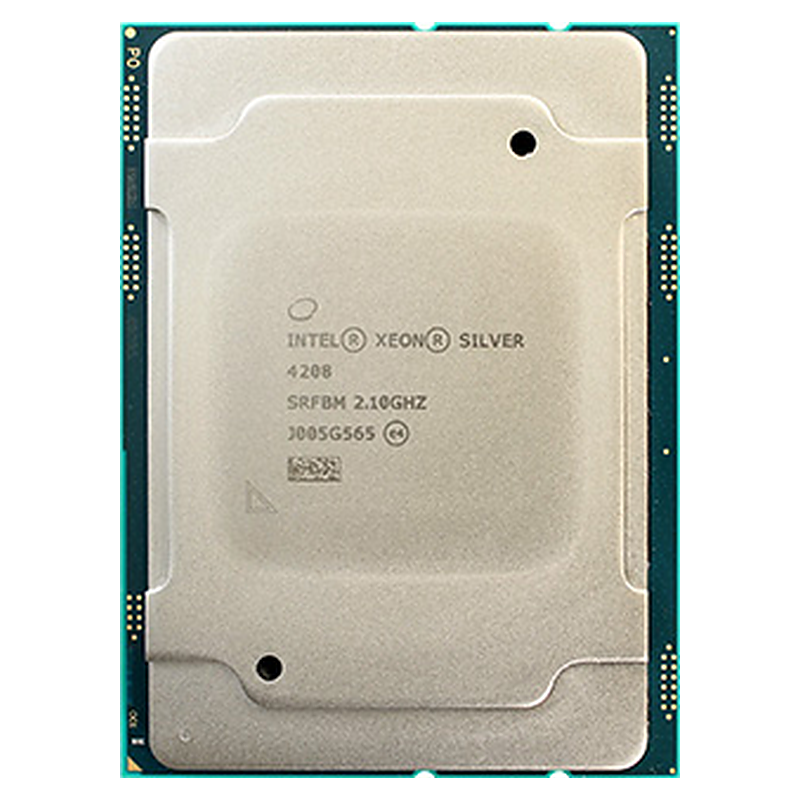
2.1 GHz / 8 Cores / 16 Threads / 11 MB Cache / 85 W / 78 °C TCASE
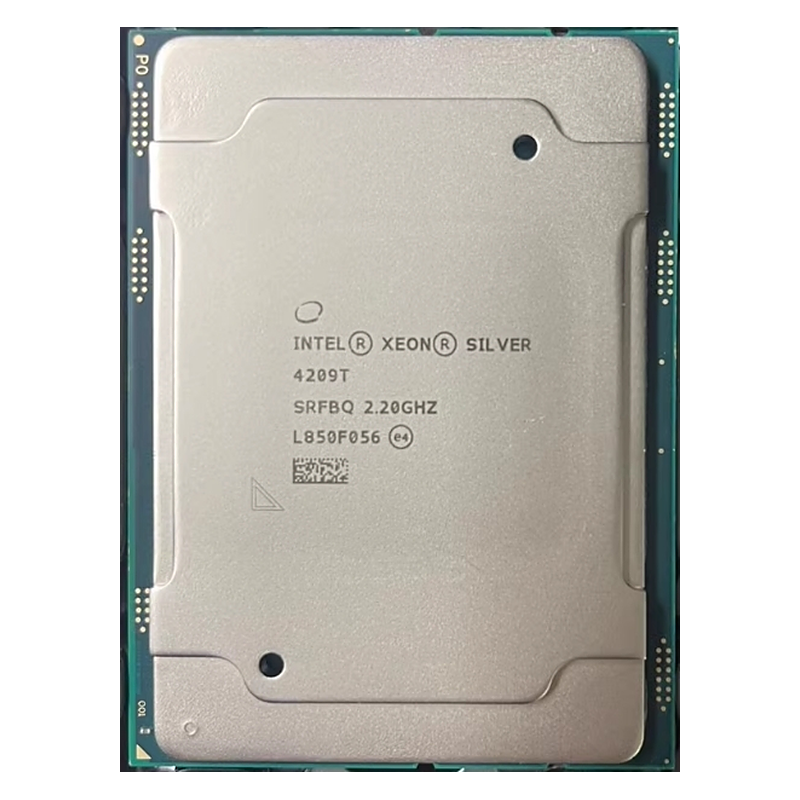
2.2 GHz / 8 Cores / 16 Threads / 11 MB Cache / 70 W / 91 °C TCASE
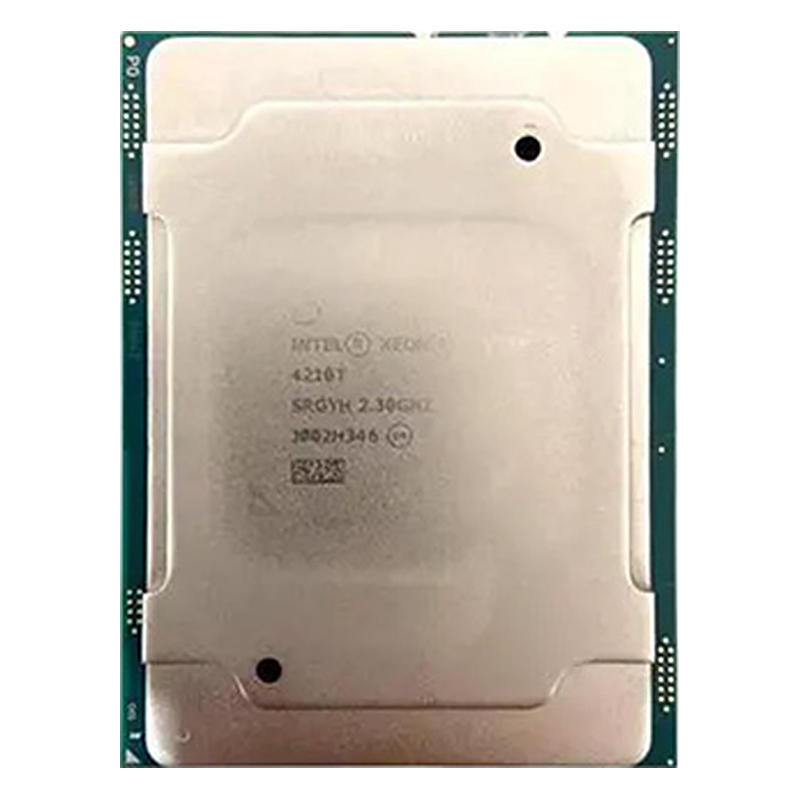
2.3 GHz / 10 Cores / 20 Threads / 13.75 MB Cache / 95 W / 91 °C TCASE
2.4 GHz / 10 Cores / 20 Threads / 13.75 MB Cache / 100 W / 2-Socket