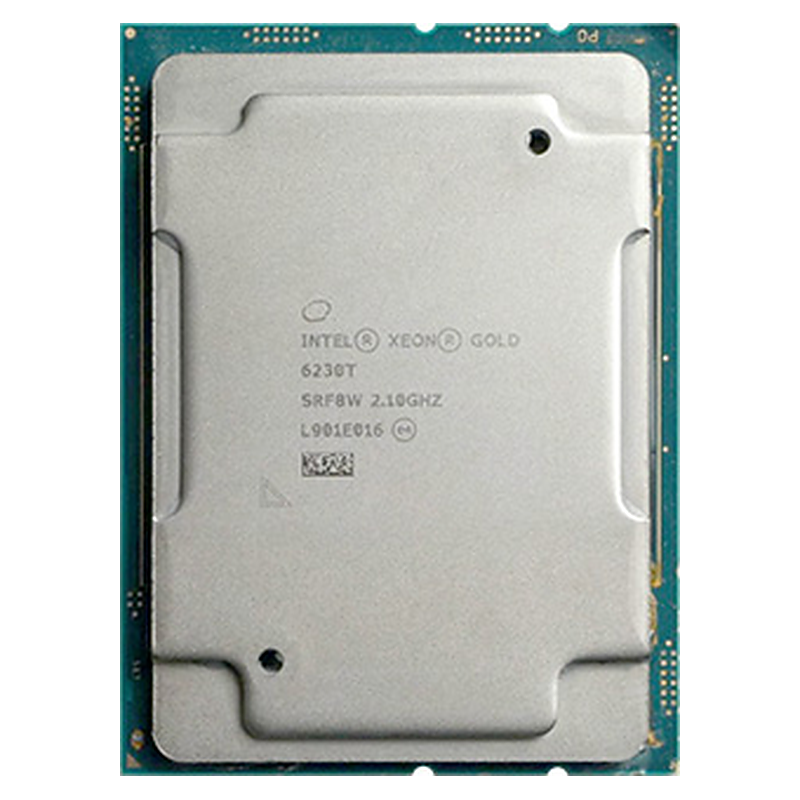
Intel Xeon Gold 6230T Processor
2.1 GHz / 20 Cores / 40 Threads / 27.5 MB Cache / 125 W / NEBS Thermal
- Part Number
- XEON-GOLD-6230T
- Brand
- Intel
- Category
- Server Processor
- Accepted Payments
- T/T Bank Transfer PayPal Western Union
Technical Specifications
| Socket | LGA3647 |
|---|---|
| Series | Xeon Gold |
| Generation | 2nd Gen (Cascade Lake) |
| Cores | 20 |
| Memory Type | DDR4 RDIMM · DDR4 LRDIMM · DDR4 3DS RDIMM |
| Max Memory Speed | 2933 MHz |
| PCIe Version | PCIe 3.0 |
| Lithography | 14 nm |
| Memory Channels | 6 channels |
| Condition | New · Used |
| Threads | 40 |
| Base Frequency | 2.1 GHz |
| Max Turbo Frequency | 3.9 GHz |
| Cache | 27.5 |
| TDP | 125 W |
Frequently Asked Questions
Intel Xeon Gold 6230T — 20 cores and 40 threads at 2.1 GHz base / 3.9 GHz turbo, 27.5 MB cache, 125 W TDP, FCLGA3647, with three UPI links and four-socket scalability. Supplied new or as tested pulls, with a 1-year warranty.
The 6230T carries the same core count, the same cache, the same clocks and the same 125 W as the 6230. It is not a faster part and it is not a cheaper one. What it sells is a wider thermal window: TCASE 92 °C against 87 °C, which from a 35 °C inlet is about 0.46 °C/W for the heatsink against 0.42 — roughly 10 % more allowance on the same silicon. For a chassis that is thermally marginal on a plain 6230, that is the difference between a build that passes a soak test and one that throttles in July.
TCASE is the maximum permitted temperature at the centre of the heat spreader, so a higher number is a softer requirement and not a measure of spare cooling. Read the other way round, it also tells you where this part is meant to live: Intel lists it under Use Conditions – Communications Commercial Temp, the bin intended for telecom and network equipment whose inlet air is warmer and whose airflow is less generous than a data-centre row. That is a statement about the operating environment the part is qualified for, not a claim that it runs cooler.
Where the platform firmware supports it, the T parts carry a longer life-cycle and NEBS-thermal positioning in Intel's product line, and embedded options are available — which is why they turn up in fixed-bill-of-materials appliances that get qualified once and built for a decade. It is worth being precise about what that does and does not mean: the long-life classification is a design and validation posture, not a support commitment that outlives the product. End of Servicing Updates for this generation was 30 June 2025, so a 6230T bought today is for a machine still in service, not for a new ten-year design.
The widest thermal allowance in the 62xx range
On the same 125 W envelope, this is the highest case limit Intel published for a 62xx Gold part: 92 °C, against 90 °C for the 6238T, 87 °C for the 6230, and 74 °C for the 6240Y. Expressed as heatsink allowance from a 35 °C inlet that is 0.46, 0.44, 0.42 and 0.26 °C/W respectively, so a build validated around a 6240Y needs a materially better cooler than one built around this part at the same wattage.
The clocks are the plain 6230's: 2.1 GHz sustained across twenty cores, 3.9 GHz on light threads, 1.375 MB of cache per core. If the requirement is more sustained clock on the same power, the 6230N is the variant that trades turbo ceiling for base; if it is more cores, the 6230R adds six of them at 150 W and gives up four-socket support to do it. This one keeps the four-socket fabric and buys temperature headroom instead.
Everything else is the standard Gold platform: six channels of DDR4-2933 to 1 TB per socket, PCIe 3.0 with 48 lanes, Optane persistent memory, AVX-512 with two FMA units, DL Boost (VNNI), Intel RDT, Intel VMD and Run Sure. There is no Speed Select table on this SKU in either variant.
Technical specifications
| Product collection | 2nd Gen Intel Xeon Scalable (Cascade Lake) |
|---|---|
| Processor number / sSpec | 6230T / SRFPS |
| Ordering code | CD8069504283704 (tray, B1 stepping; no boxed SKU) |
| Cores / Threads | 20 / 40 (Hyper-Threading) |
| Base / Max turbo frequency | 2.1 GHz / 3.9 GHz |
| Cache | 27.5 MB |
| TDP | 125 W (TCASE 92 °C) |
| Socket | FCLGA3647 (FC-LGA14B, 76.0 mm × 56.5 mm) |
| Memory | 6 channels DDR4-2933, up to 1 TB per socket, ECC RDIMM / LRDIMM / 3DS RDIMM, Optane persistent memory supported |
| Scalability | 4S (up to four sockets), 3 UPI links at 10.4 GT/s |
| PCIe | 3.0, 48 lanes |
| Use conditions | Communications Commercial Temp |
| Speed Select | SST – Performance Profile: no; SST – Base Frequency: no |
| Lithography | 14 nm |
| Launch | Q2 2019 |
| Status | Launched; End of Servicing Updates 30 June 2025 |
| Embedded options | Available |
| Accelerators | AVX-512 with 2 FMA units, Intel DL Boost (VNNI), Intel RDT, Intel VMD, Run Sure |
Chassis and boards that take it
The 6230T fits the same FCLGA3647 boards as the rest of the 6230 family, in one-, two- and four-socket configurations. What differs is the environment it is comfortable in:
- Telecom and network appliances on dual-socket FCLGA3647 boards, where inlet air is warmer than a data hall
- Dell PowerEdge R640 / R740 with the 125 W thermal option
- HPE ProLiant DL360 Gen10 / DL380 Gen10 — standard performance heatsink
- Lenovo ThinkSystem SR630 / SR650 — 125 W option
- Four-socket scale-up systems — 80 cores at 125 W per socket, where the 4S fabric is actually used
Because the case limit is 92 °C, a chassis that ran a plain 6230 hot will run this one cooler; the reverse swap — 6230T out, 6230 in — needs the heatsink and inlet checked before it is attempted. Tell us the model and we will confirm the thermal option and the BIOS level.
How it compares across the 6230 family and adjacent bins
| Processor | Generation | Cores / Threads | Base / Max turbo | Cache | TDP | Memory support |
|---|---|---|---|---|---|---|
| Xeon Gold 6230T | 2nd Gen (Cascade Lake) | 20 / 40 | 2.1 / 3.9 GHz | 27.5 MB | 125 W | 6ch DDR4-2933 · 1 TB · 4S |
| Xeon Gold 6230 | 2nd Gen (Cascade Lake) | 20 / 40 | 2.1 / 3.9 GHz | 27.5 MB | 125 W | 6ch DDR4-2933 · 1 TB · 4S |
| Xeon Gold 6230N | 2nd Gen (Cascade Lake) | 20 / 40 | 2.3 / 3.5 GHz | 27.5 MB | 125 W | 6ch DDR4-2933 · 1 TB · 4S |
| Xeon Gold 6230R | 2nd Gen Refresh | 26 / 52 | 2.1 / 4.0 GHz | 35.75 MB | 150 W | 6ch DDR4-2933 · 1 TB · 2S |
| Xeon Gold 6238T | 2nd Gen (Cascade Lake) | 22 / 44 | 1.9 / 3.7 GHz | 30.25 MB | 125 W | 6ch DDR4-2933 · 1 TB · 4S |
| Xeon Gold 6248 | 2nd Gen (Cascade Lake) | 20 / 40 | 2.5 / 3.9 GHz | 27.5 MB | 150 W | 6ch DDR4-2933 · 1 TB · 4S |
Against the plain 6230 the delta is 5 °C of case limit and the embedded / communications qualification, for a higher price on the same silicon. If the chassis is not thermally marginal, the plain part does the same job for less; if it is, this is the one that fits without redesigning the airflow.
Against the 6230N you get 400 MHz more turbo and 14 °C more case limit, and give up 200 MHz of base and the Speed Select base-frequency table. Bursty work prefers this part, steady-state work prefers the N.
Against the 6230R six cores and 8.25 MB cost 25 W and the loss of four-socket support. On a two-socket node with a current BIOS the Refresh part is more machine; on a four-socket platform it cannot be used at all.
Against the 6248 you trade 400 MHz of base and 200 MHz of turbo for 25 W per socket and 6 °C of extra case limit. Both are 20-core parts; the choice is rack power against per-core clock.
How each processor is tested before it ships
- Visual inspection of the heat spreader, capacitors and substrate on arrival.
- Thermal paste residue cleaned from the IHS; socket contact pads checked under magnification.
- sSpec marking checked against the order line before testing. SRFPS is the 6230T; SRF8W is the plain 6230 and SRFPR is the 6230N, and the three share a heat spreader layout.
- Full-core load test on an FCLGA3647 diagnostic board, confirming 2.1 GHz sustained across all twenty cores and 3.9 GHz turbo on light threads.
- Cache verification at the full 27.5 MB, followed by a memory controller pass across all six channels at DDR4-2933.
- UPI link check across all three links, since this SKU is validated for four-socket topologies.
- Thermal-run recorded against the 92 °C case limit, the widest window in the 62xx range.
- Final clean, then packaging in an anti-static tray with foam.
Warranty and lead time
Every processor carries a 1-year warranty against defects in workmanship and function. Verified faulty units are replaced or refunded and we cover return shipping. Stock is held in both new and used condition; the condition you order is confirmed before dispatch, and used units are pull-tested stock rather than untested lots. Stock is held in our own warehouse and normally dispatches within three to seven working days, with tracking issued at dispatch; volume orders are quoted individually with lead time confirmed at the time of enquiry.
Purchasing and volume enquiries
Pricing is quoted per order because condition and quantity both move it. Send the quantity, the condition you need and the chassis the part is going into, and you will get a quote with lead time the same working day. If the machine is a telecom or network appliance running a fixed bill of materials, tell us the platform and we will confirm the sSpec and stepping against its approved list before quoting.
Get Pricing For This Part
Tell us who you are — we reply within one working day with a firm quote, stock status and lead time. Volume discounts available.
Related Products
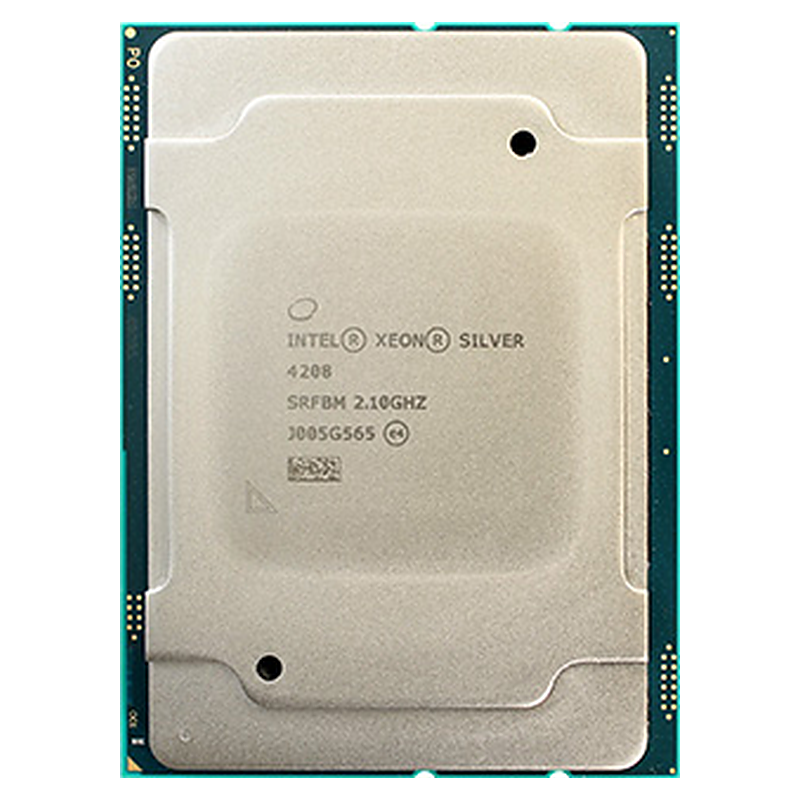
2.1 GHz / 8 Cores / 16 Threads / 11 MB Cache / 85 W / 78 °C TCASE
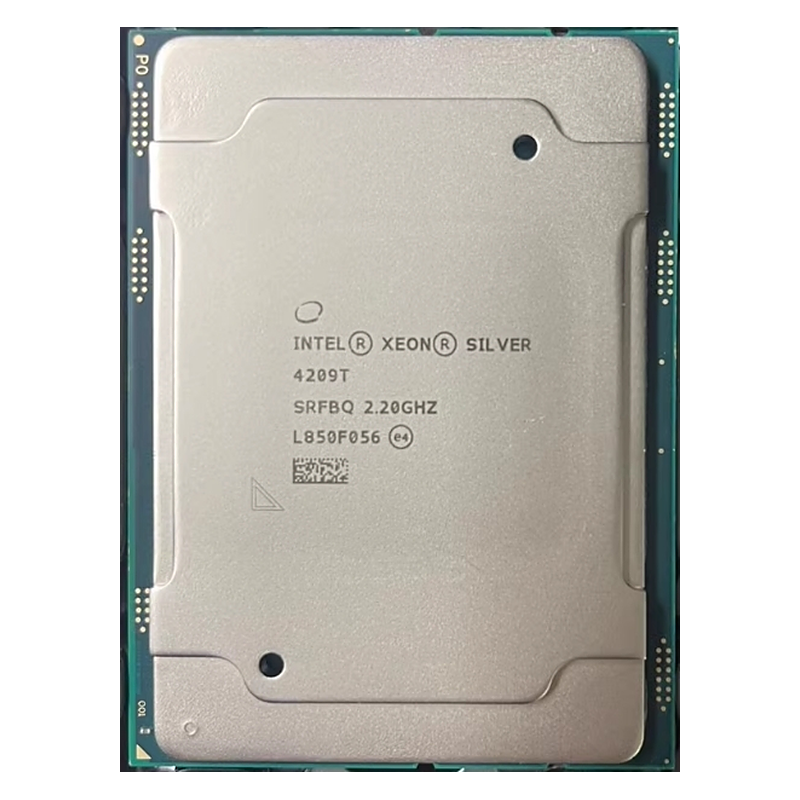
2.2 GHz / 8 Cores / 16 Threads / 11 MB Cache / 70 W / 91 °C TCASE
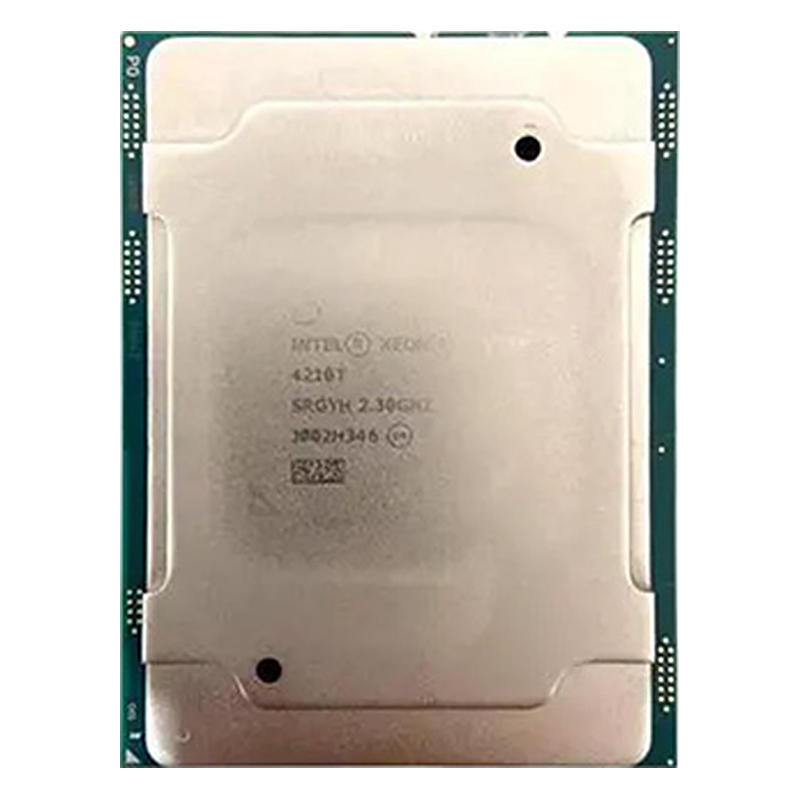
2.3 GHz / 10 Cores / 20 Threads / 13.75 MB Cache / 95 W / 91 °C TCASE
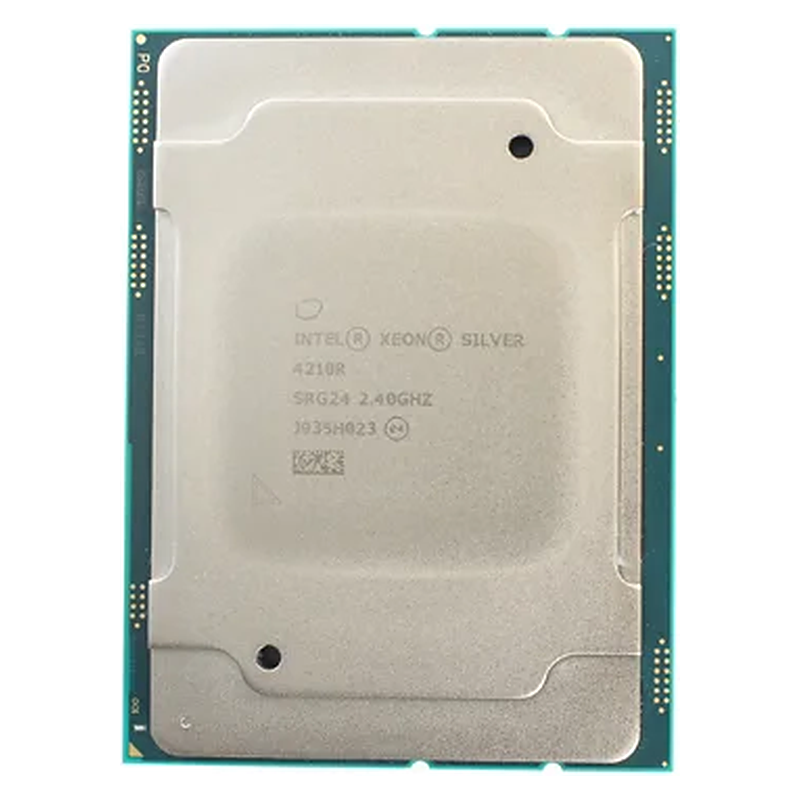
2.4 GHz / 10 Cores / 20 Threads / 13.75 MB Cache / 100 W / 2-Socket