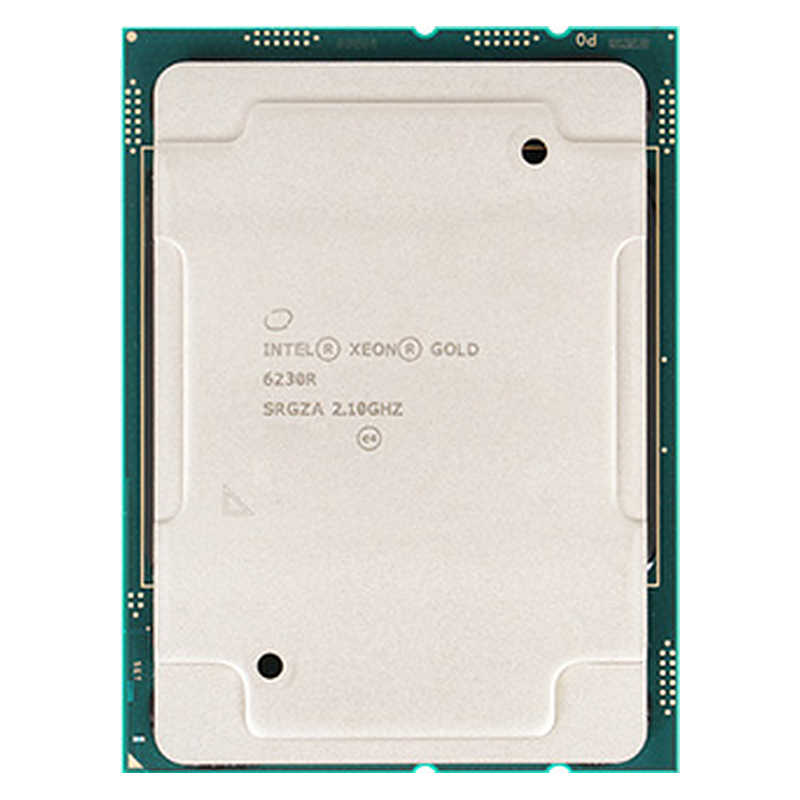
Intel Xeon Gold 6230R Processor
2.1 GHz / 26 Cores / 52 Threads / 35.75 MB Cache / 150 W
- Part Number
- XEON-GOLD-6230R
- Brand
- Intel
- Category
- Server Processor
- Accepted Payments
- T/T Bank Transfer PayPal Western Union
Technical Specifications
| Socket | LGA3647 |
|---|---|
| Series | Xeon Gold |
| Generation | 2nd Gen (Cascade Lake) |
| Cores | 26 |
| Memory Type | DDR4 RDIMM · DDR4 LRDIMM · DDR4 3DS RDIMM |
| Max Memory Speed | 2933 MHz |
| PCIe Version | PCIe 3.0 |
| Lithography | 14 nm |
| Memory Channels | 6 channels |
| Condition | New · Used |
| Threads | 52 |
| Base Frequency | 2.1 GHz |
| Max Turbo Frequency | 4.0 GHz |
| Cache | 35.75 MB |
| TDP | 150 W |
Frequently Asked Questions
Intel Xeon Gold 6230R — 26 cores and 52 threads at 2.1 GHz base / 4.0 GHz turbo, 35.75 MB cache, 150 W TDP, FCLGA3647, in the Q1 2020 Refresh of the Cascade Lake range. Supplied new or as tested pulls, with a 1-year warranty.
The first thing to get straight is that the R is not a revision of the 6230. The plain 6230 is 20 cores, 27.5 MB, 125 W and four-socket; this part is 26 cores, 35.75 MB, 150 W and two-socket only. They share a base clock and nothing else that matters. The Refresh generation took the same 14 nm die and moved the core count up at a similar price point, which is why a 6230R outperforms a plain 6230 on any throughput workload and cannot go into the four-socket chassis that the plain part can.
Per socket, 26 cores at 2.1 GHz with a 4.0 GHz turbo ceiling is a dense arrangement: 35.75 MB across 26 cores is 1.375 MB per core, the same ratio as the rest of the Refresh line, and TCASE 85 °C at 150 W leaves about 0.33 °C/W for the heatsink from a 35 °C inlet. That is a standard performance heatsink build, not a high-performance one, which is what makes a 26-core part practical in a normal 2U node.
What it gives up is the fabric: two UPI links and 2S. There is no four-socket topology on this SKU, so the R940xa, DL580 Gen10 and SR850 class of machine cannot use it — those need a part with three links. In a two-socket node, which is where the overwhelming majority of these are deployed, the missing link costs nothing: two sockets are connected point to point and the third link would only be used to reach a third and fourth socket.
The Refresh arithmetic: what six extra cores cost
Compared with the plain 6230 the trade is six cores and 8.25 MB for 25 W and the loss of four-socket support. On a two-socket node that is a straightforward win on throughput: 52 threads against 40, at the same 2.1 GHz base and 100 MHz more turbo. The 150 W envelope is still inside what a standard 2U dual-socket chassis handles, and the case limit of 85 °C is looser than the 6242R's 76 °C at 205 W.
Against the rest of the Refresh range the position is equally clean: the 6238R adds two cores and 2.75 MB for 15 W, the 6248R trades four cores for 700 MHz of base clock at 205 W, and the 6258R is the top of the line at 28 cores and 205 W. This part is the middle of that spread, and the middle is where most two-socket refreshes land.
Platform features are the standard Gold set: AVX-512 with two FMA units, DL Boost (VNNI), Intel RDT, Intel VMD, Run Sure, six channels of DDR4-2933 to 1 TB per socket, PCIe 3.0 with 48 lanes and Optane persistent memory support. There is no Speed Select table and no Turbo Boost Max 3.0.
Technical specifications
| Product collection | 2nd Gen Intel Xeon Scalable (Cascade Lake Refresh) |
|---|---|
| Processor number / sSpec | 6230R / SRGZA |
| Ordering code | CD8069504448800 (tray, B1 stepping; boxed BX806956230R) |
| Cores / Threads | 26 / 52 (Hyper-Threading) |
| Base / Max turbo frequency | 2.1 GHz / 4.0 GHz |
| Cache | 35.75 MB |
| TDP | 150 W (TCASE 85 °C) |
| Socket | FCLGA3647 (FC-LGA14B, 76.0 mm × 56.5 mm) |
| Memory | 6 channels DDR4-2933, up to 1 TB per socket, ECC RDIMM / LRDIMM / 3DS RDIMM, Optane persistent memory supported |
| Scalability | 2S only (two sockets), 2 UPI links at 10.4 GT/s |
| PCIe | 3.0, 48 lanes |
| Lithography | 14 nm |
| Launch | Q1 2020 (Refresh) |
| Status | Discontinued (End of Servicing Updates 30 June 2025) |
| Embedded options | Not available |
| Accelerators | AVX-512 with 2 FMA units, Intel DL Boost (VNNI), Intel RDT, Intel VMD |
Servers that take this processor — and the ones that do not
The 6230R fits FCLGA3647 boards whose BIOS supports 2nd Gen Xeon Scalable including the Refresh SKUs. Because the Refresh parts launched in Q1 2020, an older BIOS may not enumerate them — that is the usual reason a 6230R fails to POST in a machine that has run a plain 6230 for years, and it is a firmware question rather than a hardware one.
- Dell PowerEdge R640, R740, R740xd and R840 — two-socket, 150 W thermal option
- HPE ProLiant DL360 Gen10 and DL380 Gen10 — two-socket, standard performance heatsink
- Lenovo ThinkSystem SR630 V2, SR650 V2 and SR650 — two-socket, 150 W option
- Supermicro X11 dual-socket boards with 150 W socket support
Not compatible with four-socket systems that require three UPI links — PowerEdge R940xa, ProLiant DL580 Gen10, ThinkSystem SR850 and SR860. If the chassis takes four processors, this is the wrong SKU regardless of what the socket physically accepts; use the 3-UPI parts instead.
How it compares across the twenty-six core and adjacent Refresh bins
| Processor | Generation | Cores / Threads | Base / Max turbo | Cache | TDP | Memory support |
|---|---|---|---|---|---|---|
| Xeon Gold 6230R | 2nd Gen Refresh | 26 / 52 | 2.1 / 4.0 GHz | 35.75 MB | 150 W | 6ch DDR4-2933 · 1 TB · 2S |
| Xeon Gold 6230 | 2nd Gen (Cascade Lake) | 20 / 40 | 2.1 / 3.9 GHz | 27.5 MB | 125 W | 6ch DDR4-2933 · 1 TB · 4S |
| Xeon Gold 6238R | 2nd Gen Refresh | 28 / 56 | 2.2 / 4.0 GHz | 38.5 MB | 165 W | 6ch DDR4-2933 · 1 TB · 2S |
| Xeon Gold 6248R | 2nd Gen Refresh | 24 / 48 | 3.0 / 4.0 GHz | 35.75 MB | 205 W | 6ch DDR4-2933 · 1 TB · 2S |
| Xeon Gold 6258R | 2nd Gen Refresh | 28 / 56 | 2.7 / 4.0 GHz | 38.5 MB | 205 W | 6ch DDR4-2933 · 1 TB · 2S |
| Xeon Gold 6248 | 2nd Gen (Cascade Lake) | 20 / 40 | 2.5 / 3.9 GHz | 27.5 MB | 150 W | 6ch DDR4-2933 · 1 TB · 4S |
Against the plain 6230 six cores, 8.25 MB and 100 MHz of turbo for 25 W, with four-socket support lost in the exchange. On two sockets, which is the normal case, it is more machine for the same slot.
Against the 6238R two cores and 2.75 MB cost 15 W and 100 MHz of base. Marginal either way: take the 6238R where the last two cores pay for themselves, otherwise this part.
Against the 6248R you give up four cores but gain 900 MHz of base clock and 55 W less heat on the 6248R side. That is a per-core versus throughput decision, and the 205 W envelope is a different chassis class.
Against the plain 6248 — 20 cores at 2.5 GHz, 150 W — the Refresh gives six more cores at the same TDP. That is the entire argument for buying Refresh parts in 2026: the same power budget now holds 26 cores instead of 20.
How each processor is tested before it ships
- Visual inspection of the heat spreader, capacitors and substrate on arrival.
- Thermal paste residue cleaned from the IHS; socket contact pads checked under magnification.
- sSpec marking (SRGZA) verified against the order line before testing — the Refresh sSpecs sit close to the plain parts, and a 6230R read as a 6230 is the obvious expensive mistake.
- Full-core load test on an FCLGA3647 diagnostic board, confirming 2.1 GHz base and 4.0 GHz turbo across all 26 cores.
- Cache verification at the full 35.75 MB, followed by a memory controller pass across all six channels at DDR4-2933.
- UPI check across both links; four-socket topologies are out of scope by design on this SKU.
- Thermal-run recorded so the unit's operating temperatures can be compared with the 85 °C case limit.
- Final clean, then packaging in an anti-static tray with foam.
Warranty and lead time
Every processor carries a 1-year warranty against defects in workmanship and function. Verified faulty units are replaced or refunded and we cover return shipping. Stock is held in both new and used condition; the condition you order is confirmed before dispatch, and used units are pull-tested stock rather than untested lots. Stock is held in our own warehouse and normally dispatches within three to seven working days, with tracking issued at dispatch; volume orders are quoted individually with lead time confirmed at the time of enquiry.
Purchasing and volume enquiries
Pricing is quoted per order because condition and quantity both move it. Send the quantity, the condition you need and the server model the part is going into, and you will get a quote with lead time the same working day. If the machine is a four-socket chassis, say so before ordering — this SKU cannot populate it, and the 3-UPI parts are a different quote.
Get Pricing For This Part
Tell us who you are — we reply within one working day with a firm quote, stock status and lead time. Volume discounts available.
Related Products
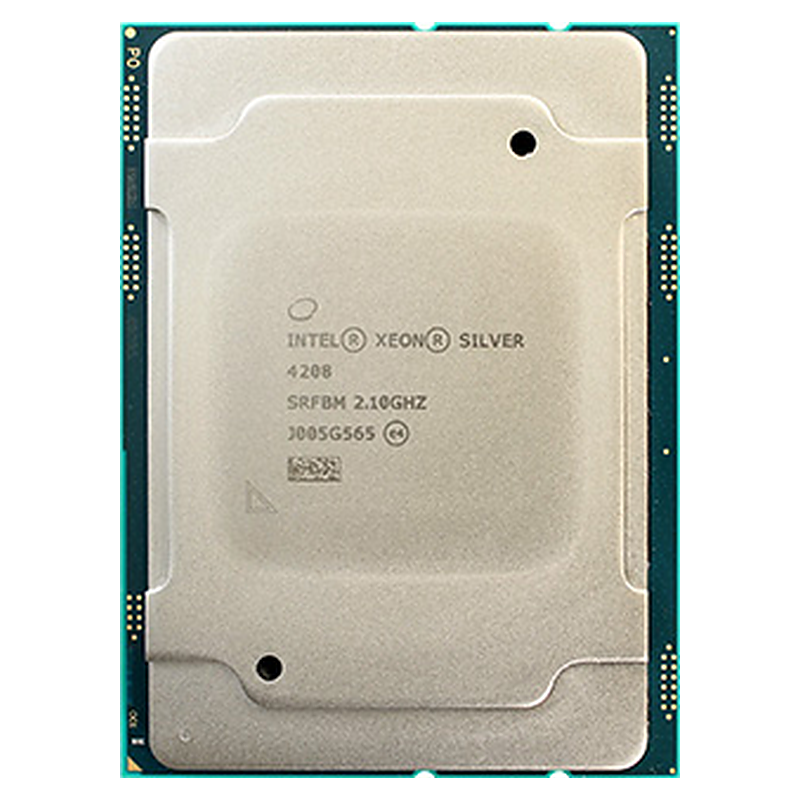
2.1 GHz / 8 Cores / 16 Threads / 11 MB Cache / 85 W / 78 °C TCASE
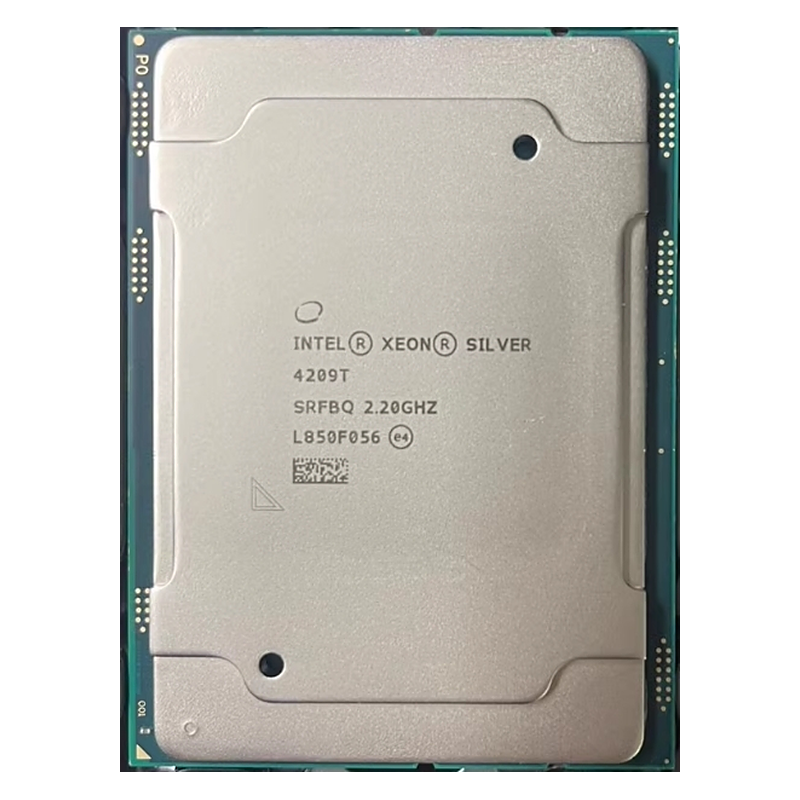
2.2 GHz / 8 Cores / 16 Threads / 11 MB Cache / 70 W / 91 °C TCASE
2.3 GHz / 10 Cores / 20 Threads / 13.75 MB Cache / 95 W / 91 °C TCASE
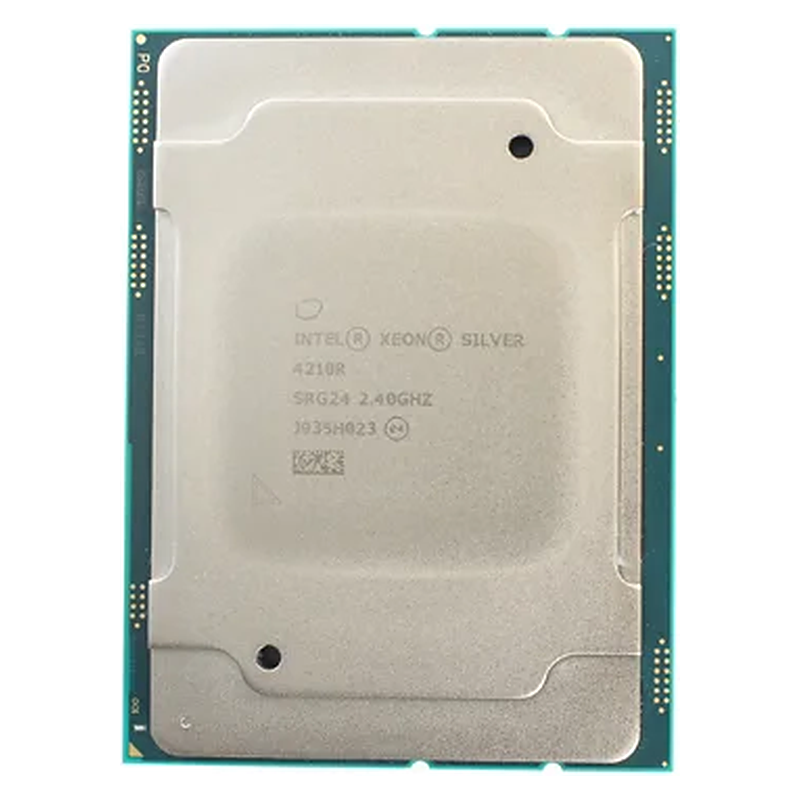
2.4 GHz / 10 Cores / 20 Threads / 13.75 MB Cache / 100 W / 2-Socket