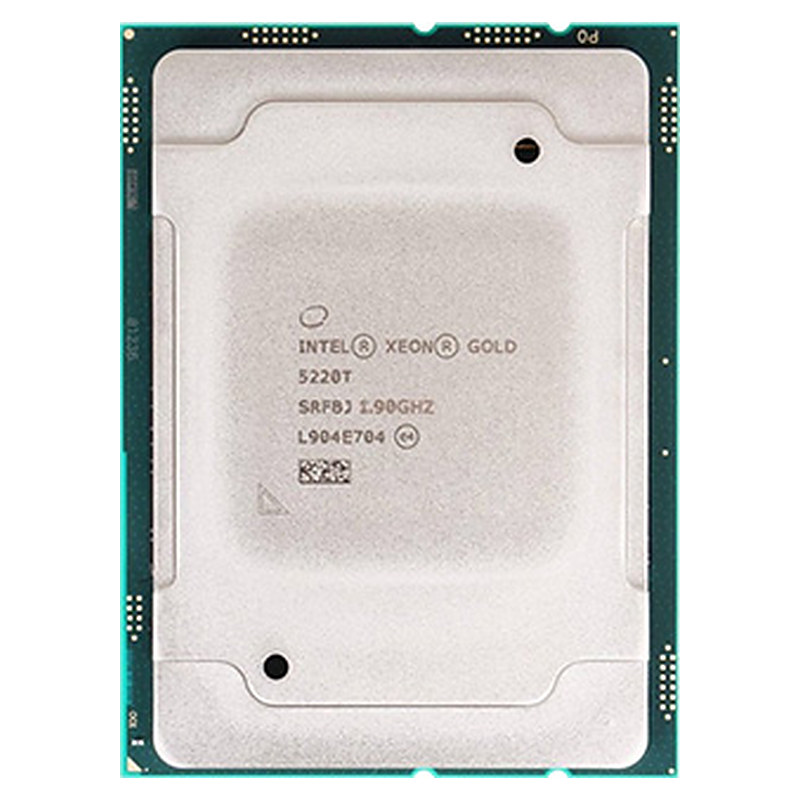
Intel Xeon Gold 5220T Processor
1.9 GHz / 18 Cores / 36 Threads / 24.75 MB Cache / 105 W / 4-Socket
- Part Number
- XEON-GOLD-5220T
- Brand
- Intel
- Category
- Server Processor
- Accepted Payments
- T/T Bank Transfer PayPal Western Union
Technical Specifications
| Socket | LGA3647 |
|---|---|
| Series | Xeon Gold |
| Generation | 2nd Gen (Cascade Lake) |
| Cores | 18 |
| Memory Type | DDR4 RDIMM · DDR4 LRDIMM · DDR4 3DS RDIMM |
| Max Memory Speed | 2667 MHz |
| PCIe Version | PCIe 3.0 |
| Lithography | 14 nm |
| Memory Channels | 6 channels |
| Condition | New · Used |
| Threads | 36 |
| Base Frequency | 1.9 GHz |
| Max Turbo Frequency | 3.9 GHz |
| Cache | 24.75 MB |
| TDP | 105 W |
Frequently Asked Questions
Intel Xeon Gold 5220T — 18 cores and 36 threads at 1.9 GHz base / 3.9 GHz turbo, 24.75 MB cache, 105 W TDP and a 93 °C case limit in FCLGA3647 packaging. Supplied new or as tested pulls, with a 1-year warranty.
The suffix is the whole point of this part. T marks the bin Intel qualified for communications commercial temperature service: the same Cascade Lake die and the same eighteen cores as the standard 5220, binned to hold a 93 °C case temperature at 105 W, and the only eighteen-core Gold in this generation whose ARK record carries Embedded Options Available: Yes. ARK also still lists this SKU as Launched, where the 5220 and 5220S are both marked Discontinued — which is why telecom and appliance builders specified it and why pulled stock stays in circulation.
It is not the fast one. 1.9 GHz sustained is 300 MHz below the 5220 and 800 MHz below the 5220S, on identical cores, identical 24.75 MB and an identical 3.9 GHz turbo ceiling. Buy this processor for thermal room, a 105 W power budget and a long-life supply line; buy a 5220S if the machine will sit at base clock all day.
The loosest thermal envelope of any eighteen-core Gold
Run the numbers from a 35 °C inlet and 105 W against a 93 °C case limit leaves roughly 0.55 °C/W of heatsink allowance. The 125 W 5220 and 5220S at 87 °C get 0.42, the 150 W 6240 at 85 °C gets 0.333, the 200 W 6254 at 82 °C gets 0.235. No other eighteen-core Gold of this generation is this easy to cool, and that is what makes a 1U chassis, a passively cooled appliance or a sealed edge cabinet a viable home for eighteen cores.
The trade is clock and it is an honest one: sustained clock sits 14 % below the 5220 and 30 % below the 5220S. For work that arrives in bursts — request handling, control plane, network functions, backup windows — the 3.9 GHz turbo ceiling does most of the heavy lifting and the real-world gap is much narrower than the base-clock figures suggest. For a node pinned at base clock twenty-four hours a day, the 5220S is the better buy.
Everything else is the standard Gold 5000-series platform: six channels of DDR4-2667 to 1 TB per socket, PCIe 3.0 with 48 lanes, two UPI links and four-socket scalability, Optane persistent memory support, DL Boost, RDT and VMD. Cache per core is 1.375 MB, exactly the family figure. AVX-512 is present with one FMA unit per core — the Gold 5000-series rule, with 5122 and 5222 the documented exceptions — so dense vector work belongs on a Xeon Gold 6240 with its second FMA unit and 2933 memory, while virtualisation, databases, file serving and container platforms never notice the difference.
Technical specifications
| Product collection | 2nd Gen Intel Xeon Scalable (Cascade Lake) |
|---|---|
| Processor number / sSpec | 5220T / SRFPK (B1 stepping) |
| Ordering code | CD8069504283006 (tray only; no boxed retail SKU) |
| Cores / Threads | 18 / 36 (Hyper-Threading) |
| Base / Max turbo frequency | 1.9 GHz / 3.9 GHz |
| Cache | 24.75 MB (1.375 MB per core) |
| TDP | 105 W (TCASE 93 °C) |
| Socket | FCLGA3647 (FC-LGA14B, 76.0 mm × 56.5 mm) |
| Memory | 6 channels DDR4-2667, up to 1 TB per socket, ECC RDIMM / LRDIMM / 3DS RDIMM, Optane persistent memory supported |
| Scalability | 4S (up to four sockets), 2 UPI links |
| PCIe | 3.0, 48 lanes |
| AVX-512 | One FMA unit per core (Gold 5000-series rule; 5122 and 5222 are the exceptions with two) |
| Use conditions | Communications Commercial Temp |
| Speed Select | SST – Performance Profile: no; SST – Base Frequency: no |
| Lithography | 14 nm |
| Launch | Q2 2019 |
| Status | Launched (servicing updates issued through 30 June 2025) |
| Embedded options | Available — the only eighteen-core Gold of this generation with the flag set |
| Accelerators | AVX-512 (1 FMA), Intel DL Boost (VNNI), Intel RDT, Intel VMD, Run Sure |
Platforms this bin is built for
Any FCLGA3647 board whose BIOS carries Cascade Lake microcode will post with it, single-, dual- or four-socket. The deployments where the 5220T actually earns its place:
- Telecom and central-office shelves, including NEBS-oriented builds, where the commercial temperature qualification and the 93 °C case limit are the reason the part exists
- 1U and power-capped virtualisation nodes — eighteen cores and 105 W inside a chassis that was never designed for a 150 W processor
- Passively cooled appliances, storage controllers and security gateways whose airflow budget is measured in single-digit CFM
- Long-life embedded builds, where the Embedded flag and the Launched status matter more than a few hundred megahertz
- Dell PowerEdge R640 and R740, HPE ProLiant DL360 and DL380 Gen10, Lenovo ThinkSystem SR630 and SR650, Supermicro X11DPi-N — all fine with the 105 W thermal option
Two checks before ordering. Confirm the BIOS revision supports Cascade Lake; boards that shipped before the 2019 launch usually need an update before they will POST. And confirm the memory: the part runs at 2667, so 2933 modules fit but deliver no more bandwidth than the processor's own limit. If the chassis already has a 150 W heatsink, you are carrying cooling headroom this processor cannot use — a 6240 would put it to work.
How it compares across the eighteen-core Golds
| Processor | Generation | Cores / Threads | Base / Max turbo | Cache | TDP | Memory support |
|---|---|---|---|---|---|---|
| Xeon Gold 5220T | 2nd Gen (Cascade Lake) | 18 / 36 | 1.9 / 3.9 GHz | 24.75 MB | 105 W | 6ch DDR4-2667 · 1 TB · 4S |
| Xeon Gold 5220 | 2nd Gen (Cascade Lake) | 18 / 36 | 2.2 / 3.9 GHz | 24.75 MB | 125 W | 6ch DDR4-2667 · 1 TB · 4S |
| Xeon Gold 5220S | 2nd Gen (Cascade Lake) | 18 / 36 | 2.7 / 3.9 GHz | 24.75 MB | 125 W | 6ch DDR4-2667 · 1 TB · 4S |
| Xeon Gold 6240 | 2nd Gen (Cascade Lake) | 18 / 36 | 2.6 / 3.9 GHz | 24.75 MB | 150 W | 6ch DDR4-2933 · 1 TB · 4S |
| Xeon Gold 6254 | 2nd Gen (Cascade Lake) | 18 / 36 | 3.1 / 4.0 GHz | 24.75 MB | 200 W | 6ch DDR4-2933 · 1 TB · 4S |
| Xeon Gold 6252 | 2nd Gen (Cascade Lake) | 24 / 48 | 2.1 / 3.7 GHz | 35.75 MB | 150 W | 6ch DDR4-2933 · 1 TB · 4S |
| Xeon Gold 5218 | 2nd Gen (Cascade Lake) | 16 / 32 | 2.3 / 3.9 GHz | 22 MB | 125 W | 6ch DDR4-2667 · 1 TB · 4S |
Against the 5220S the split is 800 MHz of base clock against 20 W and 6 °C of case headroom, on the same cores, cache, turbo ceiling, memory speed and single AVX-512 unit. The S is the search-tuned, fast bin; this is the cool one, and on the used market it is usually the cheaper of the two.
Against the 5220 it is the same part with a lower base clock, 20 W less and a case limit relaxed from 87 to 93 °C. If a chassis can take 125 W the 5220 is the faster choice for the same money; if it cannot, this one installs where the other will throttle.
Against the 6240 you give up 700 MHz of base clock, 45 W, DDR4-2933 and the second AVX-512 FMA unit — a real gap on vector-heavy work and a small one on enterprise work. Against the 6254 the difference is a whole thermal class: 1.2 GHz of base clock and 95 W, which is why the 6254 needs a high-performance heatsink at 0.235 °C/W and this part does not.
Against the 6252 the question is threads versus watts: six more cores, 11 MB more cache, 2933 memory and two AVX-512 units, for 45 W and a much tighter cooling requirement. Thread-dense estates should pay it; power- or airflow-limited ones cannot.
How each processor is tested before it ships
- Visual inspection of the heat spreader, capacitors and substrate on arrival.
- Thermal paste residue cleaned from the IHS; socket contact pads checked under magnification.
- sSpec marking verified against the order line. SRFPK is the 5220T, and it is a B1 stepping — not the L1 stepping used on some 5000-series siblings.
- Full-core load test on an FCLGA3647 diagnostic board, confirming 1.9 GHz sustained across all eighteen cores and 3.9 GHz turbo on light threads.
- Cache verification at the full 24.75 MB, then a memory controller pass across all six channels at the part's 2667 MT/s maximum.
- UPI check across both links, plus a four-socket topology run on a supported board.
- Thermal run recorded against the 93 °C case limit.
- Final clean, then packaging in an anti-static tray with foam.
Warranty and lead time
Every processor carries a 1-year warranty against defects in workmanship and function. Verified faulty units are replaced or refunded and we cover return shipping. Stock is held in both new and used condition; the condition you order is confirmed before dispatch, and used units are pull-tested stock rather than untested lots. Stock is held in our own warehouse and normally dispatches within three to seven working days, with tracking issued at dispatch.
Purchasing and volume enquiries
Pricing is quoted per order because condition and quantity both move it. Send the quantity, the condition you need and the server or chassis the part is going into, and you will get a quote with lead time the same working day. If the build is thermally constrained, say so — that is exactly the case this bin was qualified for, and we can confirm the heatsink class your platform needs.
Get Pricing For This Part
Tell us who you are — we reply within one working day with a firm quote, stock status and lead time. Volume discounts available.
Related Products
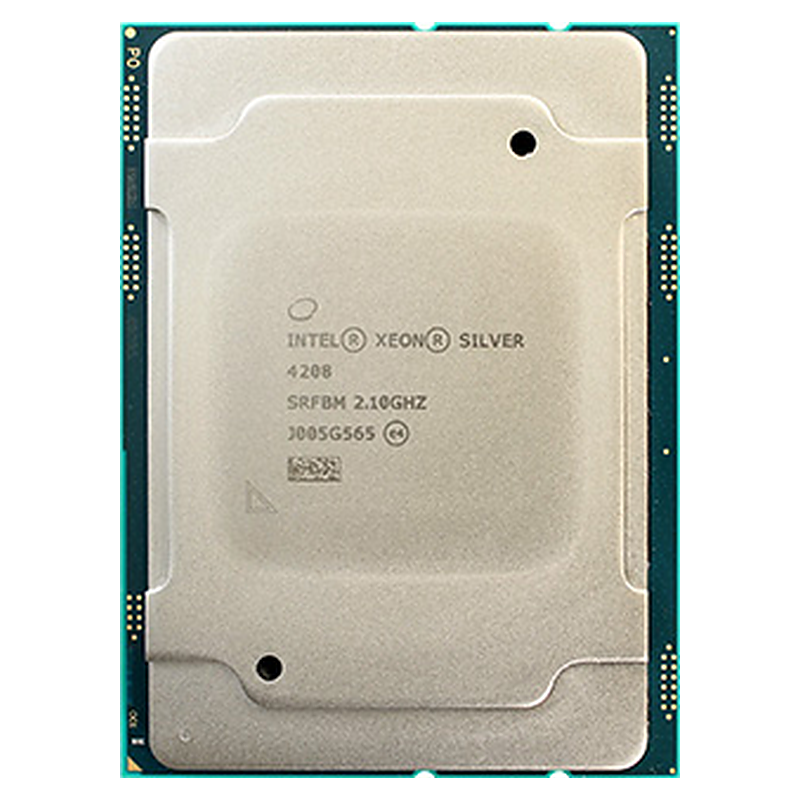
2.1 GHz / 8 Cores / 16 Threads / 11 MB Cache / 85 W / 78 °C TCASE
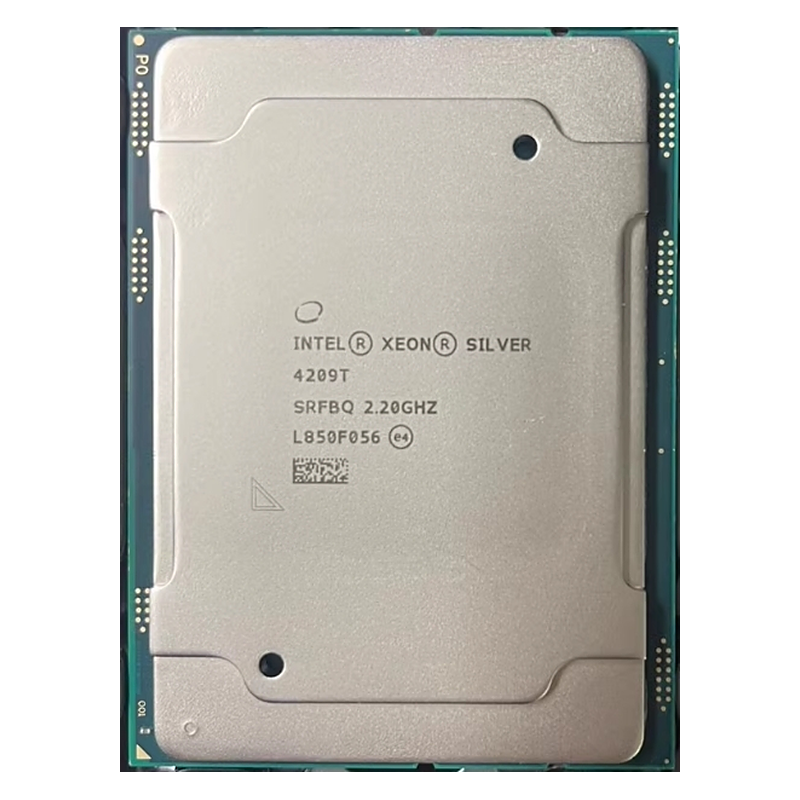
2.2 GHz / 8 Cores / 16 Threads / 11 MB Cache / 70 W / 91 °C TCASE
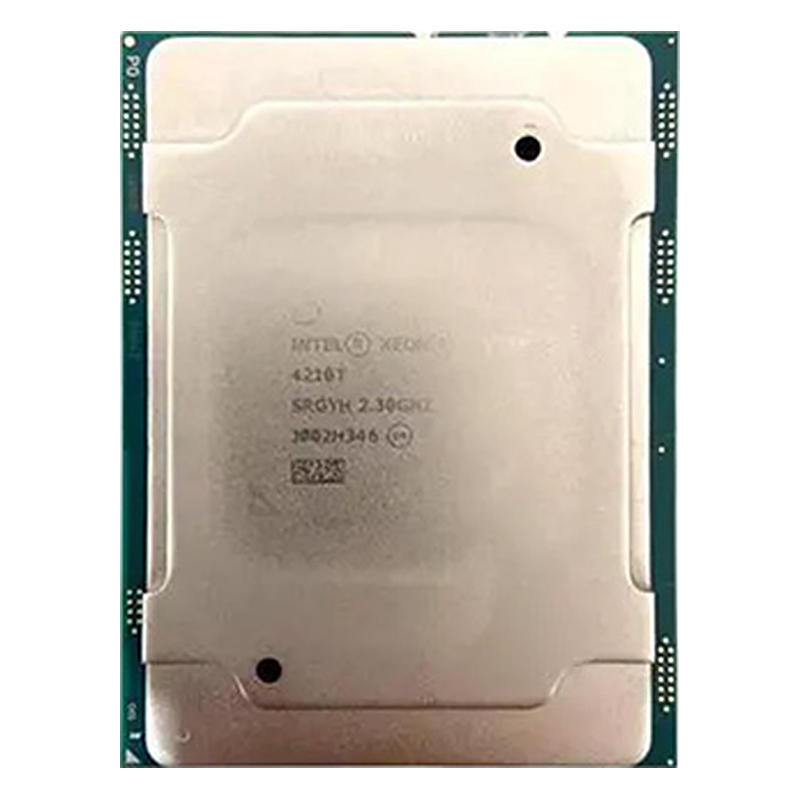
2.3 GHz / 10 Cores / 20 Threads / 13.75 MB Cache / 95 W / 91 °C TCASE
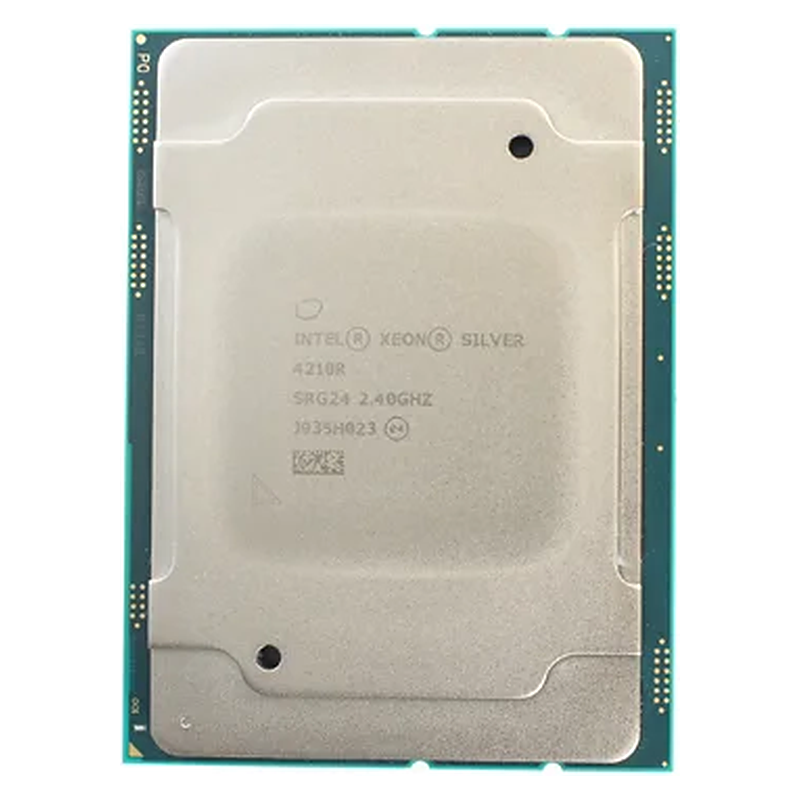
2.4 GHz / 10 Cores / 20 Threads / 13.75 MB Cache / 100 W / 2-Socket